West Africa
Efik (Cross River Nigerian)
Also: Calabar cuisine, Efik-Ibibio cooking, Cross River cuisine
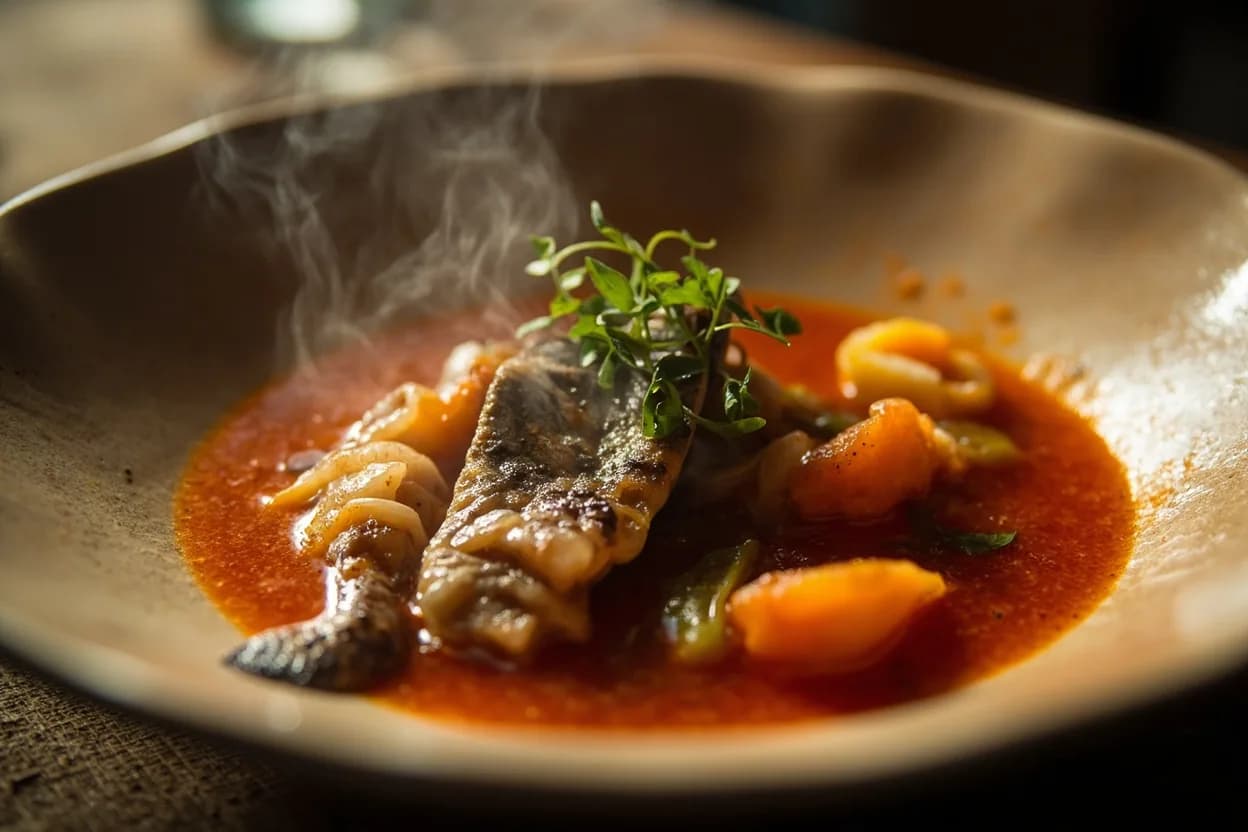
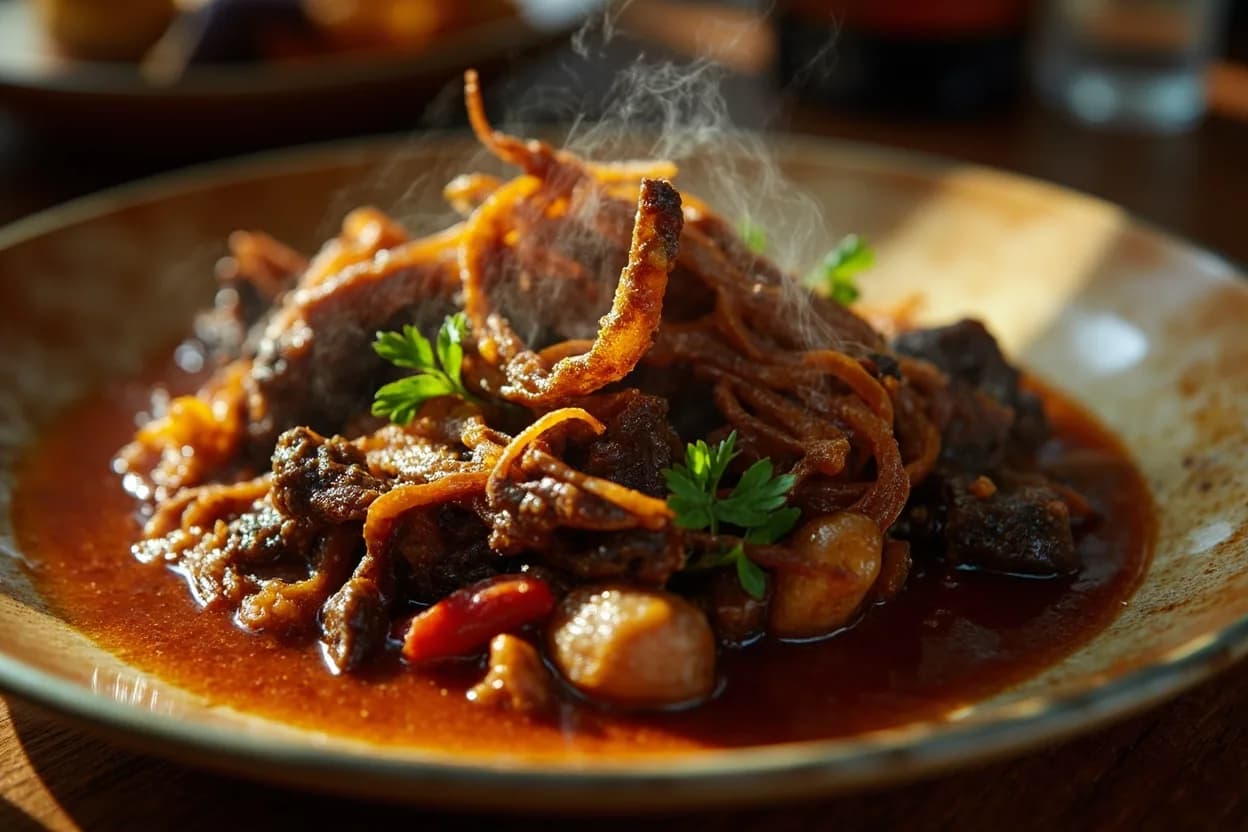
The refined, leaf-intensive cooking of Calabar — afang and edikaikong soups, fisherman's pepper broth, and a culinary sophistication forged by the Efik merchant elite of the Cross River estuary.
Efik cuisine is the cooking tradition of the Efik and closely related Ibibio people of Cross River State in southeastern Nigeria, centred on the historic city of Calabar. Long a major node in trans-Atlantic trade (including the slave trade and later palm oil commerce), Calabar developed one of the most sophisticated and distinctively creolised culinary traditions in Nigeria. The cooking is known for its abundant use of forest leaves and vegetables, periwinkles, crayfish, and the combination of palm oil and ugba (oil bean fermentation) that distinguishes it from Igbo or Yoruba cooking. Efik cuisine has a documented tradition of hospitality feasting linked to the ekpe (leopard) masquerade society and merchant wealth.
The flavour base
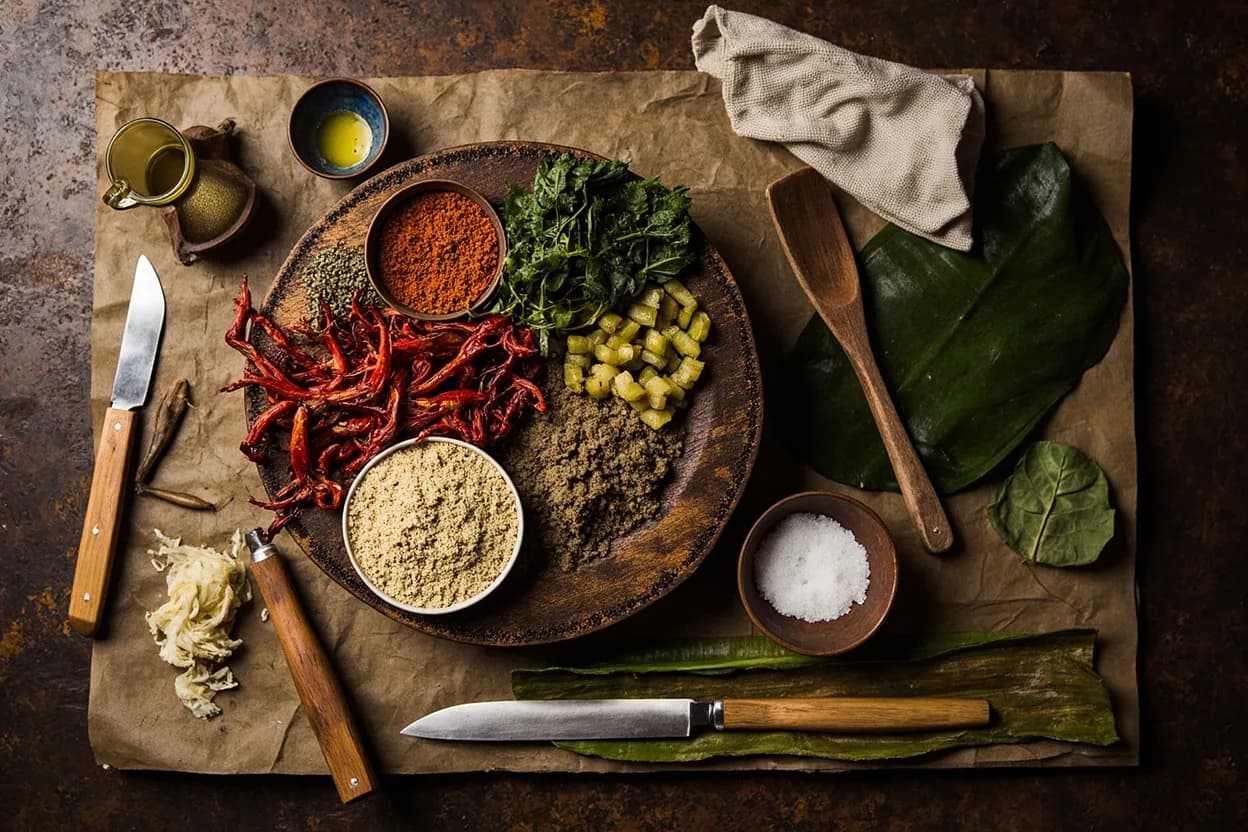
Crayfish (ground and whole), periwinkles, dried stockfish, and smoked catfish build a layered marine-umami base; palm oil ties the elements together; ugba (fermented oil bean seeds) adds a distinctive bitter-fermented note not found in other Nigerian cuisines.
Pantry staples
Key ingredients
Signature techniques
Signature dishes
Efik (Cross River Nigerian) on the table

At the table
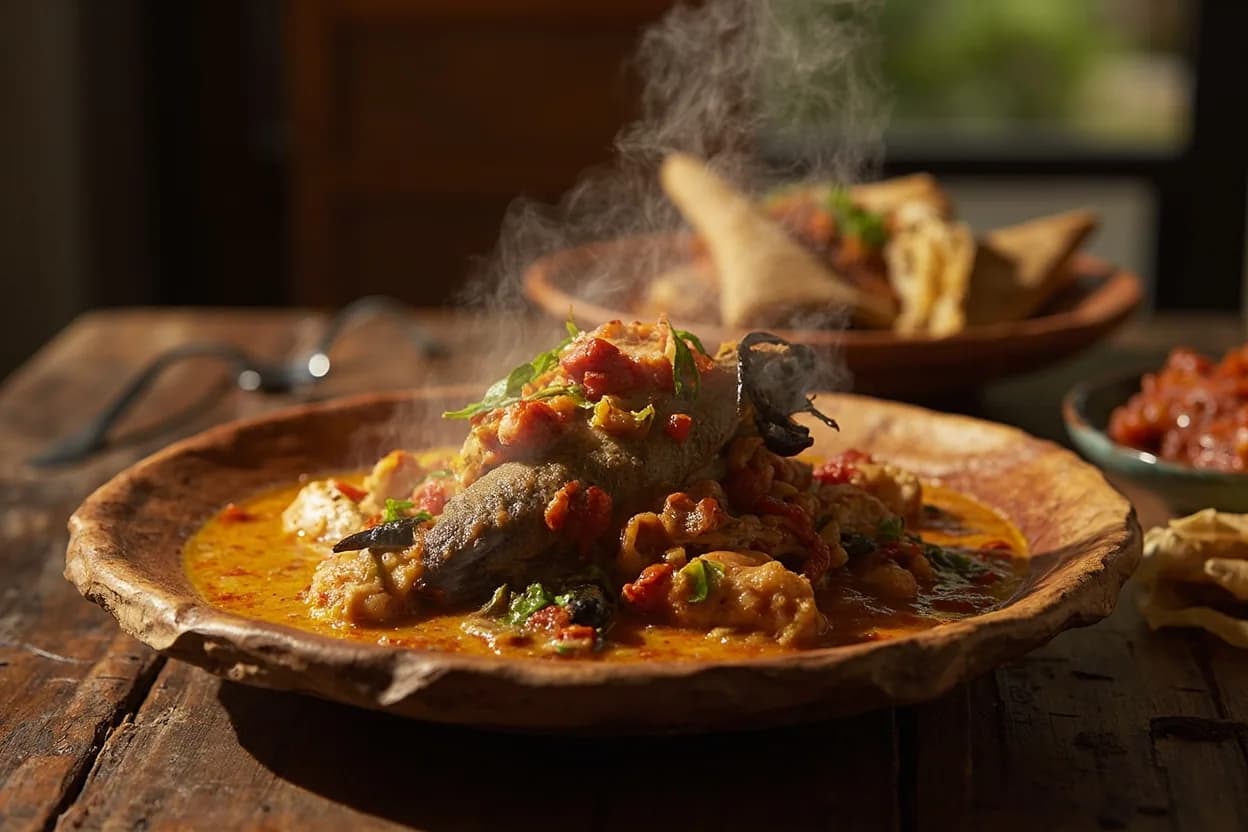
The primary meal is the afternoon meal. Soups are the centrepiece, served with pounded yam, fufu (cassava), or starchy eba (garri). Meals are abundant when hosting — Efik social identity is strongly tied to generous table-keeping. Pepper soup is a standalone first course or recovery food (served to the ill, new mothers, and after palm wine drinking). Ugba salad functions as a snack or street food. The Efik were noted by 19th-century European traders for elaborate dinner-table customs, including European-style table service adopted during the trading era.
History & context
The Efik people settled on the Cross River estuary around the 17th century and rapidly became the dominant trading brokers between inland Igbo suppliers and European merchant ships. Through the 18th and 19th centuries, Calabar's merchant families (trading houses called 'houses') accumulated wealth in palm oil, cloth, and enslaved people, and built a cosmopolitan culture that absorbed elements from Britain, Portugal, and neighboring Nigerian groups. European contact introduced tableware, bread, and canned goods, which were selectively absorbed; the core soup tradition remained entirely indigenous. The Ekpe society, a cross-ethnic secret institution governing trade and law, also governed feasting protocol. Post-independence Nigeria has seen Efik cuisine achieve national recognition — edikaikong and afang are now considered prestige dishes across Nigeria.
Regional variations
- Calabar Central (Efik proper)
Most elaborate preparations; fisherman's soup with full seafood roster; stricter use of atama leaf in banga-style soups.
- Ibibio (Akwa Ibom State)
Closely related but with greater use of fresh palm sap and specific local pepper varieties; afia efere (white soup) has stronger Ibibio association.
- Ogoja and northern Cross River
Greater Igbo and Idoma influence; corn-based porridges more common; soups less leaf-intensive.
Related cuisines
- Igbo (Eastern Nigerian)
Shared use of ugwu leaves, stockfish, and palm oil; ofe onugbu (bitter leaf soup) has Efik-adjacent variants; proximity and inter-marriage created extensive exchange.
- Delta (Urhobo/Isoko)
Both traditions build elaborate seafood-based banga/palm soups; periwinkle use is shared; atama versus fresh banga leaves distinguish them.
- Cameroonian (coastal)
Cross-border Bakweri and Bamileke communities share okazi leaf use and freshwater fish traditions across the porous Cross River–Mungo estuary region.
Canonical recipes
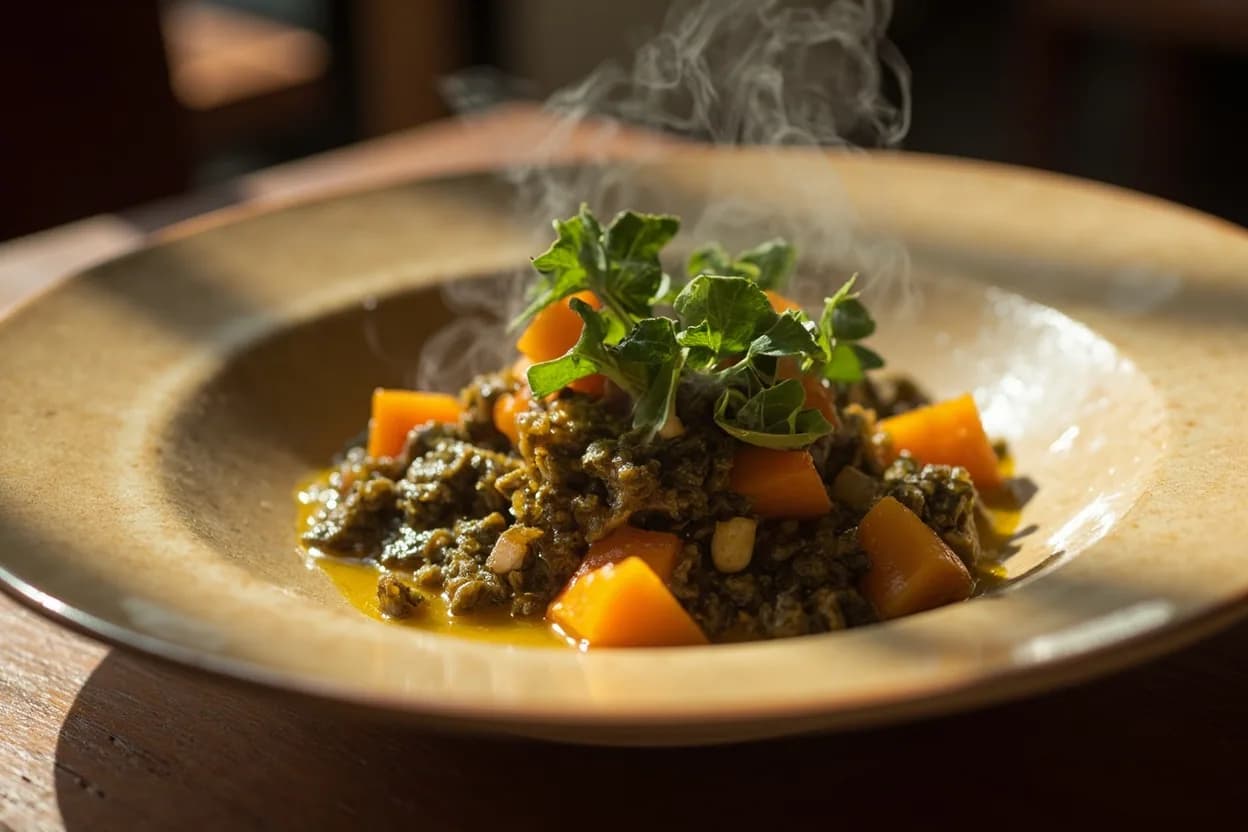
The dishes that define Efik (Cross River Nigerian), documented in the Canon.
References
- 1.Nky Iweka-Nosike, 'Nigerian Cooking Made Easy' (Nky's Kitchen, 2014)
- 2.Ozoz Sokoh (Kitchen Butterfly), 'Edikaikong: Nigeria's Most Nutrient-Dense Soup' (2019)
- 3.Paul E. Lovejoy & David Richardson, 'The Business of Slaving: Pawnship in Western Africa' (Journal of African History, 2001)
- 4.Judith Carney & Richard Rosomoff, 'In the Shadow of Slavery: Africa's Botanical Legacy in the Atlantic World' (University of California Press, 2009)
Confidence: high
Notes
Afang vs. edikaikong
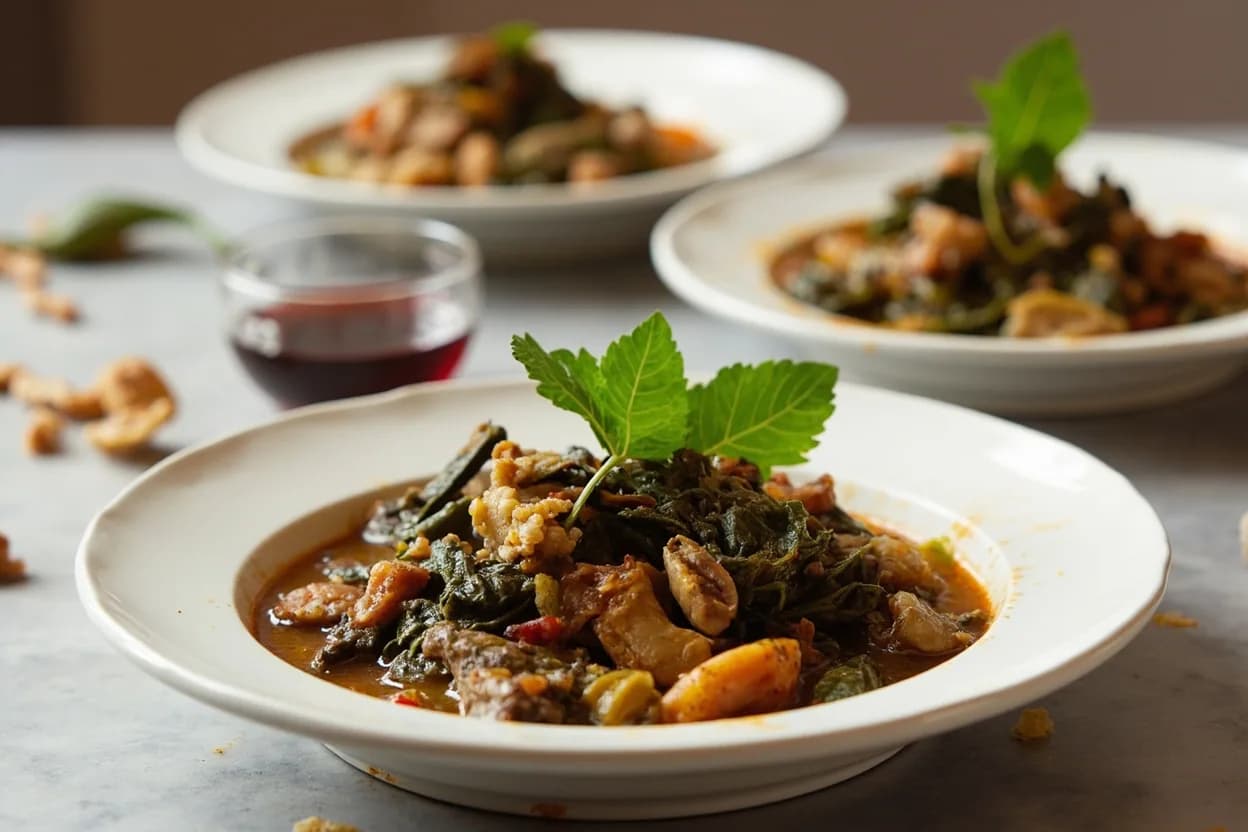
These two soups are frequently confused outside Nigeria. Afang uses Gnetum africanum (afang/okazi) leaves — tough, waxy, and slightly bitter — and waterleaf together, with the afang providing the dominant flavour. Edikaikong uses waterleaf and fluted pumpkin leaves (ugwu) — both tender — producing a silkier, richer, less bitter soup. Afang is considered the more distinctively Efik of the two; edikaikong has wider adoption across Nigeria.
Periwinkle sucking culture
Small black periwinkles (Tympanotonus fuscatus) are cooked whole in their shells and eaten by sucking the meat out — a practised skill that outsiders find difficult. In Calabar, the sound of periwinkle-sucking at a feast is a marker of authenticity and enjoyment. Street vendors sell them boiled and spiced in paper cones. They are never removed from the shell before cooking.