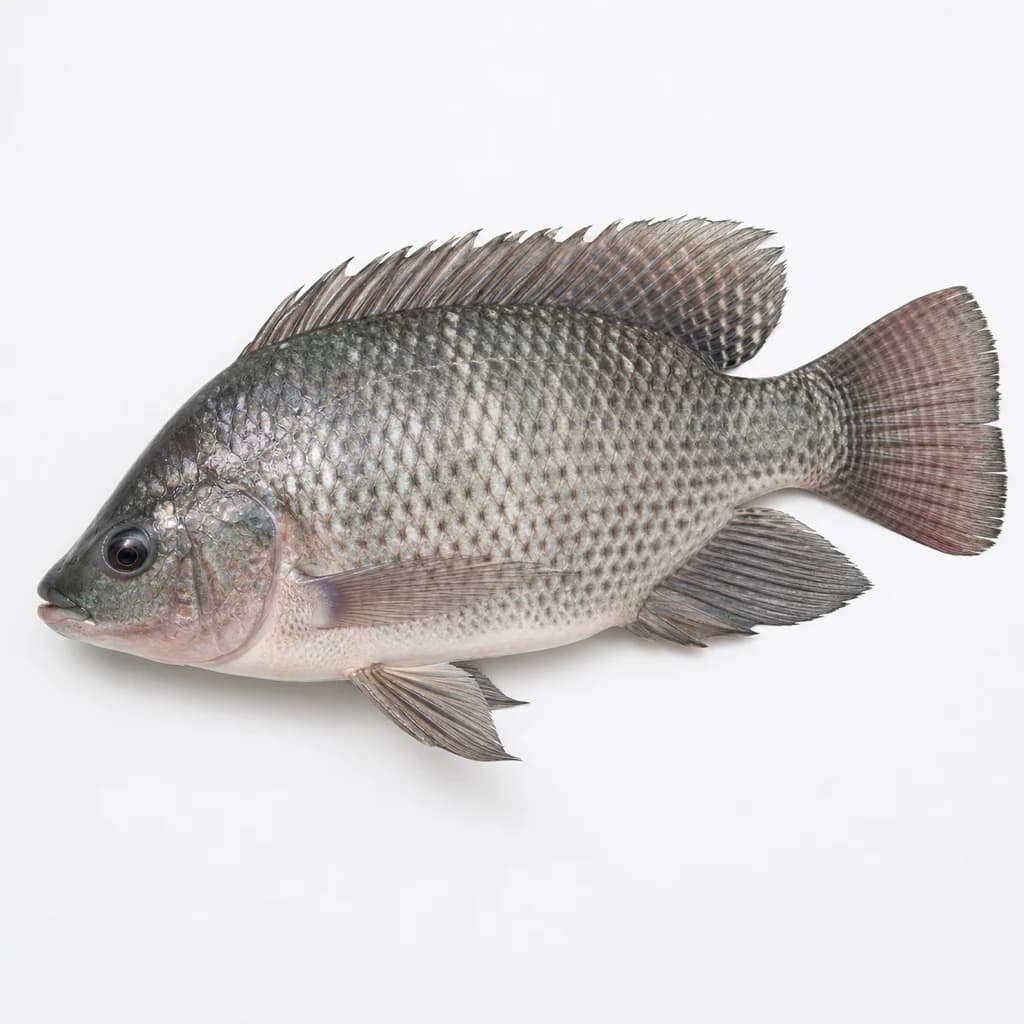
Natural form
Whole fresh tilapia with intact scales, fins, and silvery-grey coloring.
Shows the reader the complete fish as it appears at market or after catch, establishing size, body shape, and surface appearance.
Proteins
Tilapia
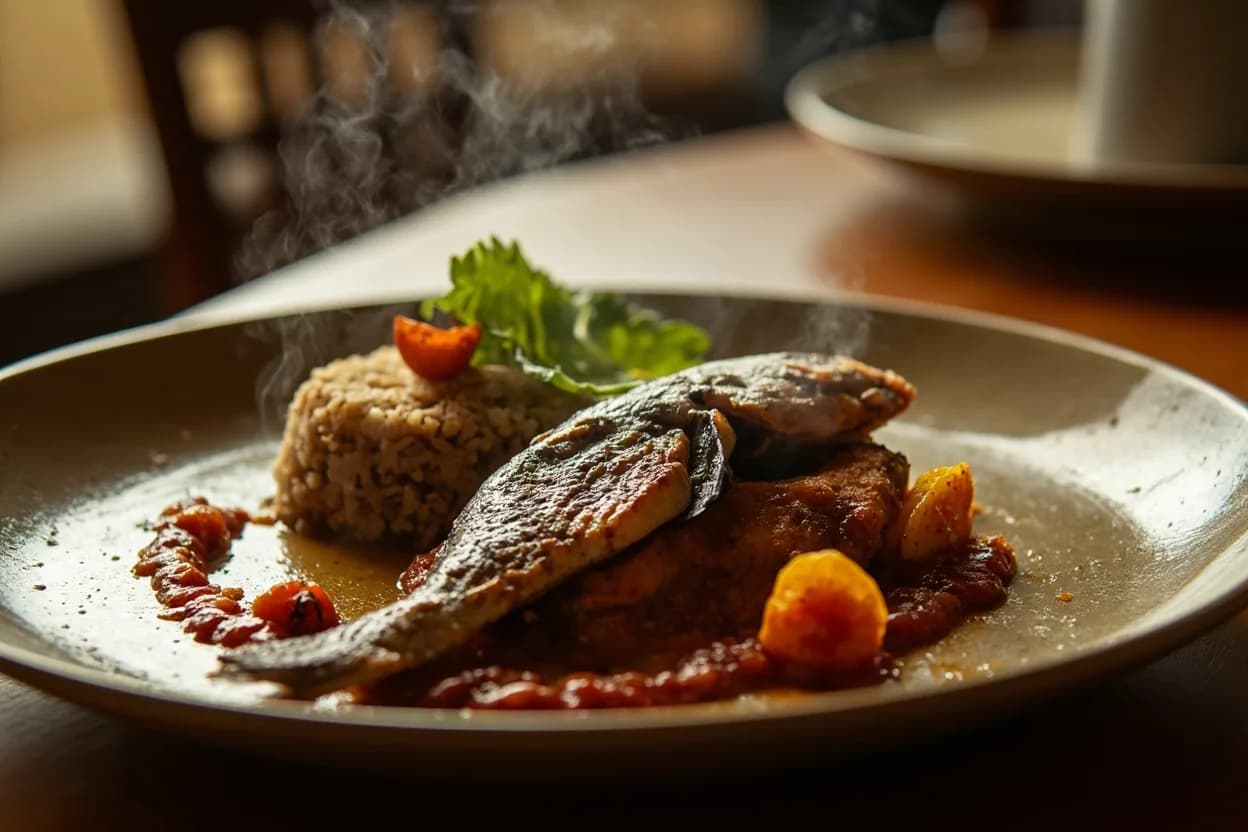
Mild, lean freshwater fish — grilled whole, fried, or stewed across Africa, Asia, and the Americas.
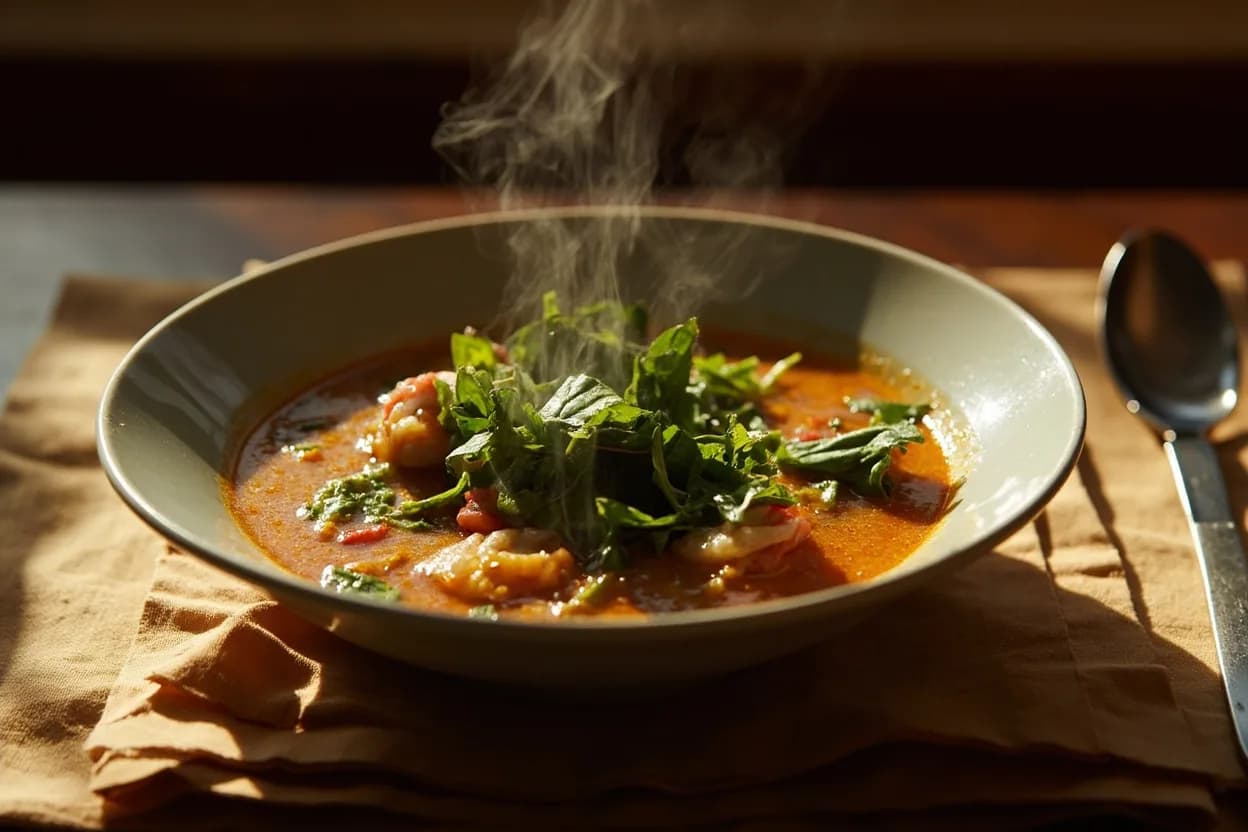
Tilapia is a mild, lean freshwater fish that is farmed and caught worldwide and prized for its affordability and clean flavor. It is grilled or fried whole, filleted for pan-frying, or simmered in spiced and tomato-based stews. Its tender white flesh takes on seasonings readily and cooks quickly.
Tilapia is a freshwater fish native to the Nile basin and the Middle East that has become one of the most widely farmed seafoods in the world. Its rise to global prominence stems from exceptional efficiency: tilapia converts feed into protein at rates comparable to chicken, which keeps it affordable and available year-round. The fish belongs to the cichlid family, and the dominant commercial species is Oreochromis niloticus, the Nile tilapia, accounting for more than 80 percent of global production. While its reputation has suffered from industrial farming associations, tilapia is genuinely versatile in the home kitchen—mild enough to take on bold seasonings without complaint, firm enough to hold together in soups and stews where more delicate fish would disintegrate.
In the pan, tilapia behaves predictably and forgivingly. Its flesh is firm and fine-grained with very low collagen, which means it flakes cleanly when cooked but offers little natural richness. This leanness is both an asset and a liability: tilapia absorbs oil and sauces readily, making it an excellent vehicle for bold flavors, but it dries out faster than fattier fish if overcooked. The flavor is clean and mildly sweet—some describe it as almost neutral—which is precisely why it has earned a place in cuisines across West Africa, Southeast Asia, the Middle East, and the Americas. Properly seasoned and cooked tilapia does not taste bland; it tastes like whatever you put on it.
Sourcing matters more than many consumers realize. Production standards vary dramatically by region and farming method. Pond-farmed tilapia from some areas may carry concerns about water quality, antibiotic use, and environmental runoff. Recirculating aquaculture systems (RAS) and responsibly managed operations in the Americas and Scandinavia produce a cleaner, more consistent product. Look for certification from the Aquaculture Stewardship Council (ASC) or similar third-party audited programs when sustainability is a priority. Despite its industrial reputation, properly sourced tilapia rewards the cook who treats it with the same respect they'd give any other protein.
- Measured in
- g
- Storage
- Fridge
Allergens
Types & varieties
Dominant commercial species; 80%+ of global farmed tilapia; named for Nile River origin
Hardier in cooler waters; slightly firmer flesh; common in US farm operations
Original cultured species in Asia; tolerates brackish water; more disease-resistant
Hybrid (typically Mozambique × Nile); marketed as premium; coral to deep-red skin color; mild flavor
Native to East Africa; used in selective breeding programs for salinity tolerance
Not a species but a selectively bred Nile tilapia strain (Genetically Improved Farmed Tilapia); faster growth, better feed conversion
Sustainability and Sourcing
Tilapia's efficiency as a farmed protein comes with caveats. Pond aquaculture in tropical regions has been associated with habitat destruction, water pollution from effluents, and antibiotic use that contributes to resistant bacterial strains. Cage farming in lakes and rivers can cause eutrophication when waste accumulates. The rise of recirculating aquaculture systems (RAS) has mitigated many of these concerns by closing the water loop and containing waste for treatment. Responsible operations in North America, Europe, and parts of Latin America produce tilapia with significantly lower environmental and contamination risk.
- Look for ASC (Aquaculture Stewardship Council) certification for third-party audited farms
- RAS-farmed tilapia from the Americas and Scandinavia generally offers cleaner product and more consistent quality
- Avoid tilapia with strong fishy odor, opaque flesh, or brown/gray discoloration at the edges
- Wild-caught tilapia is rare in commercial channels and has a slightly nuttier, firmer character—season accordingly
Common uses
Tips & pitfalls
- Purchase fillets that are translucent and moist, not opaque or chalky—avoid any with brown or gray discoloration
- Smell test: fresh tilapia smells clean and mildly oceanic; any ammonia or fishy odor indicates age
- Always pat fillets dry with paper towels before cooking—surface moisture dilutes browning and causes steaming
- Season aggressively—tilapia's mildness is an asset, but it needs bold flavors; plain tilapia tastes bland, not refined
- Use medium-high heat for searing; tilapia is lean and cooks quickly—high heat risks drying the surface before the interior is done
- Remove from heat when flesh is just opaque throughout—carryover cooking continues and firms the flesh as it rests
- For crispy skin: score the skin lightly, pat bone-dry, sear skin-side down under medium pressure, and do not move until releasing naturally
- In soups or stews, add fillets in large pieces in the last 5–7 minutes to prevent them from disintegrating
- Freezing tilapia degrades texture noticeably for poaching or raw applications—cook from fresh when possible for best results
Nutrition
Energy
402 kJ · per 100 g
Where the calories come from
Protein
20.1g
40% DV
Carbs
0g
0% DV
Fat
1.7g
2% DV
Fiber
0g
0% DV
Sugars
0g
of which
Sodium
52mg
2% DV
Source · USDA FoodData Central · Fish, tilapia, raw
View on FDC →In the shops
Matched grocery products
No matched grocery products for Tilapia yet.
Good to know
- Scientific Name
- Oreochromis niloticus (Nile tilapia)
- Origin
- Africa (Nile basin) and Middle East; now farmed worldwide
- Primary Producers
- China, Egypt, Indonesia, Philippines, Brazil
- Average Size
- 1–3 lbs whole; fillets 4–8 oz each
- Yield
- ~35–40% meat from whole fish; a 1-lb whole fish yields ~6 oz fillet
- Texture
- Firm, fine-grained; flakes when cooked; very low collagen
- Flavor
- Mild, slightly sweet; clean but neutral — takes on seasonings readily
- Fat Content
- Very lean; 2–3 g fat per 100 g
- Protein
- ~26 g per 100 g; complete protein
- Key Minerals
- Selenium (high), phosphorus, potassium; excellent B12 source
- Shelf Life
- 2 days fresh on ice; 6–9 months properly wrapped in freezer
- Cooking Difficulty
- Easy; forgiving due to mild flavor and firm texture
Substitutes
- Flounder/Sole — Most similar texture; slightly sweeter; comparable mildness; nearly 1:1 in recipes
- Sea Bass (Chilean) — Firmer, slightly more savory; good for grilling whole or substantial fillet dishes
- Red Snapper — Mild with more character; holds up in bold preparations; acceptable in most tilapia applications
- Catfish — Better in rustic preparations; richer flavor; acceptable substitute for fried or stewed dishes
- Pacific Cod — Similar lean, flaky profile; slightly more delicate; works in most cooked applications
- Halibut — Superior flavor and texture but significantly more expensive; use when budget allows for upgrade
- Firm Tofu (silken pressed) — For vegan/vegetarian textural mimicry in soups, sandwiches, and fried dishes; season heavily
Pairs with
Also called
Fresh Tilapia · Chambo (Tilapia) · Chambo
Appears in these dishes
Related

Egg
The kitchen's everything ingredient — bind, leaven, enrich, or fry

Chicken Breast
Lean, quick-cooking white meat for everyday dinners

Ground Beef
Versatile minced beef for burgers, ragù, tacos, and meatballs

Pork Loin
Lean, tender roasting cut that stays juicy with care

Salmon
Rich, rosy fish that roasts, grills, or cures beautifully

Egg White
Pure protein that whips to airy peaks for meringue and more

Egg Yolk
Rich, golden yolk for custards, mayonnaise, and pasta

Quail Egg
Tiny, speckled eggs for garnishing and elegant bites