Proteins
Pacific Cod
Lean, mild white fish with large tender flakes, slightly firmer and less sweet than Atlantic cod; excellent battered and fried, baked, or in chowders and tacos.
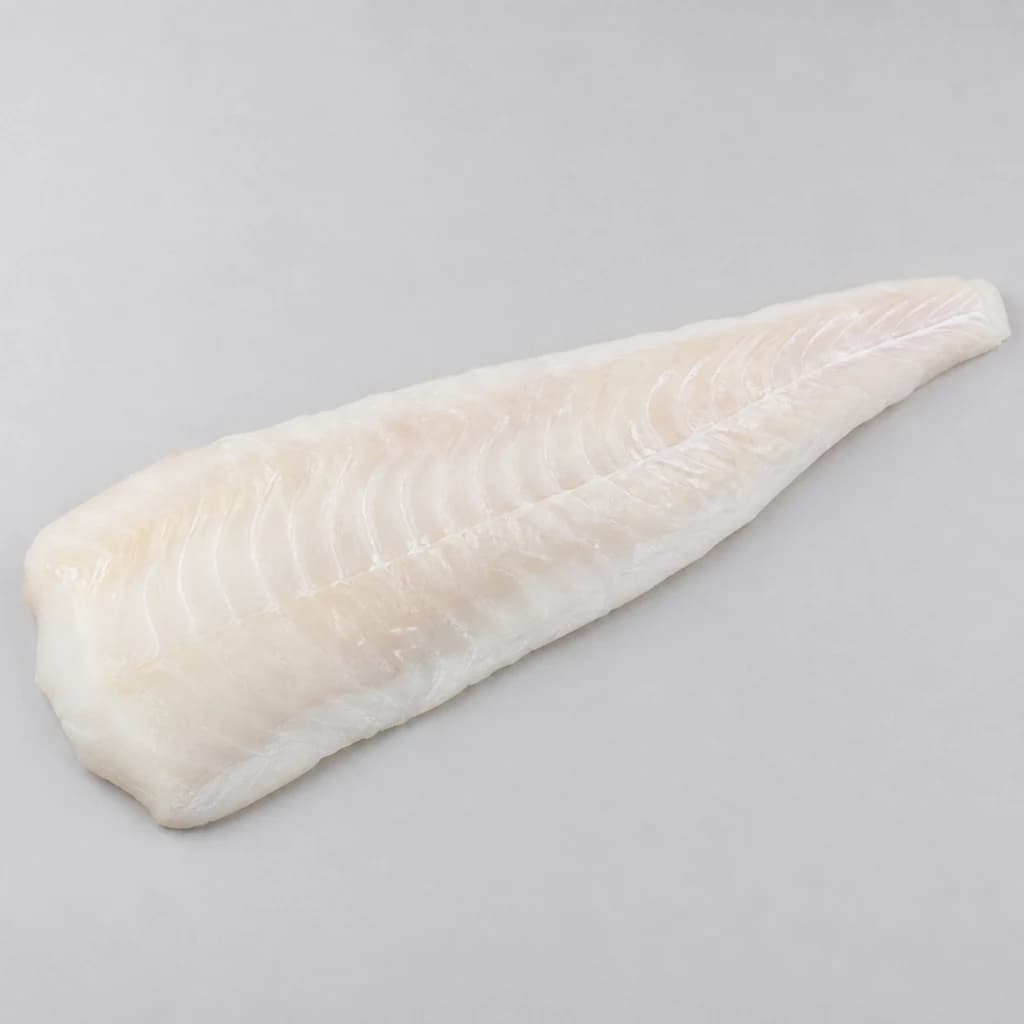
Pacific cod (Gadus macrocephalus) is the North Pacific's answer to the classic white-fish workhorse — abundant, mild, and forgiving enough to appear on weeknight plates and tasting menus alike. Unlike its Atlantic cousin, which has been fished to the brink and now commands premium prices, Pacific cod still comes off the boats in volume, much of it frozen-at-sea within hours of catch. That combination of availability, clean flavor, and a flake that holds its shape under heat is what makes it the default fish in most American fish-and-chips operations and a staple of chowders, tacos, and casseroles from coast to coast.
The flesh is pearly white, lean (under one gram of fat per 100 grams), and yields large, tender flakes that are slightly denser and less sweet than Atlantic cod. That density is a quiet asset in the kitchen: the fillet tolerates batters, crusts, and longer simmers that would disintegrate a more delicate white fish like sole or whiting. The flip side is that with so little internal fat, the fish punishes overcooking faster than almost any other white-fish option. Treat Pacific cod as you would a lean chicken breast — pull it a few degrees shy of done and let carryover do the rest.
For cooks who build menus around white fish, Pacific cod is the pragmatic choice: cheaper than halibut, more available than Atlantic cod, and with the dominant U.S. Alaska stocks carrying MSC certification. The two operational details that separate a good piece of Pacific cod from a great one are sourcing (frozen-at-sea is almost always better than counter-thawed product) and restraint at the stove.
- Measured in
- g
- Storage
- Keep On Ice In The Coldest Part Of The Fridge; Use Within A Day Or Two.
Allergens
Find it in
Types & varieties
The dominant commercial stock; large, well-managed, and the default in U.S. fish-and-chips supply.
Caught in the Sea of Okhotsk and Bering Sea; often exported as frozen H&G or fillet, with more variable quality than Alaskan product.
Highly prized in Japan for nimono (simmered dishes) and as the preferred base for premium dashi; smaller fish with a very clean flavor.
Processed within hours of catch on board the vessel; widely considered higher quality than land-frozen product.
Less traditional than Atlantic salt cod, but Pacific cod is increasingly cured and dried, especially in Spain and Portugal.
Buying and Storing Pacific Cod
Most of the Pacific cod sold as 'fresh' at the fish counter was previously frozen — that's not a complaint, it's actually a feature. Modern freezing-at-sea technology, where fillets are glazed and frozen within hours of catch, preserves texture and moisture better than a fillet that has spent four days on ice in transit. Buy it frozen unless your fishmonger can tell you exactly when the boat came in, and thaw it yourself in the refrigerator overnight on a rack over a tray. For longer keeping, vacuum-sealed frozen Pacific cod holds up to six months at 0 °F without meaningful quality loss. Watch for the impostors: anything labeled generically as 'cod' at a suspiciously low price, with no country of origin, is frequently Alaska pollock or hake — a perfectly good fish in its own right, but not what you paid for.
Pacific Cod vs. Atlantic Cod
The two species are close cousins — same family, similar flake, overlapping uses — but they behave differently in the pan. Atlantic cod (Gadus morhua) has a slightly higher fat content and a sweeter, more delicate flesh that flakes apart more readily. Pacific cod is denser, a touch brinier, and holds its shape better under rough handling like battering, deep-frying, or stirring into chowder. In most recipes you can swap them one-for-one, but expect Pacific cod to take a minute longer to cook through and to remain intact longer in a simmered dish. If a recipe was developed with Atlantic cod and depends on the flesh melting into flakes — brandade, a delicate chowder base — Pacific cod will be slightly more stubborn in a good way.
Working with Lean White Fish
Because Pacific cod has so little fat, every technique that adds moisture back into the cooking process pays dividends. A short brine (1 tablespoon salt per cup cold water, 10 minutes) firms the flesh, seasons it deeply, and reduces weeping in the pan. A wet batter — flour and cornstarch with beer or sparkling water — fries up lighter than a heavy breading and lets the snowy flake show through. And resting the cooked fillet for a few minutes before serving lets the carryover heat finish the interior gently, the way you'd rest a steak. The leanness also explains why Pacific cod pairs so happily with fat-rich sauces (beurre blanc, brown butter, chorizo-rendered oil): the fish is a blank canvas waiting for richness.
Common uses
Tips & pitfalls
- Don't overcook. Pacific cod has very little fat and tightens quickly; pull it 5–10 °F short of target internal temperature and let carryover finish it.
- Pat fillets thoroughly dry and salt at least 10 minutes ahead — surface moisture is the enemy of a brown crust.
- Buy frozen-at-sea rather than thawed 'fresh' unless you trust the boat-to-counter timeline; thaw overnight in the fridge on a rack.
- A 10-minute brine (1 tablespoon salt per cup water) firms the flesh and prevents weeping in the pan.
- For pan-searing, start skin-side down in a hot, oiled pan and press flat for 90 seconds to prevent curling; flip once and finish.
- For deep-frying, use a wet batter (flour + cornstarch + beer or sparkling water) so the flake stays visible under the crust.
- When making chowder, add the cod in the last 5 minutes of simmer — longer and the flakes disintegrate into mush.
- Score the thick end of an uneven fillet so the thin tail and thick center finish at the same time.
- Buy skin-on fillets when you can; the skin crisps beautifully and protects the flesh from drying out under the broiler or in a pan.
Nutrition
Energy
289 kJ · per 100 g
Where the calories come from
Protein
15.3g
31% DV
Carbs
0g
0% DV
Fat
0.4g
1% DV
Fiber
0g
0% DV
Sugars
0g
of which
Sodium
303mg
13% DV
Source · USDA FoodData Central · approx. Fish, cod, Pacific, raw (may have been previously frozen)
View on FDC →In the shops
Matched grocery products
 €31.62
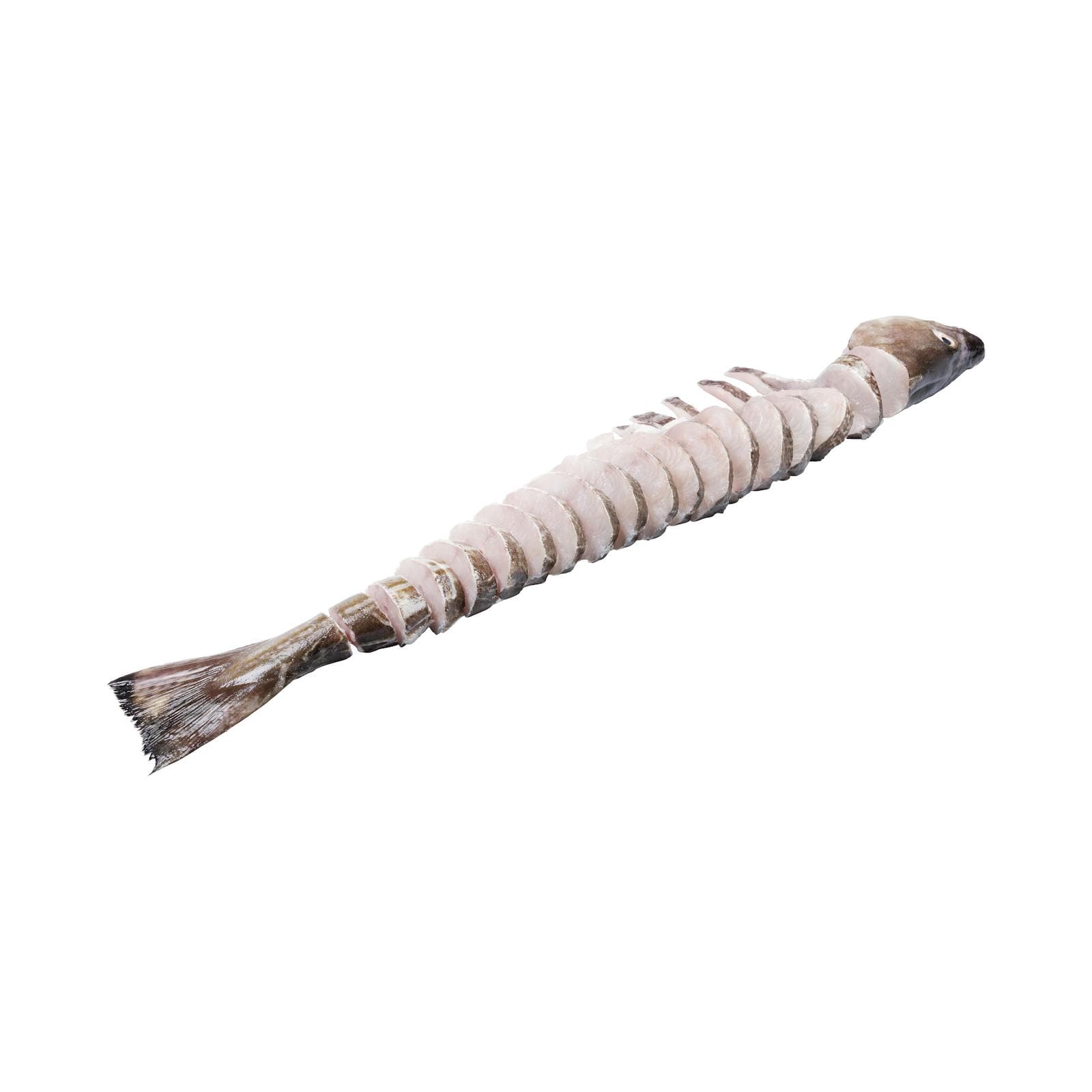
Cod Slices
2.48 kg · Mercadona
 €11.99
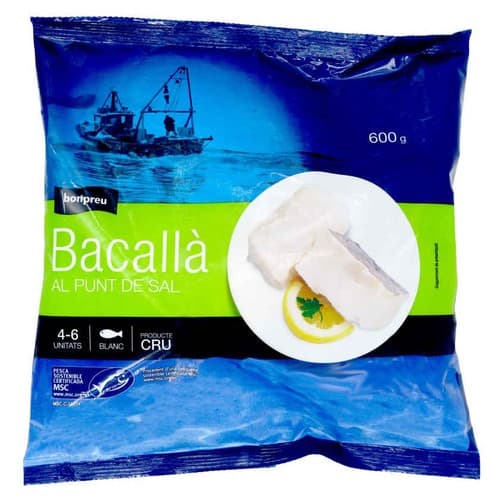
Salted Cod
BONPREU · kg · Bonpreu
 €2.99
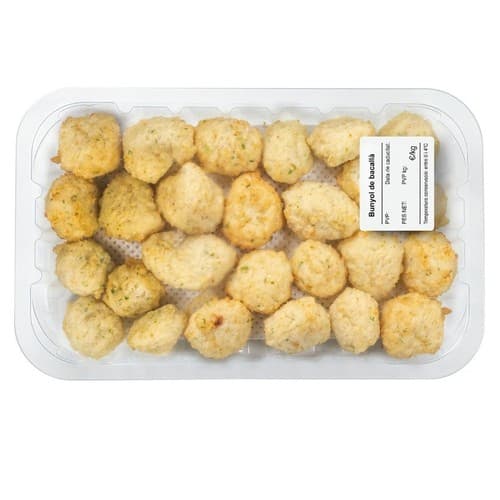
€2.99Cod Fritters
kg · Bonpreu
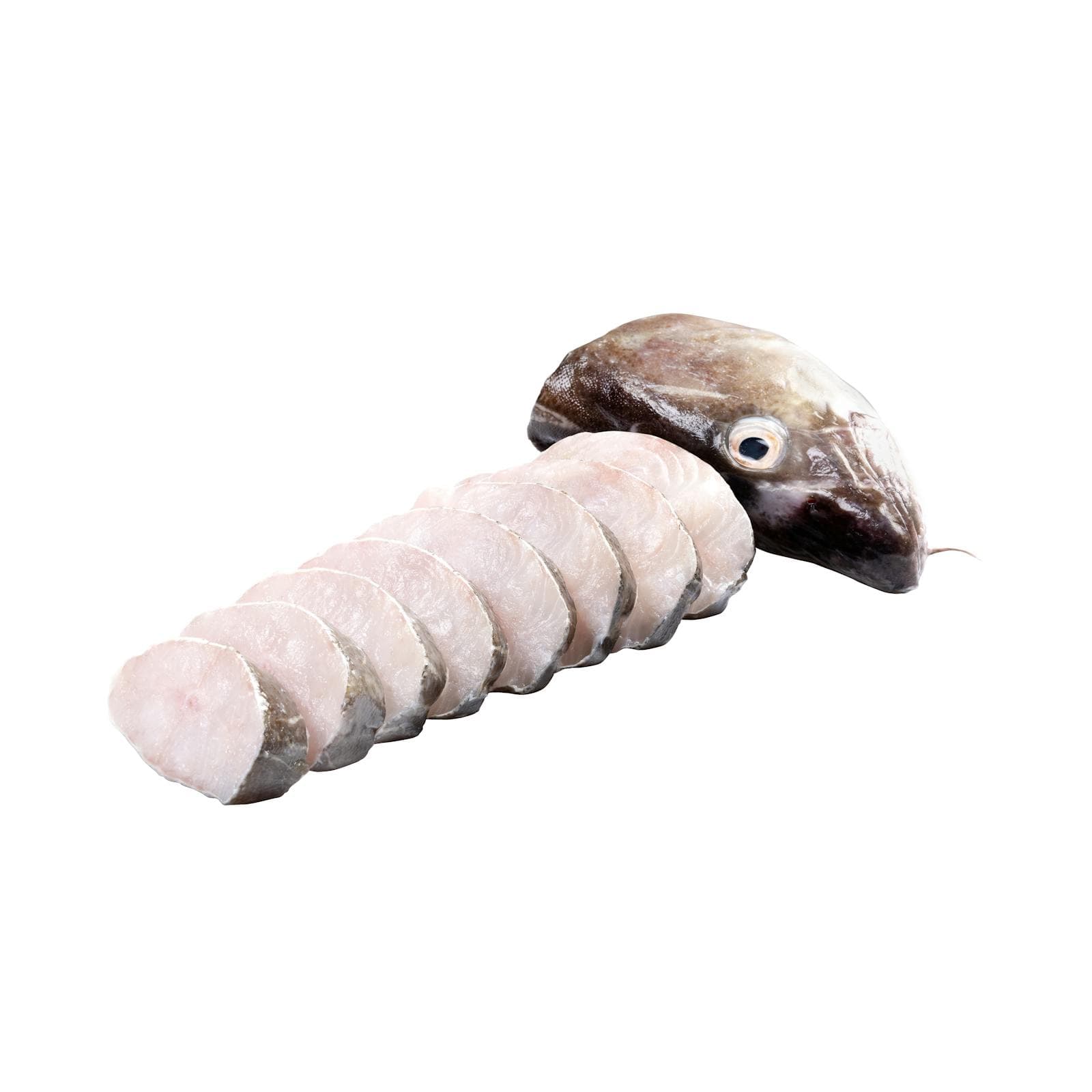 €15.04
Cod Half Piece Sliced
1.18 kg · Mercadona
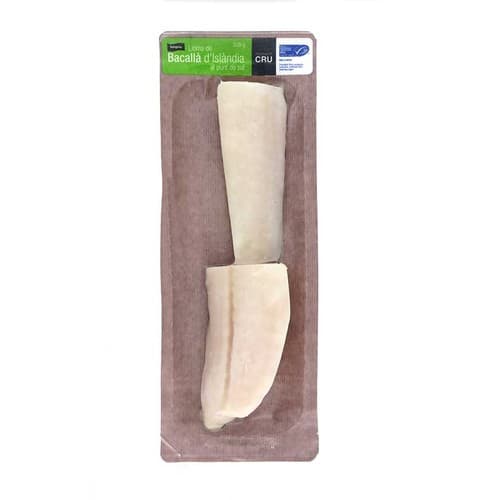 €8.99
€8.99Salted Cod Loin
BONPREU · kg · Bonpreu
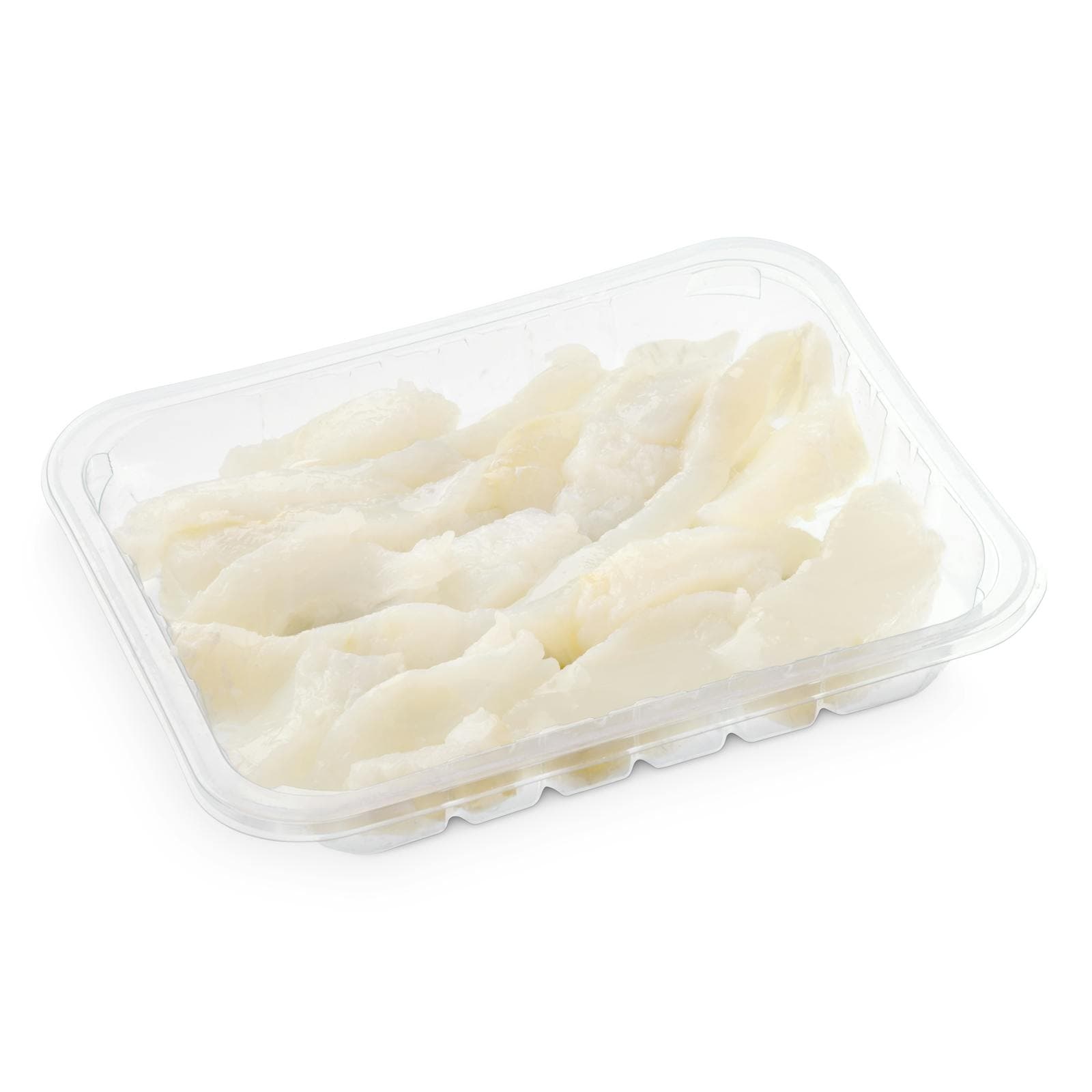 €7.27
€7.27Desalted Cod Crumbs
Hacendado · 285 g · Mercadona
Good to know
- Scientific name
- Gadus macrocephalus
- Family
- Gadidae (true cods)
- Flavor profile
- Mild, clean, slightly savory; less sweet and a touch more briny than Atlantic cod
- Fat content
- Very lean — roughly 0.7–1 g fat per 100 g raw fillet
- Yield
- About 30–35% skinless, boneless fillet from a whole gutted fish
- Internal doneness
- Pull at 130–135 °F; carryover to 140–145 °F for moist, flaky flesh
- Storage
- Fresh fillets 1–2 days on ice; up to 6 months frozen at 0 °F
- Sustainability
- U.S. Alaska Pacific cod is MSC-certified; Russian fishery status varies by region
- Often confused with
- Alaska pollock (Gadus chalcogrammus) and, by name only, black cod/sablefish (Anoplopoma fimbria)
Substitutes
- Atlantic cod — Closest match in flake size; slightly sweeter, more tender, and usually more expensive. Swap 1:1 in almost any recipe.
- Haddock — Similar flake and mildness, with a touch more sweetness and a finer texture; classic in British battered fish. Reduce cook time by about 10%.
- Alaska pollock — The most common commercial substitute (and frequent undeclared substitute); softer and more delicate. Works in chowder, fish sticks, and frying but won't hold up to long simmers.
- Hake (Pacific or Atlantic) — Affordable and mild, but softer and breaks apart more easily; best in recipes where the fish is gently poached or flaked.
- Whiting — Very lean and delicate; a good stand-in for fried preparations, though it dries out faster than cod.
- Halibut — A premium substitute — firmer, meatier, and richer; reduce cook time and consider it for searing rather than battering.
- Lingcod — Pacific coast cousin with slightly denser, sweeter flesh that holds shape well for grilling and broiling.
Pairs with
Also called
true cod · gray cod · Gadus macrocephalus