Proteins
Sea Urchin (Uni)
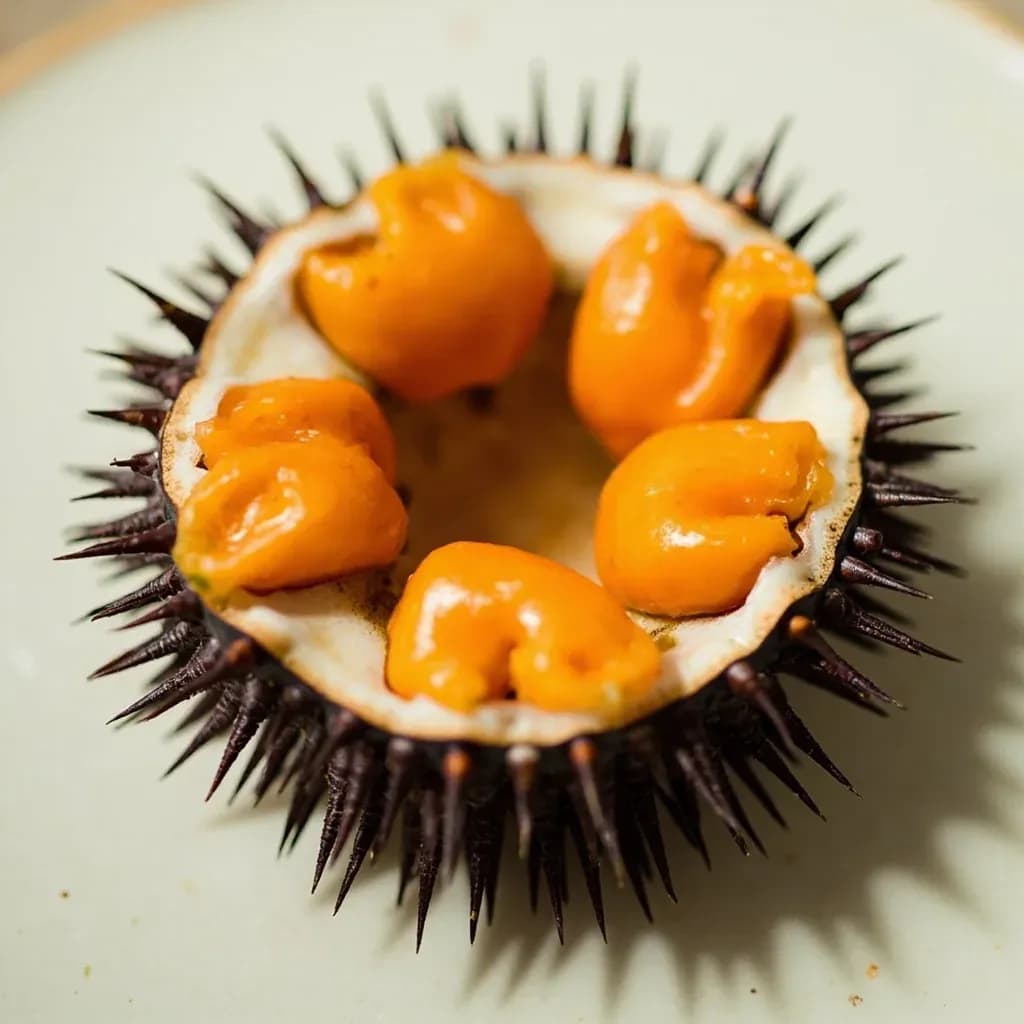
The buttery, briny gonads of sea urchin, eaten raw as sushi (uni) or stirred into rich pasta and sauces.
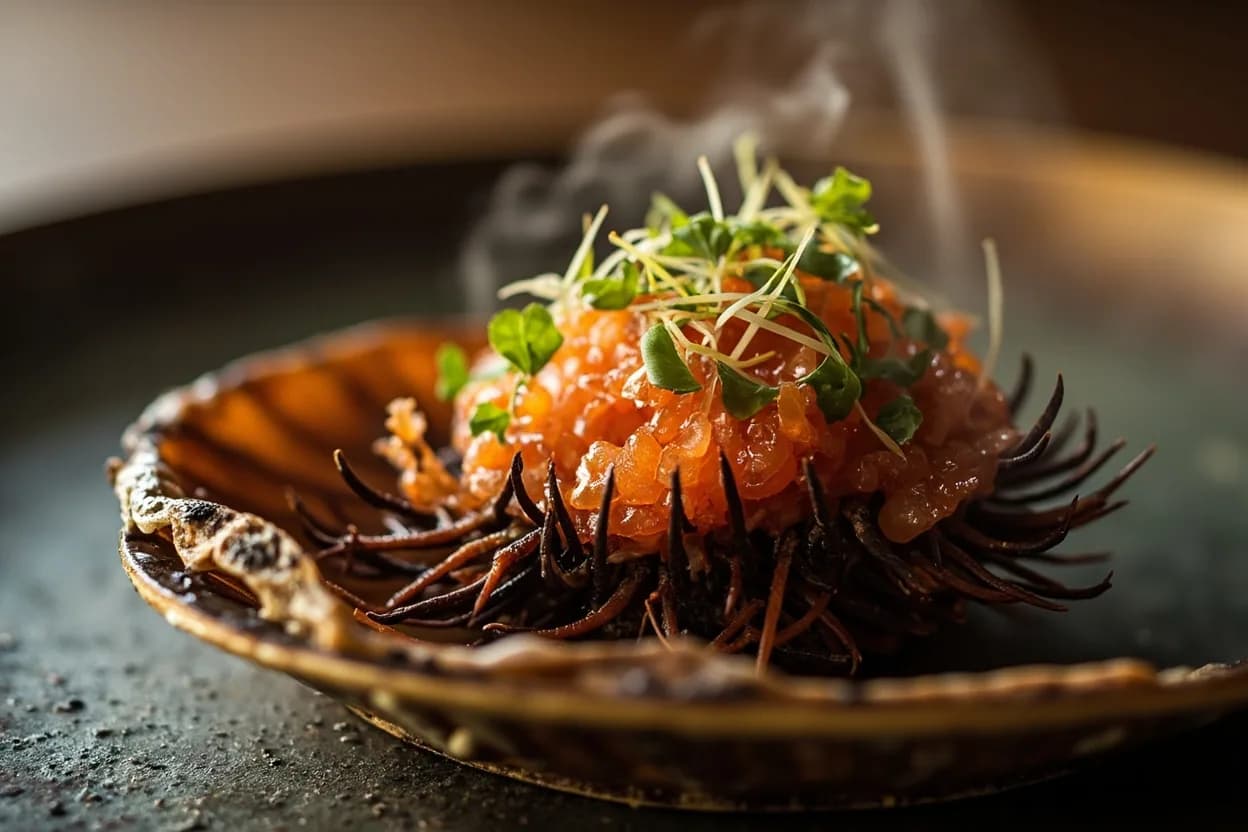
Sea urchin yields uni, the soft, custardy reproductive lobes inside the spiny shell, ranging in color from pale yellow to deep orange. It is eaten raw atop sushi rice, spooned over crostini, or melted into creamy pasta sauces, prized for its sweet, briny, intensely oceanic flavor. The texture is luxuriously soft, almost like a savory custard.
Sea urchin—the bright orange lobes called uni—is the edible gonad of several species of echinoderm, most commonly Strongylocentrotus droebachiensis (green urchin) and Strongylocentrotus purpuratus (purple urchin). The five-lobed structure should be clearly visible in fresh product, each lobe a separate tongue of creamy flesh. What makes uni extraordinary is its combination of textures: it dissolves on the tongue like custard while delivering an intensely oceanic, almost sweet-saline flavor that carries genuine umami depth. Japan has codified the world's standards for quality, grading uni by color intensity (deeper gold indicates more sugars and lipids), lobe integrity, and aroma. Hokkaido and Miyagi prefectures produce the most prized specimens—large-lobed, buttery, with a finish that lingers clean rather than fishy. The global market has expanded to include strong offerings from Maine, Norway, Chile, and the Mediterranean, each bringing slightly different mineral and salinity characteristics shaped by their waters. Sea urchin spoils faster than nearly any other protein; within hours at room temperature, enzymes begin breaking down the delicate cell structure, turning the flesh mushy and releasing ammonia compounds. This perishability is the central fact that governs every purchasing, storage, and cooking decision around uni—freshness is not a marketing claim but an absolute requirement for any raw application.
- Measured in
- g
- Storage
- Fridge
Allergens
Types & varieties
Strongylocentrotus intermedius; considered the world's finest; rich, complex flavor with buttery finish; deep golden color
High-end Japanese variety; large lobes, intense sweetness; prized for sushi presentation
Strongylocentrotus droebachiensis; sweet, clean flavor; peak winter season; small lobes, bright orange
Strongylocentrotus purpuratus; brinier than Atlantic varieties; creamy texture; marketed as "California Gold"
Strongylocentrotus franciscanus; Pacific Northwest; large size, firm texture, deep orange; longer season than green urchin
Paracentrotus lividus; from France, Italy, Spain, Greece; brinier, more mineral notes; smaller lobes; traditional in Italian and Provençal cuisines
Tripneustes gratilla; smaller, more delicate flavor; bright orange; local to Hawaii market
Anthocidaris crassispina; common in Taiwan and southern Japan; darker orange; stronger flavor
Quality Assessment
The difference between exceptional uni and mediocre uni is immediately apparent to the eye and nose. Fresh uni has a clean ocean smell—never ammonia, never fishy. The lobes should be separate and plump, the membrane taut, the color ranging from pale gold to deep amber-orange. Reddish-brown or dull coloring indicates age. Grade A uni (bright color, strong flavor, intact lobes) is essential for raw preparations. Grade B (smaller lobes, acceptable for cooking) works for pasta and sauces where texture is less critical. Grade C is typically processed into paste or frozen products and should not be served raw. When purchasing, always smell and inspect—reputable fishmongers will allow this. If the flavor seems off, the urchin is not fresh; do not rely on cooking to mask poor quality.
- Smell test: clean ocean, not ammonia or fishy
- Visual check: intact lobes, taut membrane, bright gold-orange color
- Avoid: brown spots, slimy coating, dull coloring, mushed lobes
- Grade A for raw; Grade B acceptable for cooked dishes; Grade C for processing only
Sustainability
Overfishing has depleted wild sea urchin populations across much of the globe. Japan, California, and Maine have all experienced population crashes that took decades to partially recover. Chile and Norway have developed more carefully managed fisheries that supply much of the global market. Foragers and restaurants increasingly seek MSC-certified products or investigate harvest practices. Some regions are exploring controlled sea urchin ranching as a way to meet demand while allowing wild populations to recover. When purchasing, ask your fishmonger about the source and certifications—sustainability is not an abstract concern but a present crisis affecting the long-term availability of this ingredient.
- Wild populations have crashed in Japan, California, and Maine
- Chile and Norway offer more sustainable managed fisheries
- Seek MSC-certified products when possible
- Ask about source and harvest practices before purchasing
Common uses
Tips & pitfalls
- Test freshness by smell: it should smell clean and ocean-fresh, never ammonia-like or fishy
- Check that lobes are intact and separated, not mushed together; the membrane should be taut
- Avoid urchin with brown spots, slimy coating, or a dull color—it has passed its peak
- Use immediately upon purchase; do not store in fresh water, only its own liquid or tightly wrapped
- When adding to cooked dishes, fold in off-heat just before serving to preserve the creamy texture
- For frozen uni, thaw slowly in refrigerator overnight; use directly from frozen in cooked applications
- If serving raw, keep all equipment and plates ice-cold; even brief warming ruins texture
- Grade A (highest): bright color, strong flavor, intact lobes; Grade B: smaller lobes, acceptable for cooking only
- Never cook sea urchin aggressively—high heat turns it rubbery and releases bitter compounds
- Pair with acid (lemon, yuzu) and fat (butter, cream) to balance richness and enhance sweetness
Nutrition
Nutrition
No USDA FoodData Central match for Sea Urchin (Uni) yet. We surface a per-100 g profile once a generic whole-food entry is matched and verified.
In the shops
Matched grocery products
No matched grocery products for Sea Urchin (Uni) yet.
Good to know
- Edible part
- Gonads (reproductive organs); the five orange/amber lobes called "uni"
- Flavor profile
- Sweet, briny, buttery; clean ocean taste with umami depth; no fishy odor when fresh
- Texture
- Creamy, melt-in-mouth; individual lobes must be intact and firm, never mushy or rubbery
- Primary sources
- Japan (Hokkaido, Miyagi), United States (Maine, California), Norway, Chile, Mediterranean coast
- Peak season
- U.S. West Coast Oct–Mar, East Coast Dec–Apr; Japan Oct–Feb; avoid spring spawning season
- Storage
- Refrigerate in original liquid or on crushed ice; consume within 24–48 hours; freeze only for cooked applications
- Price range
- $30–$150+ per pound (US retail); Japanese uni commands premium; frozen significantly cheaper
- Yield
- 2–5 grams of uni per urchin; roughly 5–8 urchins per serving
Substitutes
- Crab or lobster roe — Similar rich, briny oceanic flavor; usable in pasta or sauce applications at roughly half the price
- Roe from flying fish (tobiko) or salmon (ikura) — Different texture (popping) but shares the umami and visual appeal; best for garnishing
- High-quality sea urchin paste — Processed product; acceptable for cooking but lacks fresh uni texture; use in sauces and spreads
- Soft-roasted oyster — Comparable buttery richness and umami; serves as a textural substitute in cooked dishes
- Caviar (whitefish or hackleback) — Different flavor profile but similar luxury application and saltiness; best for garnish rather than sauce
Pairs with
Also called
Uni · Ricci di Mare
Appears in these dishes
Related
Egg
The kitchen's everything ingredient — bind, leaven, enrich, or fry
Chicken Breast
Lean, quick-cooking white meat for everyday dinners

Ground Beef
Versatile minced beef for burgers, ragù, tacos, and meatballs
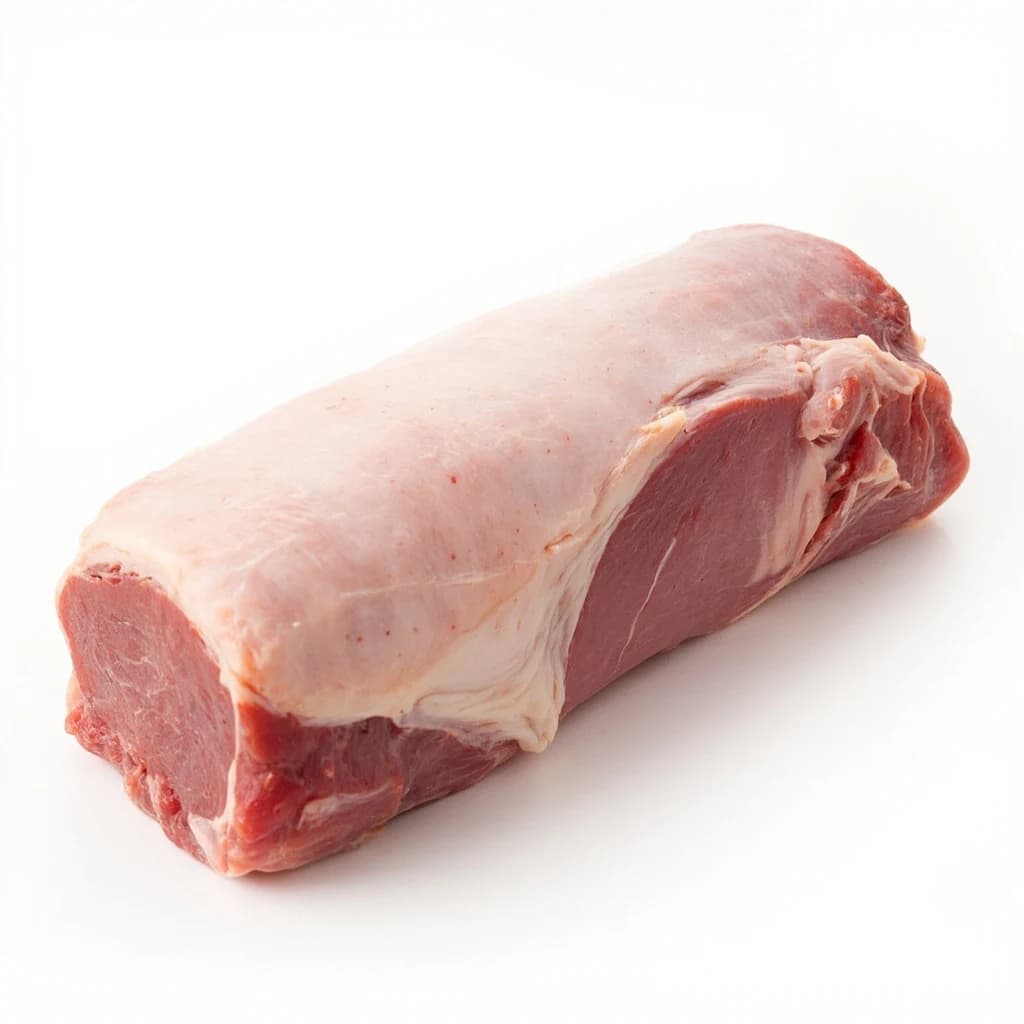
Pork Loin
Lean, tender roasting cut that stays juicy with care
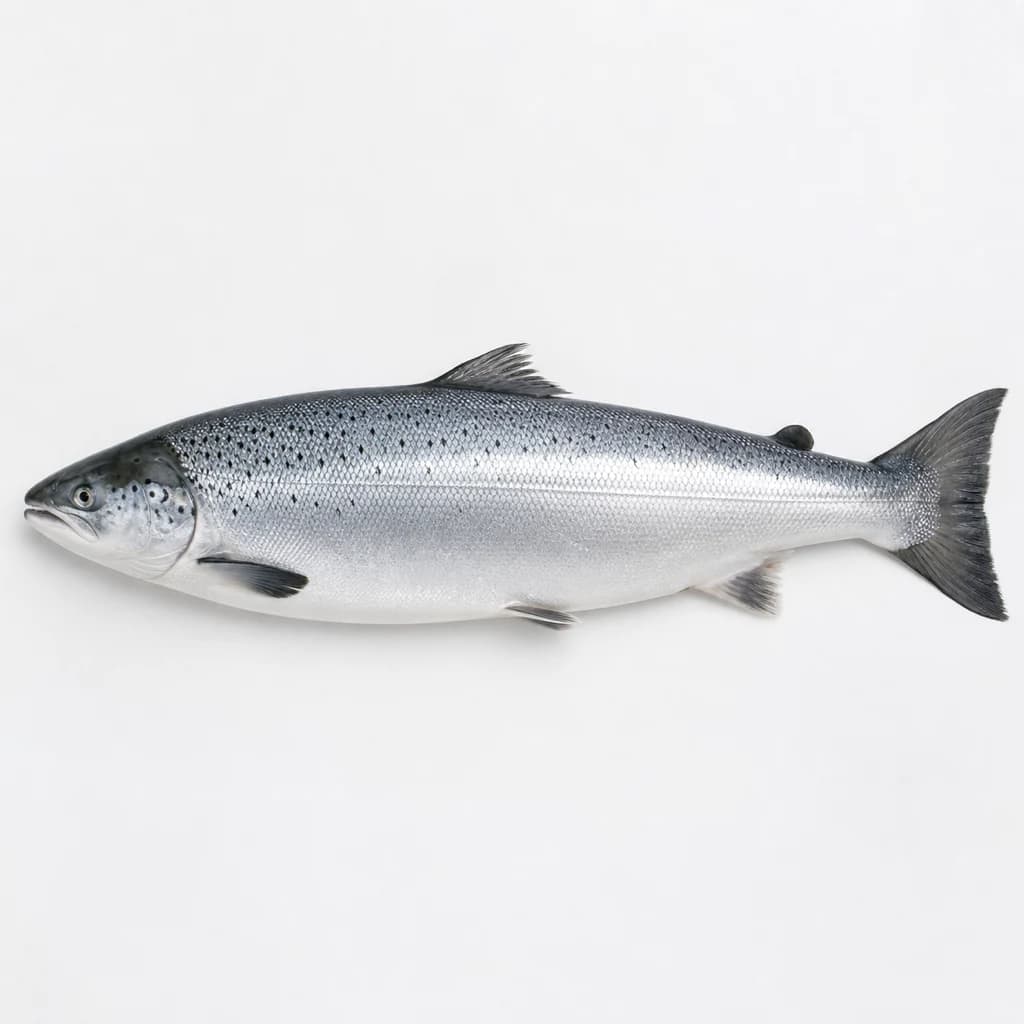
Salmon
Rich, rosy fish that roasts, grills, or cures beautifully

Egg White
Pure protein that whips to airy peaks for meringue and more

Egg Yolk
Rich, golden yolk for custards, mayonnaise, and pasta

Quail Egg
Tiny, speckled eggs for garnishing and elegant bites