West Africa
West African Fermented Condiment Tradition
Also: Dawadawa tradition, African locust bean cuisine, Iru and ogiri tradition, West African umami backbone
A millennium-old fermentation tradition using legume-based condiments — dawadawa, iru, ogiri, ugba — as the foundational umami builders of West African cooking.
Across the breadth of West Africa, from Senegal to Nigeria to Ghana to Mali, the backbone of savory cooking is not a single spice but a family of fermented legume condiments that supply deep umami, pungency, and protein. These include dawadawa (fermented African locust bean, Parkia biglobosa), iru (Yoruba term for the same), ogiri (fermented melon seeds or castor bean), ugba (fermented African oil bean, Pentaclethra macrophylla), and afitin (Benin/Fon equivalent). Each operates differently — some are dry, some paste-like, some whole bean — but all deliver the same fundamental function: depth of flavor that neither salt alone nor any single herb can replicate. This tradition represents an independent parallel to East Asian fermented soybean condiments (doenjang, miso), evolved in isolation to solve the same culinary problem.
The flavour base
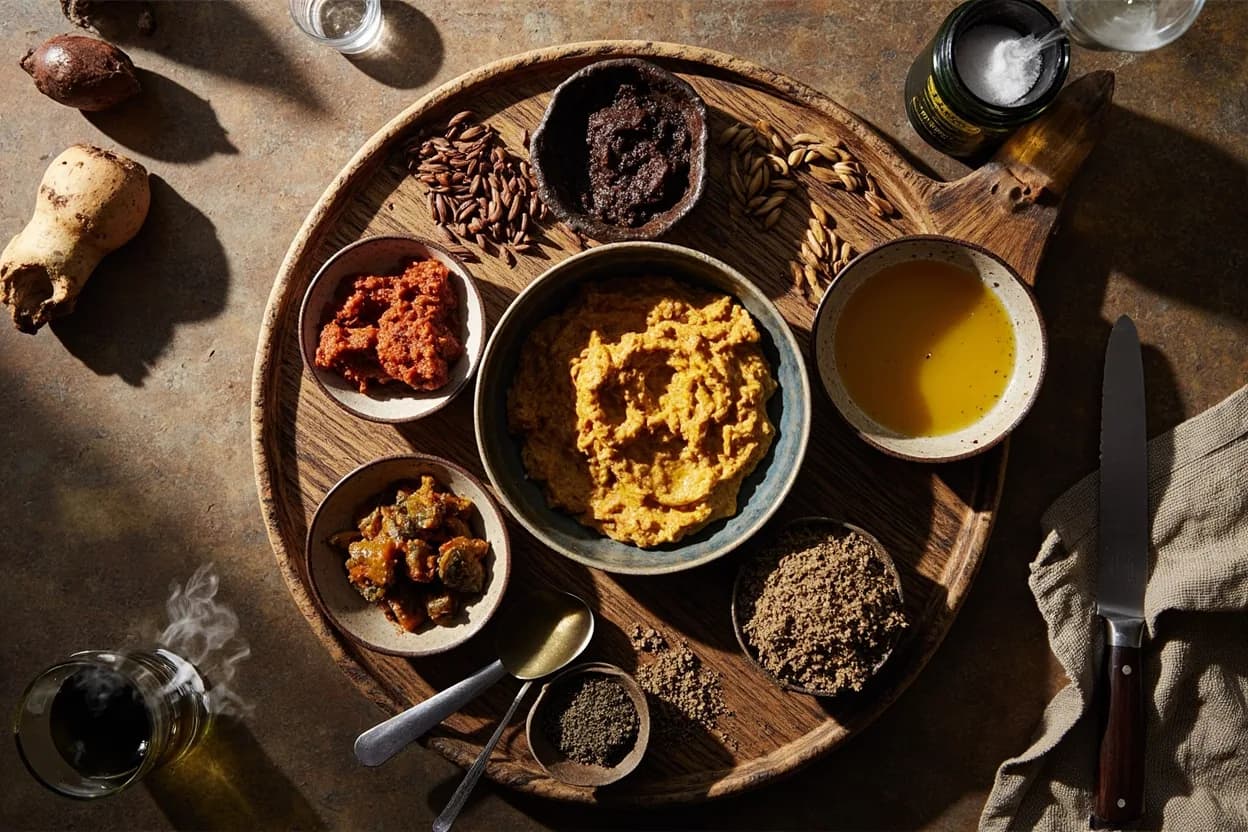
Fermented locust bean (dawadawa/iru) crumbled into stews and soups provides the umami foundation; palm oil supplies lipid richness and color; fermented melon seed (ogiri) adds pungency to vegetable soups; crayfish (dried shrimp powder) amplifies savory depth
Pantry staples
Key ingredients
Signature techniques
Signature dishes
West African Fermented Condiment Tradition on the table

At the table
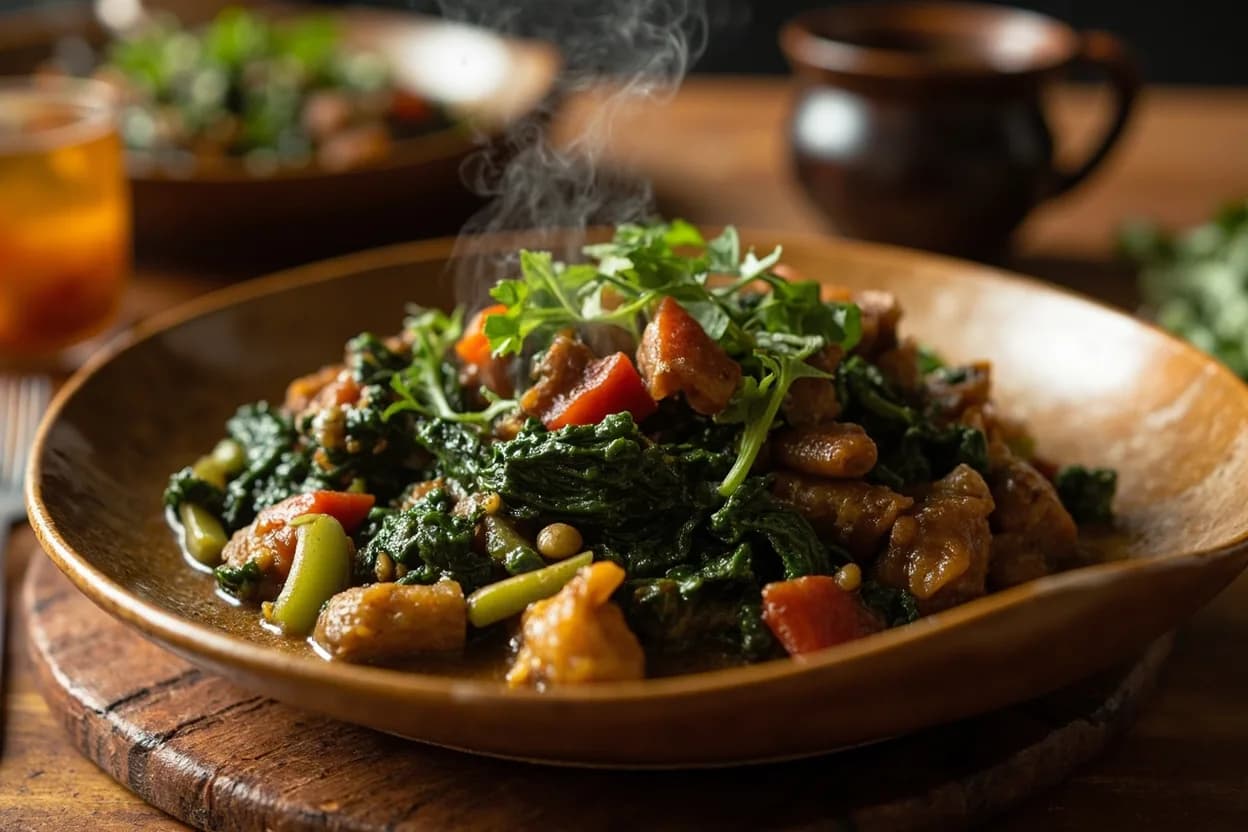
These condiments do not constitute a meal structure on their own but function as the invisible architecture behind virtually every major West African soup and stew. A bowl of pounded yam and egusi soup, a plate of jollof rice, or a bowl of groundnut stew all depend on at least one fermented condiment for their characteristic depth. In many communities the quality of a cook is judged by their use of these condiments — their dosage, their combination, their timing in the pot.
History & context
The fermentation of Parkia biglobosa seeds has been documented across the West African savanna for at least several centuries and is likely far older — the locust bean tree itself is considered sacred in several Sahelian cultures. The technology spread with trade routes, and each ethnic group developed its own name and variant method: dawadawa in Hausa-speaking north, iru among the Yoruba, afitin in Benin, soumbala in Mande-speaking Mali and Burkina Faso. Ogiri fermentation appears to have developed independently in the forest zones of southeastern Nigeria. These condiments were, and remain, critical protein sources in protein-scarce environments, functioning simultaneously as flavor agents and nutritional boosters. Colonial food science largely ignored these traditions; renewed academic interest since the 1980s has documented their microbiology (primarily Bacillus subtilis fermentation) and their nutritional profiles.
Regional variations
- Sahelian West Africa (Mali, Burkina Faso, northern Senegal)
Soumbala (fermented locust bean) is the dominant condiment; used heavily in sauce graine and mafe; drier, often sold in compressed balls
- Yoruba (southwestern Nigeria and Benin)
Iru is the standard term; used fresh (wet iru) and dried; efo riro, moin moin, and most Yoruba soups depend on it
- Igbo (southeastern Nigeria)
Ogiri is the preferred pungent condiment alongside iru; ugba (oil bean) is a distinctive Igbo contribution not found in the same form elsewhere; used in bitter leaf soup, oha soup, white soup
- Northern Nigeria (Hausa-Fulani)
Dawadawa dominates; sold in balls or slices at every market; banga (palm nut) soup variants use it; miyan taushe (pumpkin soup) always contains it
- Ghana and Côte d'Ivoire
Known as dawadawa or 'dawadawa balls'; used in palm nut soup, groundnut soup, and light soup; less variety than Nigerian forms but the same functional role
Related cuisines
- Nigerian (general)
The highest density and variety of fermented condiment use; Nigeria is the epicenter of ugba, ogiri, and iru culture
- Japanese miso tradition
Independent parallel — fermented soybean used as umami backbone; similar function despite entirely different legumes and organisms
- Korean doenjang tradition
Another independent parallel in legume fermentation for culinary depth; both rely on Bacillus subtilis variants
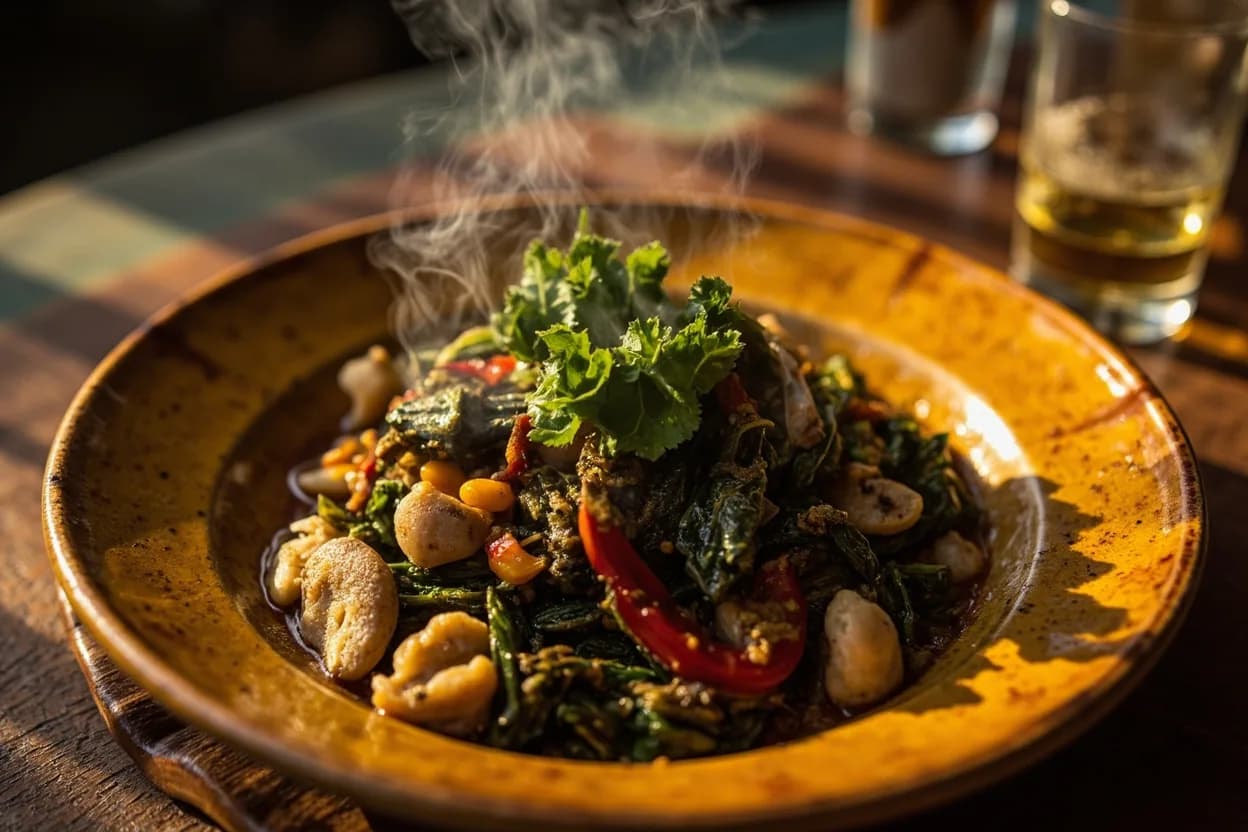
Shares the dawadawa-palm oil foundation; notable for kontomire (cocoyam leaf) stew and groundnut soup built on the same condiment base
Canonical recipes
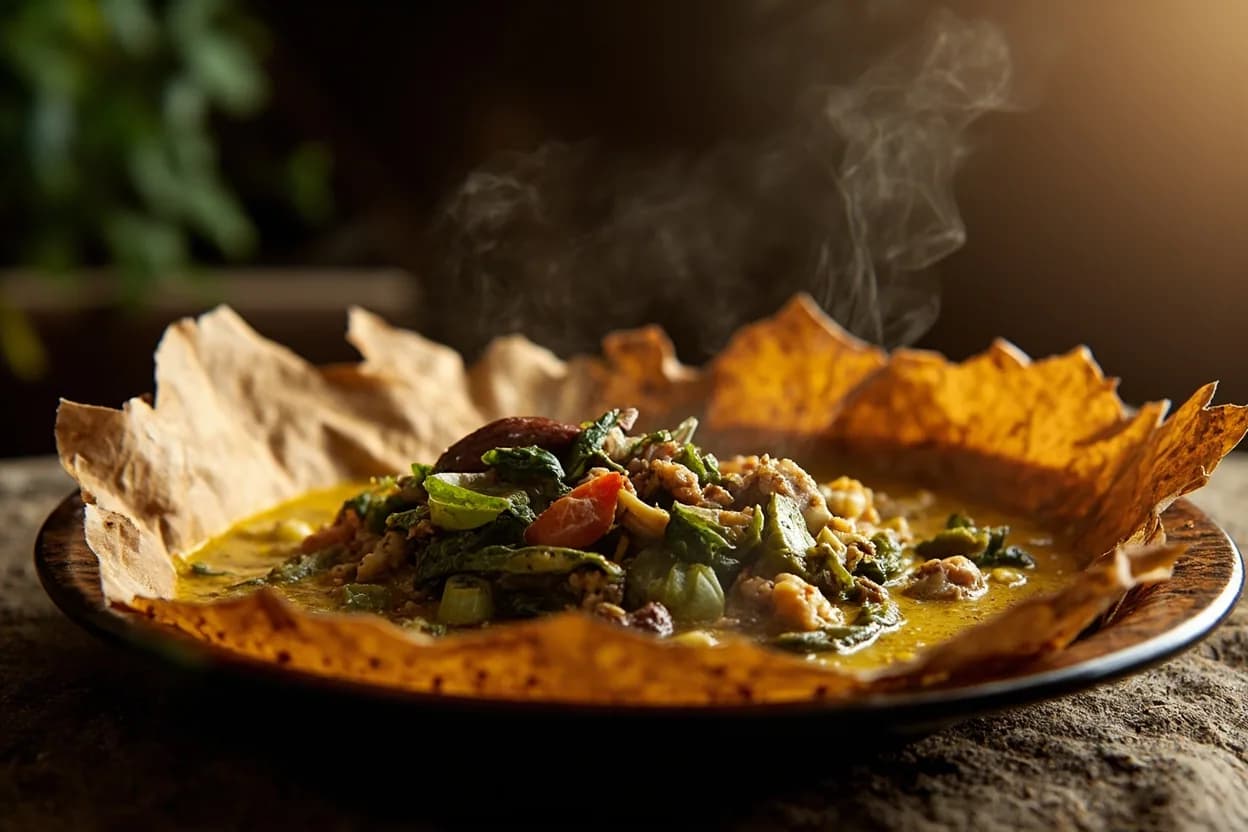
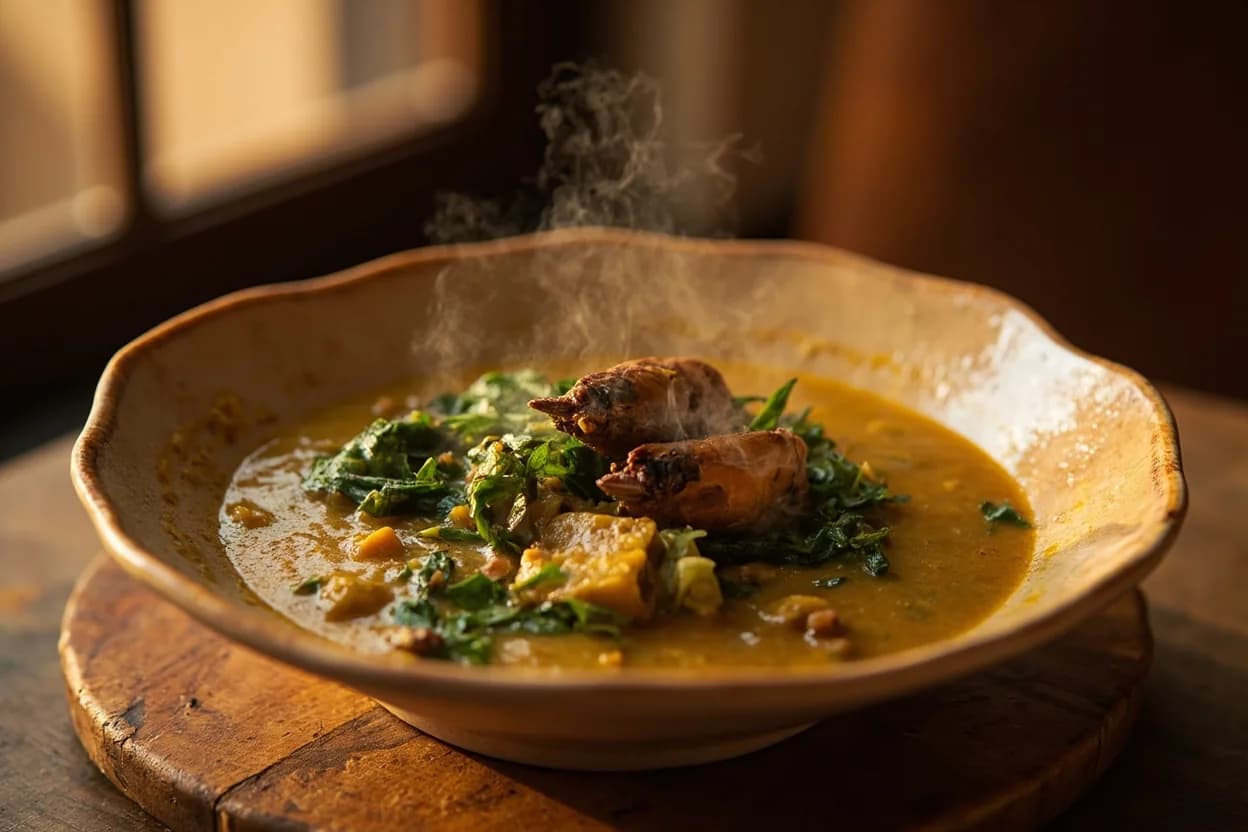
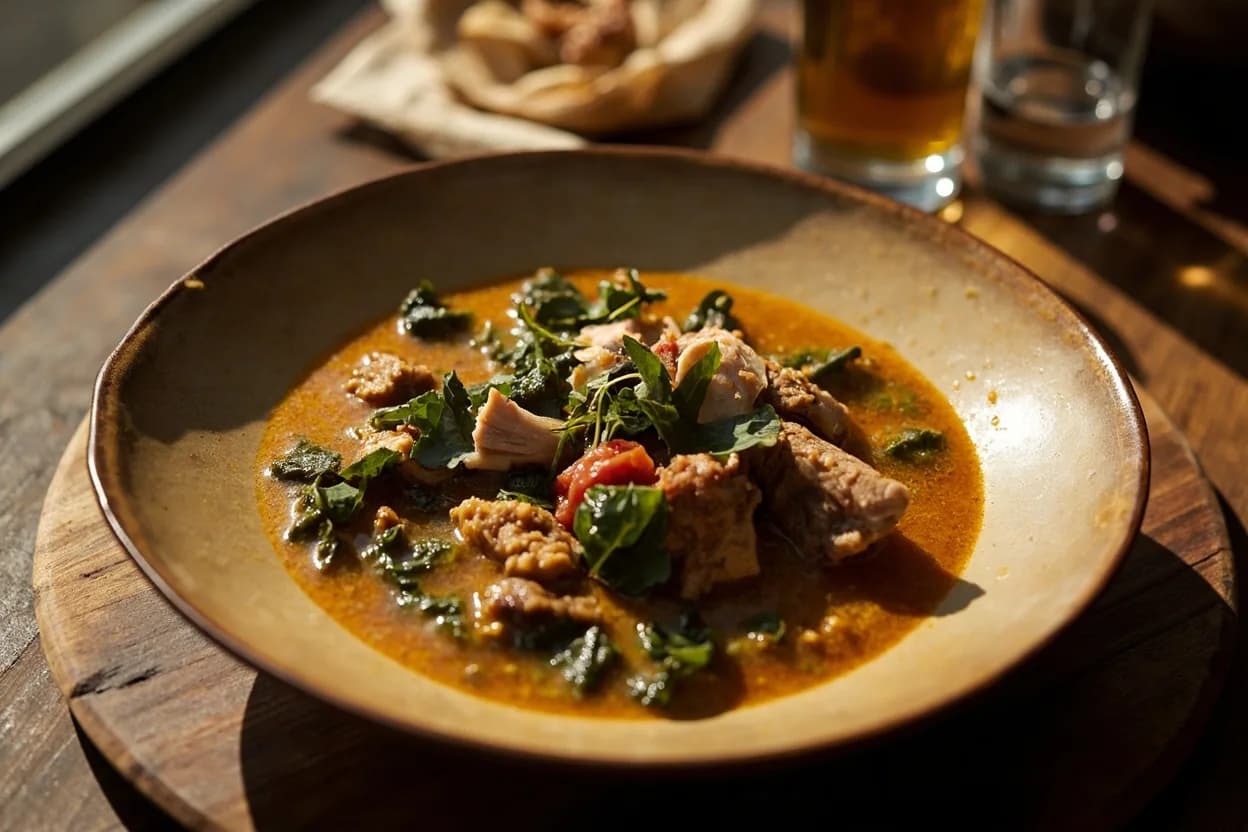
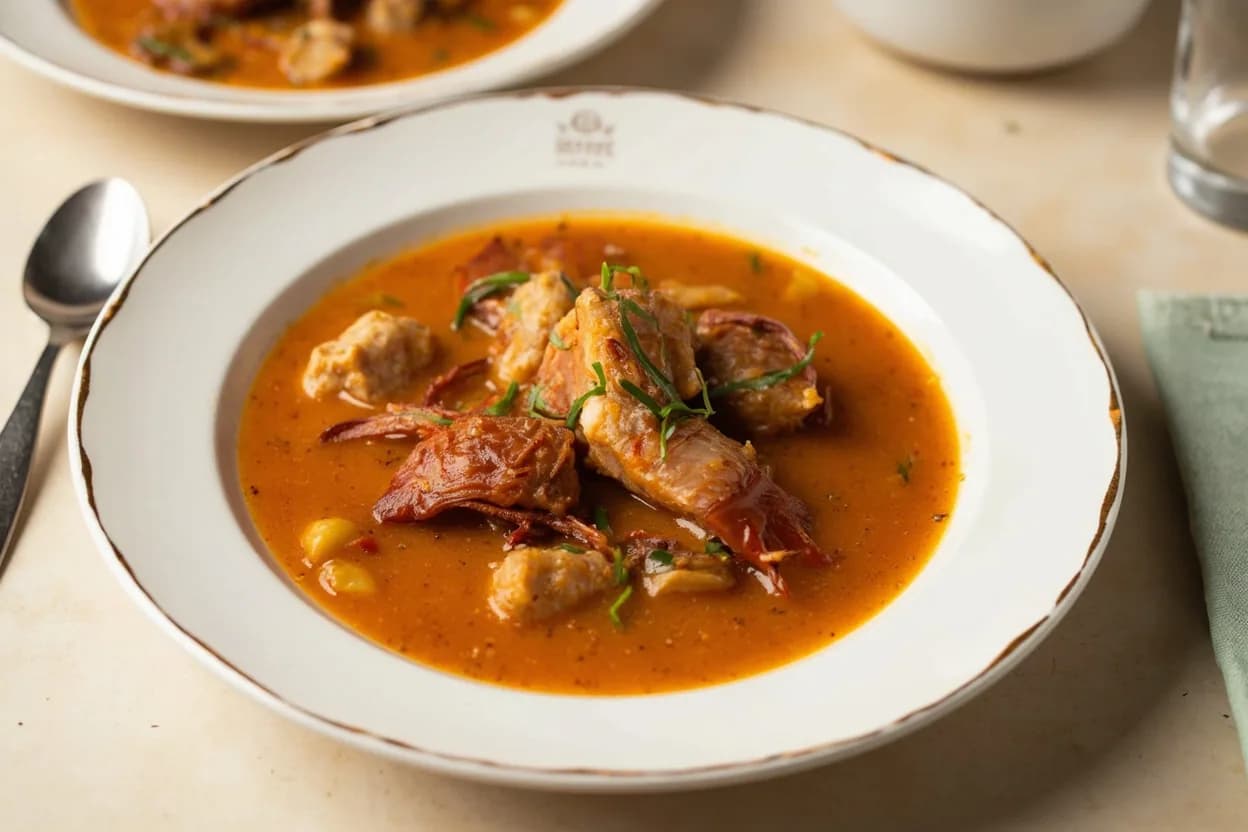
The dishes that define West African Fermented Condiment Tradition, documented in the Canon.
References
- 1.The Technology of Traditional Food Fermentation in Sub-Saharan Africa — Hesseltine & Wang (editors), 1980
- 2.African Fermented Foods — Nout and Aidoo, in Food and Nutritional Sciences
- 3.The Science of Fermented Foods in West Africa — Odunfa, S.A., Critical Reviews in Microbiology, 1985
- 4.Ogiri and African fermented condiments — Enujiugha V.N., Journal of Food Technology in Africa, 2003
- 5.Yewande Komolafe, 'Fermented and Dried: The Hidden Flavors of Nigerian Cooking', NYT Cooking
Confidence: high
Notes
Bacterial mechanism
Unlike East Asian soy fermentation which typically uses mold (Aspergillus oryzae), West African locust bean fermentation is primarily bacterial — dominated by Bacillus subtilis strains that produce protease enzymes, breaking down bean protein into amino acids and generating the pungent volatiles (especially ammonia and short-chain fatty acids) that characterize the condiments' aroma.
Protein contribution
Fermentation increases the bioavailability of proteins and minerals in locust beans. In communities where animal protein is expensive or scarce, iru and dawadawa are not merely flavoring agents but meaningful nutritional contributors — a fact long understood by the communities that produce them and only recently acknowledged by food science.