West Africa
Ghanaian
Also: Ghana cuisine, Gold Coast cooking
A cuisine of fermented corn, palm oil, and Atlantic seafood, anchored by the fufu-and-soup tradition that forms the living center of Ghanaian life.
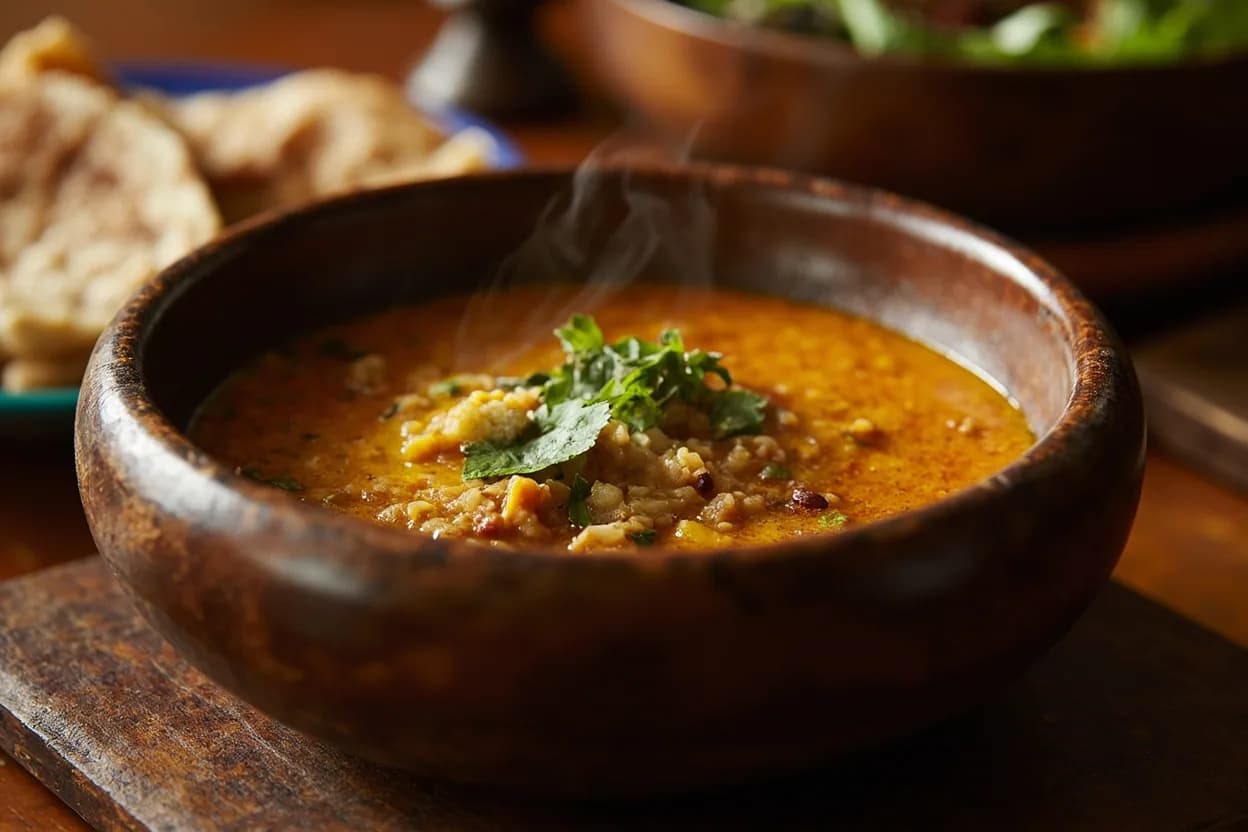
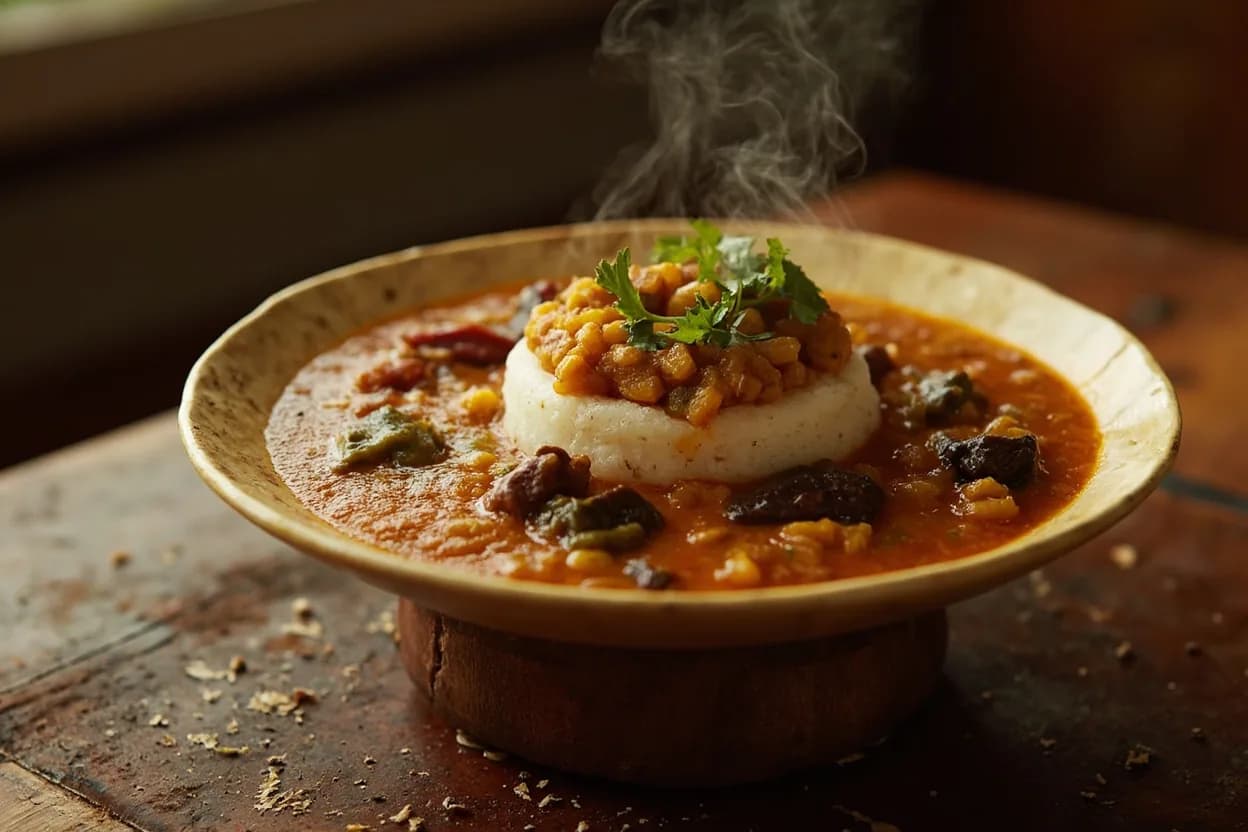
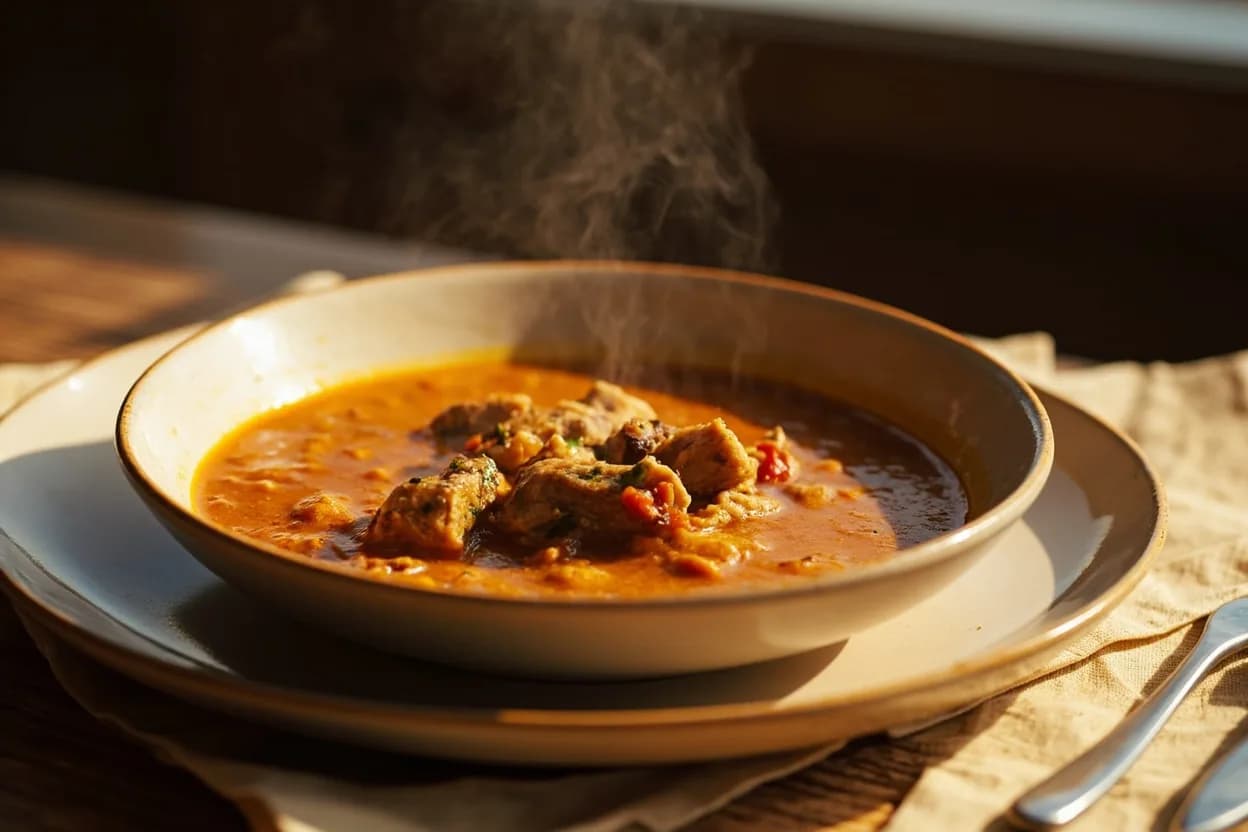
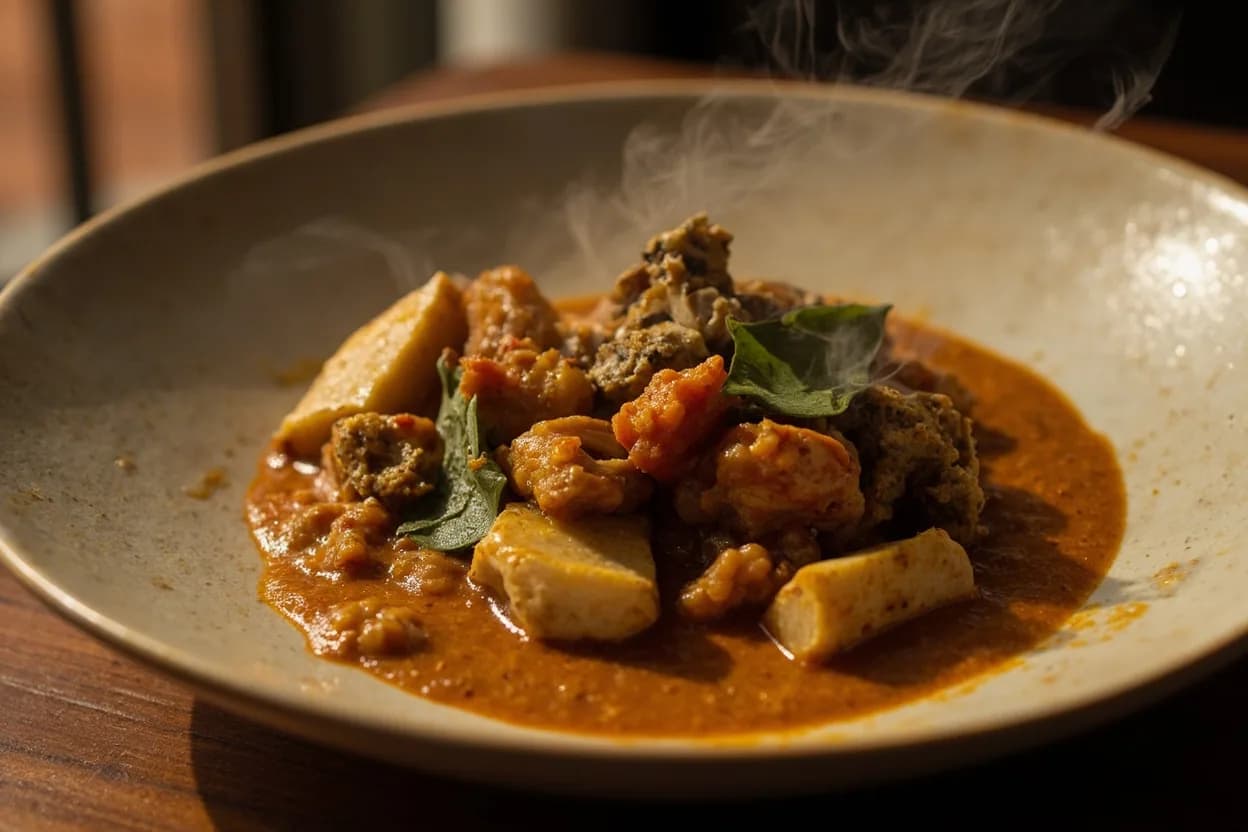
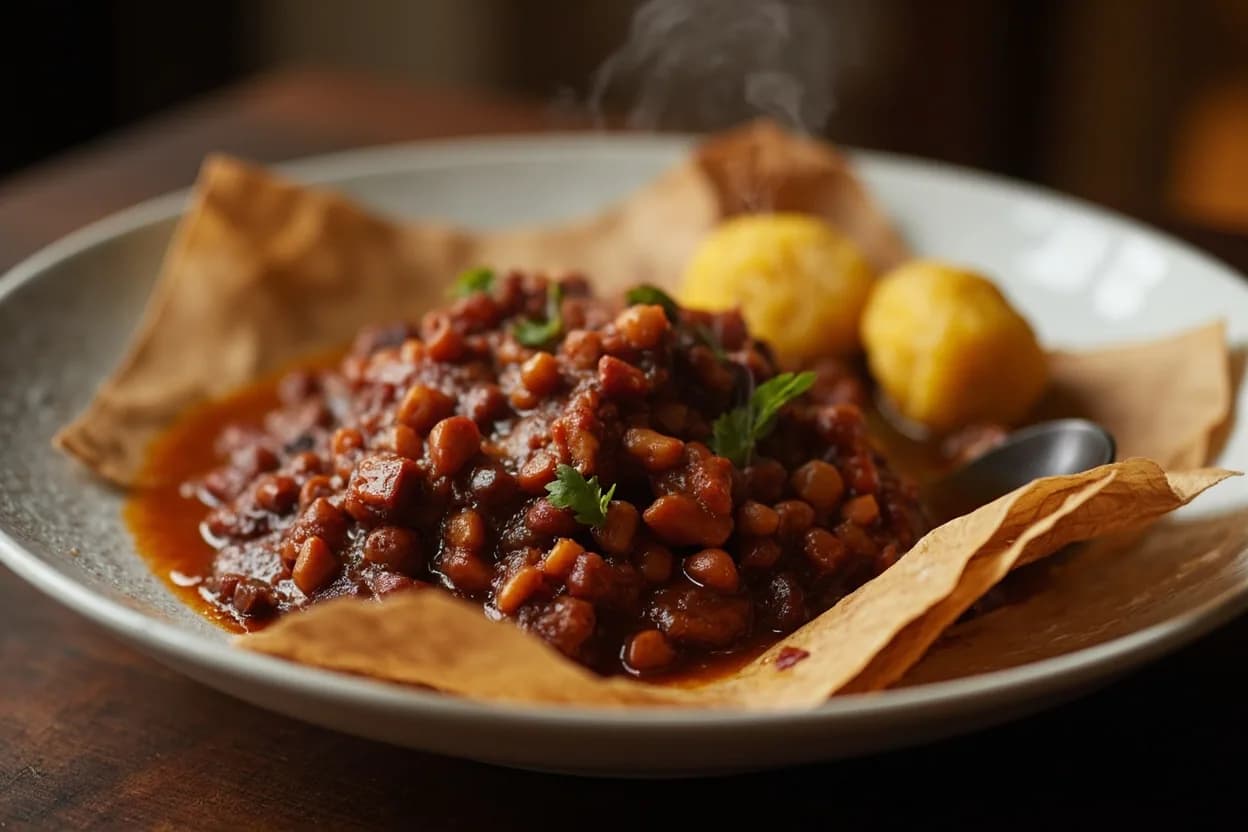
Ghanaian cuisine is defined by a central architecture of starchy bases paired with richly flavored soups and stews. The bases — fufu (pounded cassava and plantain), banku (fermented corn-cassava dough), kenkey (fermented corn dumpling), and waakye (rice-and-beans) — each carry their own cultural identity and regional loyalty. The soups, from the peanut-rich groundnut soup to the clear, tomato-brilliant light soup, are built with palm oil or tomato bases, aromatic peppers, fermented fish (momoni, koobi), and whatever protein the market or sea offers. Ghana's Atlantic coast brings a strong fish culture; its inland forest zones favor bush meat and snails.
The flavour base
Toasted tomato-pepper-onion base cooked down in palm oil or groundnut oil, deepened with fermented dried fish (koobi or momoni) and dried shrimp.
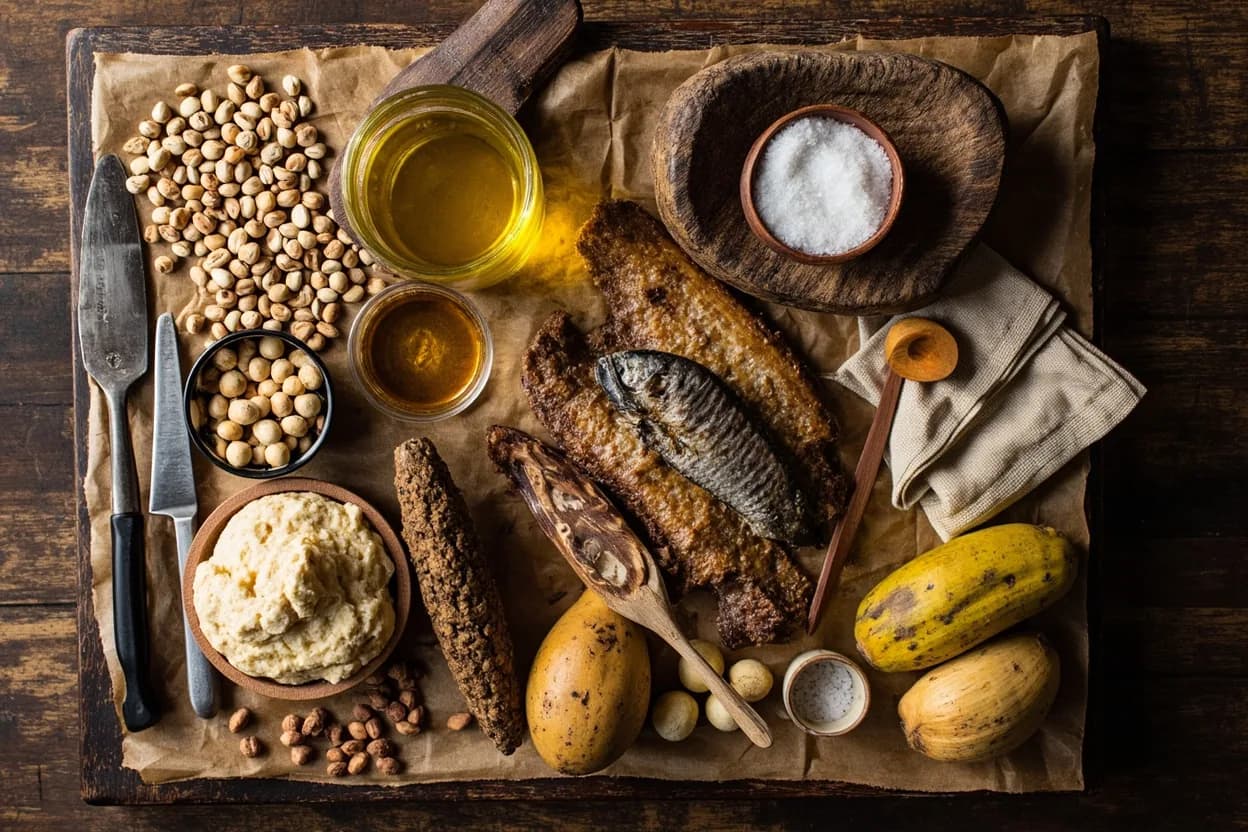
Pantry staples
Key ingredients
Signature techniques
Signature dishes
Ghanaian on the table
At the table
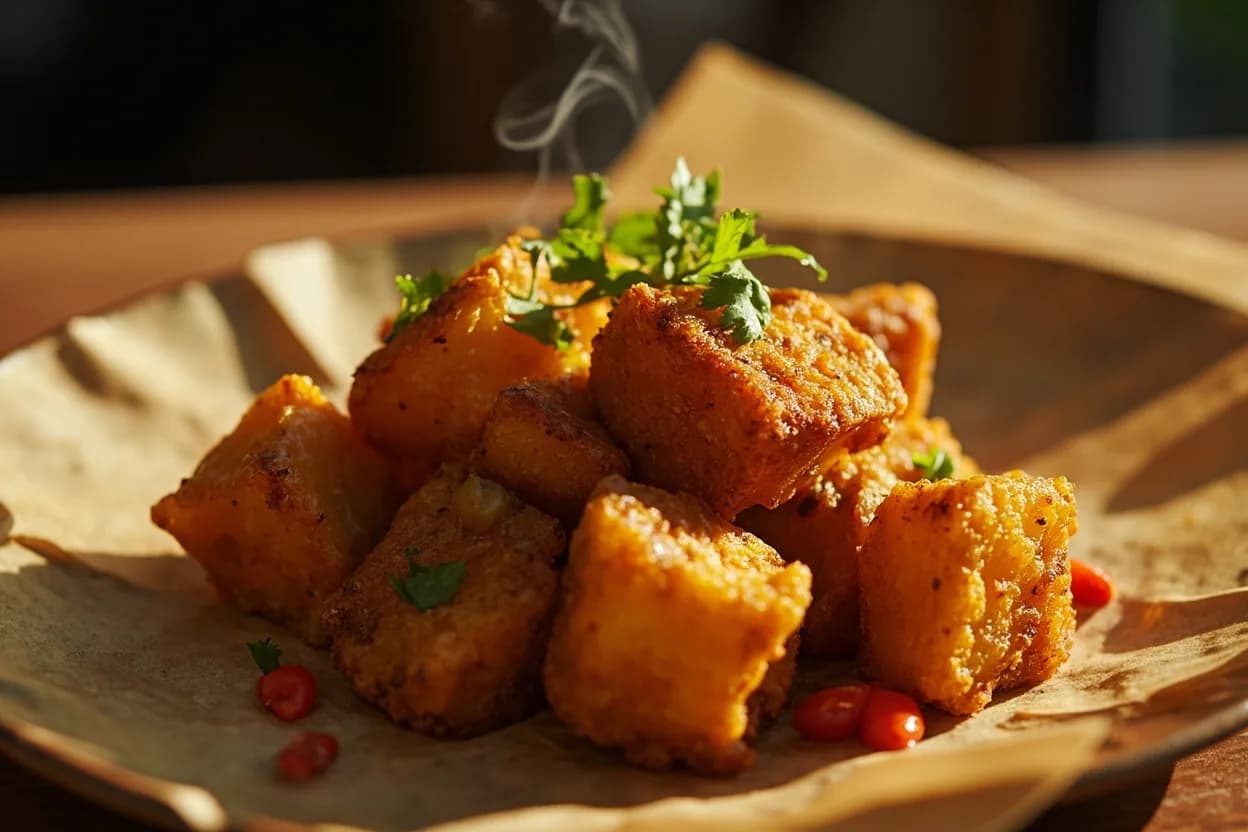
Meals are organized around the starch-and-soup pairing. Lunch is the main meal, often eaten communally. Fufu is a ritual dish — pounded fresh, eaten without utensils (torn and dipped), and associated with home and family. Kenkey and banku are common midday street foods. Breakfast may be tea with bread, hausa koko (spiced millet porridge), or koko with koose (bean fritters). Evening snacks include kelewele or roasted plantain from roadside vendors.
History & context
Ghana (formerly the Gold Coast) was a crossroads of the trans-Atlantic slave trade and earlier trans-Saharan commerce, and its cuisine reflects this traffic in both ingredients and techniques. Portuguese contact from the 15th century introduced cassava, maize, chili peppers, and tomatoes — all now foundational. Indigenous Akan, Ga, Ewe, and northern Dagomba traditions each contributed distinct dishes and techniques. The colonial British period introduced bread, tea, and processed imports while suppressing some indigenous food practices. Since independence in 1957, Ghanaian cuisine has been reasserted as a source of national identity, with dishes like waakye and kelewele enjoying broad pan-ethnic pride.
Regional variations
- Greater Accra / Ga people
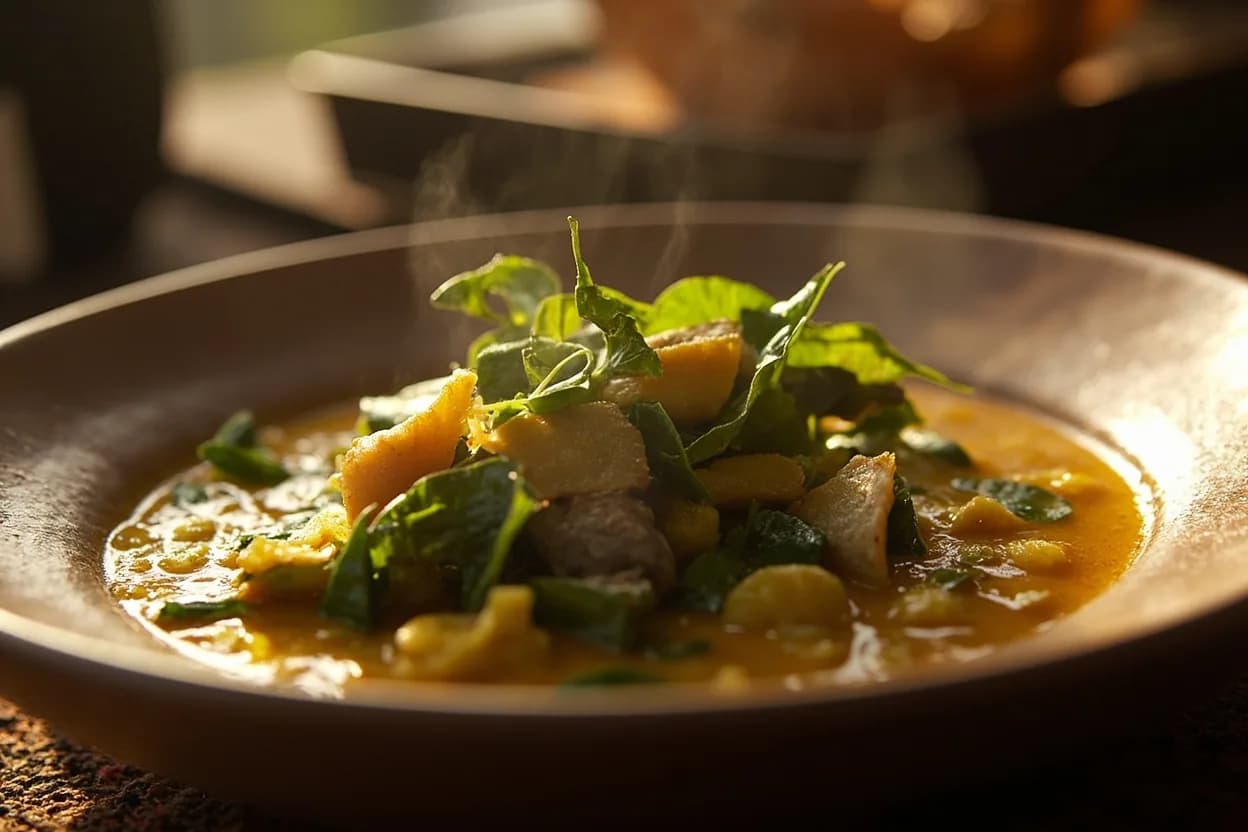
Kenkey (kpokpoi) is the staple; Ga kenkey differs from Fante kenkey in wrapping (banana leaf vs. corn husk) and fermentation level. Ga light soup with kontomire is a ceremonial dish.
- Coastal Fante (Cape Coast, Elmina)
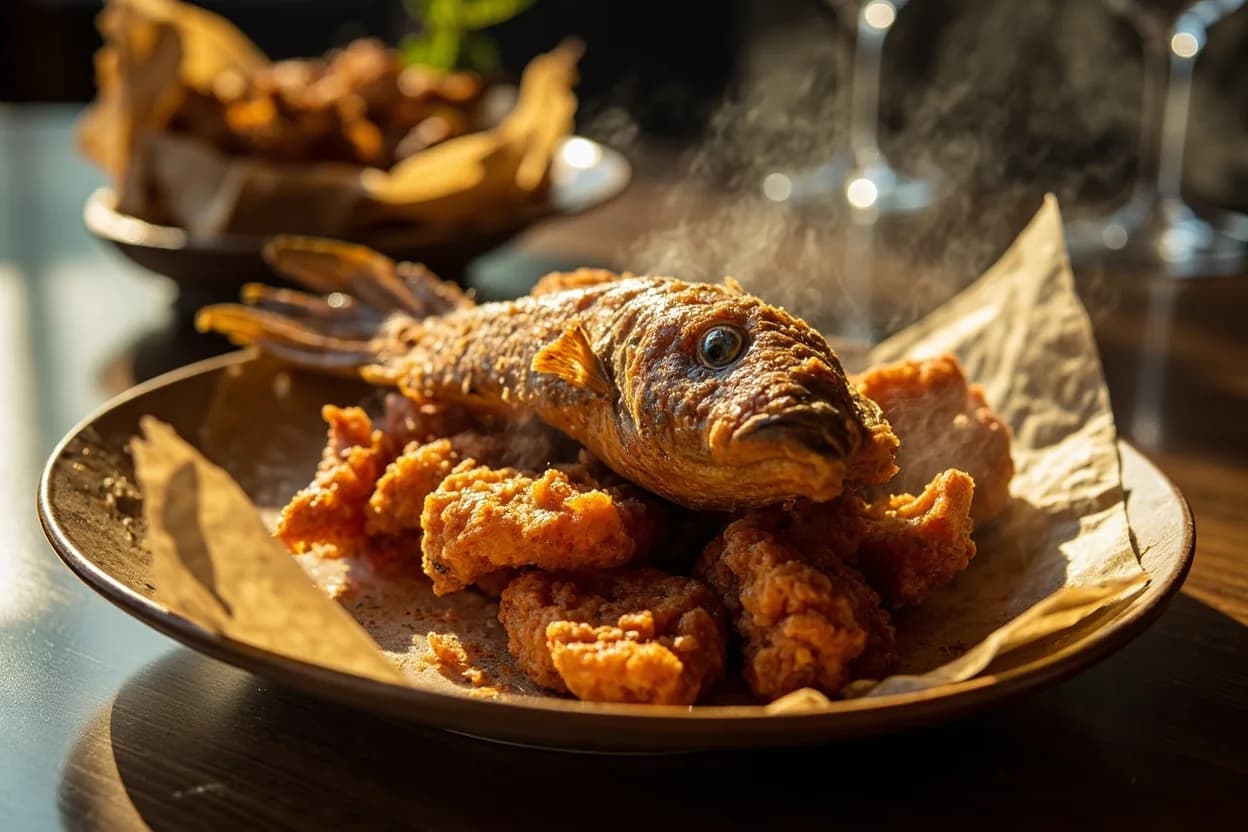
Strong Atlantic seafood tradition; Fante kenkey, fried fish in shito sauce, and palm nut soup are defining foods.
- Ashanti (Kumasi region)
Fufu culture is strongest here; ofe onugbu (bitter leaf), abunabunu (palm nut soup), and palm nut cream are Ashanti signatures. Kumasi is the fufu capital.
- Northern Ghana (Dagomba, Gonja, Frafra)
Millet-based TZ (tuo zaafi) replaces fufu; soups include ayoyo leaf and dawadawa-seasoned preparations closer to Hausa-Fulani cooking.
Related cuisines
- Nigerian
Shared palm oil infrastructure, egusi and groundnut soups, and fufu tradition; jollof rice rivalry is culturally formative.
Western neighbor sharing attiéké, aloco, and similar tomato-groundnut stew traditions.
- Liberian
Fufu, palm butter soup, and fermented ingredient traditions are closely parallel.
Northern Ghana shares TZ porridge and dawadawa with Hausa northern Nigeria.
Canonical recipes
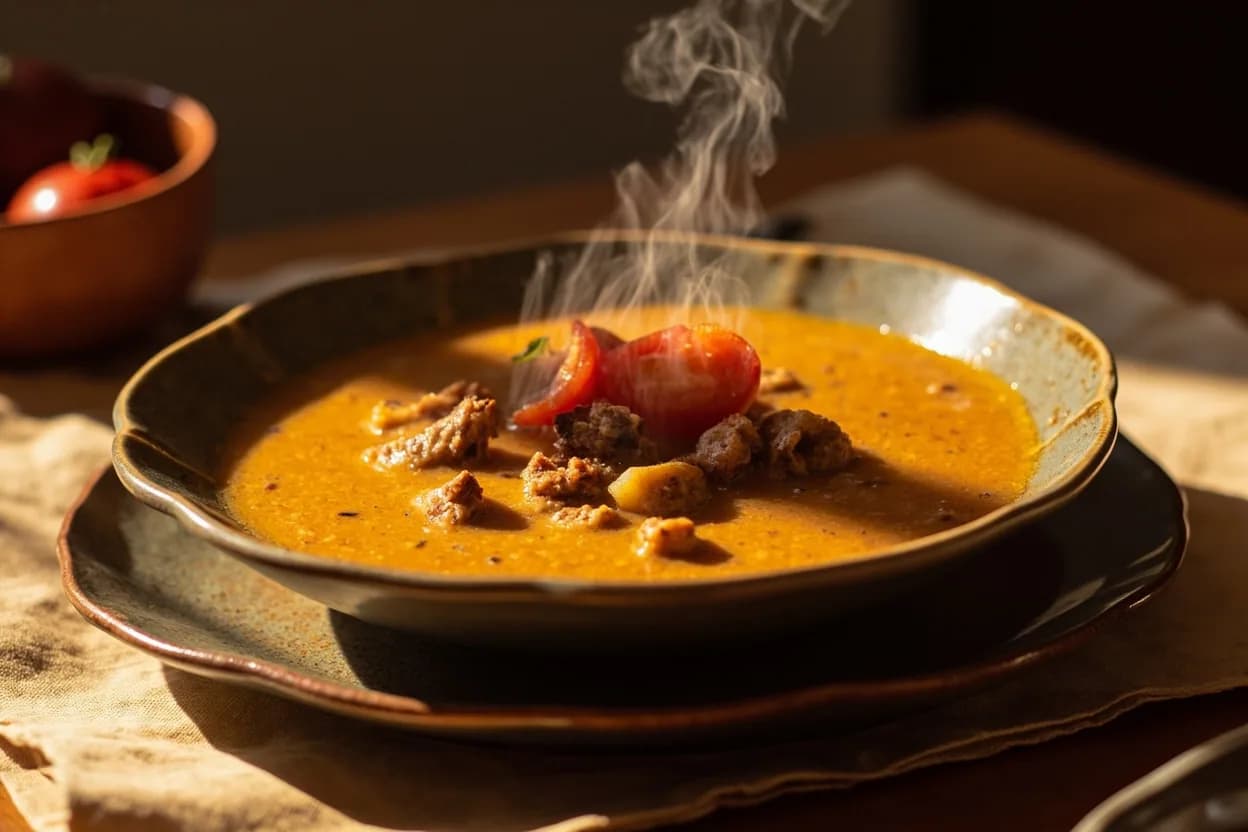
The dishes that define Ghanaian, documented in the Canon.
References
- 1.The Africa Cookbook — Jessica B. Harris (1998)
- 2.Longthroat Memoirs — Yemisi Aribisala (2016)
- 3.Ghana: The Cookbook — Lesley Enston (2020)
- 4.The Oxford Companion to Food — Alan Davidson (3rd ed., 2014)
Confidence: high
Notes
Shito: Ghana's all-purpose condiment
Shito (literally 'pepper' in Ga) is a dense, dark-brown chili paste cooked low and slow with dried shrimp, herring, tomato paste, and spices in palm or vegetable oil until all moisture is expelled and the mixture is shelf-stable. It goes on everything — rice, kenkey, eggs, bread. It is Ghana's ketchup, its miso, its workhorse flavor bomb.
The jollof debate
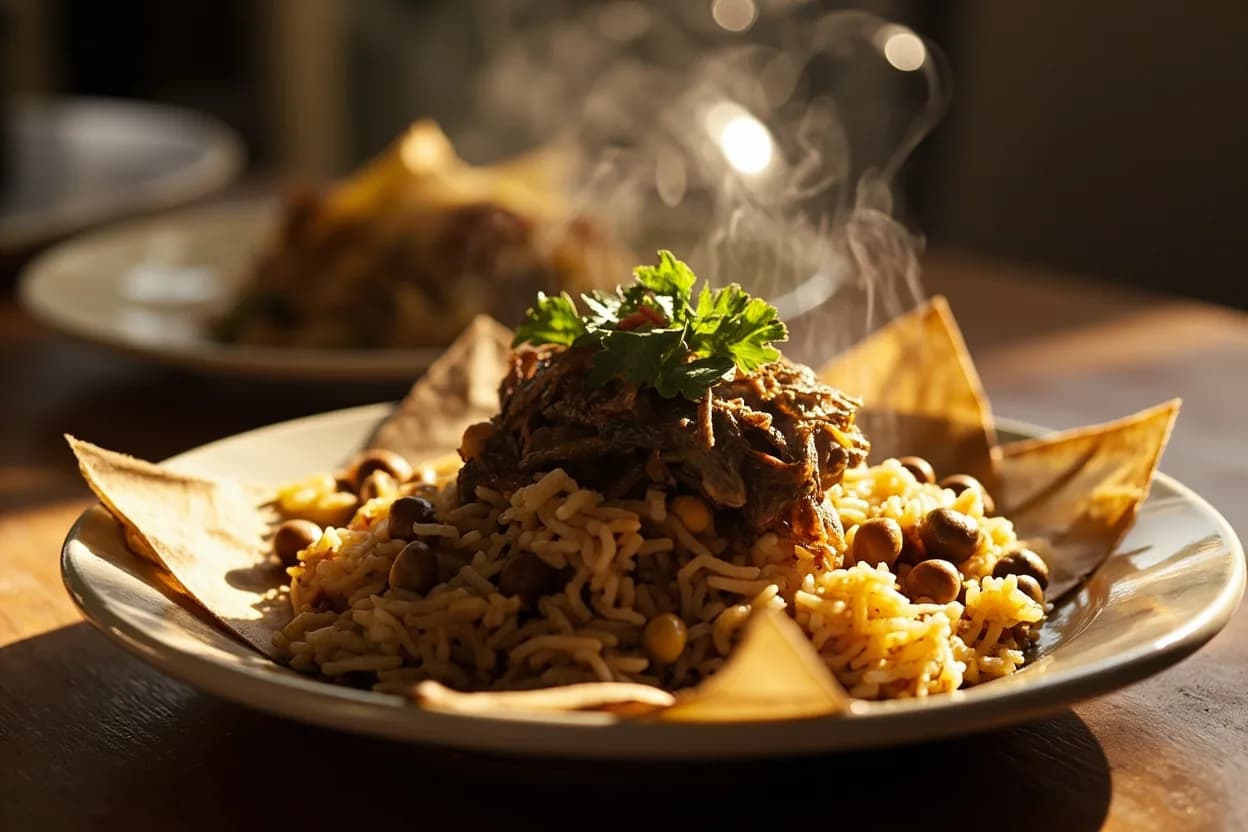
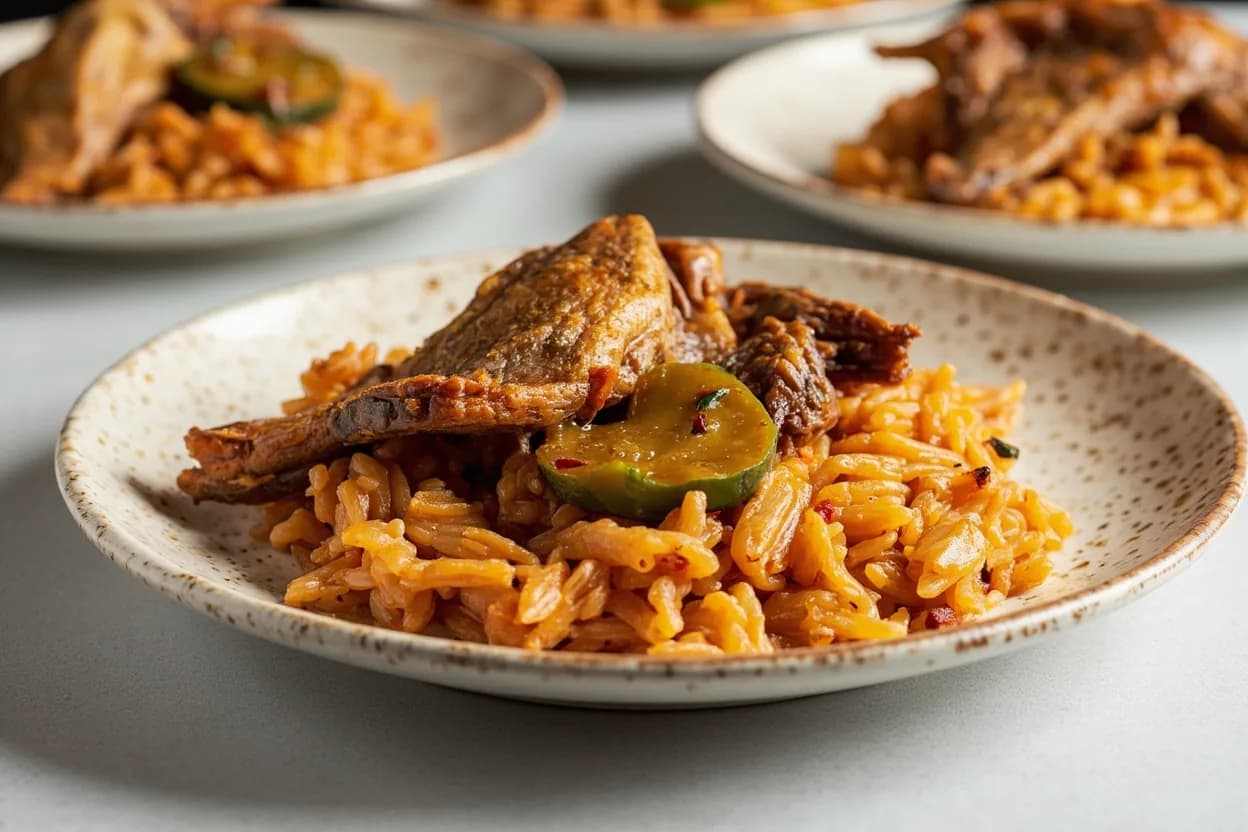
Ghanaian jollof is cooked in a tomato-pepper base with bay leaves and is typically lighter in color than Nigerian jollof. The 'jollof wars' between Ghana and Nigeria are a celebrated West African internet tradition, but on the ground, both traditions have deep roots and devoted partisans. Ghanaian jollof is typically served with fried chicken, fried plantain, and coleslaw at celebrations.