Beef — Primal & Subprimal
Beef Shank & Osso Buco Cross-Cut
Also: beef shank, fore shank, hind shank, cross-cut shank, osso buco (beef), shank medallion
The leg of the steer — an almost impossibly collagen-rich muscle that transforms under long braising into trembling, silky, marrow-laden magnificence.
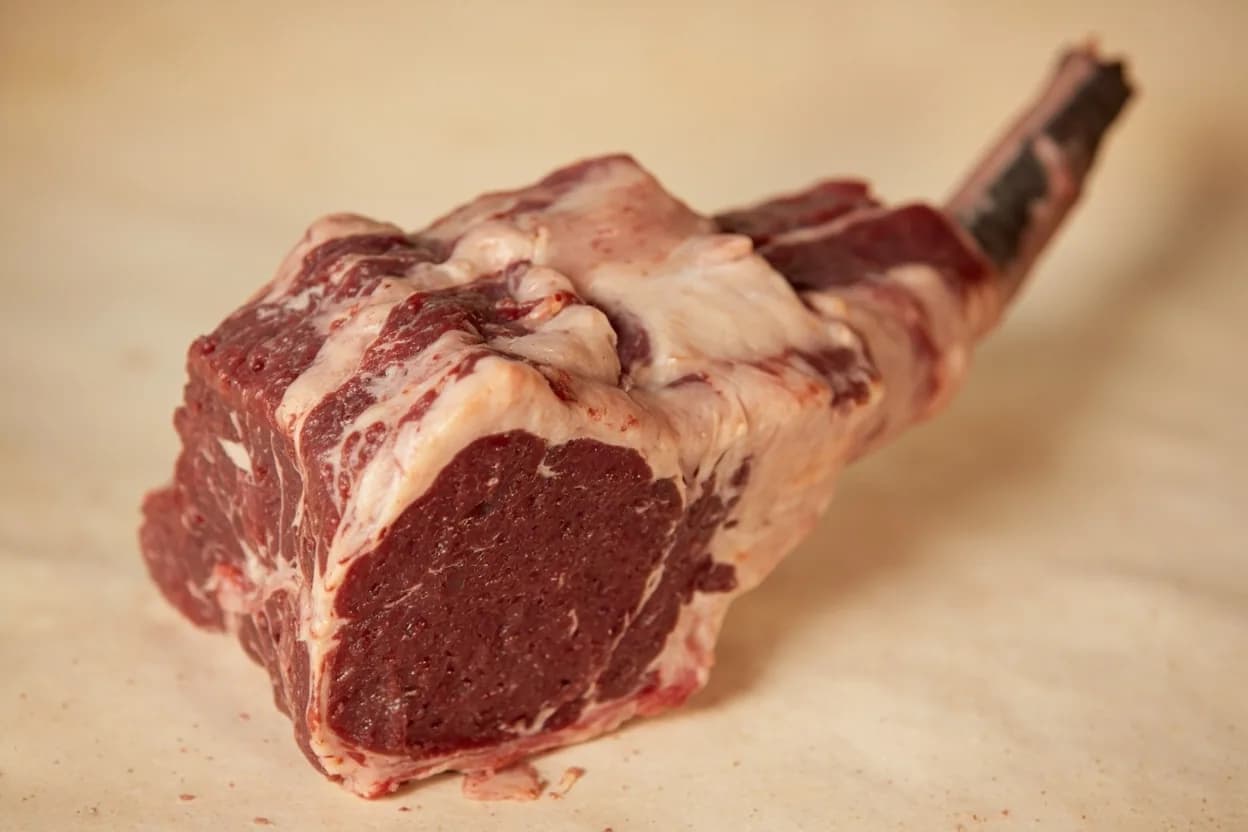
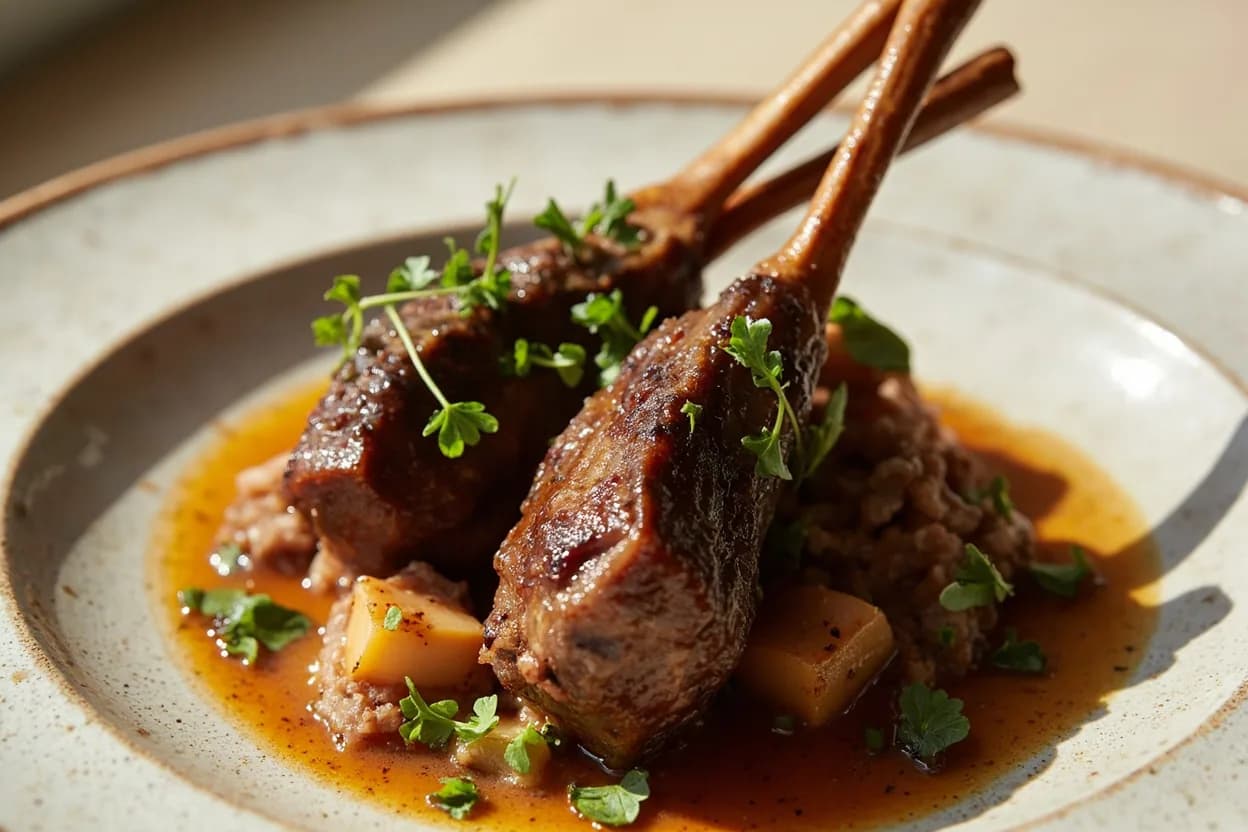
Beef shank is the lower leg muscle of the steer, taken from either the foreleg (foreshank) or hindleg (hindshank). Cross-cutting the shank perpendicular to the bone produces thick medallions with a central marrow cavity — the format used for Italian osso buco, though that dish traditionally uses veal. Whole shanks are used for stocks, soups, and long braises where maximum gelatin extraction is the goal.
In photos

Where it comes from
The foreshank sits below the brisket and chuck; the hindshank is below the round and sirloin. Both consist of the tibialis anterior and related muscles wrapped tightly around the tibia. The marrow-filled bone is the culinary prize — it is exposed in cross-cuts and melts into the surrounding braise during cooking.
Best for
How to cook it
- 1For cross-cut medallions: tie kitchen twine around the circumference of each medallion to prevent the meat from falling away from the bone during cooking.
- 2Season and dredge lightly in flour if desired; sear in a heavy braiser over high heat until deeply browned on both sides — Maillard crust is critical for flavor.
- 3Remove shanks; build a soffritto (onion, celery, carrot) in the same pan, deglaze with white or red wine.
- 4Return shanks; add stock to reach halfway up the medallions. Braise covered at 325°F (163°C) for 2.5–4 hours until meat pulls from the bone with gentle pressure.
- 5For whole shank in broth: place in a large pot, cover with cold water, bring to a simmer, skim scum for 10 minutes, then add aromatics and cook 4–6 hours low and slow.
- 6Serve cross-cuts with the marrow still in the bone — a small spoon or narrow knife extracts it; it should be spreadable and unctuous.
Prep & butchery
- Cross-cut medallions should be 1.5–2 inches (4–5 cm) thick — thinner cuts fall apart; thicker cuts take too long.
- Tie butcher's twine around the equator of each medallion before searing to maintain the 'wheel' shape.
- Pat completely dry before searing — moisture prevents browning.
- For whole shank broth: crack the bone lengthwise with a cleaver or ask the butcher to do so, exposing more marrow surface to the liquid.
Substitutes
- Veal shank (osso buco)
The canonical cut for osso buco alla milanese; more delicate flavor, shorter braise time (1.5–2 hours).
- Oxtail
Similarly collagen-rich; produces an equally gelatinous braise; different bone structure.
- Chuck roast
Less collagen; braising liquid will be thinner; shreds more readily.
Related cuts
- Veal shank
Same anatomical position; the classic osso buco cut.
Smaller, more approachable; identical braising logic.
- Beef brisket
Also collagen-rich; requires similar low-and-slow moist heat.
- Oxtail
Tail vertebrae sections; comparable gelatin yield in braises.
Appears in
References
- 1.The Silver Spoon (Il Cucchiaio d'Argento) — Phaidon Press
- 2.Mastering the Art of French Cooking — Julia Child
- 3.USDA Institutional Meat Purchase Specifications (IMPS) for Fresh Beef
- 4.On Food and Cooking: The Science and Lore of the Kitchen — Harold McGee
Confidence: high
Notes
Gremolata: The Essential Garnish
Osso buco alla milanese is traditionally finished with gremolata — a chopped mixture of lemon zest, garlic, and flat-leaf parsley scattered over the medallions just before serving. This bright, acidic garnish cuts the richness of the marrow and gelatinous braising sauce with precision. Some recipes also incorporate anchovy into the gremolata for umami depth, though the Milan canon excludes it.
Marrow Extraction
The bone marrow in beef shank cross-cuts is a pure luxury. After braising, the marrow is fully rendered and spreadable. Diners who skip it are leaving the best bite on the table. In a restaurant setting, osso buco is always plated with a small marrow fork or demitasse spoon for this purpose. At home, a narrow butter knife works. Spread on grilled bread with fleur de sel — or stir directly into the braising sauce.