Fish & Seafood Doneness
Cold-Smoked Fish Safety Temperature
Also: cold-smoked salmon safety, lox safety, cold smoke fish temp, cold-smoked fish raw status
Cold smoking below 30°C (86°F) does not cook fish — it remains raw, and safety depends entirely on prior freezing to destroy parasites and controlled salt cure to inhibit Listeria.
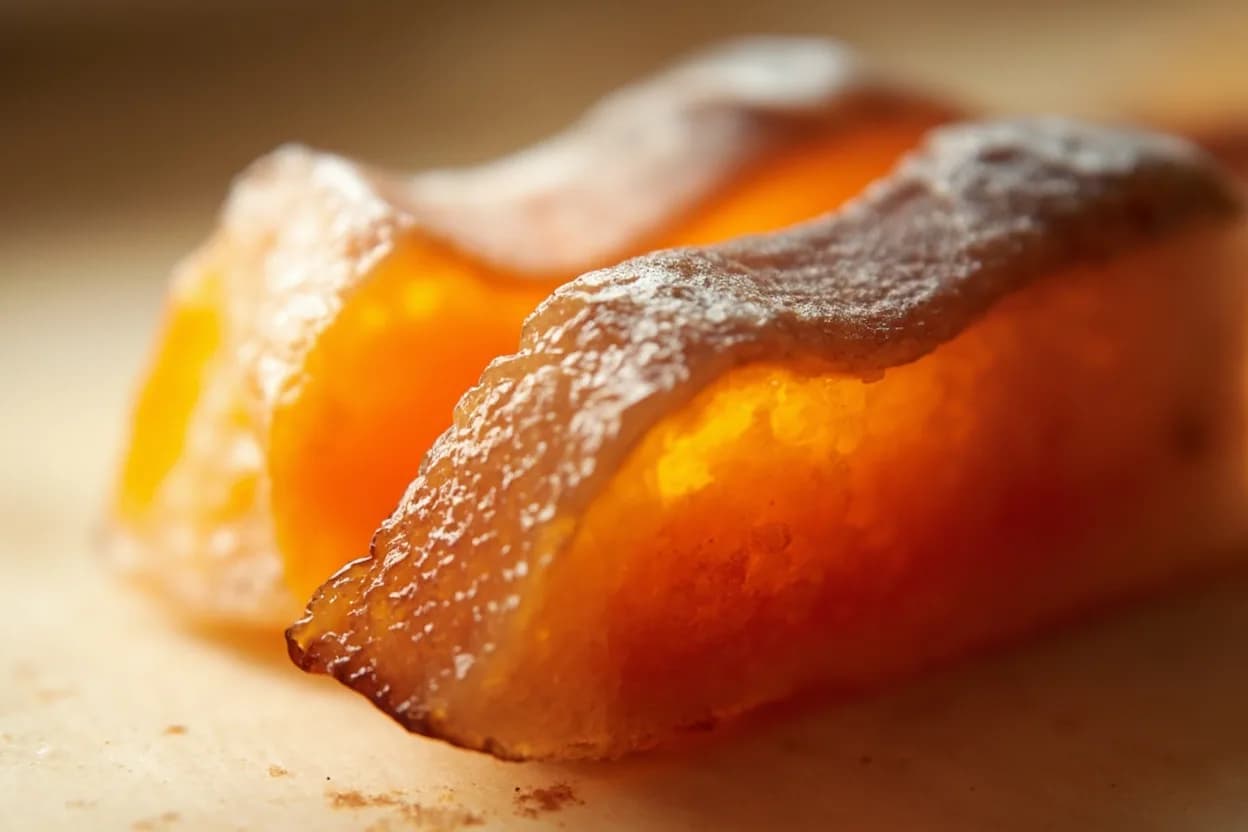
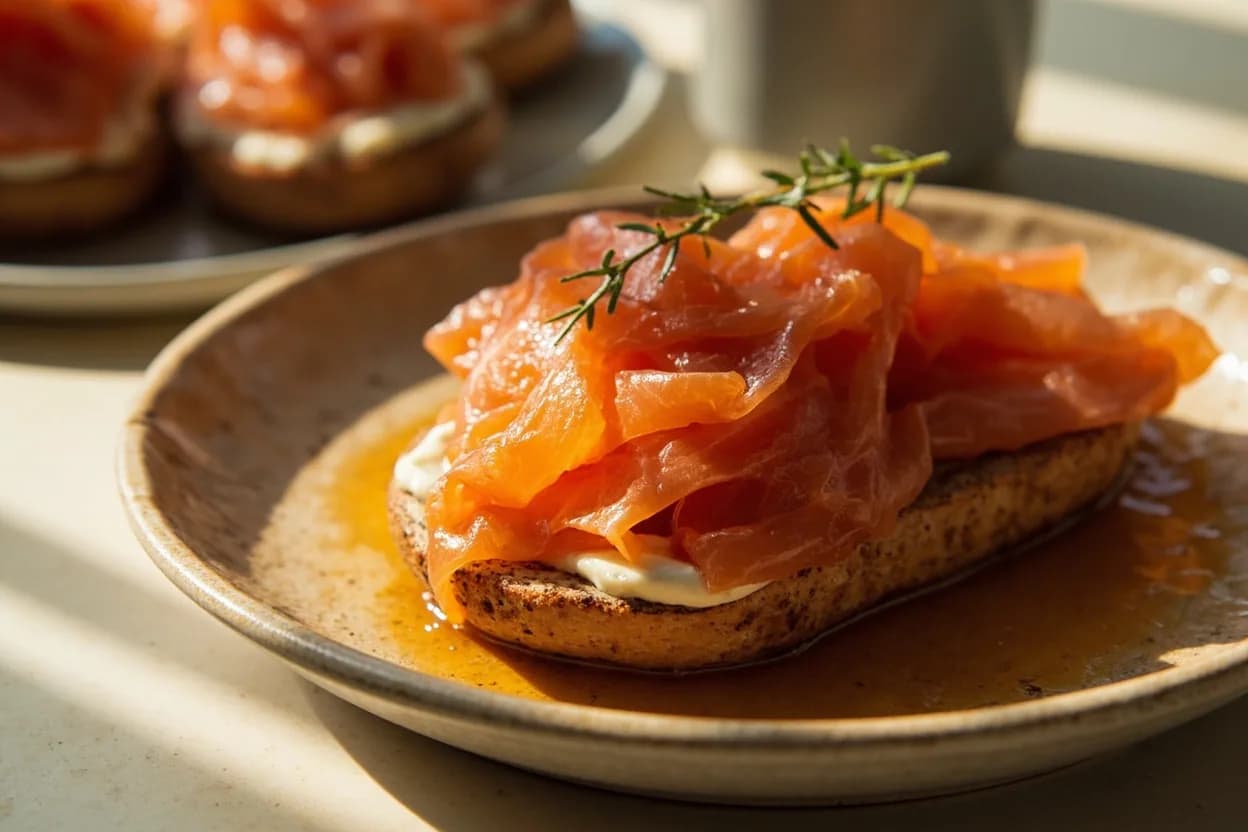
Cold smoking is a curing-and-flavoring process conducted at temperatures well below the protein-denaturation threshold of fish — typically 20–30°C (68–86°F) or lower. At these temperatures, smoke compounds penetrate the fish over many hours, contributing flavor, color, and partial preservation through phenols and acids, but the internal temperature of the fish never reaches levels needed to destroy pathogens. Cold-smoked fish (including the familiar cold-smoked salmon, nova lox, Scottish smoked salmon, and German Räucherlachs) is a raw fish product. Safety relies on the combination of: (1) prior freezing to eliminate parasites such as Anisakis; (2) a salt cure sufficient to control water activity and inhibit pathogen growth, particularly Listeria monocytogenes; and (3) unbroken cold chain from production to consumption. The cold-smoked fish looks silky, intensely flavored, and translucent-to-opaque depending on the salt cure — but it has not been cooked.
In photos

What happens
Cold smoke provides a stream of smoke compounds at low temperature for extended periods — commonly 6–24 hours for cold-smoked salmon. Smoke phenols (guaiacol, syringol), carbonyls, and organic acids deposit on and penetrate the fish surface. These compounds contribute to the characteristic flavor, a pale golden-to-amber color, and antimicrobial surface activity. However, because the internal temperature remains at ambient (typically 18–28°C), fish proteins do not denature beyond what the preceding salt cure has already accomplished. Anisakis nematodes, which survive acid and salt alone, are not killed by cold-smoke temperatures. Listeria monocytogenes — a cold-tolerant pathogen — can survive and proliferate on improperly prepared cold-smoked fish, making prior salt concentration and rapid cooling critical. The product retains a raw, silky texture that heat-cured fish does not.
What to look for
- Flesh is silky, almost translucent in thin slices — distinctly different from the opaque, flaky texture of hot-smoked fish
- Surface carries a pale amber or golden tint from smoke deposition but is not lacquered or deeply bronzed
- Texture is smooth and yielding under the knife, slicing into glassy ribbons without flaking
- Smell is lightly smoky, delicate, and clean — not a deeply penetrating cooked-smoke character
- Salt cure gives a firm (not soft) feel when pressed, but the flesh is not cooked-firm
How to check
- Visual: cold-smoked fish retains translucency in the flesh; hot-smoked fish is fully opaque — this is the simplest distinction
- Texture: cold-smoked salmon slices in thin, glassy, pliable sheets; hot-smoked salmon flakes apart
- Temperature during process: monitor cold-smoking chamber with a thermometer — if chamber rises above 30°C (86°F), the fish is entering a partially-cooked state, not cold-smoked
- Label verification for commercial products: look for 'cold-smoked,' 'lox,' 'nova,' or 'Scottish smoked salmon' designations — these are raw products
Food safety
The science behind it
The direct contrast: hot smoking cooks fish to 63°C (145°F) — a fundamentally different product and safety category
- Gravlax Cure Stage
Cold-smoked salmon is often made from a pre-cured (gravlax-style) fillet — the salt cure precedes the smoke
- Listeria monocytogenes
The primary bacterial hazard in cold-smoked fish; uniquely dangerous because it grows at refrigerator temperatures (0–10°C)
- Anisakis Parasite Freezing
The prior-freeze step is the only reliable kill step for Anisakis nematodes, which survive salt, acid, and cold-smoke temperatures
- Water Activity in Curing
Salt curing lowers water activity, inhibiting most bacteria; but Listeria has unusually low water-activity tolerance for a pathogen
- Pellicle Formation
Even for cold smoking, a surface-drying pellicle helps smoke compounds adhere more evenly to the cured fillet
Appears in
References
- 1.FDA. Fish and Fishery Products Hazards and Controls Guidance, 4th ed. U.S. Food and Drug Administration, 2011.
- 2.Feldhusen, F. 'The Role of Seafood in Bacterial Foodborne Diseases.' Microbes and Infection, 2000.
- 3.Ruhlman, Michael, and Polcyn, Brian. Charcuterie: The Craft of Salting, Smoking, and Curing. W. W. Norton, 2005.
- 4.McGee, Harold. On Food and Cooking: The Science and Lore of the Kitchen. Scribner, 2004.
- 5.Jørgensen, L.V. and Huss, H.H. 'Prevalence and Growth of Listeria monocytogenes in Naturally Contaminated Sea Food.' International Journal of Food Microbiology, 1998.
Confidence: high
Notes
Cold vs. Hot: The Most Common Consumer Confusion
Cold-smoked salmon (Scottish smoked salmon, lox, nova) and hot-smoked salmon are fundamentally different products that are frequently confused. Cold-smoked salmon is silky and raw; hot-smoked salmon is flaky and cooked. They are not interchangeable in recipes, and they carry different food-safety implications. The packaging typically clarifies, but if you can slice it paper-thin without it flaking, it is cold-smoked and raw.
Finnan Haddie: A Borderline Case
Traditional Finnan haddie (Scottish smoked haddock) was historically a cold-smoke product that required cooking before eating. Modern commercial versions are often hot-smoked for safety and convenience, and packaging should be checked. The dish poached in milk is designed for an uncooked cold-smoked product — using pre-cooked hot-smoked haddock produces a different result.