Egg Doneness
Italian Meringue Syrup Temperature
Also: Italian meringue sugar syrup, meringue all'italiana syrup, hard ball syrup for meringue, 250°F meringue syrup
The 121°C (250°F) hard-ball-stage sugar syrup that pasteurizes egg whites and builds the stable, glossy structure of Italian meringue when streamed into whipping whites.
Italian meringue is made by pouring a boiling sugar syrup cooked to 121°C (250°F) — the hard ball candy stage — in a thin, steady stream into egg whites already whipping at medium speed. The 121°C syrup instantly raises the temperature of the whites well above the 71°C (160°F) pasteurization threshold, cooking them in the bowl and transforming them into a thick, glossy, shelf-stable foam. The result is firmer and more heat-stable than Swiss meringue and far safer than French (uncooked) meringue. Temperature accuracy of the syrup is critical: below 115°C the meringue is too soft and weeps; above 130°C the syrup begins to caramelize and the whites can scramble.
In photos

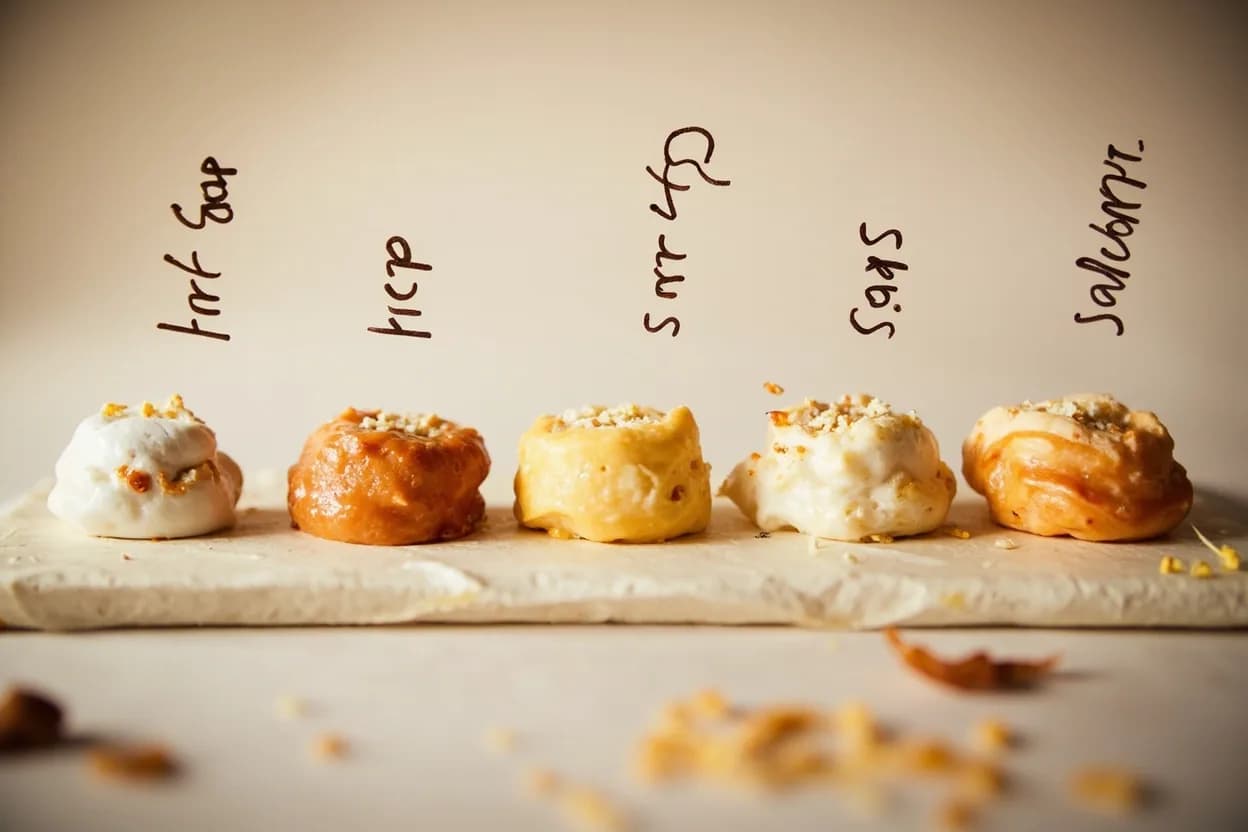
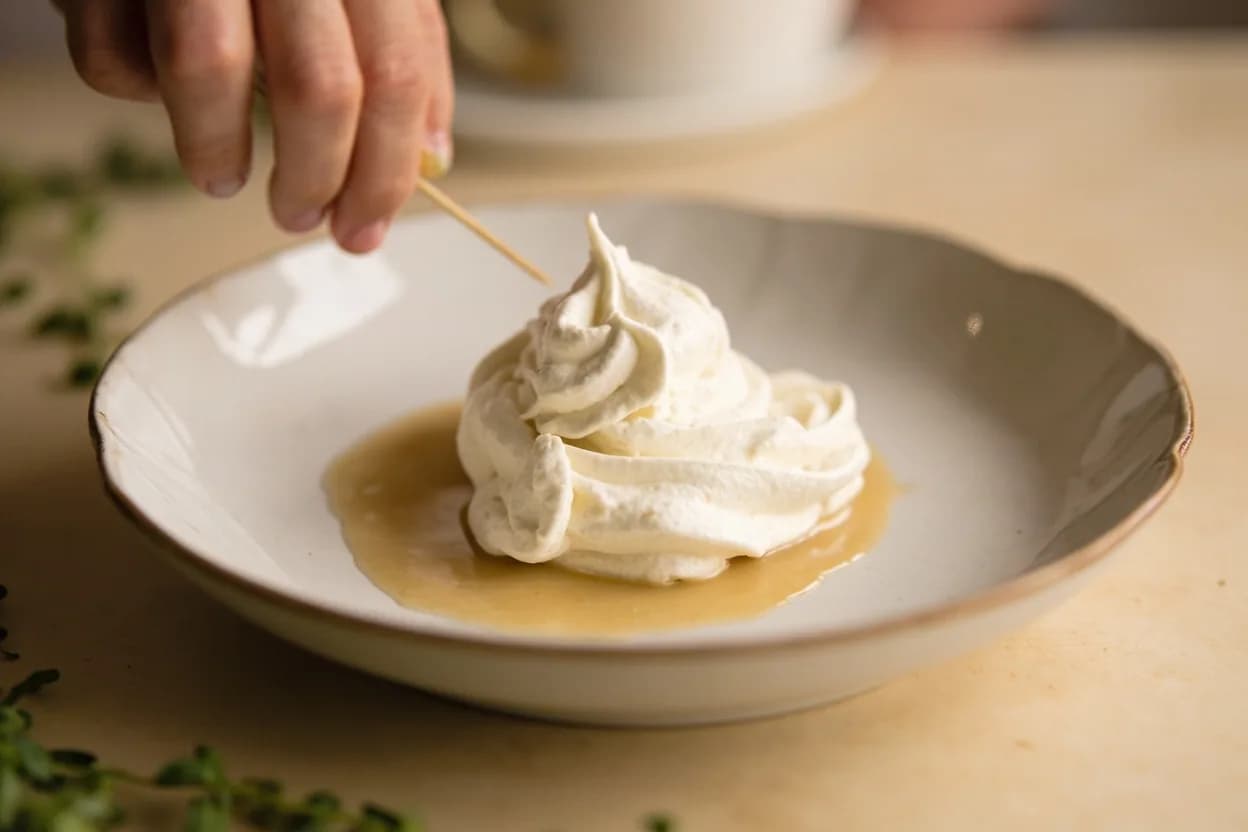
What happens
At 121°C, the sugar syrup has lost enough water (now roughly 87% sucrose by weight) to be in the hard ball stage — if dropped in cold water it forms a hard, pliable ball. When this syrup contacts the egg whites, several things happen simultaneously: the extreme heat denatures ovalbumin and other egg white proteins, creating a coagulated foam scaffold; the residual water in the syrup is rapidly absorbed into the foam, plasticizing it; and the concentrated sugar forms a continuous glassy matrix between the air bubbles that locks them in place as the mixture cools. The result is a meringue with large, stable bubbles coated in sugar glass — extremely resistant to weeping, heat collapse, and volume loss. The meringue temperature at this stage reaches approximately 60–65°C, sufficient to pasteurize the whites when combined with the direct heat of the 121°C syrup.
What to look for
- Syrup boiling at a rapid roll with large, slow bubbles (not frantic small bubbles of earlier stages)
- A thin stream of syrup dropped into ice water forms a hard, pliable ball that holds its shape
- Syrup appears clear to very faintly golden with no color — any brown tint means caramelization has begun and the batch should be discarded
- Rising steam from the pan smells purely sweet, not nutty or caramel-like
- Finished meringue is thick, glossy, and pulls away from the bowl sides in stiff, shiny peaks that hold their shape without drooping
How to check
- Instant-read thermometer: clip a candy thermometer or use a spot thermometer on the simmering syrup; target 121°C (250°F) precisely — within ±2°C
- Cold water drop test: drop a small amount of syrup from a spoon into cold water; it should form a firm, pliable ball that doesn't flatten when pressed (hard ball stage)
- Visual: the syrup will spin a thread when a spoon is lifted and the thread should snap rather than stretch (confirms water content is below 13%)
- Post-stream check: the finished meringue should reach stiff peak stage within 5–8 minutes of whipping after the syrup is incorporated, and the bowl should be barely warm to the touch
Food safety
The science behind it
- Hard ball stage
The sugar-cooking stage (118–130°C) at which the syrup is drawn for Italian meringue; hard ball is 121°C
Alternative method of making food-safe meringue via a bain-marie at 71°C instead of hot syrup
- Ovalbumin denaturation
The syrup temperature far exceeds the ~80°C denaturation point of ovalbumin, ensuring complete structural transformation
- Sugar syrup concentration
At 121°C the syrup is ~87% sucrose; this concentration is what creates the stable glassy matrix between foam bubbles
- French meringue
Uncooked egg whites + sugar — unstable and not food-safe; Italian meringue is the correct substitute wherever safety matters
Appears in
References
- 1.Patisserie: A Step-by-Step Guide — Christine McFadden & Christine France
- 2.On Food and Cooking — Harold McGee
- 3.The Professional Pastry Chef — Bo Friberg (4th ed.)
- 4.Modernist Cuisine — Myhrvold, Young, Bilet (Vol. 4)
- 5.Professional Baking — Wayne Gisslen (7th ed.)
Confidence: high
Notes
Pouring technique is as critical as syrup temperature
The syrup must be poured in a thin, steady stream down the inside wall of the mixing bowl, never directly onto the whisk. Syrup hit by the whisk spatters as burning droplets and forms hard sugar crystals in the foam. The whites should be at soft peak when the syrup begins — if they are over-whipped, the foam is too rigid to absorb the syrup evenly, and the meringue becomes lumpy. If the whites are under-whipped, the syrup deflates the foam before it can rebuild. Timing is everything.
Altitude adjustment
At high altitude, water boils at lower temperatures, which means sugar syrups also reach candy stages at lower temperatures. At 1,000 m above sea level, the hard ball stage is approximately 118°C instead of 121°C. The practical rule: reduce the target syrup temperature by approximately 1°C for every 300 m of elevation above sea level.
Macarons: Italian vs. French method
Professional macaron production almost universally uses Italian meringue because the pre-cooked whites are more stable under the humidity of commercial kitchens and the folding (macaronage) required to combine batter does less damage to a syrup-stabilized foam than to raw French meringue. The Italian method also produces shells with a thinner, glossier skin and a more consistent foot.