Egg Doneness
Swiss Meringue Pasteurization Threshold
Also: Swiss meringue safe temperature, egg white pasteurization, meringue suisse threshold
The bain-marie temperature at which egg whites and sugar must be held to eliminate Salmonella risk before whipping into a stable, food-safe meringue.
Swiss meringue is made by warming a mixture of raw egg whites and sugar over a double boiler (bain-marie) to 71°C (160°F) — the FDA-recognized pasteurization threshold for liquid egg whites — and holding it there for a minimum of 15 seconds before transferring to a stand mixer. At this temperature, Salmonella enteritidis (the pathogen most associated with egg whites) is reduced by a 5-log (100,000-fold) margin. The dissolved sugar simultaneously prevents the egg whites from prematurely coagulating, allowing the mixture to reach safe temperature while remaining pourable.
In photos
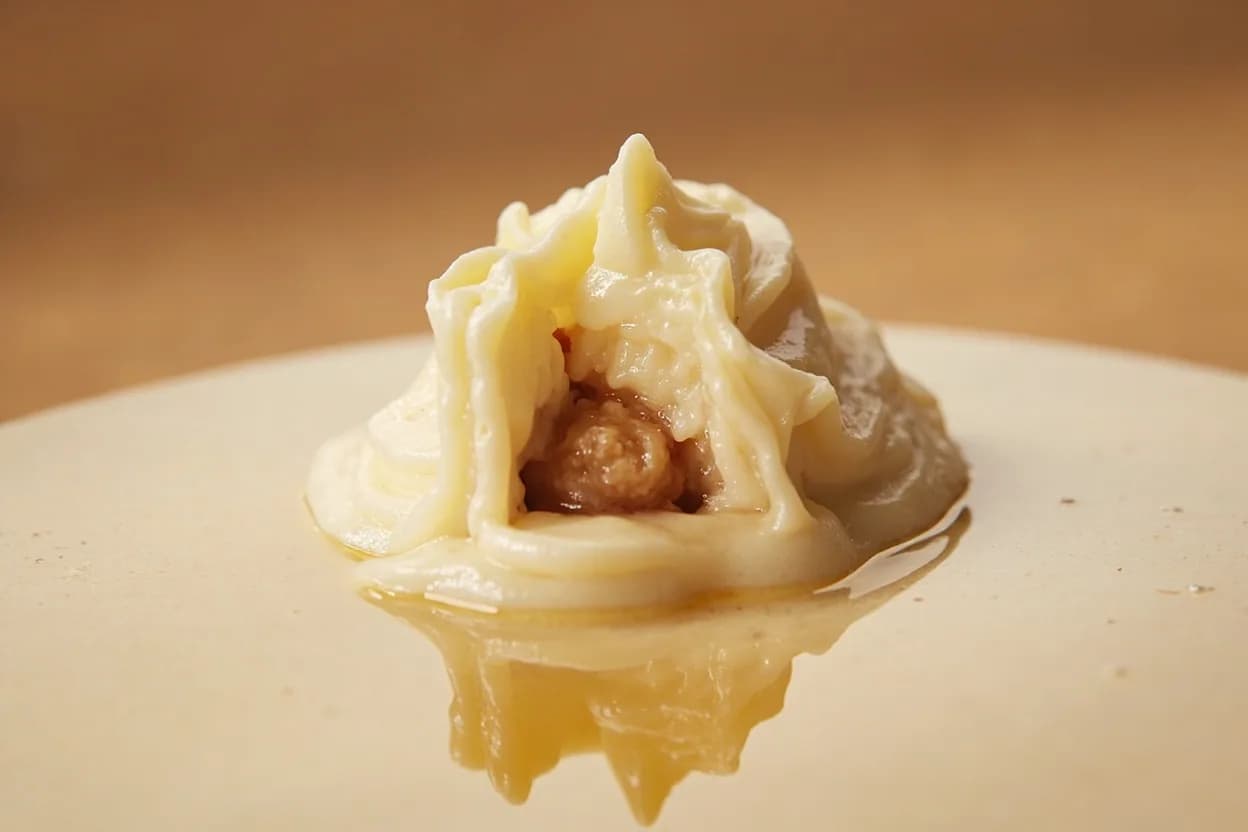
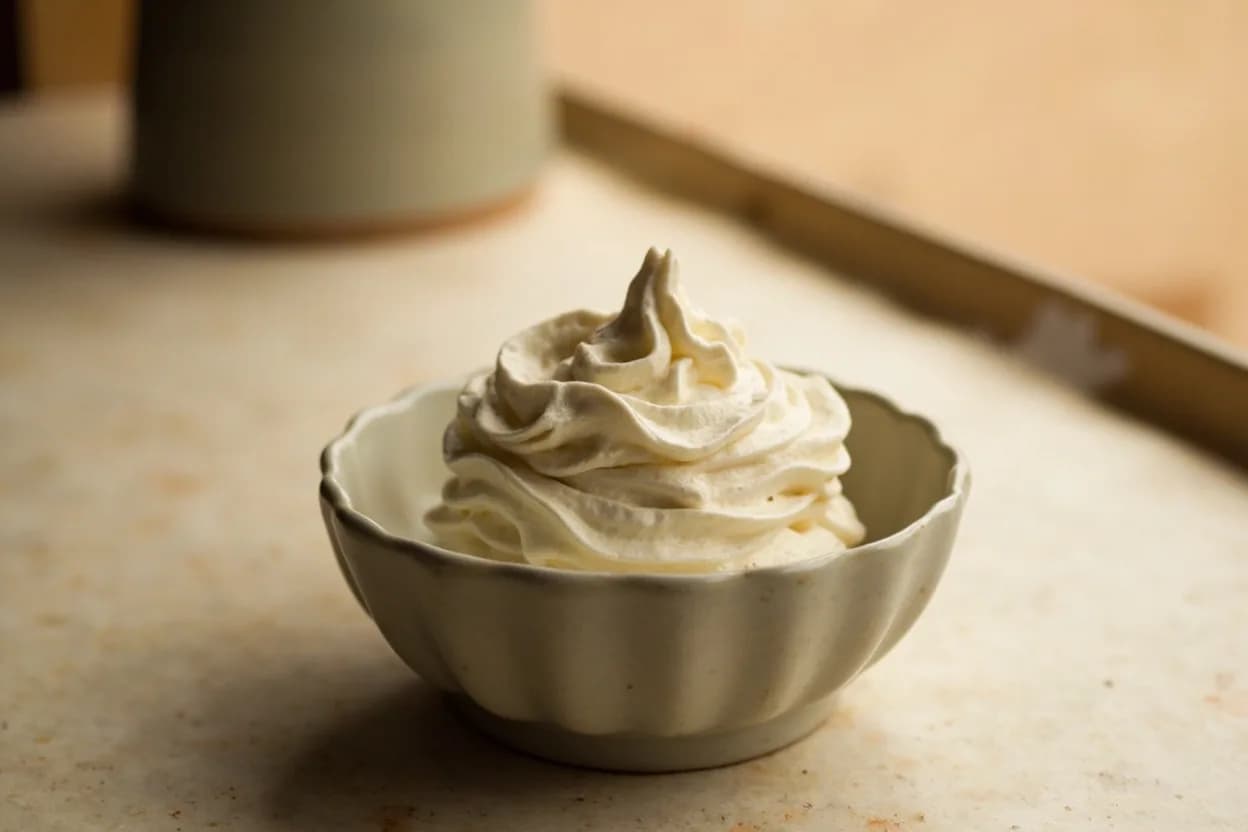
What happens
Egg whites contain several proteins — ovalbumin (~54%), ovotransferrin (~13%), ovomucoid (~11%), and others — that begin denaturing at different temperatures. At 71°C, ovalbumin, the dominant protein and the one responsible for foam stability, is partially denatured but still soluble. The presence of dissolved sucrose raises the effective denaturation temperature of these proteins (the sugar-water matrix competes for hydrogen bonds), which is precisely why the egg white-sugar mixture can be heated to 71°C without scrambling. Once the threshold is met, the mixture is whisked at high speed over ice or transferred to a cold bowl; the partial denaturation actually promotes stronger, more stable foam formation than raw whites.
What to look for
- The mixture feels hot to the touch — distinctly beyond 'warm' when a clean finger is dipped briefly
- Sugar is completely dissolved; rubbing the mixture between fingertips reveals no granularity
- The mixture becomes slightly more opaque and viscous than the initial clear, runny state
- Steam begins to rise gently from the surface of the bain-marie water
- The mixture no longer looks like separated whites and sugar — it is a homogenous, slightly thickened syrup
How to check
- Thermometer test: insert an instant-read thermometer into the center of the egg-white mixture, ensuring it is not touching the bowl; hold at 71°C (160°F) for at least 15 seconds
- Finger-rub test: dip a clean fingertip and rub with thumb — no sugar granules should be felt (incidental check for sugar dissolution, not for temperature accuracy)
- Steam observation: gentle steam from bain-marie water is a visual cue that the bath is above 90°C, sufficient to heat the mixture in the bowl to 71°C over 5–8 minutes
Food safety
The science behind it
- Italian meringue
Alternative pasteurization method: hot sugar syrup at 121°C poured into whipping whites — cooks the whites via direct heat from the syrup rather than a bain-marie
- French meringue
Unpasteurized — raw whites whipped with sugar; unsafe for most applications requiring food safety
- Ovalbumin
The dominant egg-white protein; partial denaturation at 71°C is what enables stable foam formation after heating
Double-boiler setup that moderates heat, preventing direct contact between the egg whites and a high-temperature heat source
- Sugar syneresis in meringue
Fully dissolved sugar at the pasteurization stage prevents weeping in the finished meringue
Appears in
References
- 1.On Food and Cooking — Harold McGee
- 2.Modernist Cuisine — Myhrvold, Young, Bilet (Vol. 4)
- 3.The Food Lab — J. Kenji López-Alt
- 4.FDA Food Code 2022, Section 3-401 (Egg pasteurization parameters)
- 5.Professional Baking — Wayne Gisslen (7th ed.)
Confidence: high
Notes
Why sugar makes this work
The addition of sugar to egg whites before heating is not merely for sweetness — it is structurally essential to the pasteurization process. Sugar molecules bind water and compete with protein-protein interactions that would otherwise cause coagulation. A 1:2 white-to-sugar ratio by weight typically elevates the effective coagulation temperature to above 80°C, giving a safe 9°C margin to pasteurize at 71°C without scrambling the whites. Attempting to pasteurize unsweetened egg whites at 71°C will result in partial cooking and foam failure.
Swiss vs. Italian: same safety outcome, different mechanism
Italian meringue achieves pasteurization by pouring 121°C sugar syrup into the whites while they whip — the extreme heat of the syrup brings the white mixture well above 71°C almost instantly. Swiss meringue achieves it by a slower, controlled bain-marie heat. Both methods produce food-safe meringue; Swiss is more forgiving for home cooks, Italian produces a slightly denser, more stable result preferred for piping.