Beef Doneness
Wagyu Doneness Stages
Also: A5 wagyu doneness, Kobe beef temperature, highly marbled beef doneness
Wagyu's extreme intramuscular fat shifts the optimal eating window to a lower internal temperature — typically 50–55°C/122–131°F — where fat has melted but muscle fibers remain tender.
Wagyu beef (particularly Japanese A4–A5 grades and American Wagyu) carries intramuscular fat (marbling) in quantities that fundamentally change the cooking physics. The oleic-acid-rich fat begins melting at around 25°C and is substantially liquid by 40°C — far below the temperatures at which commodity beef fat renders. Cooking wagyu to standard 'medium-rare' temperatures appropriate for USDA Choice beef (57–60°C) risks over-rendering the fat before the muscle can benefit from it, resulting in greasy texture rather than silky richness. The preferred eating window for premium wagyu shifts downward to rare-to-medium-rare (50–55°C), where fat is fluid and coating yet muscle fibers remain supple.
In photos
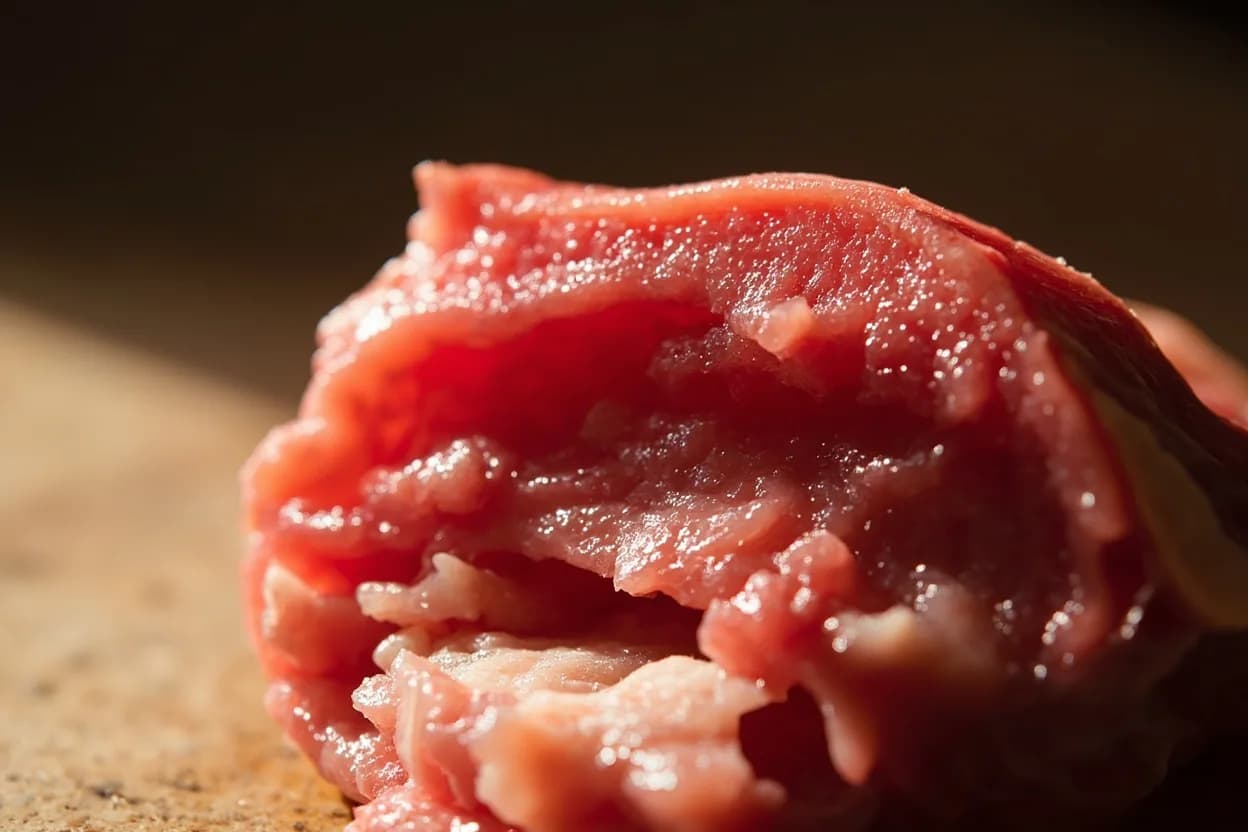
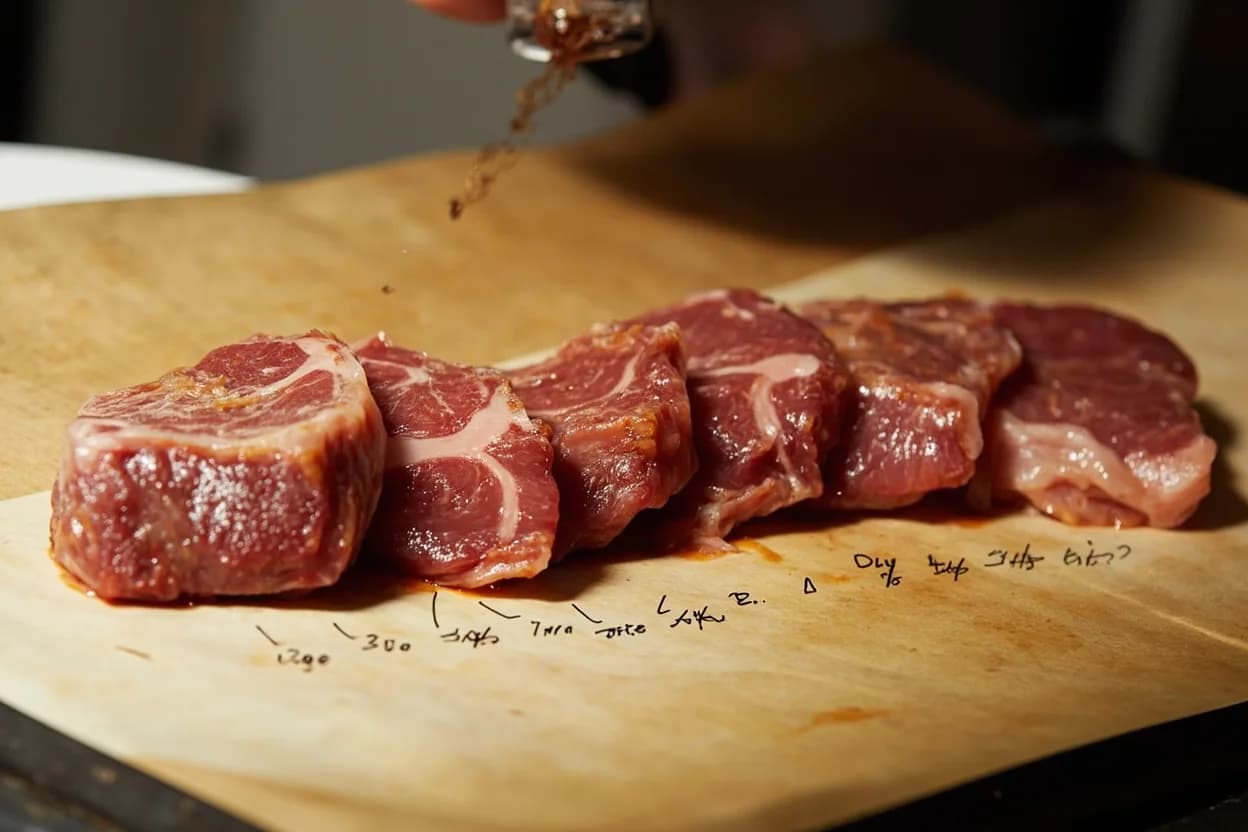

What happens
Wagyu's intramuscular fat, exceptionally high in monounsaturated fatty acids (particularly oleic acid), has a lower melting point than commodity beef fat (tallow). At 50–55°C this fat is nearly fully liquid, lubricating and coating muscle fibers for the characteristic silky, buttery mouthfeel. Above 60°C the fat has largely rendered out of the muscle matrix and collects as pools of grease rather than staying integrated. Simultaneously, myoglobin begins denaturing at 60–65°C, so wagyu at its ideal temperature retains a pink-to-deep-red center.
What to look for
- Deep red to bright pink center — essentially rare to medium-rare visually
- Fat visible throughout the slice appears translucent and glistening, not white or waxy
- Mouthfeel is rich and silky; fat melts on the tongue immediately
- Meat is very tender with minimal chewing resistance
- A pronounced savory-umami aroma with a distinctly buttery note from rendered fat
How to check
- Instant-read thermometer in the geometric center — target 50–55°C for A4–A5 wagyu
- Press test: extremely tender, almost yielding — softer than commodity beef at the same visual doneness
- Watch the fat: when marbling visible on the surface of a thin slice begins to turn translucent and bead, the interior is likely approaching 50°C
- For sukiyaki or yakiniku thin slices, color change from red to pale pink is the primary cue — these cook in seconds
Carryover & resting
Wagyu's high fat content means carryover is significant even in thin cuts — the fat retains heat efficiently. Pull wagyu 2–4°C below target and rest briefly on a warm plate. Thick cuts (striploin, ribeye) can carry over 3–5°C.
The science behind it
- Intramuscular fat (marbling)
The defining characteristic of wagyu; its oleic-acid composition gives it an unusually low melting point that shifts optimal cooking temperature downward
Standard medium-rare targets (57–60°C) are appropriate for commodity beef but slightly high for premium A5 wagyu
50–55°C wagyu falls at the upper end of rare or lower medium-rare on conventional scales — closer to rare than most Western diners expect
- Yakiniku
Japanese grilled-meat tradition in which thin wagyu slices are cooked and eaten at lower temperatures, often barely changed from red
- Fat rendering temperature
Oleic-acid-rich wagyu fat renders at significantly lower temperatures than conventional beef tallow
Appears in
References
- 1.Modernist Cuisine: The Art and Science of Cooking — Myhrvold et al. (2011)
- 2.The Food Lab — J. Kenji López-Alt (2015)
- 3.Japanese Wagyu Grading Standards — Japan Meat Grading Association (2021)
- 4.Fatty acid composition of Wagyu beef — Gotoh et al., Meat Science (2009)
Confidence: high
Notes
A5 versus American Wagyu
Japanese A5 wagyu (BMS 8–12) has so much intramuscular fat that it is typically served in smaller portions (50–150g) and at lower temperatures (50–53°C) than American Wagyu (F1 or full-blood at BMS 6–8), which can be enjoyed at 54–57°C in steak portions. Overcooking A5 is especially unforgiving — the fat loss is irreversible and the cut becomes greasy rather than silky.
Thin-slice cooking (yakiniku / sukiyaki)
For 2–4mm yakiniku slices over binchotan charcoal, the effective cooking window is seconds. Slices are considered perfectly done when the exterior color changes from red to pale pink and the surface fat turns translucent — at this point the internal temperature has already reached 50–55°C. Resting is impractical; eat immediately.
Safety note
Whole-muscle wagyu steaks fall under the same USDA guidance as any whole-muscle beef: 62.8°C (145°F) with a 3-minute rest is the official safe minimum. Serving wagyu below this temperature is common in restaurants and carries the same low but non-zero pathogen risk as any rare whole-muscle beef. Ground wagyu must reach 71°C (160°F) per standard ground beef rules.