Fats, Pastes & Condiments
Amba (Pickled Mango)
Also: amba sauce, Iraqi mango pickle, mango amba, amb
Iraq and Israel's greatest condiment: raw mango fermented with turmeric, fenugreek, and chili into a funky, tangy-spiced sauce that transforms everything it touches.
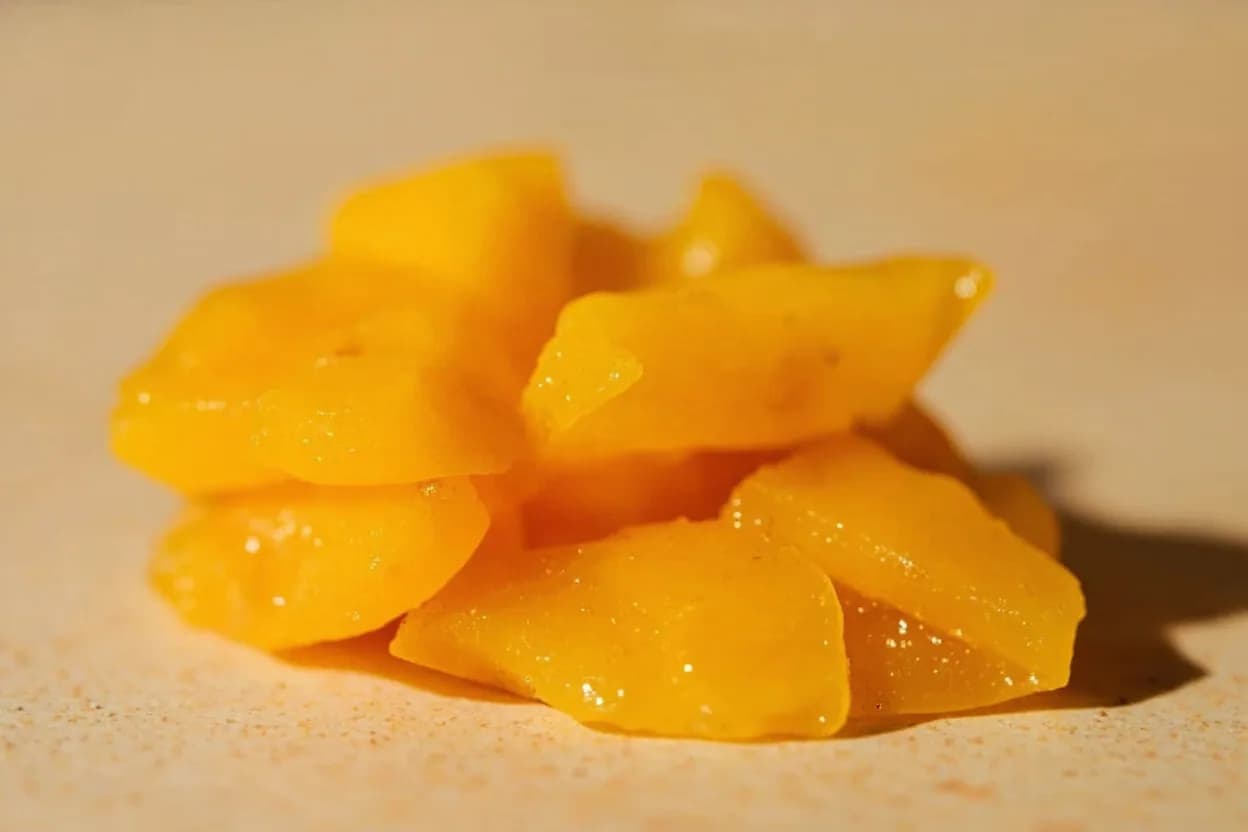
Amba is a pungent, golden-orange mango pickle originating in Iraq, brought to Israel in the 1950s by Iraqi Jewish immigrants and now inseparable from Israeli street food culture. Unripe mangoes are salted, sun-dried, then fermented or quick-brined with turmeric, fenugreek (which gives amba its characteristic slightly bitter, maple-meets-mustard note), dried chili, and vinegar. The result is thick, jammy, and deeply funky — simultaneously sour, spicy, faintly sweet, and musky with fermentation. Its flavor is aggressive, polarizing, and unforgettable. Amba occupies the same flavor-bridge role in Levantine street food that ketchup does in American — a universal condiment that ties salty, fatty foods together with acid and funk.
In photos
Flavour profile
Classic pairings
- Sabich (fried eggplant sandwich)Israeli
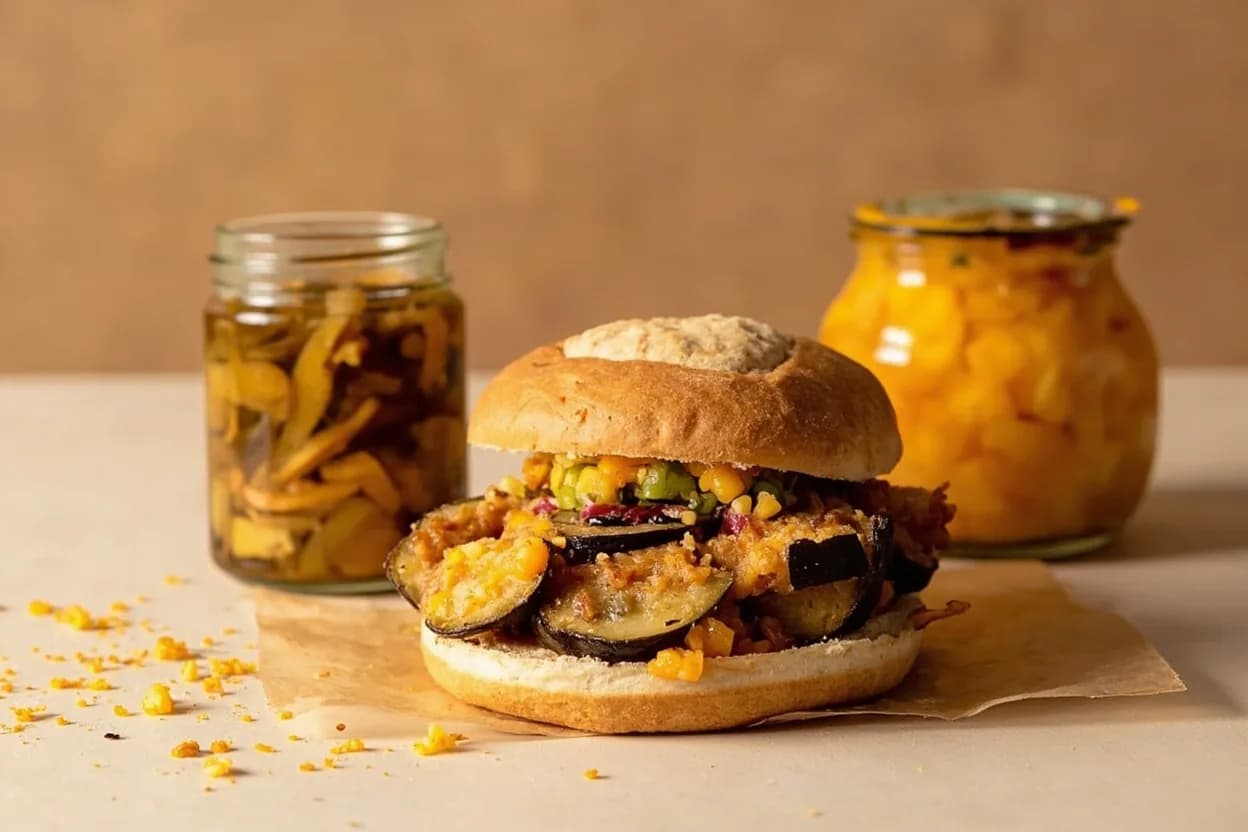
Amba is the defining condiment of sabich — the Iraqi-Israeli pita stuffed with fried eggplant, hard-boiled egg, and hummus; its acid and funk cut through the fried oil and balance the creamy egg.
- FalafelIsraeli
Amba adds a tangy, spiced counterpoint to falafel's crispy, herb-packed exterior; it is the acid component where tahini provides the fat and hummus provides the body.
- ShawarmaIsraeli / Levantine
Drizzled into a shawarma wrap with tahini, pickled cabbage, and lamb or chicken, amba provides the fruity-sour contrast that prevents the dish from becoming heavy.
- HummusIsraeli / Levantine
A spoonful of amba stirred into or drizzled over hummus creates a layered dip where fenugreek's bitter note plays against chickpea's nuttiness.
- Hard-boiled eggsIsraeli
Inside sabich, and on its own — amba's funky acid is the perfect counterpart to the sulphurous, creamy richness of a hard-boiled egg.
- LambIraqi / Levantine
Amba's tartness cuts lamb's lanolin-fatty richness; the fenugreek-turmeric spice profile aligns with the Levantine and Iraqi spice vocabulary used to season lamb.
- Fried cauliflowerIsraeli
A common Israeli vegetarian preparation: deeply fried cauliflower with amba and tahini — the condiment lifts the dish's oiliness and provides the sour spark that tahini lacks.
Adventurous pairings
- Cheese (aged cheddar, halloumi)
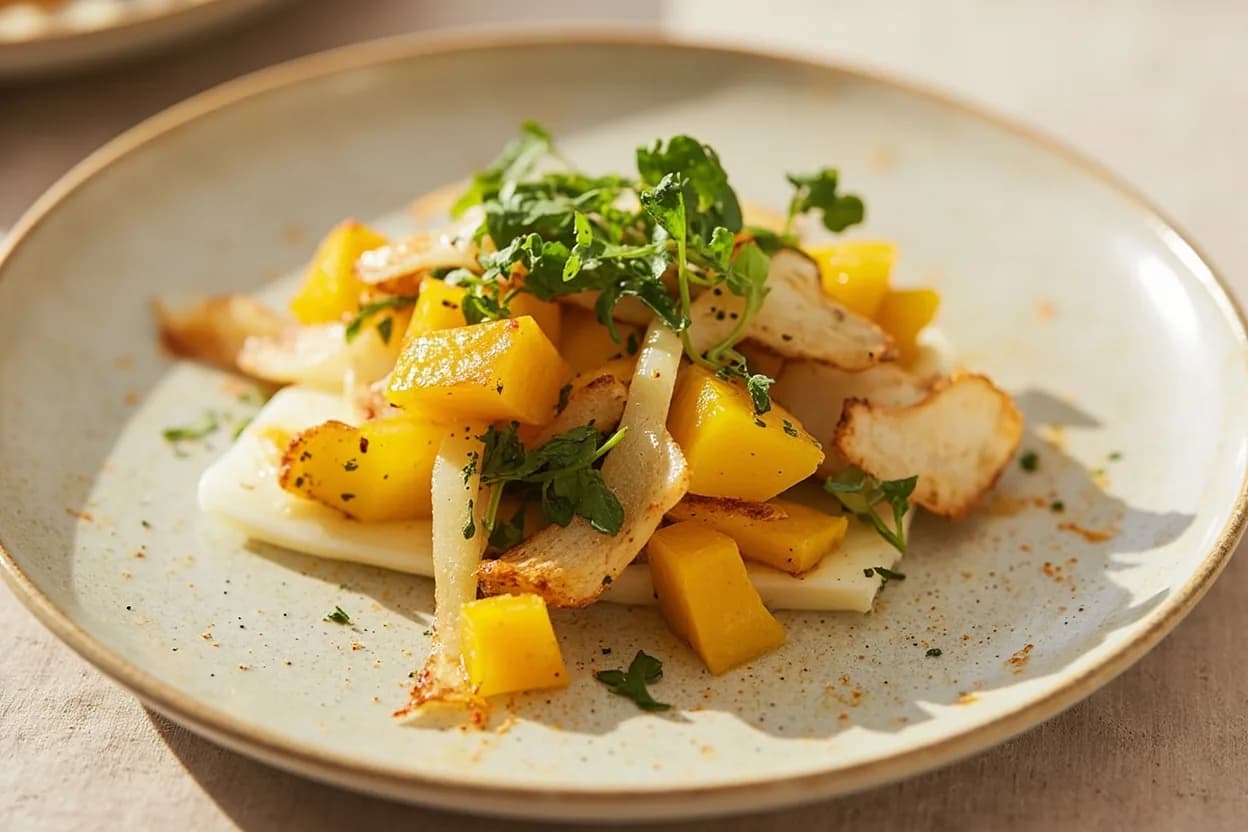
Amba's acid and funk against sharp or grilled cheese creates a South Asian-influenced chutney dynamic; the fenugreek sweetness echoes the malty notes in aged cheddar.
- Pulled pork
Amba's mango-vinegar tartness performs the same acid-cut role as North Carolina vinegar sauce on fattily braised pork — with a Middle Eastern spice profile instead.
- Fish tacos
Amba in place of or alongside crema brings turmeric-mango tartness to battered fish that deepens the dish beyond a simple lime-acid approach.
Brushed on charred corn with butter and salt, amba echoes Mexican elote's tangy-funky profile but in an Iraqi register, with fenugreek sweetness highlighting the corn's sugar.
- Oysters (cooked, not raw)
Roasted or grilled oysters with a thin streak of amba instead of hot sauce work surprisingly well — the brine of the oyster and the mango's residual sweetness find common ground.
Tread carefully
- Raw oystersavoid
Amba's musky fenugreek funk and assertive acid are too dissonant with the mineral, oceanic delicacy of raw oysters; a squeeze of lemon or light mignonette is correct.
- Mild, sweet dessertsavoid
Amba's fermented pungency and fenugreek bitterness clash irreparably with sweet pastry or dessert contexts — the funk belongs in savory territory.
- Cream-based soups or saucesavoid
The vinegar and fermentation acids will curdle cream and the fenugreek's maple-adjacent bitterness turns unpleasant when warmed in a dairy context.
How to use it
- Drizzle from a squeeze bottle onto assembled sandwiches for precise coverage
- Stir into yogurt or tahini to moderate the pungency for a more accessible dipping sauce
- Thin with water or lemon juice to create a salad dressing base
- Use as a marinade for chicken or lamb — the acid tenderizes and the turmeric colors the surface golden
- Add a tablespoon to hummus or baba ganoush during blending for depth without obvious identity
- Heat gently and spoon over roasted vegetables as a glaze
Appears in
Related flavours
The essential counterpart to amba in Israeli street food — fat against acid, sesame against mango, neutral against funky.
The defining spice in amba's character; understanding fenugreek's maple-bitter profile is key to predicting amba's pairings.
- Zhug (Yemenite Green Chili Sauce)
Another condiment often served alongside amba in sabich; the herb-heat of zhug and the fruity-acid funk of amba together bracket the full condiment range.
References
- 1.Jerusalem — Yotam Ottolenghi & Sami Tamimi
- 2.Zaitoun: Recipes from the Palestinian Kitchen — Yasmin Khan
- 3.Plenty More — Yotam Ottolenghi
Confidence: high
Notes
Iraqi origins, Israeli identity
Amba arrived in Israel in the 1950s with the massive aliyah (immigration) of Iraqi Jews following the establishment of the State of Israel. In Iraq, mango pickles were already an established tradition tied to South Asian pickling cultures brought via trade routes. The condiment quickly became embedded in Israeli street food, particularly in Tel Aviv's working-class markets, and today is considered as quintessentially Israeli as falafel — though its roots are squarely Iraqi.
Fenugreek as flavor key
The fenugreek in amba (methi) is what distinguishes it from other mango pickles. Fenugreek seeds contain sotolone, a lactone compound that at high concentrations smells of bitter celery or lovage, and at lower concentrations produces the characteristic maple-syrup-like aroma found in imitation maple syrup. In amba, it creates a slightly medicinal, sweet-bitter undertone that is the condiment's signature and the reason it tastes like nothing else.