Fats, Pastes & Condiments
Chimichurri
Also: salsa chimichurri, chimichurri verde, chimichurri rojo
Argentina's elemental herb sauce: raw parsley, garlic, and oregano punched with red wine vinegar — the one sauce that makes every grilled thing taste more of itself.
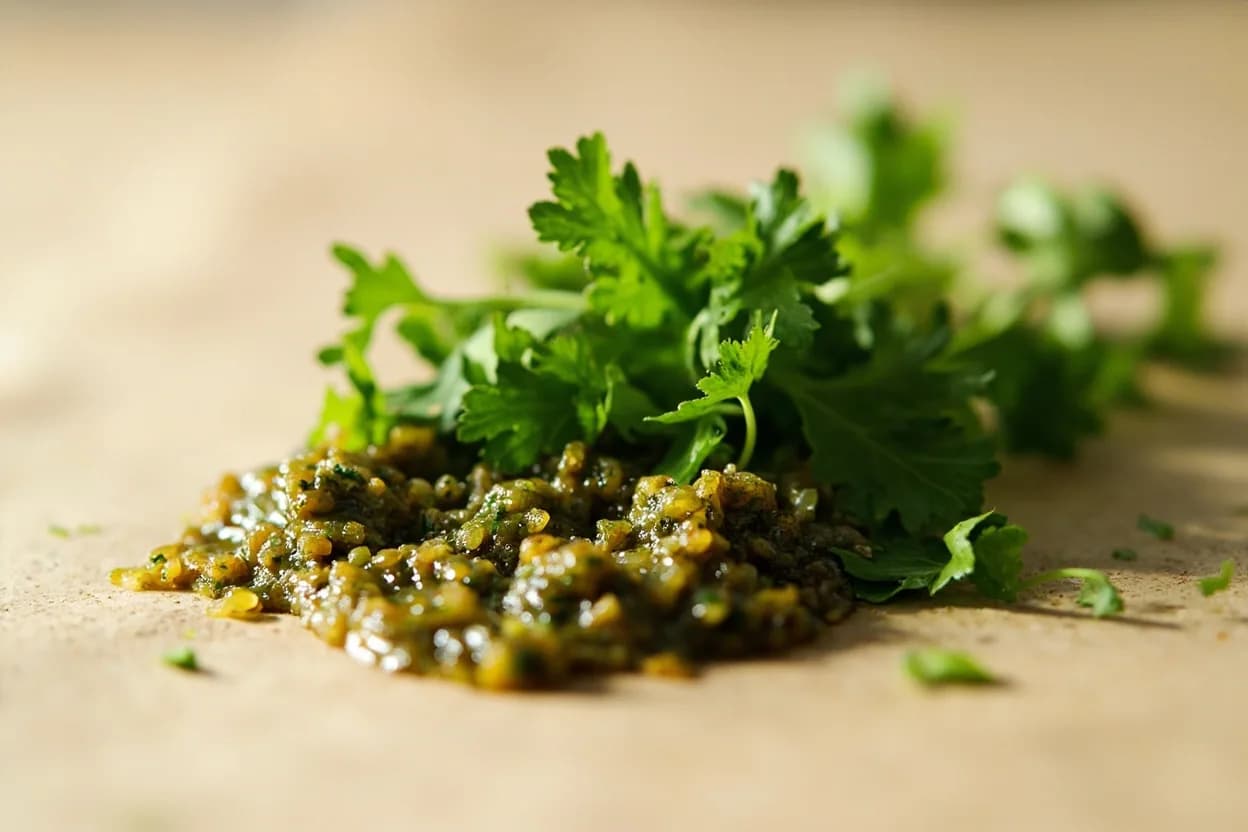
Chimichurri is Argentina's national condiment, a loose, uncooked herb sauce made from finely chopped flat-leaf parsley (and optionally cilantro), garlic, dried or fresh oregano, red wine vinegar, olive oil, and red chili flakes or fresh ají. Unlike pesto, it is not blended into a paste — the chopped herbs float in the oil-vinegar base, creating a textured sauce that is applied cold to hot meat. Verde is the standard; rojo substitutes roasted red peppers and paprika. The flavor profile is direct: herbal brightness from the parsley's chlorophyll, sharp pungency from raw garlic, earthiness from oregano, acid snap from red wine vinegar, and a back warmth from chili. It has no fat-softened complexity — everything is presented raw, vivid, and precise. It is both a sauce and a marinade, and at the asado it is the only condiment that matters.
In photos
Flavour profile
Classic pairings
- Beef (asado, skirt steak, short ribs)Argentine
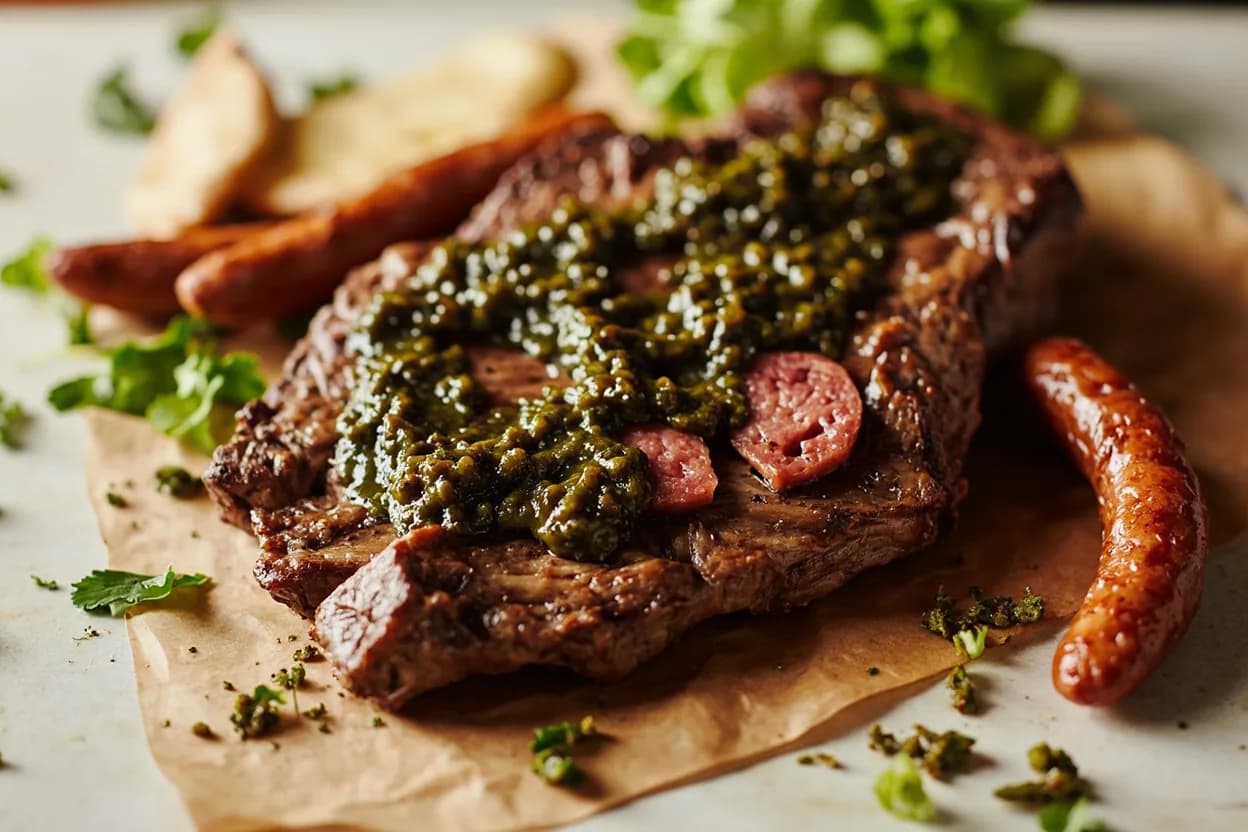
The defining pairing — chimichurri's raw-herb acid cuts through beef's rendered fat at the asado; the garlic resonates with the meat's own savory compounds developed during charcoal grilling.
- Chorizo (Argentine)Argentine
Argentine pork chorizo — sweeter and less paprika-forward than Spanish — is traditionally served with chimichurri; the herb brightness lifts the fatty sausage.
- EmpanadasArgentine
Dunked into or eaten alongside chimichurri, the flaky pastry and seasoned meat filling of an empanada gains an acidic, herbal dimension that prevents it from tasting heavy.
- Grilled chickenArgentine / Latin American
Chimichurri as both marinade and finishing sauce is the default Argentine preparation for pollo al disco or parrilla chicken; vinegar tenderizes while herbs penetrate the skin.
- Grilled vegetables (zucchini, eggplant, peppers)Argentine / Mediterranean
The raw herb sauce provides acid contrast to the sweetness produced by caramelized grilled vegetables; the raw garlic reads as bold against the soft, cooked vegetables.
- Crusty breadArgentine
At the asado, bread is used to mop juices and chimichurri from the plate — the oil soaks into the crumb while the herb solids cling to the crust.
- LambArgentine (Patagonian)
In Patagonia, chimichurri on slow-roasted lamb (cordero) is as classic as in Buenos Aires — the herb's freshness cuts the lanolin-fat of Patagonian lamb, and garlic amplifies the meat's gamey depth.
Adventurous pairings
- Roasted potatoes
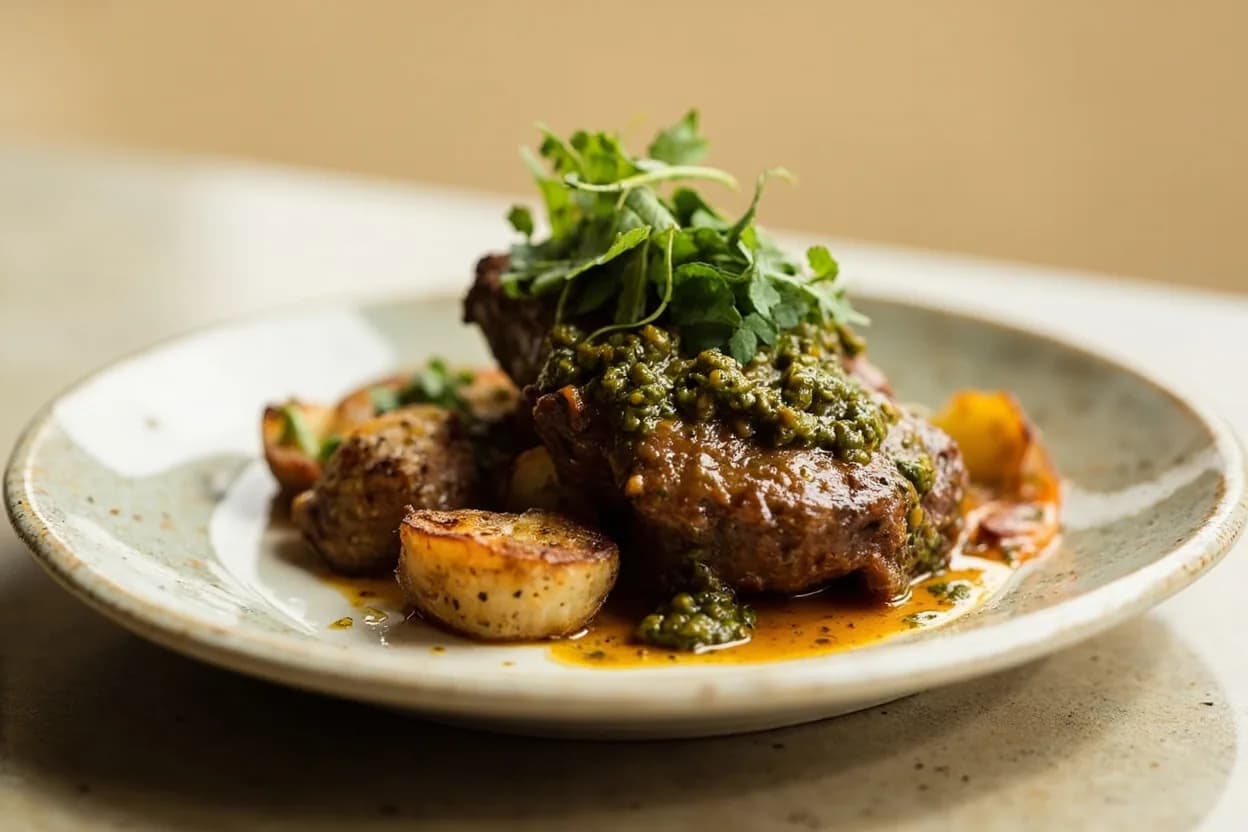
Chimichurri spooned over hot crispy-skinned roasted potatoes creates the kind of side dish that outperforms the main — garlic and vinegar turn humble potato into something extraordinary.
- Salmon
Chimichurri's acid and herb cleanly cut through salmon's rich omega-3 fat; the parsley's grassy note plays against the fish's characteristic iodine.
- Pizza (as a finishing sauce)
Drizzled over a hot pizza after baking, chimichurri performs the role of basil oil but with more acid aggression and garlic punch; a favorite in Argentine pizzerias.
- Eggs (fried or scrambled)
A tablespoon of chimichurri on eggs provides the acid and herb component that transforms a simple fried egg into a satisfying meal — common in Argentine households.
Cold burrata on a plate with chimichurri pooled around it is a study in acid-fat balance — the cream absorbs the vinegar's sharpness and the parsley provides color and freshness.
Tread carefully
- Delicate raw fish (sashimi)avoid
Raw garlic's pungency and red wine vinegar's tartness overpower and chemically alter the surface of raw fish; the acid begins to cook the proteins (ceviche-style) in an uncontrolled way.
- Cream-based pasta saucesavoid
Red wine vinegar causes cream to curdle; additionally, the raw, aggressive herb character clashes with béchamel or cream's soft, dairy-forward profile.
- Chocolate dessertsavoid
The garlic and vinegar in chimichurri are categorically incompatible with the fat-sweet-bitter profile of chocolate; no fusion logic bridges this gap.
How to use it
- Chop herbs by hand rather than blending — chopping preserves cell structure for a more textured, vivid sauce; blending creates a darker, muddier paste
- Let the finished sauce rest 30 minutes minimum before serving — acid softens the raw garlic edge and the oil absorbs the herb aroma
- Use as a marinade: coat meat 2–24 hours before grilling; vinegar tenderizes and herbs penetrate surface layers
- Spoon onto hot meat directly from the plate — cold sauce hits hot meat and the oil carries herb compounds into the fat cap
- Make in large batches — chimichurri keeps refrigerated for 1 week, improving in integration after day two
- For rojo variant: add roasted red peppers, smoked paprika, and reduce parsley by half
Appears in
Related flavours
- Parsley
Flat-leaf parsley is the structural backbone of chimichurri; its chlorophyll-fresh, slightly bitter character defines the sauce.
- Gremolata
The Italian cousin of chimichurri's logic — parsley, garlic, and lemon zest applied raw to hot braised meat (ossobuco); same acid-herb-garlic principle, different cultural context.
- Salsa Verde (Italian)
Another raw herb-acid sauce with anchovy and capers in the base — shares chimichurri's function of cutting rich meat with herb brightness.
References
- 1.The Art of South American Cooking — Rafael Palomino
- 2.Seven Fires: Grilling the Argentine Way — Francis Mallmann
- 3.The Flavor Bible — Karen Page & Andrew Dornenburg
Confidence: high
Notes
Etymology debate
The origin of the word 'chimichurri' is contested. The most plausible theory attributes it to Basque immigrants in Argentina — 'tximitxurri' meaning roughly 'a mixture of several things in no particular order.' Other theories trace it to British soldiers mispronouncing 'give me the curry' during 19th-century conflicts with Argentina. The Basque etymology is linguistically more credible and aligns with the Basque community's documented role in the cattle culture of the Pampas.
Verde vs. rojo
Verde (green) is the original and most common form — parsley-dominant, bright, raw-herb forward. Rojo (red) is a variant that adds roasted red peppers, tomato, smoked paprika, and sometimes cumin — it is thicker, sweeter, and more sauce-like. Rojo pairs particularly well with pork and chicken, where verde's raw garlic brightness can be overpowering. In Argentina, both versions appear at the asado table, and serious grill cooks maintain that each cut of meat has its correct form.