Teas & Beverages
Chicory Root
Also: chicory, endive root, succory, Cichorium intybus root, café chicorée
A roasted, bitter-earthy root that doubles as a caffeine-free coffee surrogate and flavor-deepening additive — the soul of New Orleans café au lait.
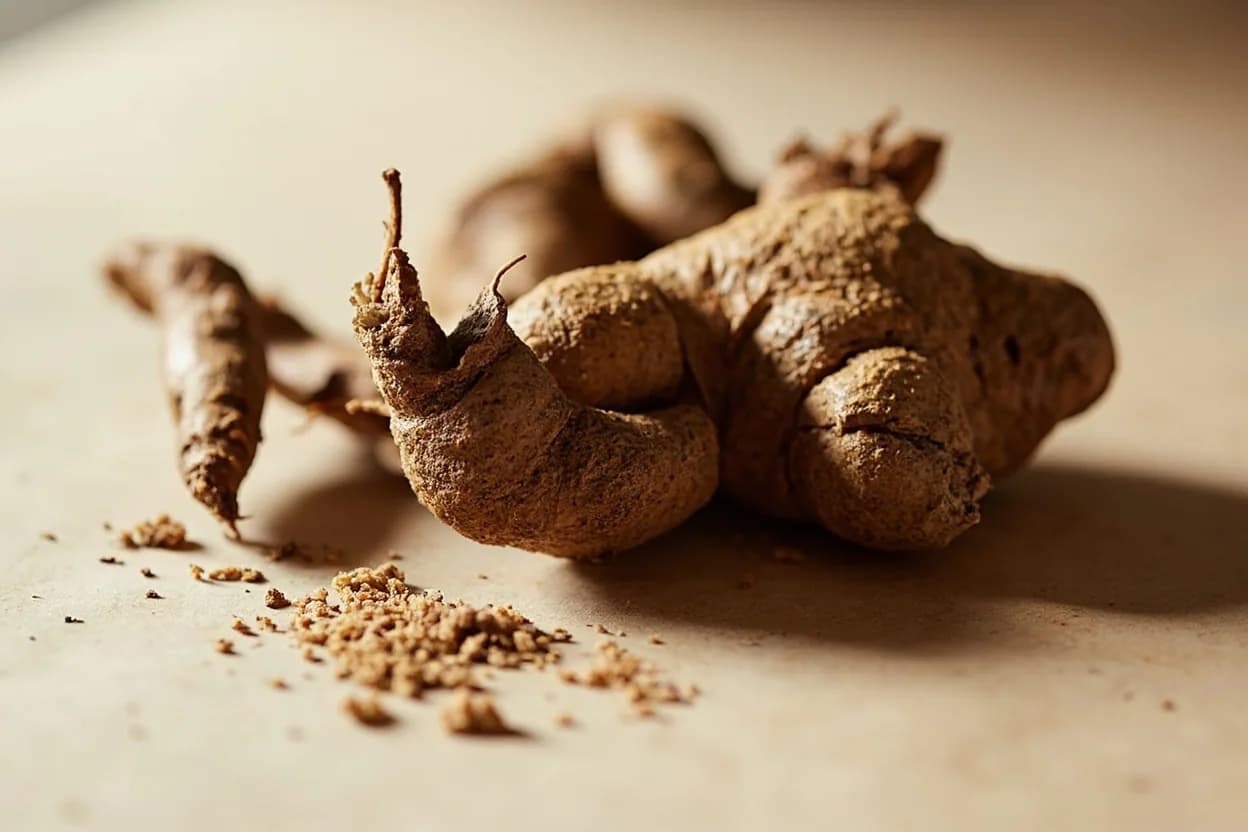
Chicory root (Cichorium intybus) is the dried and roasted taproot of the chicory plant, a perennial herb in the daisy family native to Europe. The root contains inulin (a prebiotic dietary fiber) along with bitter sesquiterpene lactones (primarily lactucopicrin) that give it an assertive bitterness. Roasting caramelizes the inulin into fructans and triggers Maillard reactions, producing a dark, coffee-like powder with bitter chocolate and woody, earthy notes. Soluble in hot water, roasted chicory is used as both a coffee substitute and additive — most famously in Louisiana where Creole tradition blends it 60/40 with dark-roast coffee. The root's prebiotics also provide mild digestive benefits.
In photos

Flavour profile
Classic pairings
- Dark-roast coffee (French or Creole roast)American (Louisiana Creole)
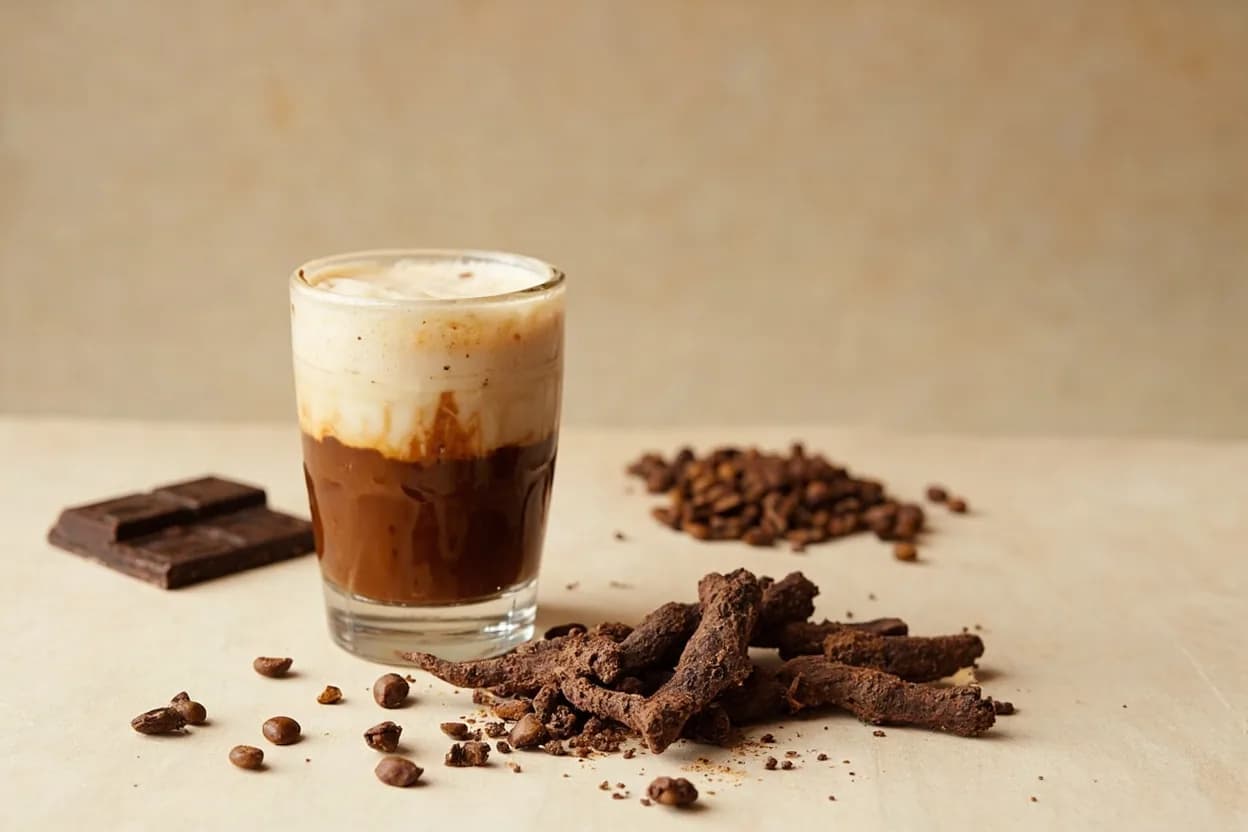
The definitive pairing — chicory blended with dark-roast coffee (the New Orleans café du monde style) deepens the cup's bitter-earthy body without adding caffeine, while roasted coffee's acidity brightens chicory's flat earthiness.
- Whole milk and condensed milk (café au lait)American (Louisiana), French
New Orleans café au lait is chicory coffee cut 50/50 with hot milk — the fat and lactose sweetness round the bitterness into a velvety, balanced drink. Condensed milk amplifies richness in Vietnamese-influenced versions.
- Dark chocolateFrench, American
Chicory root powder stirred into hot chocolate or brownie batter deepens the chocolate's bitterness and adds a coffee-adjacent earthiness — they share roasted flavor compounds including furans and pyrazines.
- HoneyEuropean herbal tradition
Honey's floral sweetness and mild acidity are the classic sweetener for chicory tea — it softens the aggressive bitterness while adding aromatic complexity that sugar alone cannot match.
- VanillaAmerican, French
Vanilla's sweet, floral creaminess is the standard flavoring added to chicory coffee blends and roasted grain beverages — it rounds the bitter edge into a gentler, more dessert-like drink.
- CinnamonMiddle Eastern, American
Cinnamon's warm spice and sweetness cut through chicory's flat bitterness in spiced chicory lattes and herbal teas — a natural pairing in both Middle Eastern coffee traditions and Western herbal infusions.
- Beignets and fried doughAmerican (Louisiana Creole)
The canonical New Orleans pairing — the sweetness and fat of sugar-dusted beignets provide direct contrast to the bitter depth of chicory café au lait, each making the other taste more itself.
Adventurous pairings
- Stout beer
Roasted chicory root powder added to a stout (or used in homebrewing) amplifies the beer's dark malt bitterness and adds an earthy complexity — a technique used in craft brewing for coffee-stout variants without actual coffee.
- Orange zest
Orange's bitter citrus oils resonate with chicory's bitterness but add aromatic brightness — a chicory tea with orange peel reads as clean and almost floral rather than flat and heavy.
Molasses's deep, earthy sweetness and mineral bitterness have natural affinity with chicory's roasted character — together in a dark bread or baking context they create a complex, almost coffee-cake depth.
- Cardamom and rose water (Indian Ayurvedic tradition)
Chicory is used in Indian herbal coffee (Cafix, Raagi) blended with cardamom and rose water — the spice and floral notes transform the bitter root into something perfumed and aromatic.
Chicory root's bitterness mirrors the bite of aged blue cheese in a composed salad or cheese-board pairing — both flavors share an assertive, slightly funky character that creates balance through resonance rather than contrast.
Tread carefully
- Delicate white teas and green teasavoid
Chicory's roasted bitterness overwhelms the subtle, grassy sweetness of high-grade green or white teas — blend only with robust, dark-roast beverages.
- Fresh berries and light fruit flavorsavoid
Chicory's earthiness muddies the brightness of fresh berry flavors — its bitter-roasted character has no productive relationship with fruity acidity.
- Very sweet, one-dimensional dessertsavoid
Too much chicory bitterness in pure sugar confections (hard candies, light frostings) reads as a defect rather than complexity — use sparingly and only where the bitterness has something to work against.
How to use it
- Brew like coffee: use 1–2 tablespoons per cup of near-boiling water (200°F / 93°C) and steep 4–5 minutes; strain and serve
- Blend 20–40% chicory with dark-roast coffee grounds for depth without additional caffeine
- Add a teaspoon of chicory powder to hot chocolate, brownies, or chocolate cake batter to deepen chocolate flavor
- Use as a caffeine-free coffee substitute in tiramisù or coffee-flavored desserts
- Steep in warm milk for a non-caffeinated bedtime drink; strain and sweeten with honey
Appears in
Related flavours
- Roasted Dandelion Root
Very close functional relative — also bitter, earthy, coffee-like; often blended with chicory in herbal coffee formulations
- Maca Root
Another Andean root used in coffee-like beverages — earthier and maltier than chicory, but shares the herbal-coffee substitute category
The ingredient chicory is most commonly paired with; they share roasted pyrazines and furan flavor compounds, making them genuinely synergistic rather than merely similar
References
- 1.The Encyclopedia of Herbs, Spices and Flavorings — Elizabeth Lambert Ortiz (Dorling Kindersley, 1992)
- 2.Real Cajun — Donald Link (Clarkson Potter, 2009)
- 3.On Food and Cooking: The Science and Lore of the Kitchen — Harold McGee (Scribner, 2004)
- 4.The New Wildcrafted Cuisine — Pascal Baudar (Chelsea Green Publishing, 2016)
Confidence: high
Notes
Inulin and digestion
Chicory root is one of the richest natural sources of inulin, a prebiotic dietary fiber that feeds beneficial gut bacteria. Inulin is not digested in the stomach and reaches the colon intact, where it ferments — which is why large amounts of chicory can cause gas and bloating. For most people, a tablespoon or two in a beverage is well within comfortable range; chicory-based beverages have been prescribed for digestive health in European herbal medicine for centuries.
The wartime coffee
Chicory's role as a coffee substitute became critical during periods of war-era coffee rationing — in Napoleon's France during the Continental Blockade, in Germany during both World Wars, and in Louisiana during the American Civil War when Union blockades cut off coffee imports. In each case, local cooks blended whatever they had with chicory and, over time, the blend became a preferred taste in its own right — the origin of Louisiana's distinctive chicory coffee culture.