Herbs
Dill
Also: dill weed, Anethum graveolens, dill leaf, shabt (Persian), kopar (Russian), ukrop (Ukrainian)
The feathery, anise-grassy herb that bridges Scandinavian cold-cures and Persian golden rice in a single aromatic breath.
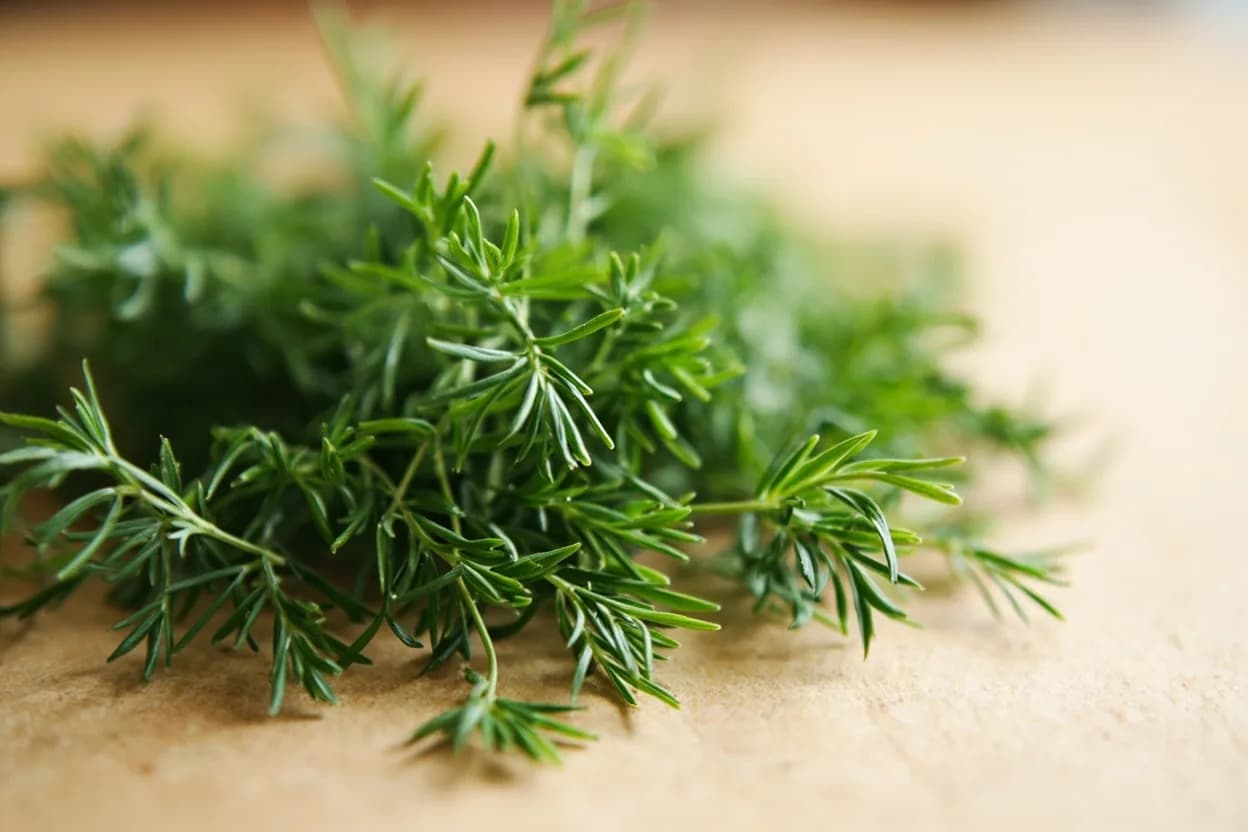
Dill (Anethum graveolens) is an annual herb whose wispy, thread-like leaves and hollow stems carry a distinctive flavour: fresh, grassy, and gently anise-like, underscored by a slight citrus-limonene brightness. The fresh herb is softer and more volatile than its dried counterpart; the seeds are sharper and more caraway-adjacent. Dill is indispensable in Scandinavian cured fish (gravlax), eastern European pickles, Persian herb rice (sabzi polo), and throughout the cuisines of the Mediterranean, Middle East, and Central Asia. It bridges the roles of brightness enhancer and primary herb with equal ease.
In photos
Flavour profile
Classic pairings
- salmonScandinavian
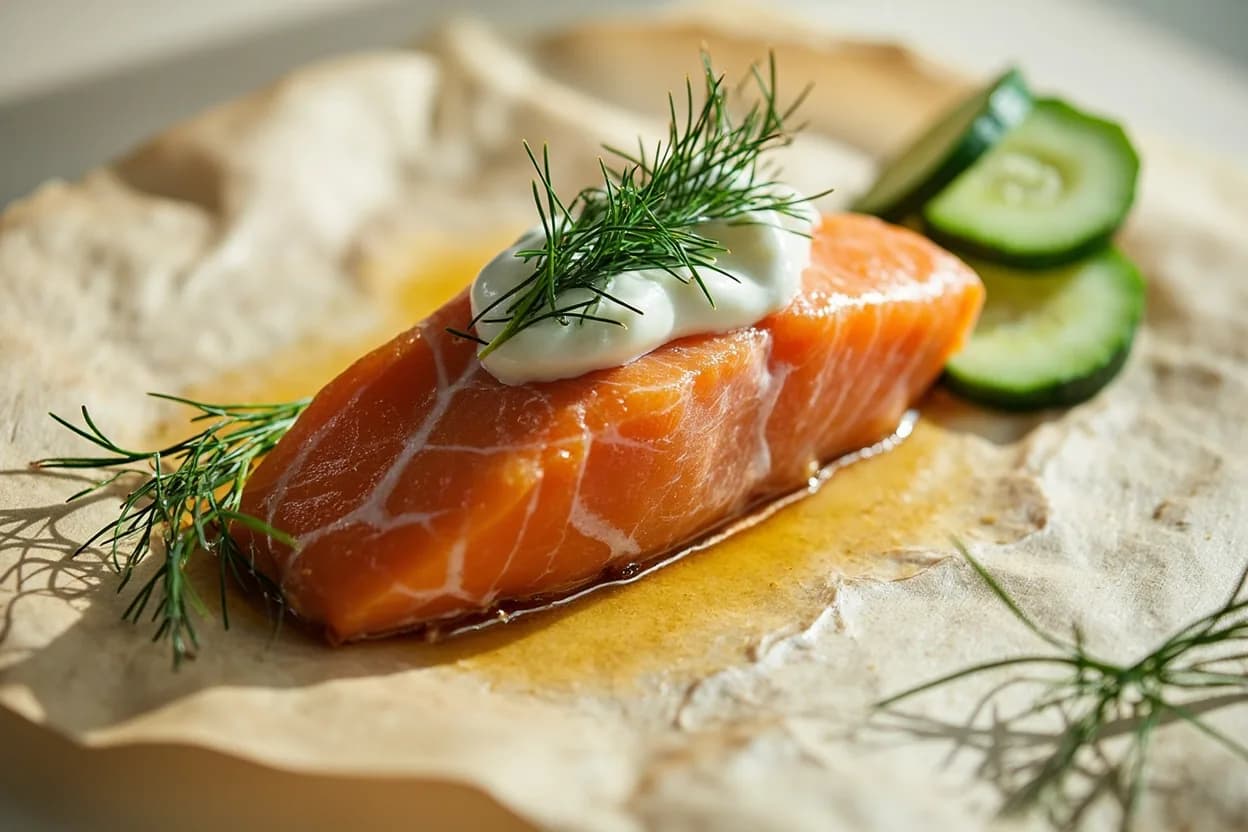
The defining partnership: dill's fresh anise note balances salmon's fat and iron richness in gravlax, dill butter, and cream sauces — an almost chemical-level compatibility.
- cucumberGreek, Eastern European, Scandinavian
Dill and cucumber share overlapping aromatic compounds (cucumber aldehydes and dill's fresh green notes align); together in tzatziki, salads, and pickles they amplify each other.
- sour cream and crème fraîcheEastern European, Scandinavian
The dairy's tang and fat soften dill's bite and carry its volatile aromatics evenly; the classic base for dips, potato salads, and Eastern European sauces.
- potatoScandinavian, Russian, Georgian
Dill over boiled new potatoes is a summer classic from Sweden to Georgia; starchy potatoes absorb the herb's aromatics without competing.
- eggPersian, Eastern European
In Persian cooking and Eastern Europe, dill in egg dishes — frittatas, kuku sabzi, deviled eggs — is the first-choice herb; its lightness complements egg's richness.
- cider vinegar and brineEastern European, American
Dill is the canonical pickling herb for cucumbers, carrots, and green beans throughout Germany, Poland, Russia, and the American South; its oils perfume the brine.
- basmati ricePersian
In Persian tahdig and sabzi polo, dill is combined with fenugreek, parsley, and chives to create the fragrant herb layer; dill is the dominant anise-green note.
Adventurous pairings
- avocado
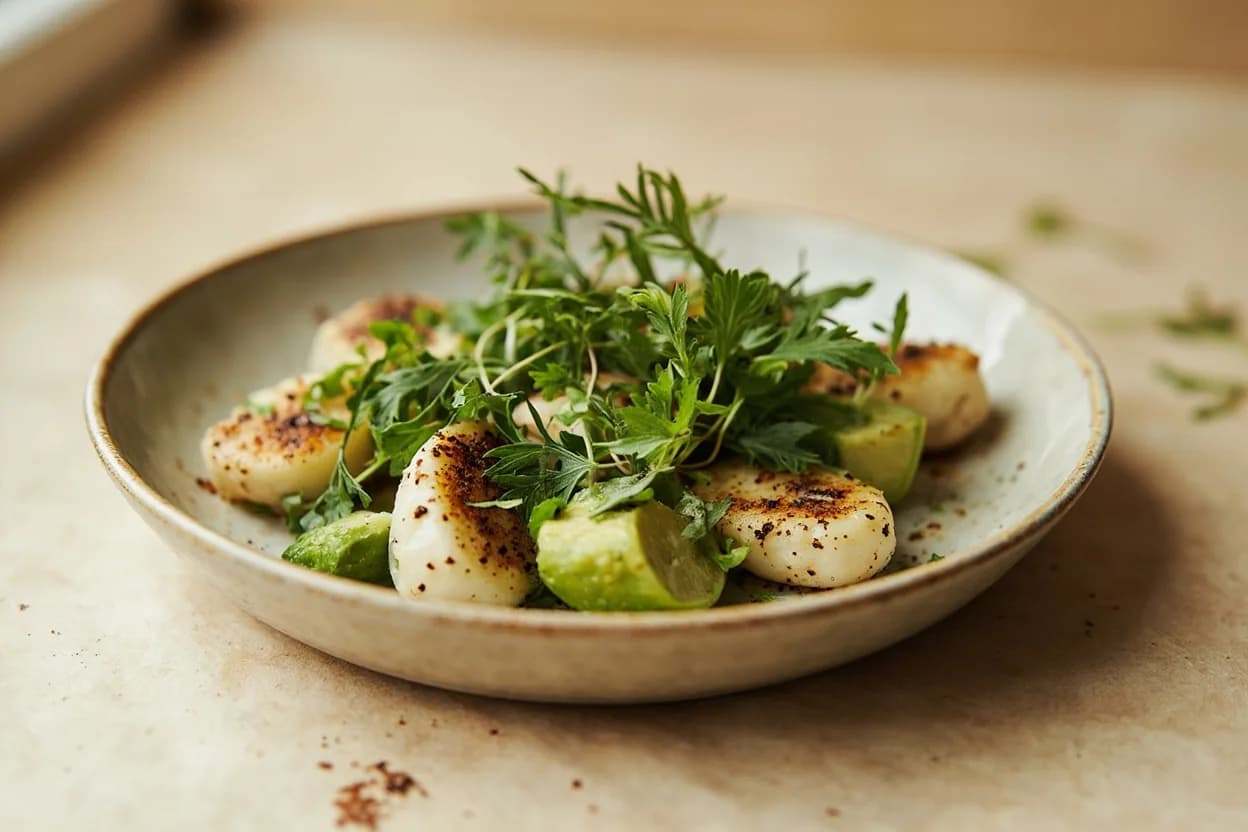
Dill's grassy anise cuts through avocado's butteriness more decisively than cilantro; works in modern toast preparations, tartare, or ceviche-style dressings.
- oysters
A small amount of fresh dill in a mignonette or compound butter introduces a Scandinavian register to oysters; dill's marine-adjacent green note resonates with briny shellfish.
- watermelon
Dill and watermelon is a Georgia (Caucasus) summer classic — the herb's anise-fresh bite provides a herbal counterpoint to the fruit's sweet-watery flesh.
- feta and preserved lemon
Dill's gentle anise bridges the saltiness of feta and the floral bitterness of preserved lemon in grain salads and roasted vegetable dishes.
- white miso
Dill stirred into white miso butter for roasted fish or vegetables creates a Scandinavian-Japanese hybrid — both are ferment-forward; dill's brightness cuts through miso's sweetness.
Tread carefully
- basil (combined as co-equal herbs)avoid
Both are assertive and aromatic; their anise registers compete rather than harmonize — Mediterranean herb blends typically choose one, not both.
- strong spices (cumin, heavy garam masala)avoid
Dill's delicate volatile compounds are overpowered and muddied by pungent warm spices; it belongs in lighter, acid-forward contexts.
- red wine reductionsavoid
Tannin-heavy red wine sauces turn dill's fresh green notes sour and herbal in an unpleasant way; stick to white wine or cream-based finishes if using dill.
How to use it
- Add fresh dill at the very end of cooking or off heat — its volatile oils evaporate within minutes over direct heat
- Dill butter (compound butter): blend into softened butter with lemon zest; freeze for use on grilled fish or vegetables
- For pickling, add whole fresh dill heads (flower and all) to brine — the seeds carry more punch than the fronds
- In Persian rice (sabzi polo), layer dry dill into the rice before the dum (steam phase) — the enclosed steam holds the aromatics
- Blitz fresh dill with olive oil and freeze in ice cubes for year-round use in sauces and dressings
- Dried dill (dill weed) works well in cooked applications like stews and dips where heat integration is desired
Appears in
Related flavours
- Fennel Frond
Shares dill's feathery texture and anise register; slightly sweeter and more aromatic — often substitutable in fish dishes
The French equivalent of dill's anise-herb role; more intense licorice, less grassy — use in French preparations where dill would feel out of place
- Chervil
The most delicate of the anise-herb family; used in fine French cooking where dill would overpower
References
- 1.The Flavor Bible — Karen Page & Andrew Dornenburg (Little, Brown, 2008)
- 2.Plenty — Yotam Ottolenghi (Chronicle Books, 2011)
- 3.The Complete Cook's Country TV Show Cookbook — America's Test Kitchen (2012)
- 4.Food of the Scandinavian Countries — Solveig Rekstad (Northlight, 2009)
- 5.Sabzi — Sabrina Ghayour (Mitchell Beazley, 2021)
Confidence: high
Notes
Fresh versus dried: two different herbs
Fresh dill fronds and dried dill weed behave so differently that treating them as equivalent is a culinary mistake. Fresh dill's primary compounds (phellandrene, carvone, limonene) are extremely volatile — they disappear in minutes over heat, which is why fresh dill is added at the very end or off heat. Dried dill has lost most phellandrene and concentrates carvone, which gives it a sharper, more caraway-like character. The two have different applications: fresh dill for finishing and raw preparations, dried dill for brines, long-cooked stews, and spice rubs where heat stability matters.
Dill as a culinary axis between cuisines
Few herbs span such geographically distant cuisines with equal authenticity. Dill is as central to Persian cuisine as it is to Scandinavian, as important to Eastern European Jewish cooking (pickles, borscht) as to Greek. This cosmopolitan reach reflects the herb's origin in the eastern Mediterranean and its spread along ancient Silk Road spice routes — the same journey that planted it in Indian Ayurvedic medicine and Central Asian rice pilafs.