Spices & Dried Aromatics
Marjoram
Also: sweet marjoram, Origanum majorana, knotted marjoram
Oregano's quieter, sweeter sibling — warm and floral with a delicate pine-citrus depth that makes everything it touches taste more itself.
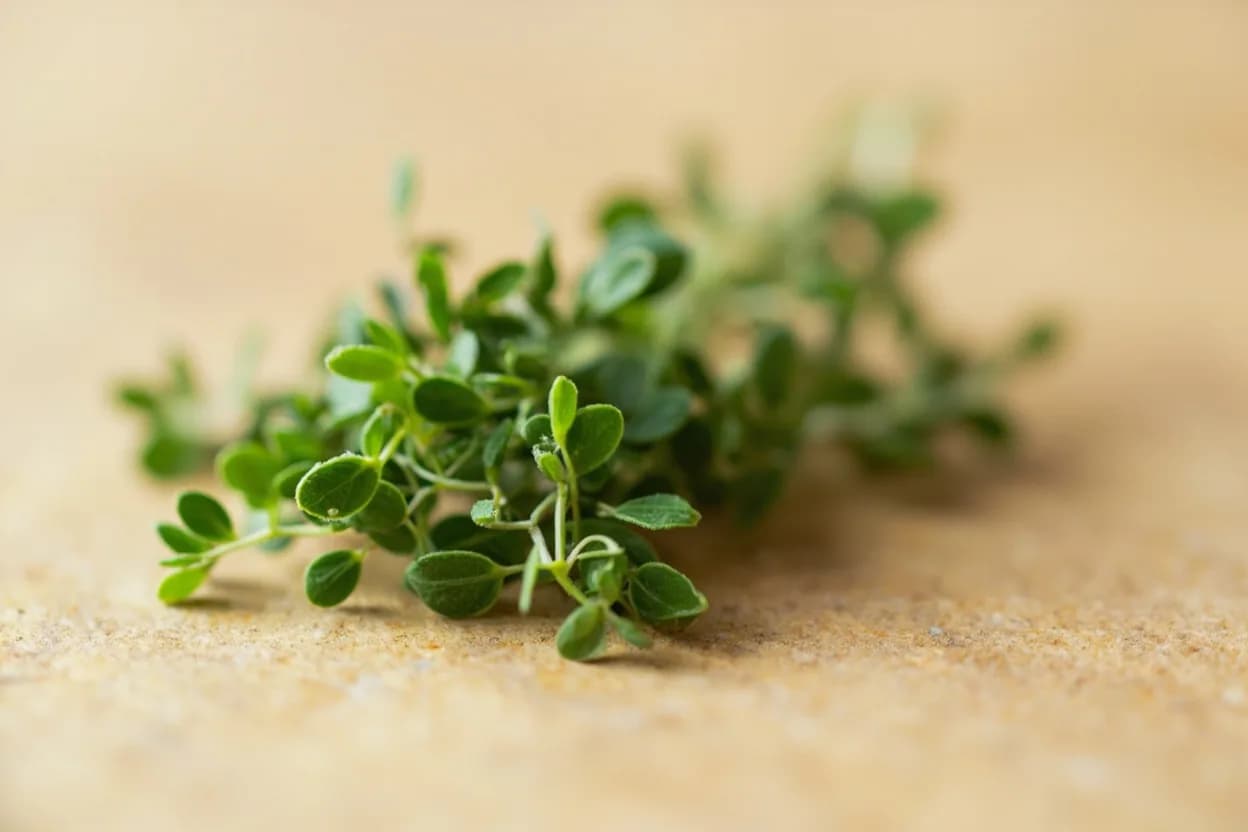
Marjoram (Origanum majorana) is a close relative of oregano but substantially more delicate and sweet. Where oregano is pungent and assertive, marjoram is tender, floral, and warm — dominated by terpinene-4-ol and sabinene rather than carvacrol. It is native to the Mediterranean and Middle East, widely used in German, Greek, Polish, and Italian cooking. Both fresh and dried marjoram are valued: dried concentrates the sweet, camphorous warmth; fresh retains grassy, floral delicacy. It is the essential herb of German sausages, poultry stuffings, and Mediterranean vegetable dishes.
In photos
Flavour profile
Classic pairings
- Pork sausage (Wurst)German
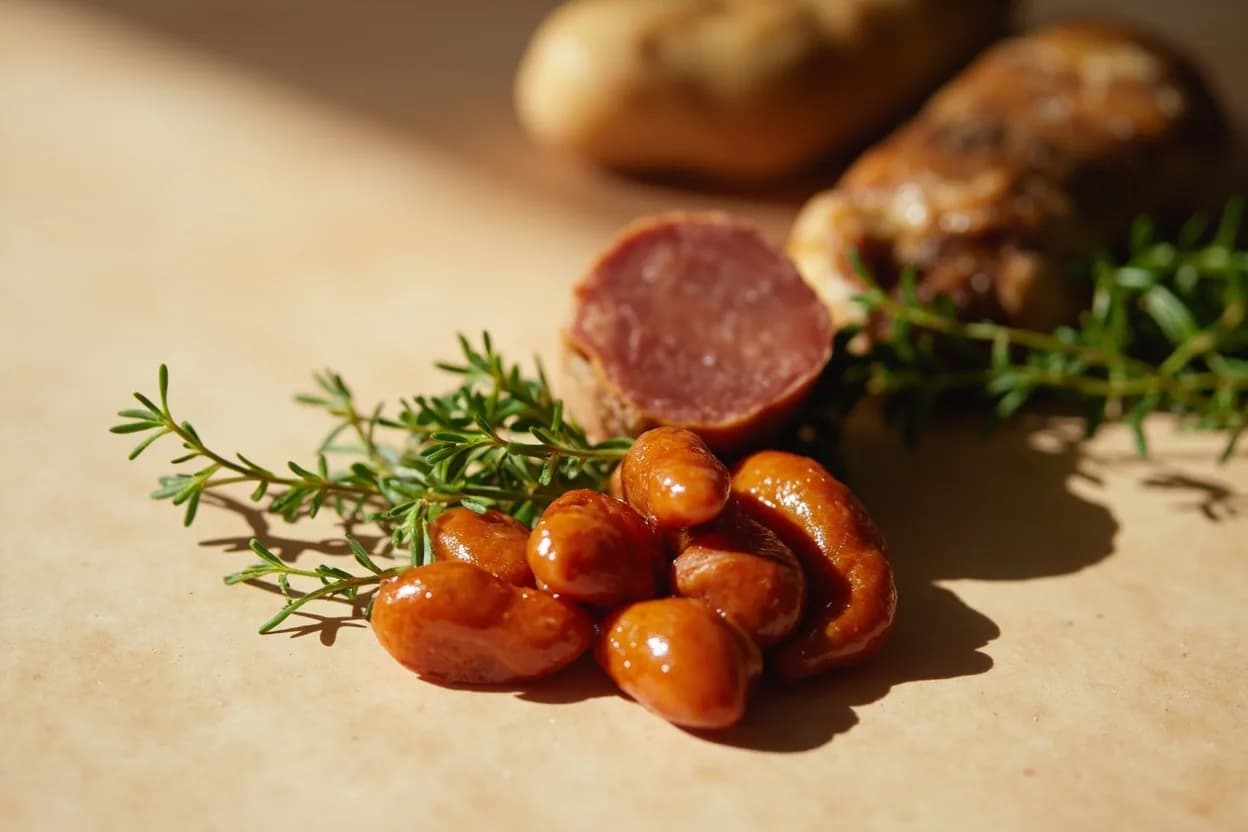
Marjoram is the defining herb of German sausage-making — Bratwurst, Leberwurst, and Thüringer would be unrecognisable without it. Its sweetness threads through fatty pork and offal.
- Chicken and poultryFrench / German / Italian
Marjoram is the classic stuffing and roasting herb for chicken — gentler than thyme, it scents the bird without overpowering delicate white meat.
- LambGreek / Italian
Marjoram's sweet warmth moderates lamb's gaminess in Greek souvlaki marinades and Italian lamb roasts — pairs especially well with garlic and lemon.
- Zucchini and summer squashProvençal / Italian
Marjoram's soft, floral warmth lifts watery vegetables — a Provençal and Italian staple for tian and ratatouille-style gratins.
- TomatoItalian
Marjoram in tomato sauce is a Southern Italian tradition; it is sweeter and less dominant than oregano, allowing tomato's own character to come through.
- Egg (frittata, omelette)Italian / German
Marjoram's gentle warmth is one of the best herb complements to eggs — used in frittatas across central Italy and in German herb omelettes.
- Lentils and legumesPolish / Czech
Polish and Czech soups use marjoram in lentil and split-pea preparations; it bridges the earthiness of legumes with herbal warmth.
Adventurous pairings
- Mushroom (porcini, cremini)
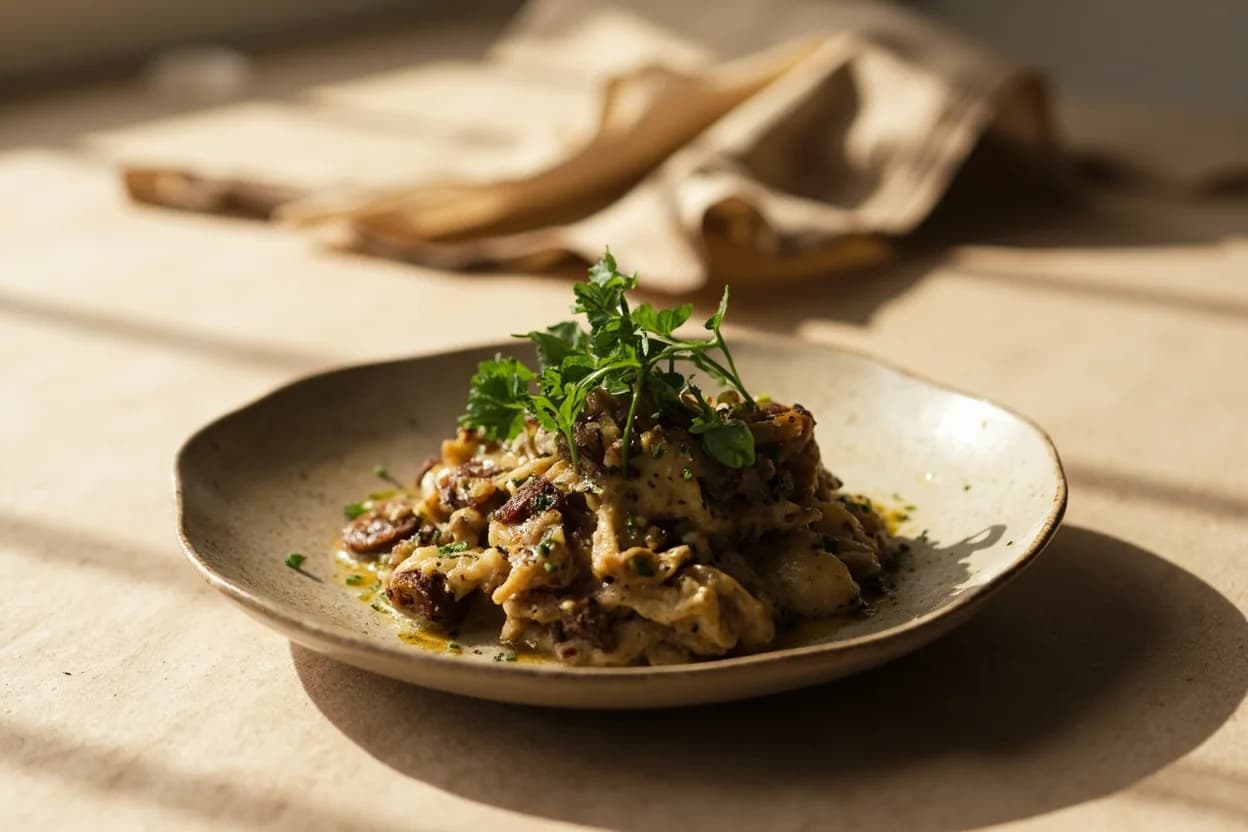
Marjoram's warm-sweet profile deepens mushroom's umami without competing; excellent in wild mushroom ragù and compound butters.
- Honey
Marjoram flowers are a prized source of monofloral honey in Greece and Portugal; the herb itself infused into honey creates a complex, floral-savoury condiment.
- Goat cheese
Marjoram's floral warmth complements chèvre's tang — used in baked goat cheese dishes, herb-crusted rounds, and Mediterranean salads.
- White wine (as a braising liquid)
Marjoram bloomed in white wine and butter makes an elegant braising base for chicken or veal; the alcohol carries the herb's volatile terpenes into the dish.
- Roasted carrot
The carrot's natural sweetness is amplified by marjoram's floral notes — a pairing found in contemporary Mediterranean vegetable cookery.
Tread carefully
- Strong spices (cumin, cloves, star anise)avoid
Marjoram's delicacy is erased by assertive, pungent spices — it cannot hold its own in heavily spiced environments; use oregano instead.
- Long-cooked braises (added too early)avoid
Unlike rosemary and thyme, marjoram loses its floral character with prolonged heat; add in the final 10–15 minutes of cooking or after the heat is off.
- Raw red meatavoid
Marjoram's sweetness reads as incongruous against the iron-rich savoriness of raw or barely seared red meat — better as a finishing herb for cooked preparations.
How to use it
- Add dried marjoram early to fat at the start of German sausage-making — heat opens its volatile oils into the pork
- Crumble dried marjoram into your palm and rub between hands before adding — this bruises the dried herb and releases oils that heat alone would not
- Use fresh marjoram as a finishing herb: scatter over frittata, pasta, or roasted vegetables just before serving
- Make a compound butter with marjoram, lemon zest, and garlic for finishing roasted chicken or pork chops
- Infuse in olive oil (3 days, room temperature) for a fragrant drizzling oil over white beans or grilled fish
- Include in bouquet garni alongside parsley, bay, and thyme for stocks and braises — remove before serving
Appears in
Related flavours
- Oregano
The botanical parent — more pungent, less sweet, better suited to long cooking and robust preparations where marjoram would fade.
- Thyme
Classic companion in the French fines herbes tradition; thyme's savoury thymol contrasts with marjoram's sweet terpinene-4-ol to create complexity.
Marjoram and garlic are inseparable in Mediterranean sausage-making, herb pastes, and roasted poultry — their combined aromatics are a pillar of the region's cooking.
References
- 1.On Food and Cooking — Harold McGee (Scribner, 2004)
- 2.The Flavor Bible — Karen Page & Andrew Dornenburg (Little, Brown, 2008)
- 3.An Omelette and a Glass of Wine — Elizabeth David (Penguin, 1984)
- 4.The Oxford Companion to Food — Alan Davidson (Oxford University Press, 3rd ed., 2014)
- 5.Charcuterie: The Craft of Salting, Smoking and Curing — Michael Ruhlman & Brian Polcyn (Norton, 2005)
Confidence: high
Notes
Marjoram vs. oregano
The confusion is genuine — both are Origanum species and share overlapping chemistries. The practical difference: oregano (O. vulgare) is dominated by carvacrol and thymol, giving it punch and heat that survives long cooking. Marjoram (O. majorana) is dominated by terpinene-4-ol and sabinene, making it sweeter, more floral, and heat-sensitive. Oregano belongs in long-cooked tomato sauces and pizza; marjoram belongs in sausages, stuffings, and finishing applications.
The German sausage connection
No herb is more characteristic of the German sausage tradition than marjoram. The Thuringian Bratwurst — arguably Germany's most iconic sausage — is distinguished precisely by its marjoram-forward seasoning. This sets it apart from Bavarian or Nuremberg styles. When Germans describe the smell of a proper Wurst, they are often smelling marjoram.