Sweet Aromatics
Matcha
Also: ceremonial green tea powder, koicha, usucha, tencha (pre-ground)
Japan's stone-ground ceremonial green tea — grassy, bitter, umami-rich, and deeply aromatic — that balances sweetness like no other ingredient.
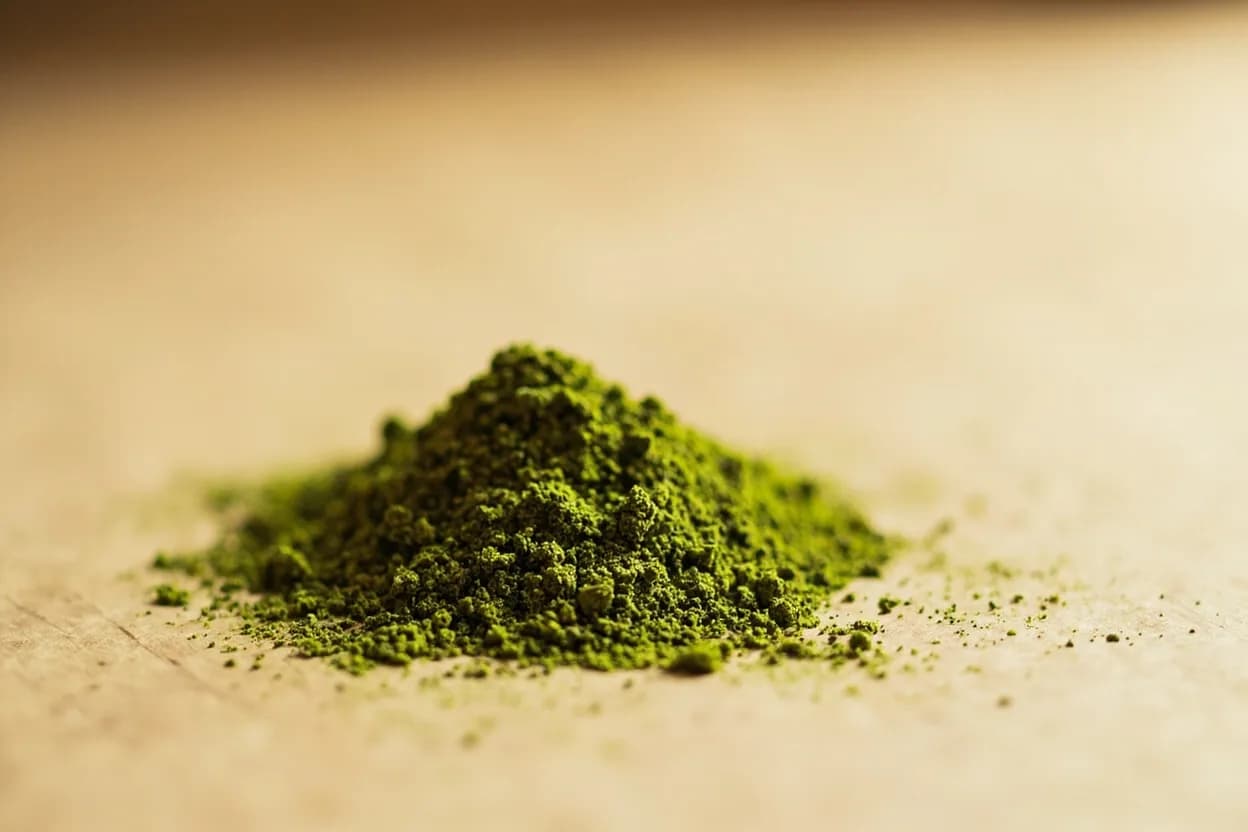
Matcha is stone-ground powder made from tencha, shade-grown green tea leaves that have been deveined and destemmed before grinding. Shade-growing (3–4 weeks before harvest) forces the plant to increase chlorophyll and L-theanine production while decreasing catechin (tannin) conversion, resulting in a deeply green, umami-forward, mellow-bitter leaf. The catechins and chlorophyll in matcha account for its distinctive grassy-marine bitterness. L-theanine provides the 'calm alertness' feeling and contributes to matcha's savory depth (it enhances umami perception). Ceremonial grade is intended for drinking and has the most complex flavor; culinary grade is more bitter and is better suited to baking and cooking. Matcha's vibrant green color oxidizes rapidly on exposure to heat and light.
In photos
Flavour profile
Classic pairings
- White chocolateJapanese-French patisserie
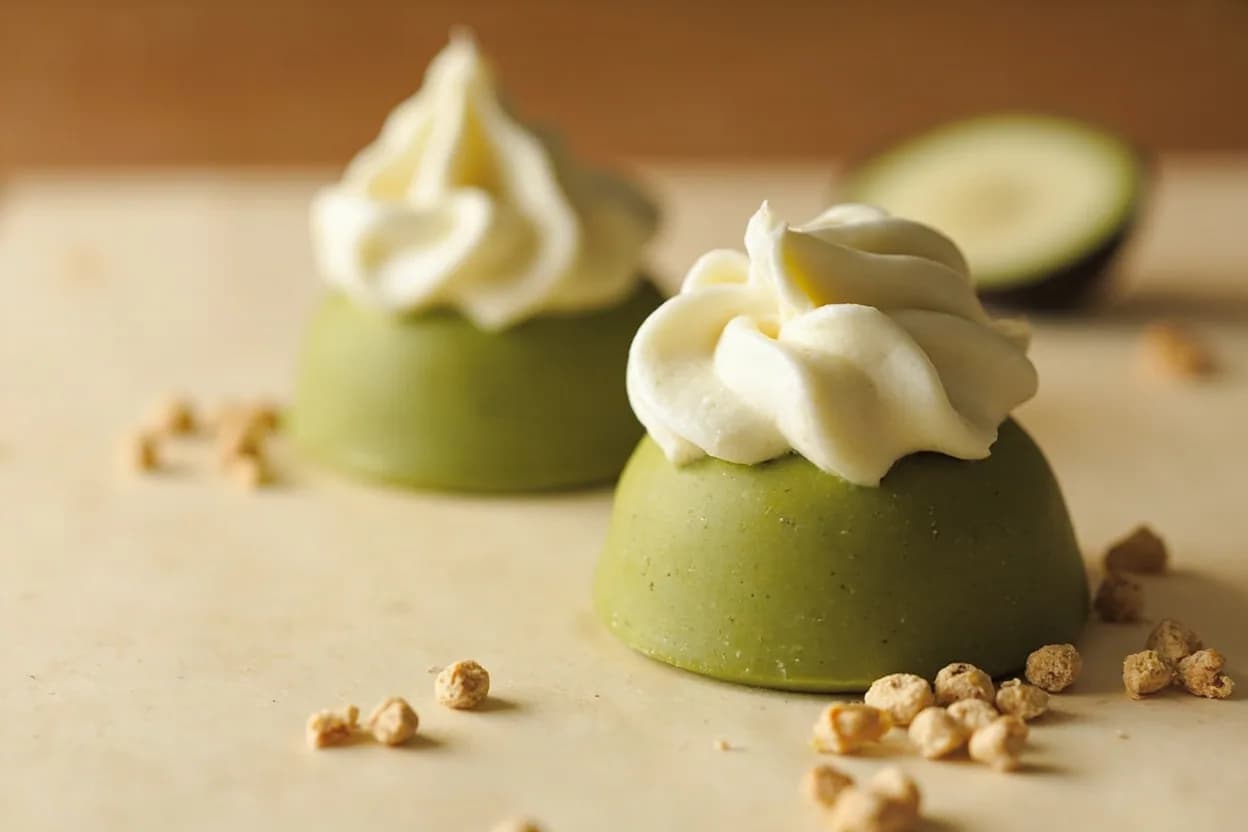
White chocolate's cocoa butter sweetness and vanilla tone are the perfect fat-soluble carrier for matcha's bitter-grassy compounds; the bitterness of matcha cuts white chocolate's cloying sweetness in a ganache or mousse.
- Red bean paste (anko)Japanese
The foundational Japanese pairing: anko's earthy, barely-sweet legume flavor is the traditional counterpart to matcha's bitterness in wagashi, daifuku, and dorayaki.
- Heavy cream / milkJapanese, Global
Fat extracts matcha's fat-soluble compounds and softens its astringency; the basis of matcha latte, ice cream, and panna cotta — dairy rounds without obliterating the green character.
- Sesame (white and black)Japanese
Sesame's roasted nuttiness provides an earthier dimension that grounds matcha's grassy brightness; used together in Japanese confections and contemporary pastry.
- Mochi (glutinous rice)Japanese
The neutral, chewy sweetness and fat-free texture of mochi provides a platform that showcases matcha's full flavor without introducing competing aromatics.
- Dark chocolate (70%+)Japanese-French fusion
At high cacao percentages, dark chocolate's bitter complexity aligns with matcha's bitter-umami register; together they create a bitter-complex confection with layers of green and roasted notes.
- LemonContemporary
The brightness of lemon juice sharpens and clarifies matcha's vegetal quality; acidulation cuts the grassy earthiness and highlights matcha's sweeter top notes in cakes and dressings.
- Azuki beanJapanese
Closely related to anko; the slightly sweet, earthy azuki bean is the canonical Japanese counterpart to matcha in parfaits, kakigori (shaved ice), and traditional tea ceremony sweets.
Adventurous pairings
- Coconut cream
Coconut cream's natural sweetness, fat richness, and tropical fragrance balance matcha's astringency while adding a Southeast Asian dimension; the combination appears in contemporary Thai-Japanese desserts and is sonically satisfying.
Yuzu's piercingly floral, tart citrus character amplifies matcha's aromatic florals while cutting its bitterness; a sophisticated Japanese pairing in ganaches, sauces, and frozen desserts.
Both are intensely green and carry an underlying nuttiness; pistachio's fat richness provides creaminess that matcha needs to smooth its astringency, creating a layered, complex pastry filling.
- Lamb (in savory context)
Matcha can function as a savory rub or sauce component for lamb: its tannins interact with the iron in the meat and its herbal character complements Middle Eastern spice blends; a niche but defensible use in avant-garde cuisine.
Raspberry's malic acid and vivid fruit character creates a high-contrast pairing with matcha — the berry's sweetness cuts bitterness while its color provides a visual counterpoint to matcha's green. Used in Japanese-French layer cakes.
- Miso (white)
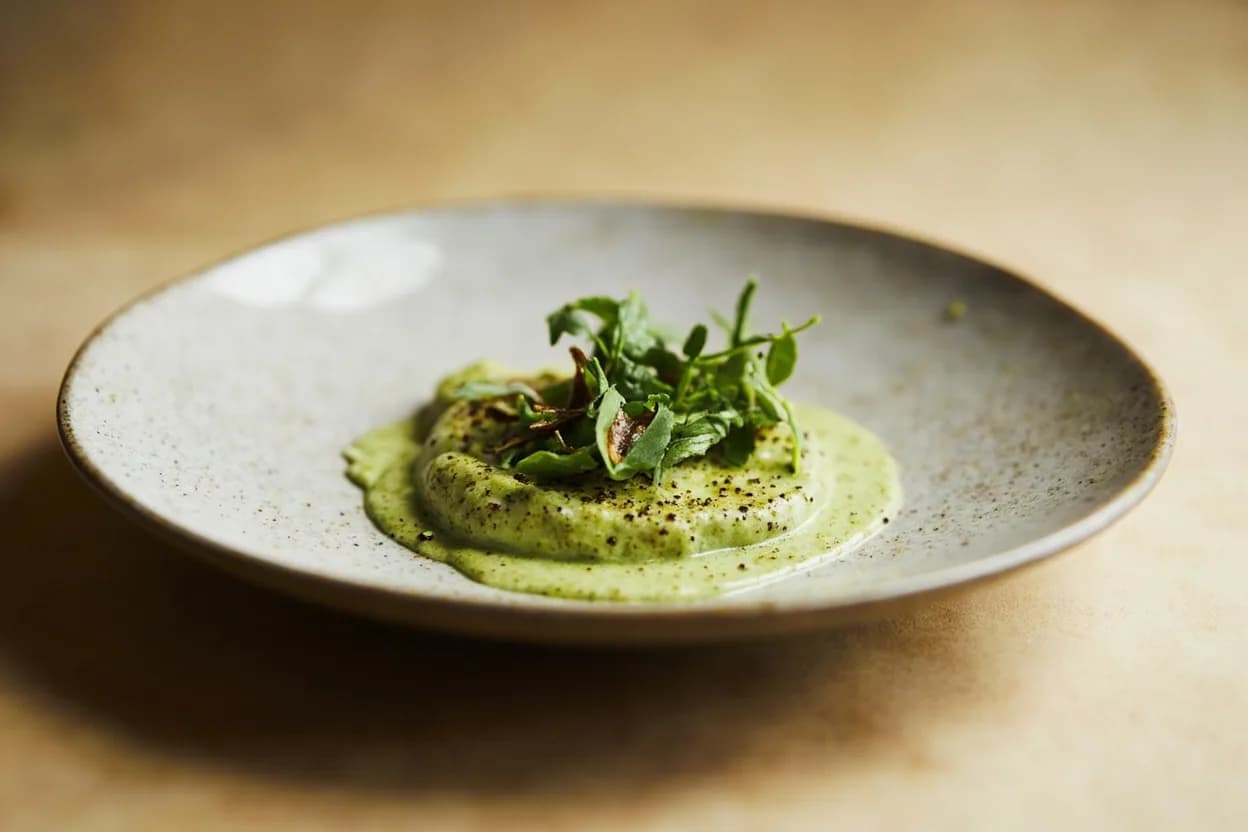
White miso's fermented, subtly sweet umami deepens matcha's own L-theanine savory quality; combined in a vinaigrette or sauce they create a complex, satisfying savory-sweet dimension.
Tread carefully
- Milk (excessive quantity in cooking)avoid
While dairy works beautifully in small amounts, drowning matcha in too much milk (as in under-concentrated matcha lattes) cancels its green character entirely, leaving only a pale, vaguely grassy milkiness.
- Very sweet icing or fondant aloneavoid
Simple sugar-dominant preparations without fat to carry aromatics reduce matcha to a coloring agent; the bitterness disappears into sweetness without any of matcha's complexity surviving.
- Aged or pungent cheesesavoid
The volatile compounds in aged Parmesan, aged Gouda, or blue cheese compete aggressively with matcha's delicate umami register, producing an uncomfortable clash rather than synergy.
How to use it
- Sifting: always sift matcha through a fine-mesh strainer before whisking — clumps are impossible to incorporate smoothly and leave bitter raw spots
- Whisking (chasen): use a bamboo chasen in a W or M motion with warm (not boiling) water at 70–80°C; boiling water destroys delicate aromatics and increases bitterness
- Blooming in fat: dissolve matcha in a small amount of room-temperature cream or butter before adding to a batter to prevent clumping and maximize aromatic extraction
- Cold water slurry: for smoothies and cold preparations, dissolve matcha in 1–2 tablespoons of cold water first, whisking to a paste before adding other liquids
- Layering in pastry: matcha cream sandwiched with a neutral sponge (biscuit joconde) allows the flavor to be appreciated without cooking degrading its color
- Protecting color: avoid prolonged heat above 80°C to preserve chlorophyll's vivid green; bake at lower temperatures and shorter times when green color is aesthetically critical
Appears in
Related flavours
- White Chocolate
The go-to fat carrier for matcha in Western pastry; the pairing is now ubiquitous in Japanese-French confectionery worldwide
Vanilla softens matcha's bitter edge and adds a creamy dimension; commonly used together in matcha ice cream to round the profile for non-Japanese audiences
A more challenging pairing than white chocolate, but rewarding in high-percentage chocolate where both bitter notes align
References
- 1.The Japanese Art of the Tea Ceremony — A. L. Sadler
- 2.The Flavor Bible — Karen Page & Andrew Dornenburg
- 3.Wagashi: The Art of Japanese Sweets — Kimiko Gunji
- 4.On Food and Cooking — Harold McGee
- 5.Tokyo New Wave: 31 Chefs Defining Japan's Next Generation — Andrea Fazzari
Confidence: high
Notes
Grade matters enormously
Ceremonial grade matcha (the top 20% of the harvest, ground from the youngest shaded leaves) is intended for whisking directly into hot water for the tea ceremony. Its flavor is complex, floral, and mellow — extraordinary in cold preparations (ice cream, panna cotta, no-bake cheesecake) where its aromatics aren't destroyed by heat. Culinary grade matcha is harvested later, has higher catechin content, more pronounced bitterness, and a darker, less vivid green — better suited to baking where its stronger character can hold up to heat and competing ingredients. Using ceremonial grade in a muffin is wasteful; using culinary grade in a pure matcha latte is noticeably inferior.
The umami dimension
What distinguishes matcha from ordinary green tea powder is L-theanine, an amino acid found almost exclusively in Camellia sinensis and synthesized at higher levels under shade-growing conditions. L-theanine has no strong flavor of its own, but it significantly enhances umami perception and is responsible for matcha's distinctive savory depth. This is why matcha paired with dashi (both containing umami-amplifying compounds) or with white miso creates something greater than the sum of its parts in savory applications — the two umami sources synergize.