Smoke & Fire
Mesquite
Also: mesquite smoke, mesquite wood, Prosopis smoke
The wild, sun-baked smoke of the American Southwest — fierce, earthy, and unapologetically cowboy.
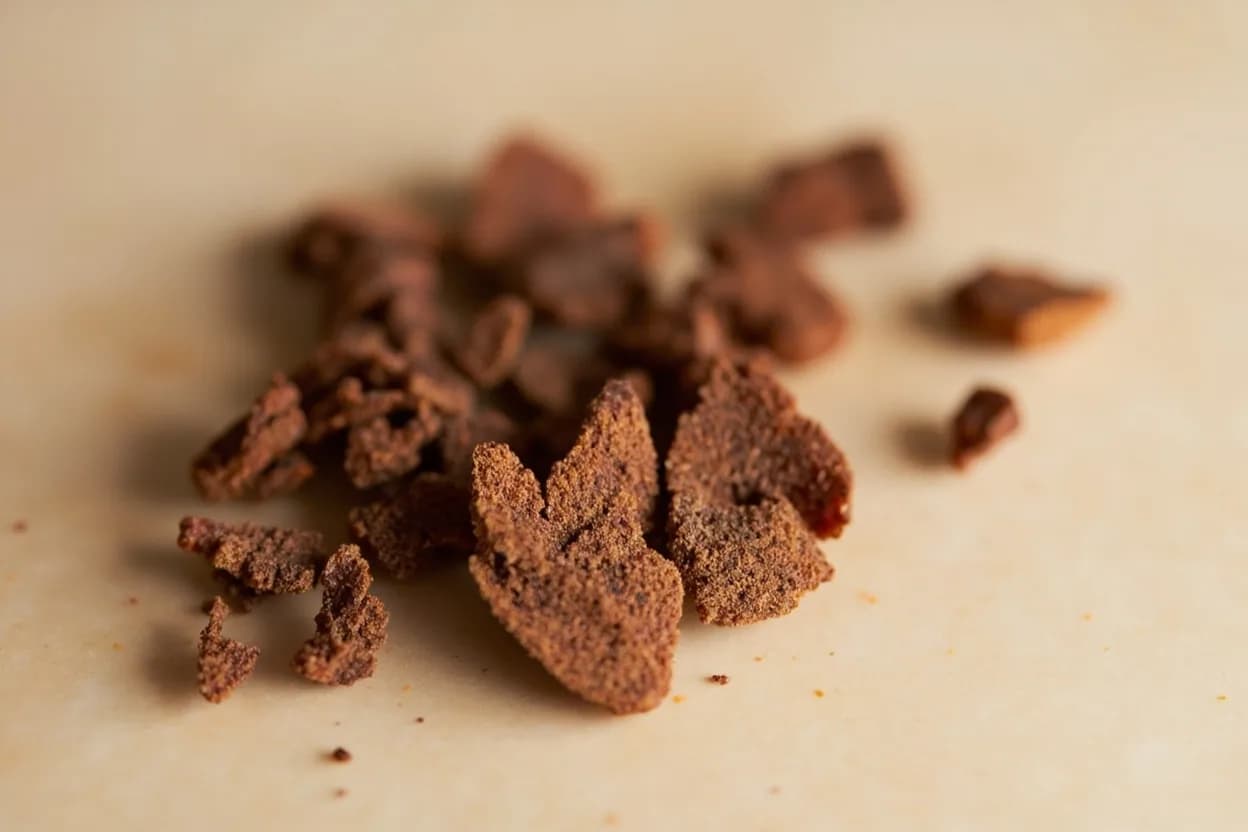
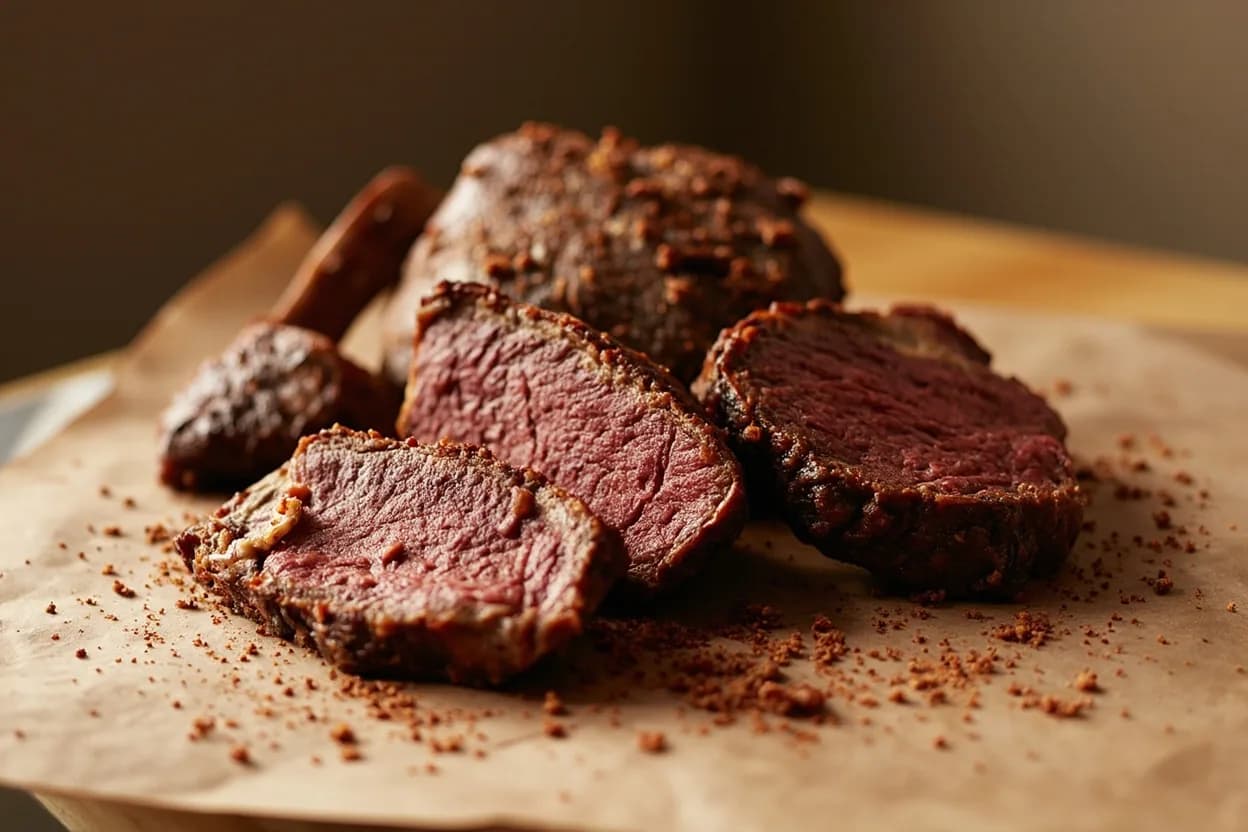
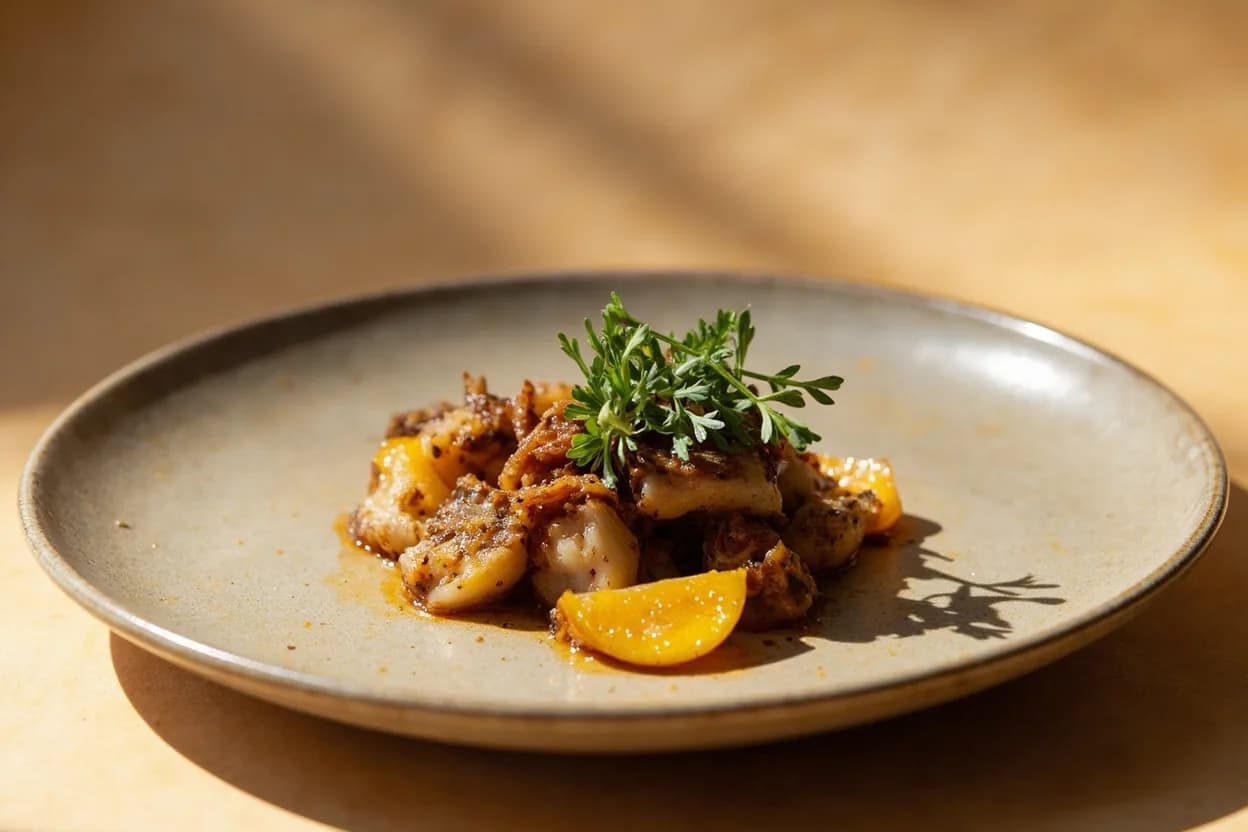
Mesquite (Prosopis species) is a thorny hardwood native to the arid deserts of Texas, New Mexico, and northern Mexico. It burns extremely hot and produces a dense, intensely flavored smoke with an earthy, almost mineral quality — stronger than hickory and far more assertive than any fruitwood. At low temperatures and short durations it imparts a pleasantly wild, savory depth; prolonged exposure, however, can yield harsh, resinous bitterness. It is the wood of cowboy cooking and Tex-Mex steakhouses, and the defining smoke of cabrito (roasted kid) and carne asada across the US-Mexico borderlands.
In photos
Flavour profile
Classic pairings
- Beef skirt steak (carne asada)Tex-Mex / Northern Mexican
High-heat mesquite grilling is the canonical method for carne asada — the intense heat sears quickly while the wood adds a wild, border-region smokiness.
- Beef brisketWest Texas BBQ
West Texas BBQ relies heavily on mesquite; its intensity pairs with brisket's fat content, though cooks use less wood than they would with milder woods.
- Whole kid (cabrito)Northern Mexican
Roasted cabrito over mesquite coals is a Norteño fiesta tradition — the gamey richness of kid goat demands the assertive smoke.
- VenisonSouthwestern American
Mesquite's earthy intensity complements venison's gaminess without competing; both feel like products of the same desert landscape.
- Jalapeños (for rajas or smoked salsa)Mexican
Briefly mesquite-smoked jalapeños gain an earthy depth that elevates them beyond fresh chiles — the basis of chipotle at a conceptual level.
- Fajita-style chickenTex-Mex
A short hot-fire mesquite grill (8–12 minutes) chars chicken thighs with char-forward smoke without over-penetrating the mild meat.
- Duck breastSouthwestern American
Duck's rich subcutaneous fat layer can handle mesquite's assertiveness; the result is a deeply savory, wild-tasting smoke ring.
Adventurous pairings
- Mezcal
Both mesquite smoke and mezcal (agave smoked over wood) share an earthy, arid terroir — pairing them in a marinade or serving alongside smoked meat is deliberately double-smoked and potent.
- Prickly pear (cactus fruit)
The floral sweetness of nopal fruit glaze on mesquite-grilled meat creates a quintessential desert-Southwest flavor synergy.
- Dark mole negro
Mesquite-smoked chile pasilla and mulato are key building blocks in Oaxacan mole negro, where the smoke is a background structural note rather than a foreground flavor.
- Aged beef tallow
Brushing a mesquite-smoked brisket with rendered tallow during the rest ties the fat and smoke into one cohesive flavor — a West Texas finishing technique.
- Coffee and chile rub
On beef, mesquite smoke's mineral bite is counterpointed by espresso's roast and ancho's fruit; together they echo the desert itself.
Tread carefully
- Pork ribs (extended low-and-slow)avoid
Mesquite's high heat and intensity can turn pork bitter over long cooks; fruitwoods or hickory are better suited to multi-hour pork smokes.
- Salmon and delicate fishavoid
Mesquite overwhelms fish, leaving an acrid, resinous aftertaste; alder, cedar, or applewood are the correct tools.
- Cheese (cold-smoking)avoid
Mesquite's phenolic compounds are too harsh for cold-smoking cheese — they penetrate too deeply without the buffering effect of fat at cooking temps.
How to use it
- High-heat direct grilling (450–600°F / 232–315°C) for thin steaks and carne asada
- Short smoking windows (1–3 hours maximum) to avoid resinous over-penetration
- Using lump mesquite charcoal for controlled, consistent heat without green-wood bitterness
- Combining mesquite with a mild wood (pecan, oak) to moderate intensity on long cooks
- Cowboy-style open-pit cooking over mesquite log beds, raked to coals before cooking
- Wrapping meat in butcher paper mid-cook (Texas Crutch) to halt smoke absorption while retaining moisture
Appears in
Related flavours
Hickory is sweeter and more rounded; mesquite is earthier and hotter — the same BBQ archetype expressed through opposite regional terroirs.
Chipotles are jalapeños smoke-dried (traditionally over mesquite or pecan); they carry a similar earthy smokiness in paste or powder form.
- Mezcal
Both are products of desert flora fire — mesquite wood smoke and agave pit-smoking share phenolic smoke compounds and a mineral dryness.
References
- 1.The Tex-Mex Cookbook — Robb Walsh
- 2.Barbecue! Bible — Steven Raichlen
- 3.Meathead: The Science of Great Barbecue and Grilling — Meathead Goldwyn
- 4.Truly Texas Mexican: A Native Culinary Heritage in Recipes — Adán Medrano
Confidence: high
Notes
Green vs. seasoned mesquite
Green (freshly cut) mesquite produces acrid, resinous smoke loaded with unpleasant compounds. Seasoned mesquite — dried for at least 6–12 months — burns cleaner and sweeter. Texas pitmasters and border-region grill cooks are adamant about this distinction. Lump mesquite charcoal sidesteps the issue entirely.
Borderlands identity
Mesquite is not merely a cooking fuel in the US-Mexico border region — it is a cultural identifier. Norteño cuisine, Tex-Mex BBQ, and Arizona Sonoran cooking are inseparably linked to this wood in the same way that hickory defines the American South.