Herbs
Mexican Oregano
Also: Lippia graveolens, Mexican wild sage, hierba dulce, orégano mexicano
More citrusy, more resinous, and more assertive than Mediterranean oregano — the essential aromatic in mole, chorizo, and Oaxacan salsas.
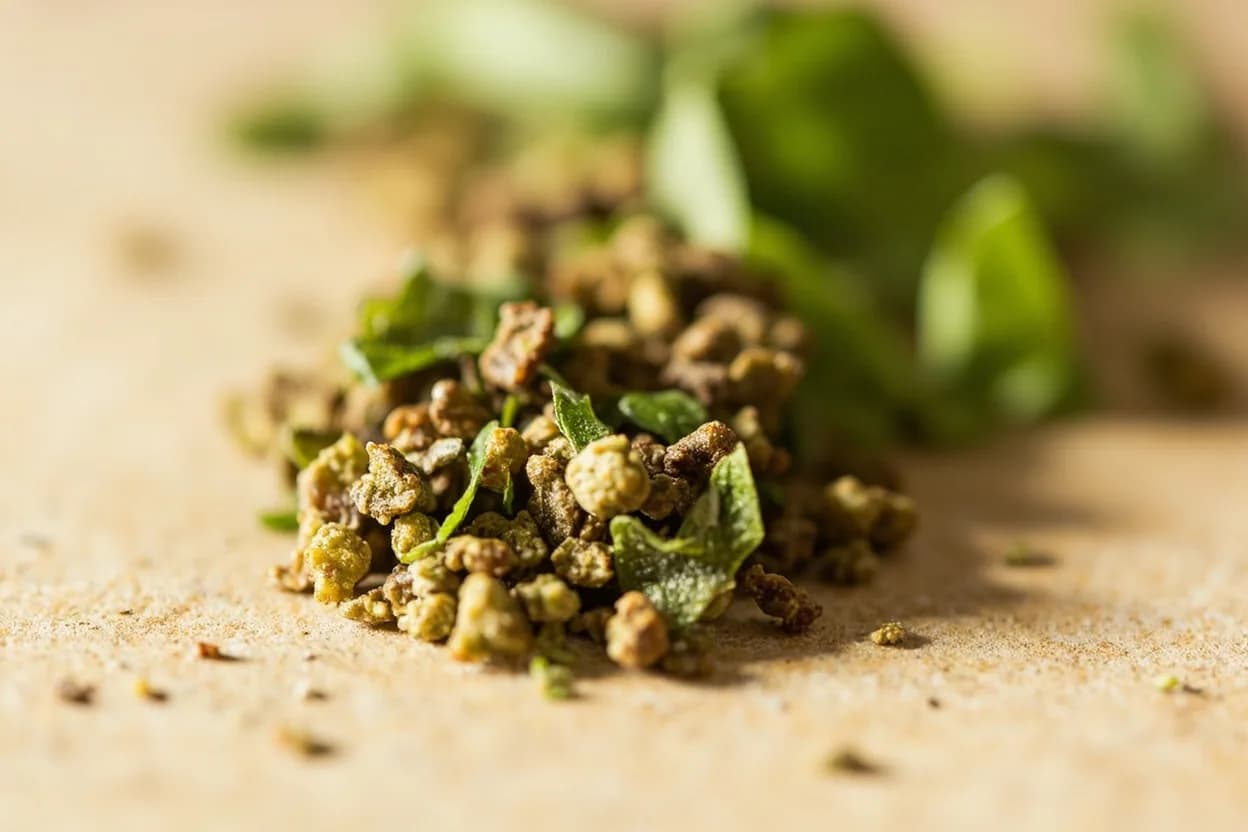
Mexican oregano (Lippia graveolens) belongs to the verbena family, not the mint family like Mediterranean oregano (Origanum vulgare). Despite sharing a common name, the two herbs are botanically distant and taste quite different. Mexican oregano is more robust, more citrusy (driven by higher levels of carvacrol and limonene), and carries a faint floral-resinous edge that is absent in its Mediterranean counterpart. It stands up to extended cooking, powerful chiles, and bold spices in ways that Mediterranean oregano cannot; conversely, it overwhelms delicate European dishes where the latter would be appropriate. Mexican oregano is dried far more commonly than it is used fresh, and drying actually concentrates its signature resins rather than depleting them.
In photos
Flavour profile
Classic pairings
- Dried ancho, mulato, or pasilla chileMexican / Oaxacan
Mexican oregano is indispensable in moles and chile sauces; its citrus-resin edge bridges the fruity depth of dried chiles and the other aromatics without losing its identity over a long simmer.
- TomatoMexican
Cooked tomato's acidity and sweetness align beautifully with Mexican oregano's citrus-resin notes; the herb is standard in roasted tomato salsas, caldos, and red enchilada sauces.
- Chorizo (Mexican)Mexican
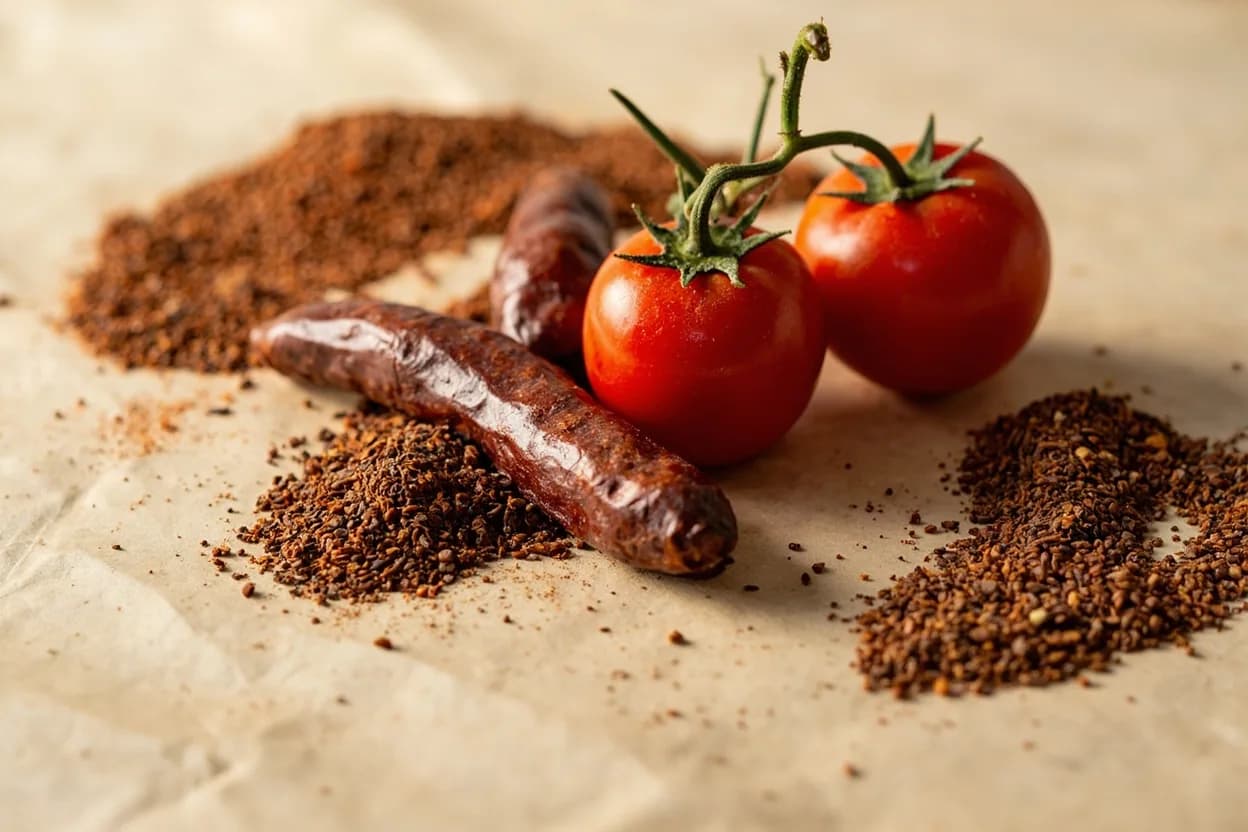
Mexican chorizo's pork fat and dried chile base is almost always seasoned with Mexican oregano; the herb's resinous depth harmonizes with smoked paprika and vinegar in the sausage.
- Dried cuminMexican / Northern Mexican
Cumin and Mexican oregano are the two essential spices of northern Mexican cooking; cumin's earthy warmth and oregano's citrus-resin together define carne asada, chili colorado, and caldo de res.
- Black beanMexican
Alongside epazote, Mexican oregano is a traditional herb for seasoning long-cooked black beans; it adds a savory, herbal depth that complements the beans' natural creaminess.
- Beef (braised or stewed)Mexican
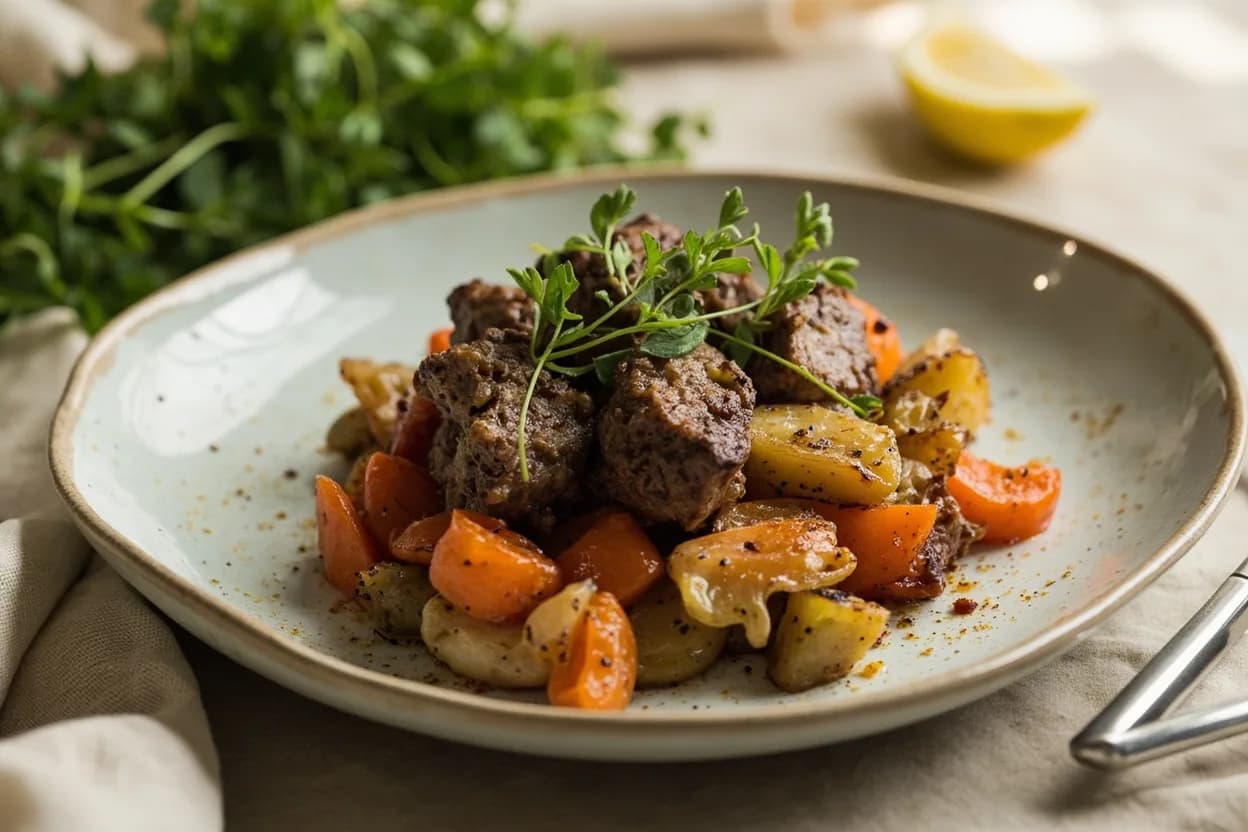
The herb's robustness allows it to survive long braises without fading; it is essential in birria, caldo de res, and beef-based pozole.
- Garlic and onionMexican
The aromatic trio of Mexican oregano, garlic, and white onion underpins most Mexican red sauces and adobo marinades.
Adventurous pairings
- Lamb
Mexican oregano is used in traditional birria de borrego (lamb birria); its resinous bite handles lamb's gaminess better than Mediterranean oregano.
- Dark beer (stout or porter)
The roasted bitterness of a dark beer parallels Mexican oregano's resinous edge; together they form a compelling braise liquid for beef short ribs or pork shoulder.
- Orange juice and zest
Mexican oregano's limonene notes are amplified by citrus zest; orange juice and oregano together make a classical Yucatecan marinade base (related to achiote recado).
- Chocolate (dark, 70%+)
Both dark chocolate and Mexican oregano share resinous bitterness and earthy aromatic depth; the combination appears in sophisticated mole negro preparations.
- Mezcal
The smoky agave base of mezcal and Mexican oregano's resinous herb character share a Mexico-specific aromatic register; together in a marinade they create an intensely expressive crust for grilled meats.
- Goat cheese
The tangy lactic sharpness of fresh goat cheese is grounded by Mexican oregano's robust herbal character; a distinctly different pairing than the Mediterranean herb achieves with the same cheese.
Tread carefully
- Delicate pasta sauces (aglio e olio, cacio e pepe)avoid
Mexican oregano's assertive citrus-resin profile overwhelms the subtle balance of minimalist Italian preparations; use Mediterranean oregano instead.
- Beurre blanc or cream reductionsavoid
The herb's robustness clashes with delicate French butter sauces; its resinous notes cannot be tempered by dairy fat in the way that Mediterranean herbs can.
- Sushi or raw fish preparationsavoid
Mexican oregano's strong volatile character is entirely wrong for delicate raw fish; it overpowers oceanic subtlety completely.
How to use it
- Toast dried Mexican oregano briefly in a dry skillet for 30 seconds before grinding — heat activates essential oils and smooths the raw bitterness
- Rub between your palms before adding to a dish to crack the dried leaves and release volatile oils
- Add early in long braises and moles — it is heat-stable and benefits from extended cooking unlike delicate herbs
- Blend into adobo marinades with garlic, cumin, and dried chiles for overnight meat marinades
- Use 1.5–2x the quantity if substituting for Mediterranean oregano, as Mexican variety is more potent
Appears in
Related flavours
- Mediterranean oregano
Botanically distinct cousin (Origanum vulgare); milder, more subtle and mint-adjacent; appropriate for Italian and Greek applications where Mexican oregano would overwhelm.
Fellow assertive Mexican herb suited to long cooking and robust chile-based preparations; sometimes used alongside Mexican oregano in bean dishes.
Softer and sweeter than both oregano varieties; useful when a milder herbal note is needed in dishes that would otherwise call for Mexican oregano.
References
- 1.Authentic Mexican: Regional Cooking from the Heart of Mexico, Rick Bayless (1987)
- 2.The Art of Mexican Cooking, Diana Kennedy (1989)
- 3.Oaxaca al Gusto: An Infinite Gastronomy, Diana Kennedy (2010)
- 4.The Flavor Bible, Karen Page & Andrew Dornenburg (2008)
- 5.On Food and Cooking: The Science and Lore of the Kitchen, Harold McGee (2004)
Confidence: high
Notes
Not the same as Mediterranean oregano
This distinction matters practically: Lippia graveolens (Mexican) and Origanum vulgare (Mediterranean) are from entirely different plant families and have meaningfully different flavor profiles. Recipes calling for Mexican oregano in mole or birria will taste noticeably different — more floral, less resinous, less citrusy — if Mediterranean oregano is substituted.
Regional variation within Mexico
Mexican oregano varies significantly by region. Oaxacan oregano (sometimes Lippia palmeri, sometimes grown at higher altitude) has a particularly complex and aromatic character distinct from northern Mexican commercial dried oregano. Diana Kennedy emphasizes sourcing from specialty suppliers or Mexican markets rather than general supermarkets.