Nuts & Seeds
Toasted Sesame Seeds
Also: goma (Japanese), bokkeun chamkkae (Korean), zhī ma (Chinese)
A tiny seed with a massive toasty, nutty perfume that finishes dishes the moment they leave the heat.
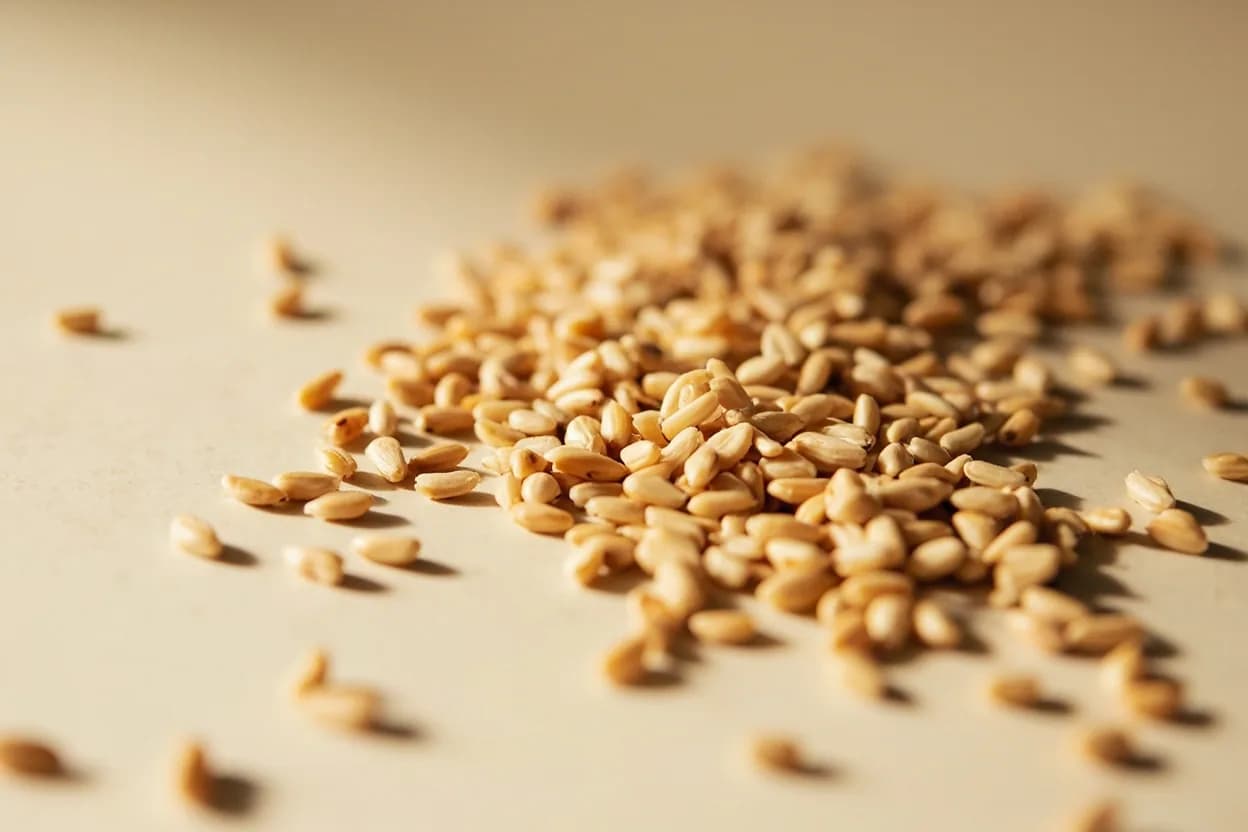
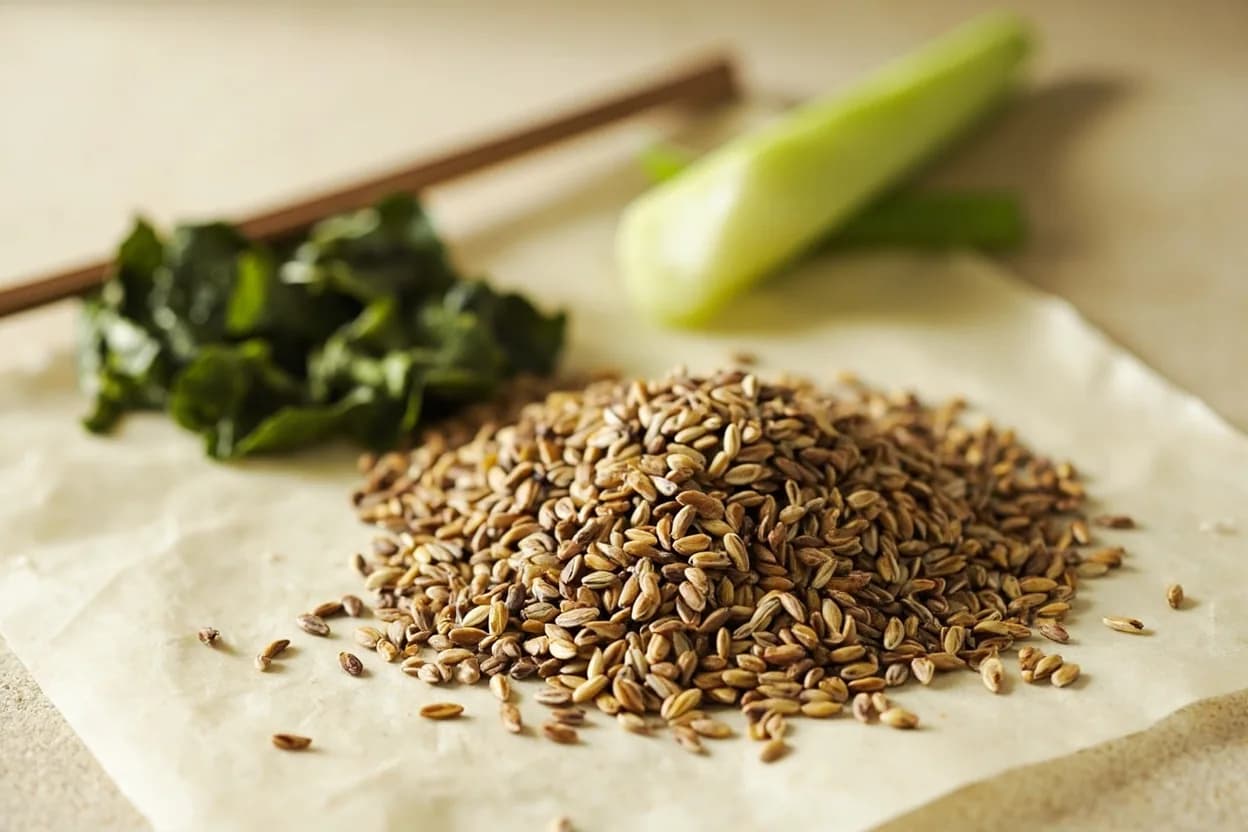
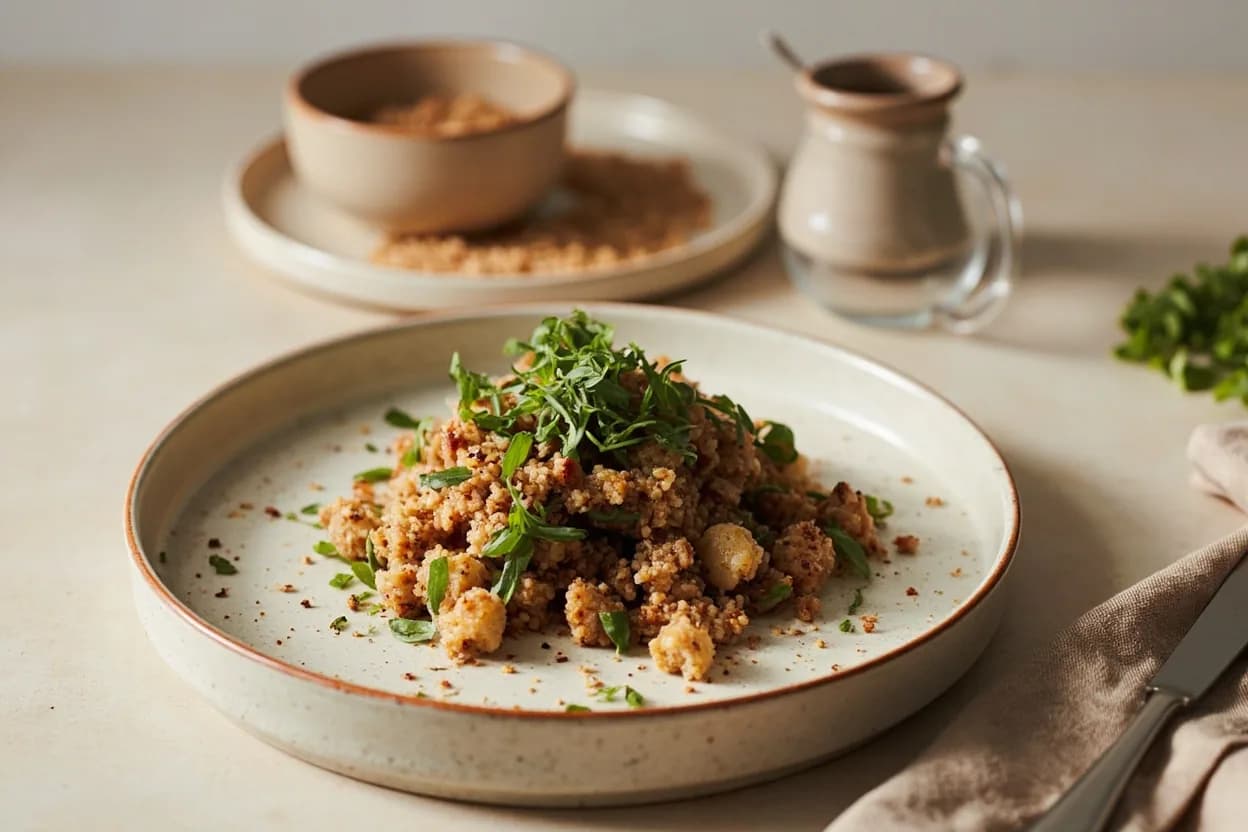
Raw sesame seeds (Sesamum indicum) are mild and slightly oily; toasting transforms them fundamentally, driving the Maillard reaction in the seed's natural oils and producing pyrazines and furans that deliver a deep, roasted-nut aroma. The flavour is warm, buttery, and slightly sweet with a lingering finish. White toasted sesame is gentler; black sesame is earthier, more bitter, and more dramatic visually. In Korean and Japanese cooking they are a near-universal garnish applied at the last second to preserve volatility.
In photos
Flavour profile
Classic pairings
- Soy sauceKorean / Japanese
The umami depth of soy sauce and the roasted nuttiness of sesame are inseparable in Korean and Japanese cuisine — ganjang and goma are a foundational pair.
- Spinach (sigeumchi namul)Korean
Blanched spinach dressed with sesame oil, soy, garlic, and crushed toasted sesame is a quintessential Korean banchan — the seeds add crunch and aroma to the silky greens.
- CucumberChinese / Korean / Japanese
Cold smashed cucumber salads across East Asia are finished with toasted sesame for textural and aromatic contrast against the watery, cool vegetable.
- Sushi riceJapanese
Scattered over chirashi-zushi or mixed into seasoned rice for futomaki, toasted sesame seeds provide nutty counterpoint to the vinegared sweetness.
- Sesame noodles (cold soba / dan dan mian)Chinese / Japanese
Ground or crushed toasted seeds deepen the sesame paste sauce; the toasty dimension the tahini-style base lacks on its own.
- Grilled meats (bulgogi, yakitori)Korean / Japanese
A final scatter of toasted sesame over caramelised meat activates the shared Maillard chemistry, creating aroma harmony between crust and seed.
- Green onion (scallion)Korean / Chinese
The sharp, allium brightness of scallion and the warm fat of sesame are a classic Korean and Chinese garnish pair — appearing together on almost every banchan and noodle dish.
Adventurous pairings
- Dark honey (buckwheat, chestnut)
Drizzle over toasted sesame brittle or stir into a sesame vinaigrette — the robust floral bitterness of dark honey amplifies rather than masks the seed's nuttiness.
- Miso-caramel
Toasted sesame seeds folded into miso caramel (used in modern Japanese pastry) create a complex sweet-savoury-smoky candy with no Western analogue.
- Citrus zest (yuzu, lemon)
Bright citrus cuts the fat of sesame oil and seeds, and the terpene compounds in the zest contrast beautifully with the pyrazines in the toasted seed.
- Avocado
Sesame seeds on avocado toast or avocado tartare is a clean modern pairing: complementary fat profiles plus textural drama.
- Tahini + pomegranate molasses
Levantine in inspiration — toasted seeds scattered over a plate of tahini drizzled with pomegranate molasses (as with falafel or roast cauliflower) add crunch to an already-layered flavour landscape.
Tread carefully
- Strongly floral perfumed ingredients (rose water, lavender)avoid
The roasted-nutty volatiles of toasted sesame clash with delicate floral top notes, producing a confusing mid-palate rather than harmony.
- Very heavily smoked proteinsavoid
Piling sesame's own roasted compounds on top of aggressive smoke can create an acrid bitterness — use raw sesame instead, or reserve sesame for less smoke-intense dishes.
- Very acidic vinaigrettes aloneavoid
Without a fat carrier (sesame oil, tahini) the seeds' aroma is not unlocked by sharp acid; add a neutral oil to marry the flavours.
How to use it
- Toast in a dry skillet over medium heat, shaking constantly, until golden and fragrant — remove immediately as they burn in seconds
- Crush lightly in a mortar (or suribachi) just before use to crack the shell and release more aroma
- Add as the very last step off the heat — heat degrades the volatile aromatics quickly
- Grind into gomashio (sesame salt) at an 8:1 seed-to-salt ratio for a Japanese table condiment
- Infuse into oil by gently warming seeds with neutral oil, then strain — amplifies the aromatic extraction
- Mix into marinades for grilled meats where they will toast again on the grill
Appears in
Related flavours
- Sesame oil (toasted)
The liquid extract of toasted sesame — used for the same aromatic purpose, applied as a finishing drizzle
Ground raw sesame paste — the toasted seed is a crunchier, more intensely aromatic companion or substitute
- Shiso leaf
Japanese herb frequently paired with sesame as dual garnishes, their anise-mint note contrasting with the seed's nuttiness
References
- 1.The Korean Table — Taekyung Chung & Debra Samuels (Tuttle, 2008)
- 2.Japanese Farm Food — Nancy Singleton Hachisu (Andrews McMeel, 2012)
- 3.On Food and Cooking: The Science and Lore of the Kitchen — Harold McGee (Scribner, 2004)
Confidence: high
Notes
White vs. black sesame
White toasted sesame seeds are more common in Japanese and Korean cooking; black sesame is earthier, more bitter, and higher in antioxidants. In Chinese pastry and dessert tradition, black sesame paste is a filling staple (tang yuan, sesame rolls). The two are not interchangeable in recipes where visual contrast matters.
Storage after toasting
The volatile aromatics that make toasted sesame so compelling dissipate within a few days of toasting. Store pre-toasted seeds in an airtight jar in the freezer and re-toast lightly in a dry pan before use to revive them.