Fermented Pastes & Sauces
XO Sauce
Also: XO醬, Hong Kong XO sauce, dried seafood chili sauce
Hong Kong's luxury condiment: a slow-fried blend of dried scallops, shrimp, and cured ham in chili oil that delivers concentrated seafood umami to everything it touches.
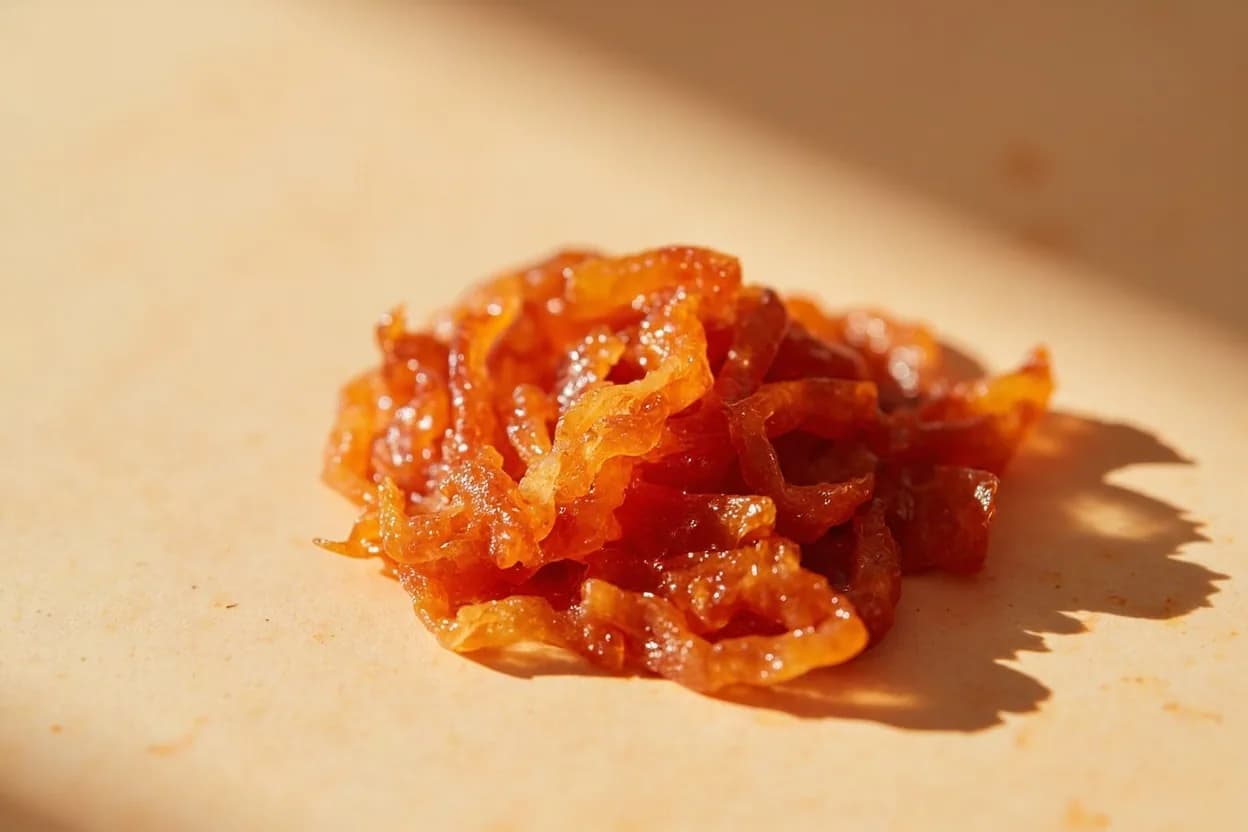
XO sauce is a Cantonese condiment invented in Hong Kong in the 1980s — the 'XO' borrows the cognac classification XO (Extra Old) to signal luxury, though the sauce contains no cognac. It is made by slow-frying dried conpoy (dried scallops), dried shrimp, Jin Hua ham (or Yunnan or Serrano ham as substitutes), garlic, shallots, dried chili, and sometimes shrimp paste in a large quantity of neutral oil until deeply golden and fragrant. The result is an intensely savory, slightly spicy, deeply umami-rich sauce suspended in flavored oil — with recognizable shreds of dried seafood and ham throughout. It amplifies almost anything savory it touches, functioning like a luxury finishing condiment and wok sauce base simultaneously. Commercially produced versions (Lee Kum Kee, T'ang Court) are widely available, but premium restaurant versions use significantly more dried scallop.
In photos
Flavour profile
Classic pairings
- Rice noodles (ho fun)Cantonese
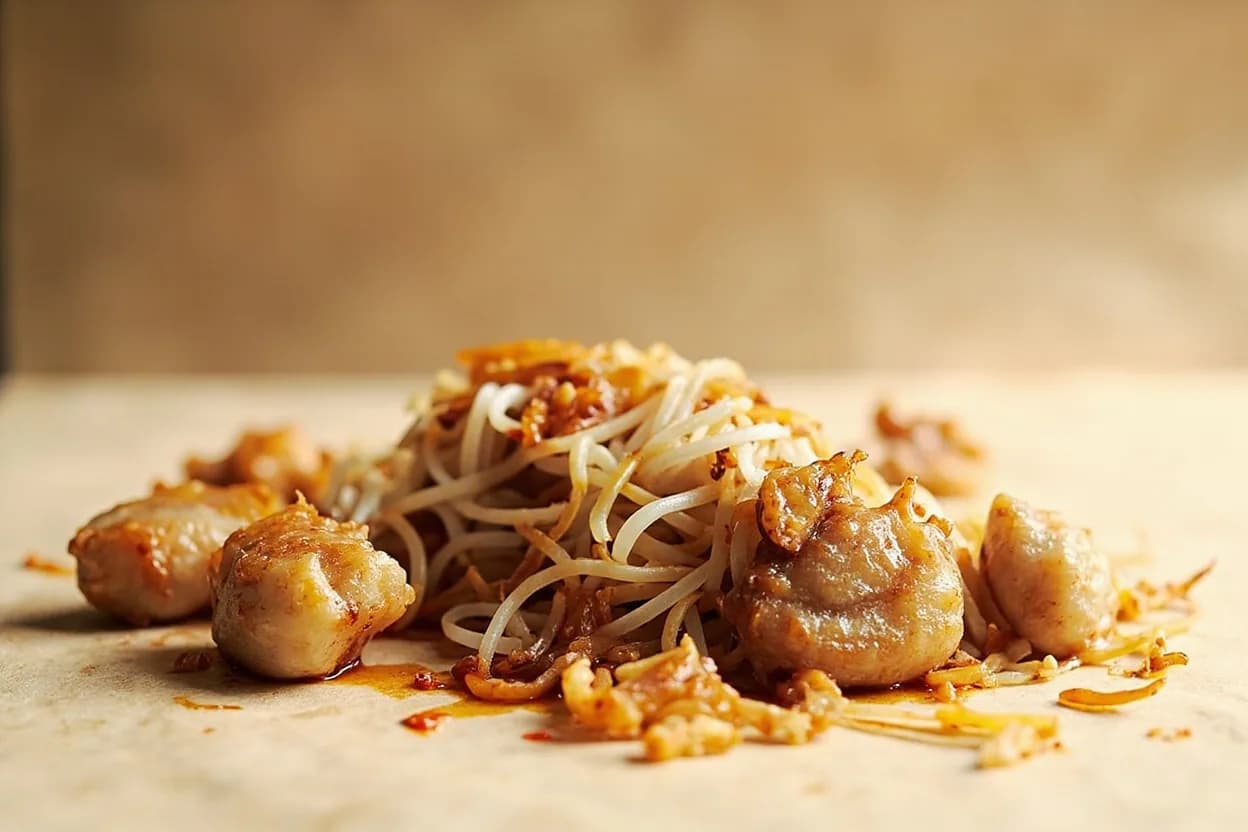
Wide flat rice noodles stir-fried with XO sauce — the noodles' neutral starchy surface absorbs the flavored oil completely; a simple preparation where XO sauce is the entire flavor story.
- Turnip cake (lo bak go)Cantonese / Hong Kong
Pan-fried radish cake served with XO sauce is a classic dim sum pairing — the starchy, mild cake is the ideal canvas for the sauce's concentrated umami, and the textural contrast of crispy exterior against the sauce's oil is essential.
- Steamed or stir-fried clams and shellfishCantonese
Seafood amplifies seafood: the dried scallop and shrimp in XO sauce reinforce the fresh brininess of live clams or mussels, creating a layered marine umami with none of the flatness that plain garlic sauces risk.
- Tofu (silken or fried)Cantonese / Hong Kong
Silken tofu with a spoonful of XO sauce is a minimal, high-return dish; the tofu provides cold neutrality against the sauce's warm, fried richness. Also excellent on agedashi or pan-fried tofu.
- Scallop (fresh, seared or steamed)Cantonese
Fresh scallops with XO sauce is a natural pairing — the sauce is literally made of concentrated dried scallop; the echo between fresh and fermented-dried versions of the same ingredient creates complex depth.
- Fried rice (chahan style)Cantonese / Hong Kong
XO sauce stirred through fried rice in the final 30 seconds adds layers of umami that no single seasoning can replicate; a technique used across Hong Kong dai pai dongs and restaurants alike.
- Pak choi and Chinese leafy greensCantonese
Blanched pak choi finished with XO sauce is a staple Cantonese vegetable dish: the greens provide bitter freshness and water, the sauce provides all the seasoning and fat needed.
Adventurous pairings
- Pasta (spaghetti or linguine)
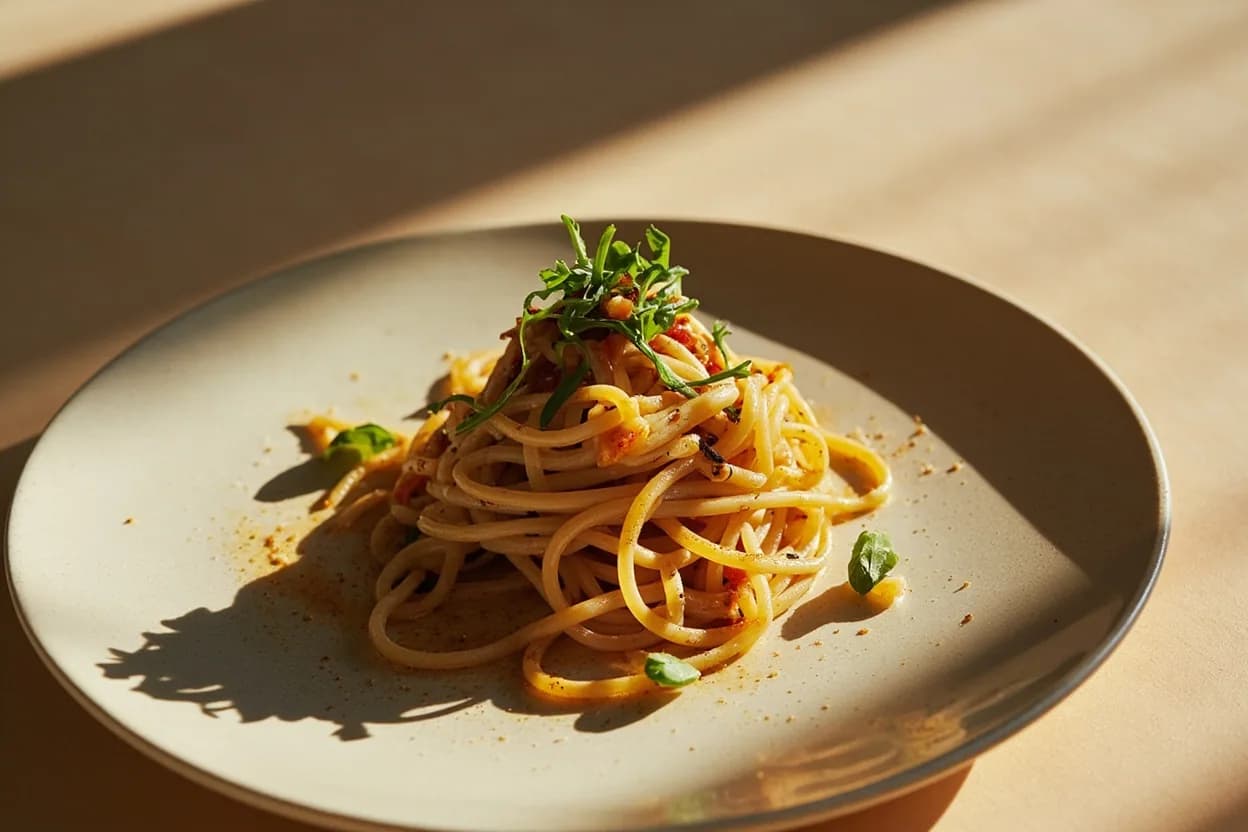
XO sauce tossed with al dente pasta and a splash of pasta water creates an umami-charged cross-cultural dish with none of the manufactured quality of many fusion applications; the sauce's oil and shallots function exactly like aglio e olio but with exponentially more depth.
- Corn on the cob
Brushing grilled or boiled corn with XO sauce is a street-food-adjacent move that works remarkably well — the corn's natural sweetness and the sauce's savory brininess are exactly the right tension, and the charred kernels absorb the seafood oil like a flavor sponge.
- Pizza bianca or flatbread
Used instead of olive oil on a white pizza base with fresh mozzarella, XO sauce provides a savory-funky underpinning that elevates the entire pie; works best when paired with ingredients that can hold their own — clams, shrimp, or prosciutto.
- Roasted cauliflower
XO sauce tossed through cauliflower before or after roasting transforms an understated vegetable into a showpiece dish; the Maillard reactions in the roasted florets mirror the fried dried seafood character of the sauce itself.
- Fried eggs
A spoonful of XO sauce alongside or poured over fried eggs is the simplest test of the condiment's power — the egg yolk enriches and cools the chili heat while the dried seafood umami makes an ordinary breakfast feel extraordinary.
Tread carefully
- Desserts and sweet applicationsavoid
XO sauce's briny, savory seafood intensity has no place in sweet contexts; the dried shrimp and ham flavors cannot be masked by sugar and create an unpleasant marine-sweet clash.
- Delicate herb-forward dishes (e.g., salsa verde, gremolata pairings)avoid
XO sauce's concentrated umami dominates and drowns out the bright, volatile herbal notes in dishes built around fresh parsley, basil, or mint; the balance collapses.
- Large amounts as a direct sauce (un-diluted)avoid
XO sauce is a condiment and flavor amplifier, not a primary sauce; using it in large amounts without the starch, neutral fat, or liquid of a finished dish results in overwhelming salinity and seafood intensity.
How to use it
- Use as a finishing condiment — stir in off heat or at the very end of cooking to preserve the fried aromatics' complexity
- For stir-frying: add 1–2 teaspoons to the hot wok with garlic for the final 30 seconds before sauce or noodles
- As a table condiment: serve alongside steamed rice, congee, or dumplings for individual application
- Dilute with neutral oil or a little soy sauce if using as a dressing base for noodle salads or cold vegetables
- Home production: dried conpoy (most expensive component) can be partially substituted with dried shrimp for a more accessible version without losing core character
Appears in
Related flavours
- Dried scallop (conpoy)
The primary ingredient and source of the sauce's dominant umami character; understanding conpoy alone illuminates why XO sauce works
Both are complex Chinese condiment pastes used to amplify savory stir-fries; doubanjiang brings fermented chili funk, XO brings dried seafood umami
Shares the high-IMP seafood umami axis; fish sauce is liquid and fermented, XO is textured and fried — they are complementary not interchangeable
A milder, sweeter Cantonese umami condiment from the same culinary tradition; oyster sauce glazes and sweetens where XO sauce adds punchy depth
References
- 1.The Wok: Recipes and Techniques — J. Kenji López-Alt (W. W. Norton, 2022)
- 2.Land of Fish and Rice — Fuchsia Dunlop (W. W. Norton, 2016)
- 3.Hong Kong Food Culture — Cecilia J. Leung (academic survey)
- 4.The Flavor Bible — Karen Page & Andrew Dornenburg (Little, Brown, 2008)
Confidence: high
Notes
The luxury provenance
XO sauce was invented in Hong Kong in the 1980s, attributed to various Cantonese hotel restaurants including the Peninsula Hotel. The 'XO' designation was a deliberate marketing choice — borrowing the cognac classification's connotation of age, complexity, and luxury — to signal that this was not an everyday condiment but an aspirational ingredient. Historically, dried conpoy (dried scallops) were among the most expensive ingredients in Chinese cuisine, and a sauce built around them confirmed its luxury status. Today it sits in the middle of a spectrum from expensive home-made (heavy on conpoy) to affordable commercial versions (heavy on dried shrimp).
Umami synergy
XO sauce is one of the most scientifically interesting umami condiments in world cuisine. Dried scallops are extremely high in guanylate (GMP); dried shrimp are high in inosinate (IMP); and the amino acid glutamate from the shrimp paste or ham is present as well. When glutamate and nucleotides (IMP or GMP) are present together, their umami perception is not additive but multiplicative — a well-documented synergy first described by Akira Kuninaka. This is why XO sauce seems disproportionately intense relative to the quantity used: it is triggering the maximum umami response in combination.