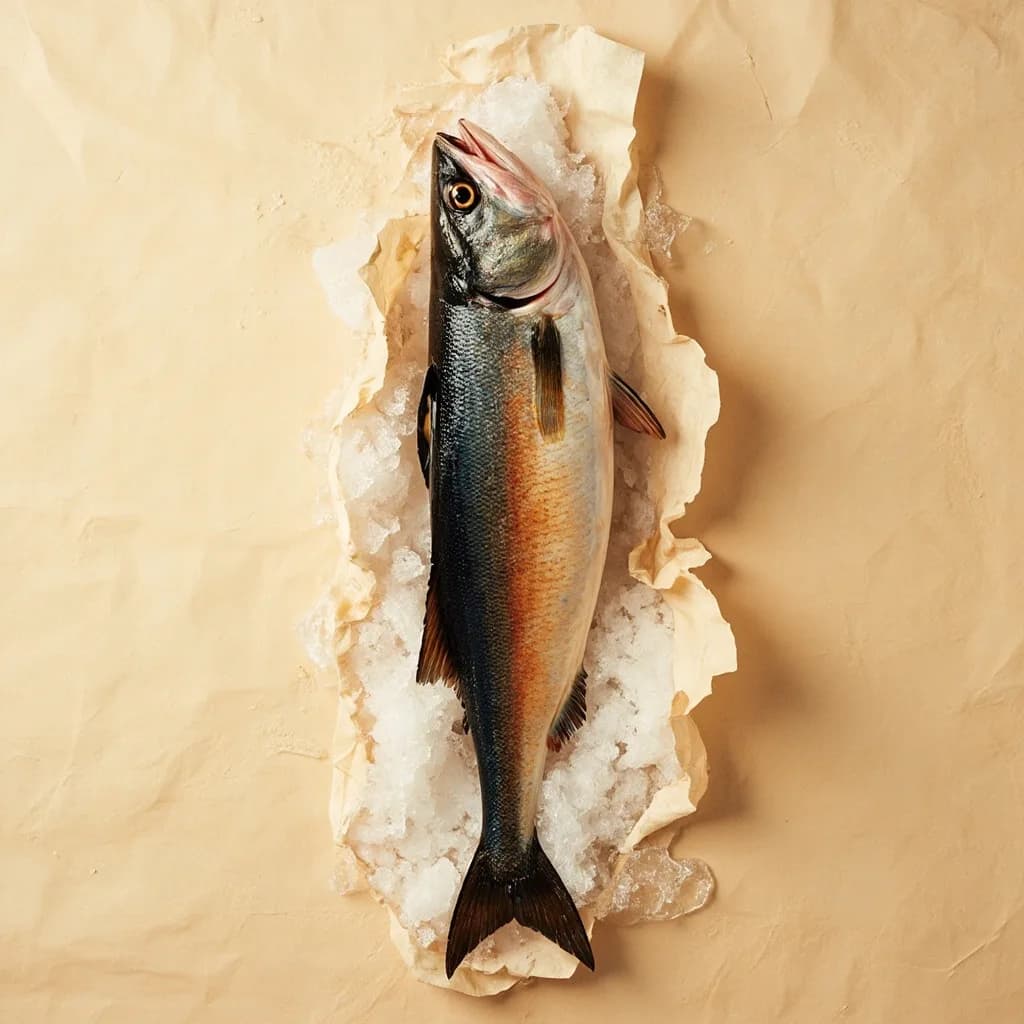
Natural form
Shows the whole fish that identifies albacore distinctly: sleek dark-blue back, silvery sides, torpedo-shaped body — different from round fish or fillets that could be any white fish.
Proteins
Albacore Tuna
Pale, mild tuna with a firm flaky texture; the classic 'white' canned tuna. Sear loins rare for steaks or fold flaked meat into salads and melts.
Albacore (Thunnus alalunga) is the pale-fleshed, mild-flavored member of the tuna family that occupies a unique place in the kitchen: it is the only tuna the U.S. FDA permits to be labeled simply 'white tuna' when canned, and it is a popular sear-and-slice fish on restaurant menus, especially along the Pacific coast. Its flesh runs creamy ivory rather than the deep red of bluefin or crimson of yellowfin, a consequence of lower myoglobin and a leaner muscle. The flavor is clean, slightly sweet, and less iron-forward than its relatives, with a firm, large-flaked texture that holds its shape through canning, grilling, or rare searing.
What sets albacore apart in the pan is its intermediate fat — higher than yellowfin, lower than bluefin — which lets it take a fast hard sear without drying the way ahi does, yet punishes overcooking faster than fatty fish like salmon. That same fat carries the omega-3s that make it nutritionally interesting and supports a long canned market where albacore commands a price premium over 'light' (skipjack) tuna.
Sourcing matters more than for most tunas: troll-caught Pacific albacore, bled and ice-chilled at sea, is the fish that reaches U.S. counters as sashimi-grade loins. Longline-caught fish tends to be larger and is largely destined for canning — including the Spanish 'bonito del norte' trade, hand-packed in olive oil. The dark red lateral bloodline should always be trimmed before raw service; the meat itself should smell of the sea, not of fish.
- Measured in
- g
- Storage
- Refrigerate
Allergens
Find it in
Types & varieties
Caught off the U.S. West Coast and Japan; the most common fresh loins in U.S. markets, with a July–October troll season.
Smaller and slightly fattier; sold largely canned, managed under EU quota.
Major source for global canning; caught around New Zealand and across the South Pacific.
Spanish premium canned albacore, hand-packed in olive oil, typically from the Bay of Biscay fishery off northern Spain.
Handline- or troll-caught, bled and iced at sea; pale pink, clean flavor suitable for raw service.
Buying and storing
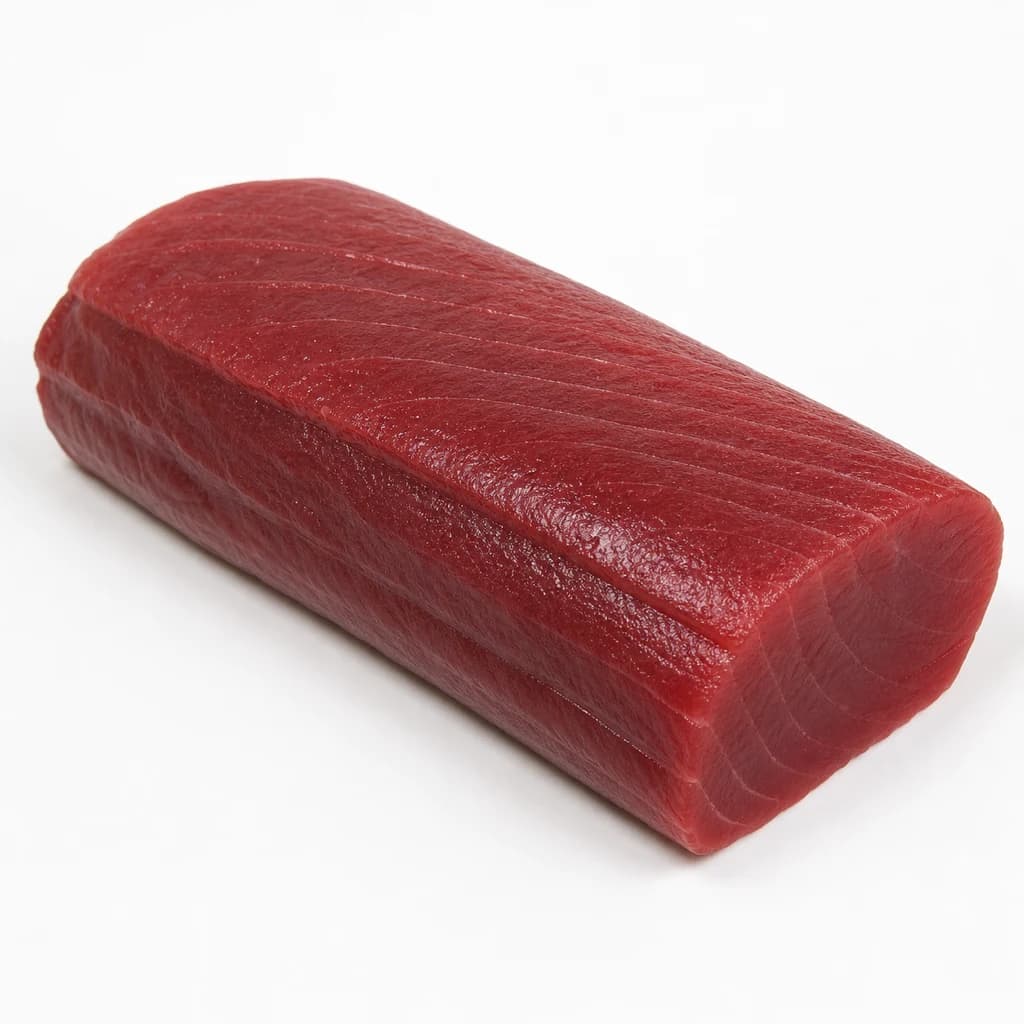
Fresh albacore loins should be glossy, almost translucent pale pink, with no brown oxidation and a clean sea smell. Most U.S. retail albacore is frozen at sea and thawed before sale — this is normal and does not indicate lower quality, but you should never refreeze it, because each freeze-thaw cycle ruptures muscle cells and leaves the flesh weepy and mushy. Buy the last piece on the ice, not the first, and use it within a day of thawing. For raw service, ask the fishmonger specifically for troll- or handline-caught, sushi-grade, bled-at-sea fish; longline albacore is generally sold cooked or canned. Canned albacore keeps for years on the shelf; once opened, transfer any leftovers to a sealed container and use within two days.
- Look for pale pink, glossy flesh with no brown edges and a briny (not fishy) smell.
- Most U.S. fresh albacore is frozen-at-sea and thawed — normal, but do not refreeze.
- Specify 'sushi-grade' and 'troll-caught' for raw service; longline goes to canning.
- Opened canned albacore keeps 2 days in a sealed container in the fridge.
Common uses
Tips & pitfalls
- Sear fresh loins no more than 60–90 seconds per side on screaming-hot cast iron; the window between rare and chalky is narrow.
- Pat loins bone-dry and salt only right before cooking — salt draws moisture and prevents a crust from forming.
- Brine fresh loins briefly (1 tbsp salt + 1 tbsp sugar per cup water, 15 minutes) for sushi service to season and set the texture.
- Buy sushi-grade only from a trusted purveyor; the flesh should smell briny, not fishy, and spring back when pressed.
- Score thick loins in a crosshatch before grilling so heat penetrates evenly without overcooking the exterior.
- Drain canned albacore well and fold in mayonnaise at the last moment to keep the flakes intact — over-mashing makes tuna salad pasty.
- Choose olive-oil-packed cans for richer salads and pastas; choose water-packed for lighter, lower-calorie applications.
- Trim the dark red lateral bloodline before raw service for a milder flavor and cleaner color on the plate.
- Watch mercury: rotate with skipjack and follow current FDA/EPA weekly guidance for canned albacore, especially for pregnant eaters and children.
Nutrition
Nutrition
No USDA FoodData Central match for Albacore Tuna yet. We surface a per-100 g profile once a generic whole-food entry is matched and verified.
In the shops
Matched grocery products
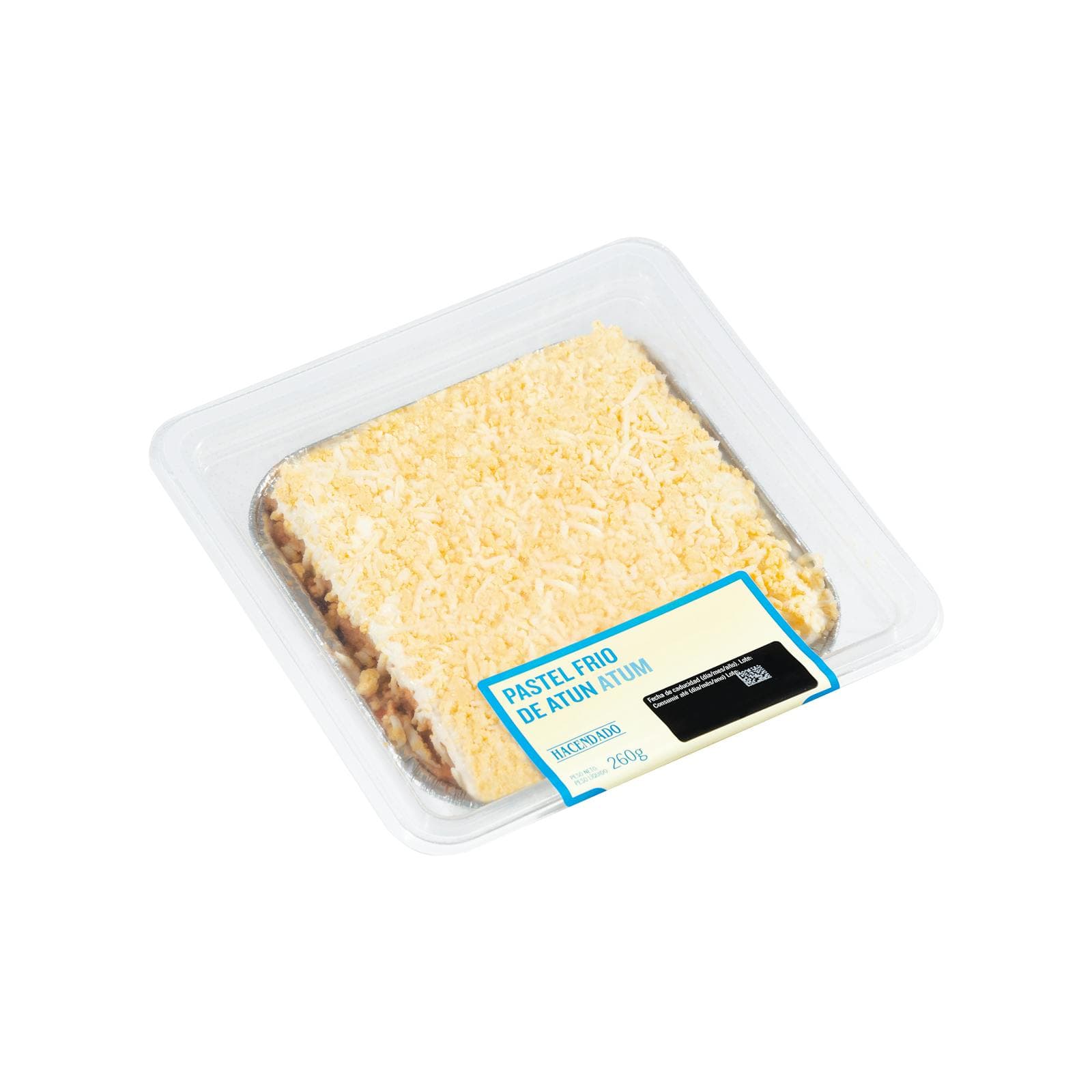 €2.90
€2.90Tuna Pie
Hacendado · 260 g · Mercadona
 €4.99
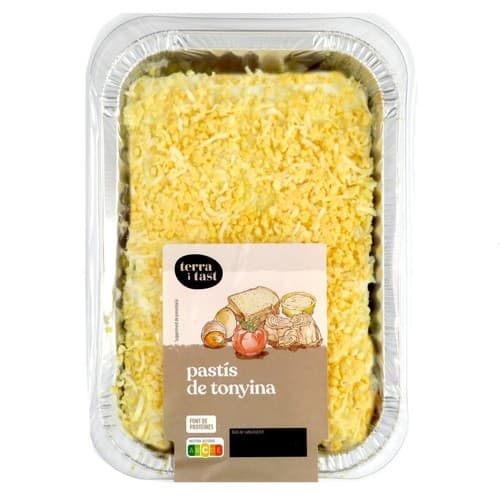
€4.99Tuna Pie
TERRA I TAST · kg · Bonpreu
 €2.30
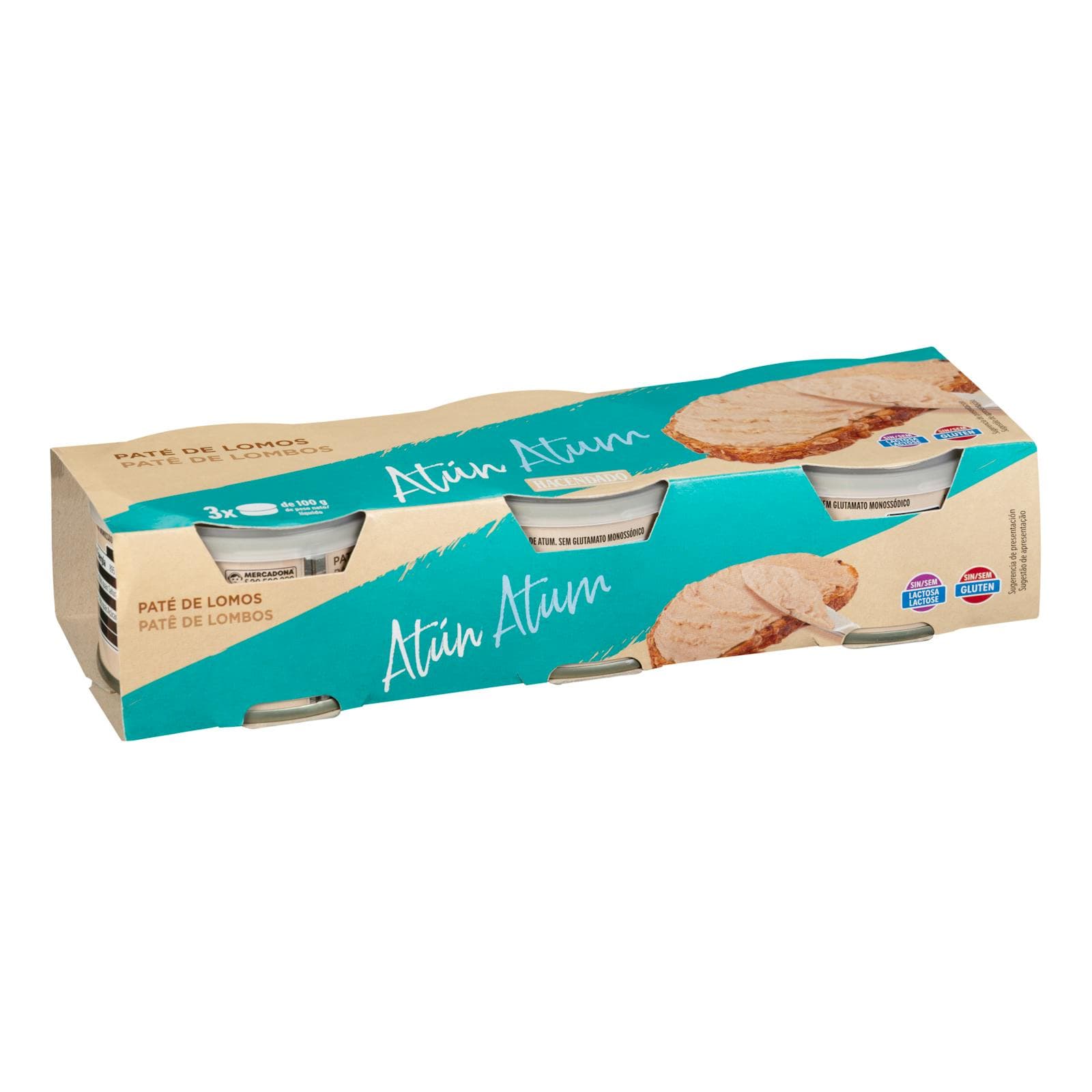
€2.30Tuna Loin Paté
Hacendado · 300 g · Mercadona
 €3.25
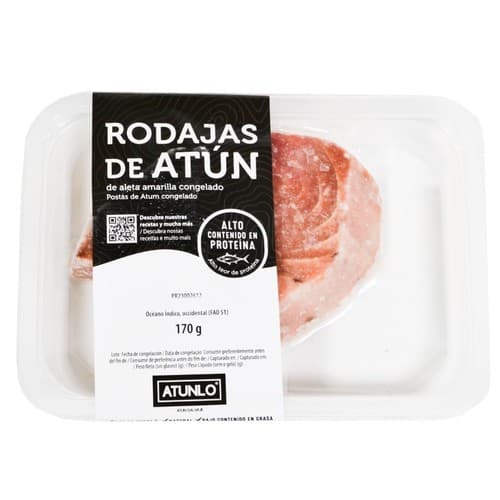
€3.25Natural Tuna Rondanxa
ATUNLO · kg · Bonpreu
 €5.37
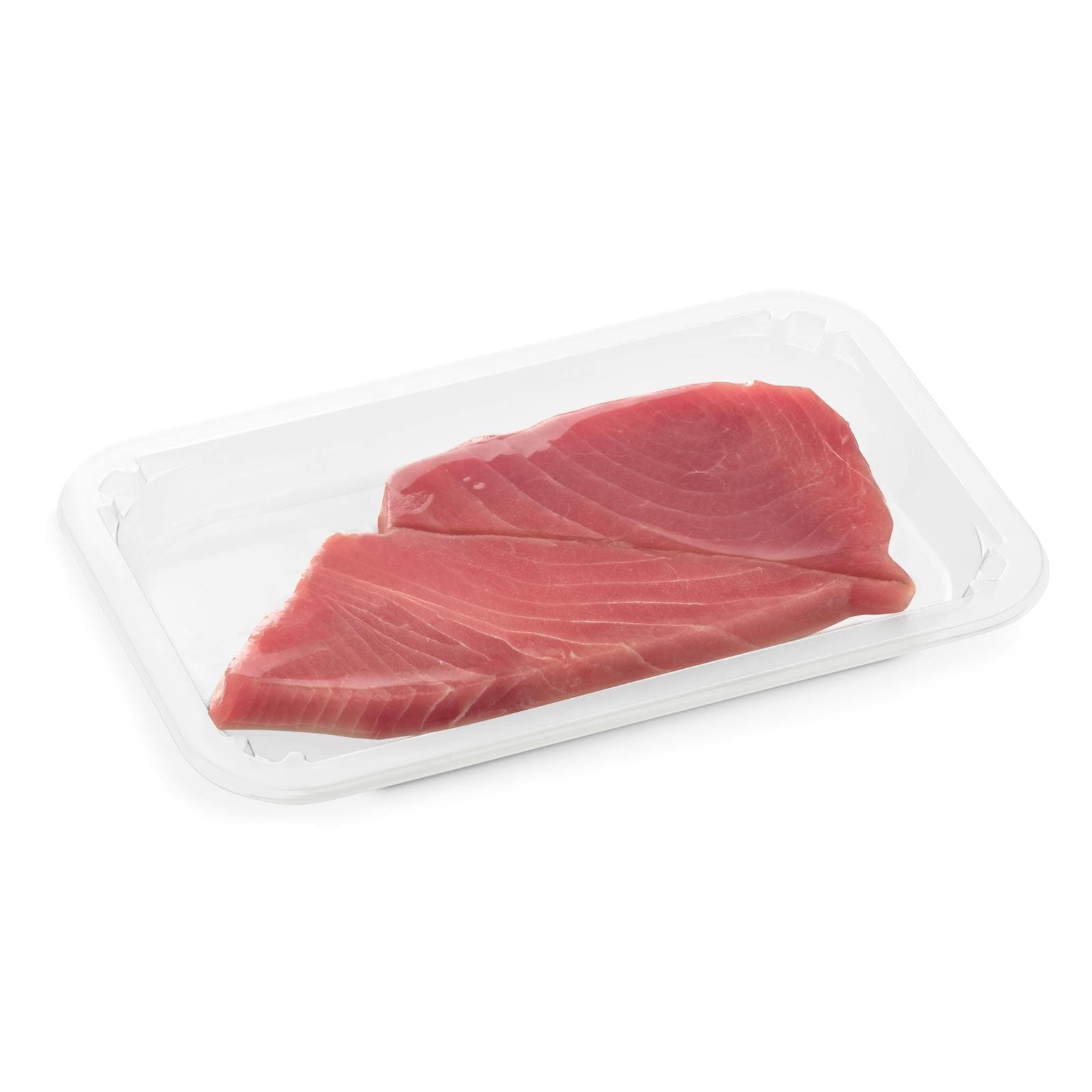
€5.37Yellowfin Tuna Slices
235 g · Mercadona
 €2.99
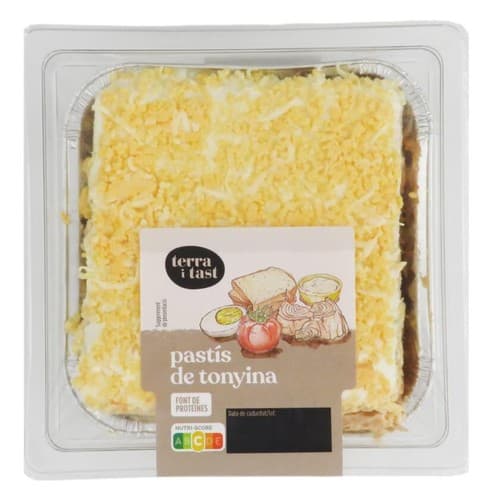
€2.99Terra i Tast Tuna Cake
TERRA I TAST · kg · Bonpreu
Good to know
- Scientific name
- Thunnus alalunga
- Family
- Scombridae (mackerel family)
- Flesh color
- Pale pink raw, creamy ivory-white when cooked — distinctly lighter than yellowfin or bluefin
- Fat content
- 5–8% typical — higher than yellowfin, leaner than bluefin; rich in omega-3s
- Internal temperature (steak)
- Rare to medium-rare 115–125°F (46–52°C); above 140°F it dries quickly
- Canned form
- The only tuna legally labeled 'white' in the U.S.; sold solid, chunk, or flake, in water or olive oil
- Peak season
- U.S. West Coast troll-caught: July–October; year-round as frozen-at-sea supply
- Mercury
- Moderate — higher than skipjack, lower than bluefin; FDA/EPA weekly guidance applies
Substitutes
- Yellowfin tuna (ahi) — Leaner and more pronounced in flavor, with a deeper red color; sears the same way but eats drier if overcooked.
- Skipjack tuna — Stronger flavor and darker flesh; the standard 'light' canned tuna, best in cooked dishes rather than raw.
- Bonito — Closest wild relative, richer and more pungent; excellent seared or canned, and a clean 1:1 swap.
- Escolar — Buttery texture mimic, but causes oily digestive effects in some people — use sparingly and warn diners.
- Sablefish (black cod) — Mild, rich, and silky; works for raw or seared applications, though not a structural substitute in salads.
Pairs with
Also called
white tuna · longfin tuna · bonito del norte · tombo