Proteins
Black Cod (Sablefish)
Buttery, high-fat white fish with silky flaking flesh; not a true cod. Shines miso-marinated and broiled, or roasted gently to keep it succulent.
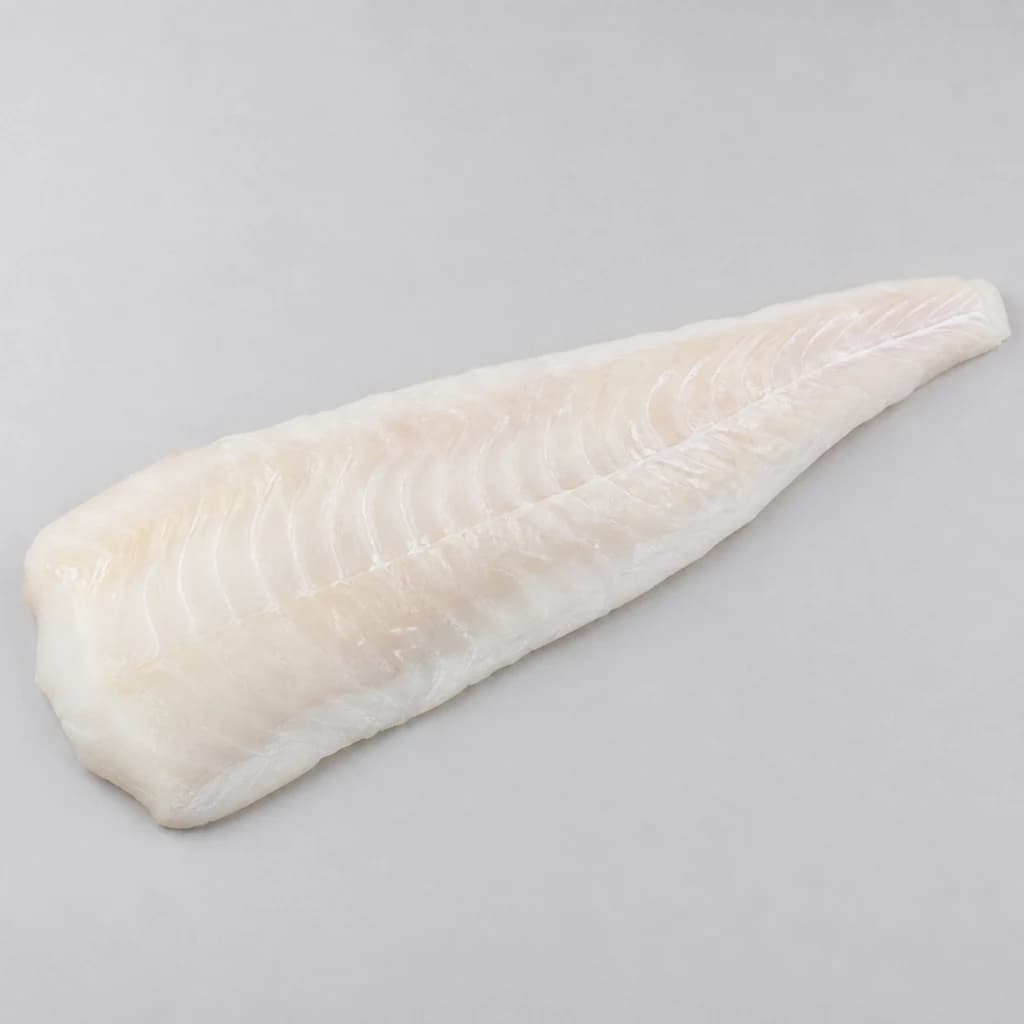
Black cod is the trade name for Anoplopoma fimbria, a deep-water fish of the North Pacific that has nothing to do with the true cods of the Gadidae family. The name stuck because its flaky, snow-white flesh looks and behaves a lot like Atlantic cod, but in almost every other respect sablefish is its own creature: a slow-growing, long-lived bottom-dweller caught at 300 to 1,500 meters off Japan, Alaska, British Columbia, and down the Pacific coast to northern Baja. It is sometimes called butterfish, and in Japan it is known as gindara ("silver cod"), the name you will see on sushi menus and in classic saikyo-yaki recipes.
The defining feature is fat. Where most "white" fish like halibut, cod, or snapper run 1 to 3 percent fat, sablefish carries 15 to 20 percent intramuscular fat, putting it in the company of salmon and mackerel. That fat is the reason the flesh stays moist under high heat, smokes without drying, and works raw, and it is also the reason sablefish spoils faster, costs more, and rewards a lighter touch in the pan. Cook it to 55 to 60 °C and the interior is translucent and custardy; push it past 65 °C and the same fat that makes it extraordinary turns waxy and greasy. Once you understand that single fact, the rest of the kitchen playbook follows.
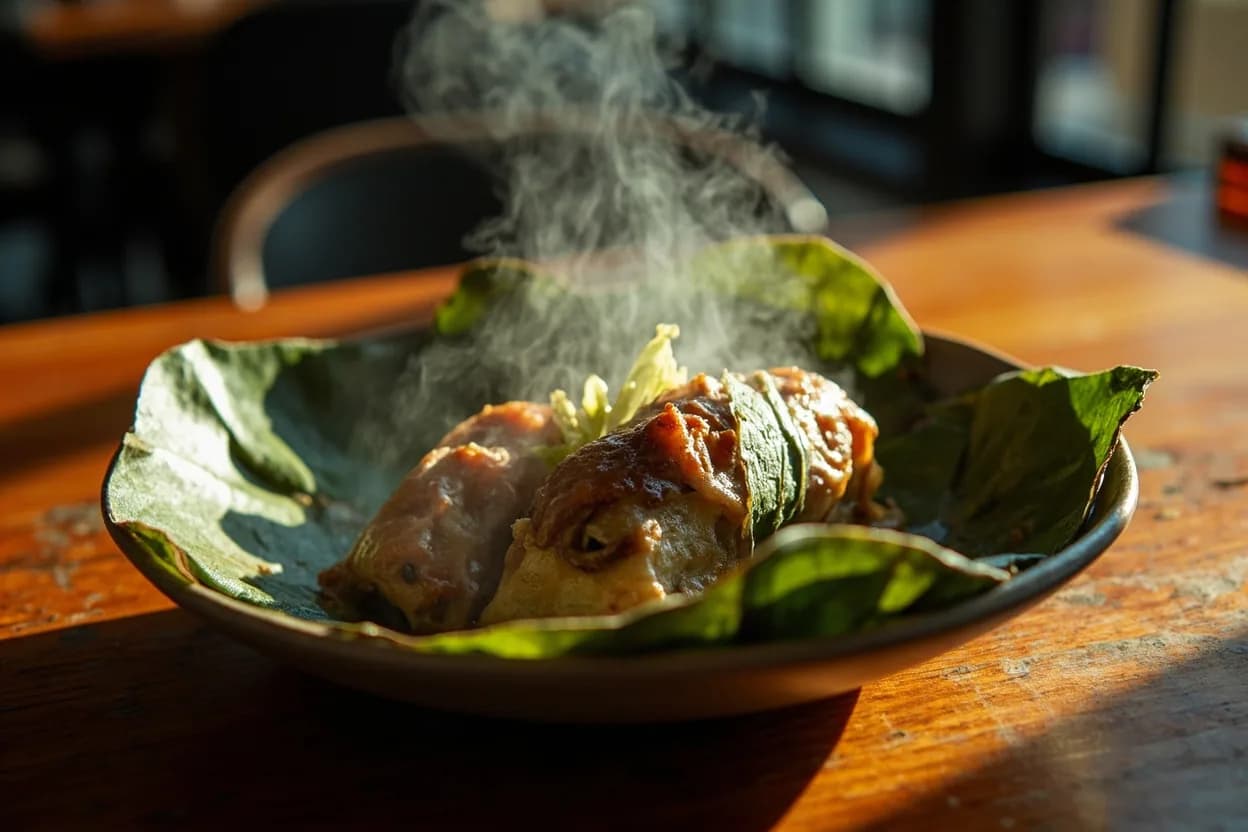
In Japanese cuisine sablefish is the star of saikyo-yaki, marinated for one to three days in sweet white (saikyo) miso, mirin, and sake, then broiled until the surface caramelizes. On the Pacific Northwest coast, indigenous communities have cold-smoked it for generations, and the silky, almost spreadable smoked product is now a chef's ingredient worldwide. Today sablefish is also farm-raised in closed containment in British Columbia, giving a more consistent, year-round supply with a slightly milder flavor than wild fish.
- Measured in
- g
- Storage
- Refrigerate
Allergens
Find it in
Types & varieties
Longline and pot caught off Alaska; the benchmark for sashimi-grade quality and the traditional source for cold-smoking.
Pot fishery along the BC coast; well-managed and prized for plump belly cuts.
Closed-containment aquaculture, mainly in BC; more consistent fat and year-round supply, slightly milder than wild.
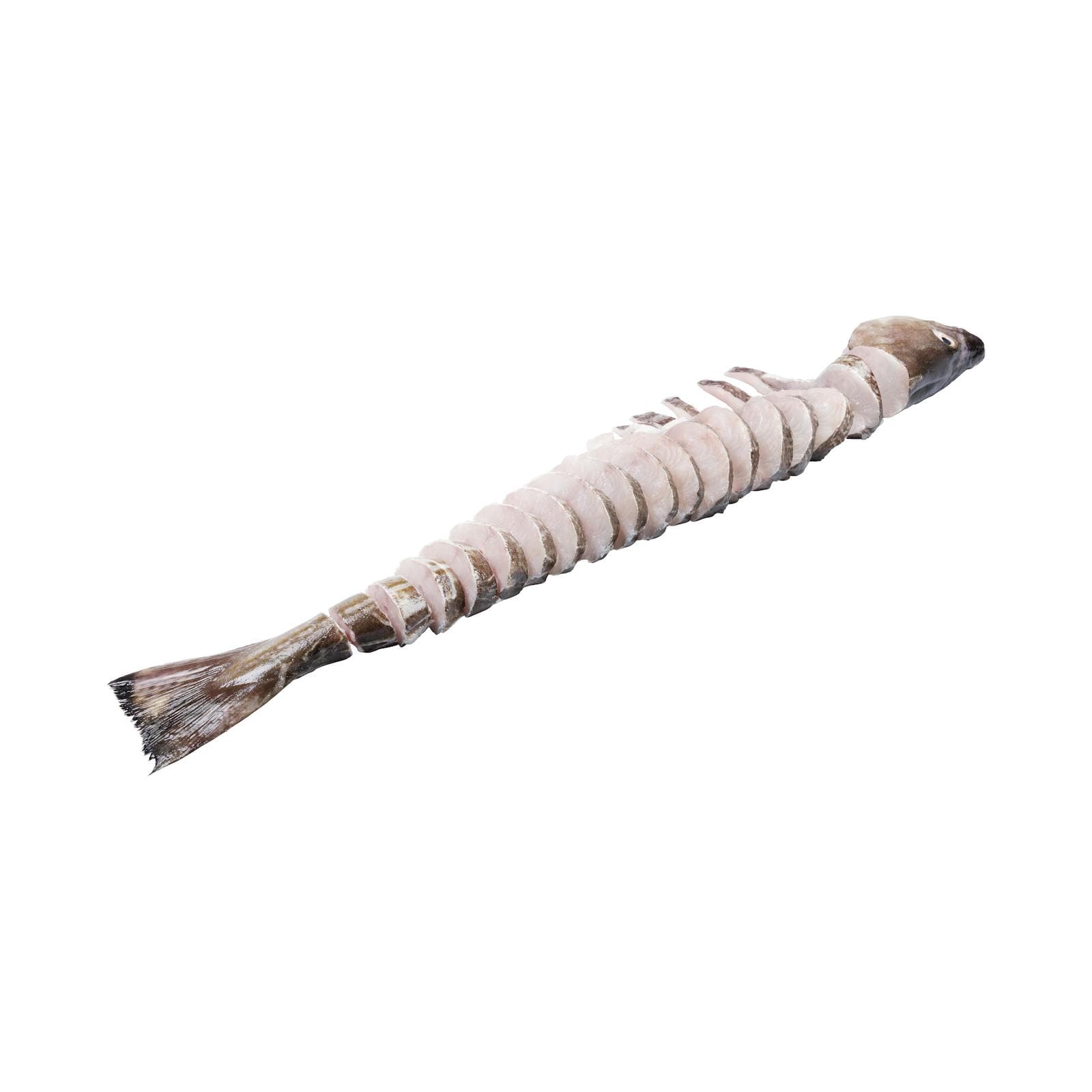
Best for roasting whole or breaking down to custom portions; the bones and trim make a rich broth.
Standard restaurant cut, usually pinbone-out; skin crisps well and holds the fillet together on the grill.
Uniform thickness for even cooking; the most reliable piece for broiling or pan-searing.
The richest, fattiest portion; prized for smoking, grilling, and confit.
Pre-cooked, sliced thin; silky, almost spreadable, with a long, sweet smoke.
Why sablefish forgives (and rewards) a careful cook
Sablefish's high unsaturated fat acts as an internal buffer against heat. The fat renders slowly through the flesh, basting it from within, which is why a thick sablefish fillet can be broiled 8 to 10 cm from the heating element and still come out moist. It is also why a quick hot smoke at 80–95 °C produces a flaky, almost spreadable texture rather than the dry, jerky result you'd get from a lean fish at the same temperature. The catch is that the same fat oxidizes quickly, so the fish is more perishable than lean white fish and benefits from being eaten within a day or two of the catch. In practice this means buying from a high-turnover counter, keeping the fish on ice at home, and not letting it sit in the fridge for three days 'just in case.'
- Score the skin in a shallow crosshatch before cooking to keep it flat and to let the subcutaneous fat render evenly.
- Pull from heat at 55–60 °C internal; carryover will finish the cook on the plate.
- For grilling, a brief 5–8% salt brine for 10–15 minutes firms the flesh and seasons it through.
- Save trim, collars, and skin to make a broth; the rendered fat carries an enormous amount of flavor.
The miso-marinade tradition (saikyo-yaki)
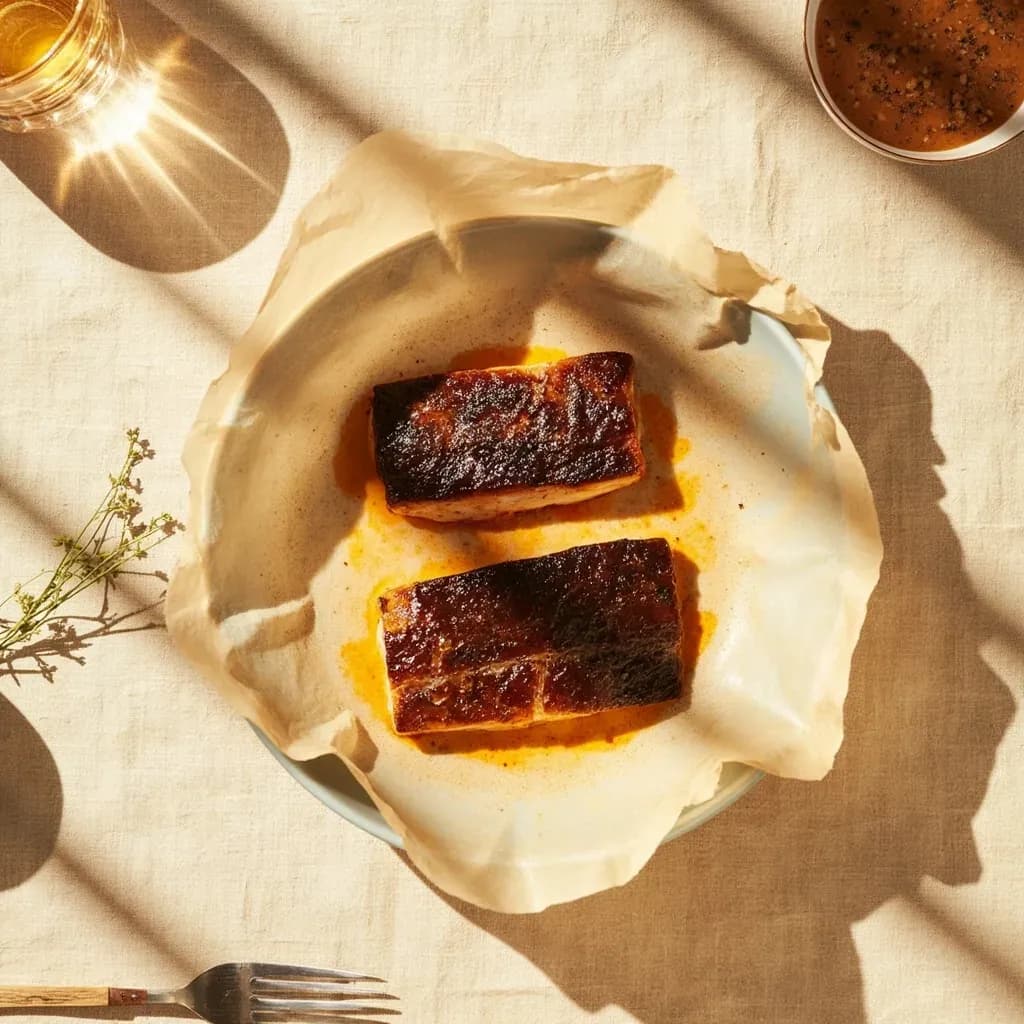
Saikyo-yaki, the Nobu restaurant classic, is built on a counter-intuitive idea: bury a rich, fatty fish in another layer of richness and let time and the broiler sort it out. Saikyo miso is a sweet, low-salt white miso from Kyoto, blended with mirin, sake, and a little sugar. The marinade is brushed onto skinless fillets and left to cure for 24 to 72 hours, during which the salt seasons the flesh and the sugars and amino acids of the miso begin to tenderize the surface. The fillets are then wiped clean (this step matters, see tips) and broiled 10–12 cm from the element until the surface caramelizes into a deep mahogany and the interior stays just-cooked and custardy. The result is sweet, salty, savory, and rich all at once, and works as a small first course, on rice, or as the centerpiece of a Japanese-style dinner.
- Marinate skin-side and flesh-side, refrigerated, for 24–72 hours depending on fillet thickness.
- Wipe excess marinade off with a clean cloth before broiling or the sugars will scorch long before the fish is cooked.
- Broil 10–12 cm from the element for 6–10 minutes depending on thickness; rotate once for even browning.
- Finish with a brush of mirin and a sprinkle of grated daikon and scallion if serving traditionally.
Common uses
Tips & pitfalls
- Cook to 55–60 °C internal, no higher; beyond 65 °C the flesh turns waxy and the fat reads as greasy on the palate.
- Do not add extra oil when pan-searing or broiling; the fish carries far more fat than it needs.
- Wipe off excess miso marinade before broiling, or the sugars will burn long before the fish is cooked through.
- Score the skin in a shallow crosshatch to prevent curling and to render the layer of fat under the skin evenly.
- Marinate for 24–72 hours, not longer; a week-long cure overwhelms the fish and turns the surface mushy.
- Source from a high-turnover fishmonger and keep the fish very cold; the unsaturated fat oxidizes fast and turns 'fishy' when mishandled.
- Thaw frozen sablefish slowly in the fridge overnight, never at room temperature or in warm water, which accelerates spoilage and ruins the texture.
- Do not confuse it with butterfish (Peprilus), a smaller, much leaner species sometimes sold under the same name.
Nutrition
Energy
816 kJ · per 100 g
Where the calories come from
Protein
13.4g
27% DV
Carbs
0g
0% DV
Fat
15.3g
20% DV
Fiber
0g
0% DV
Sodium
56mg
2% DV
Source · USDA FoodData Central · Fish, sablefish, raw
View on FDC →In the shops
Matched grocery products
 €31.62
Cod Slices
2.48 kg · Mercadona
 €11.99
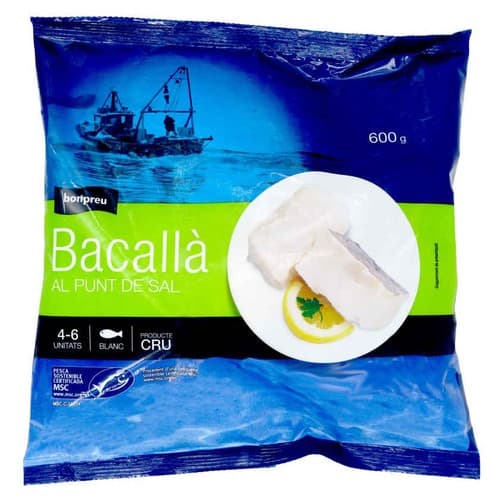
Salted Cod
BONPREU · kg · Bonpreu
 €2.99
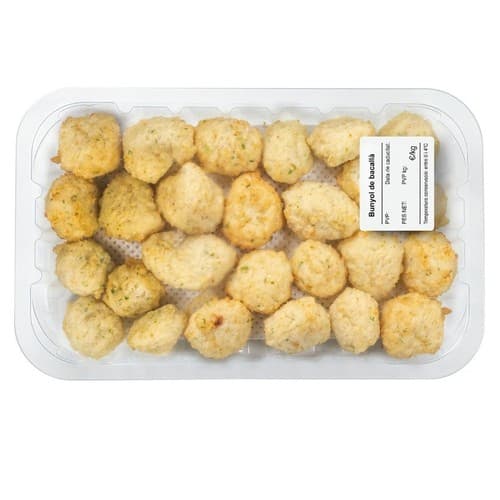
€2.99Cod Fritters
kg · Bonpreu
 €15.04
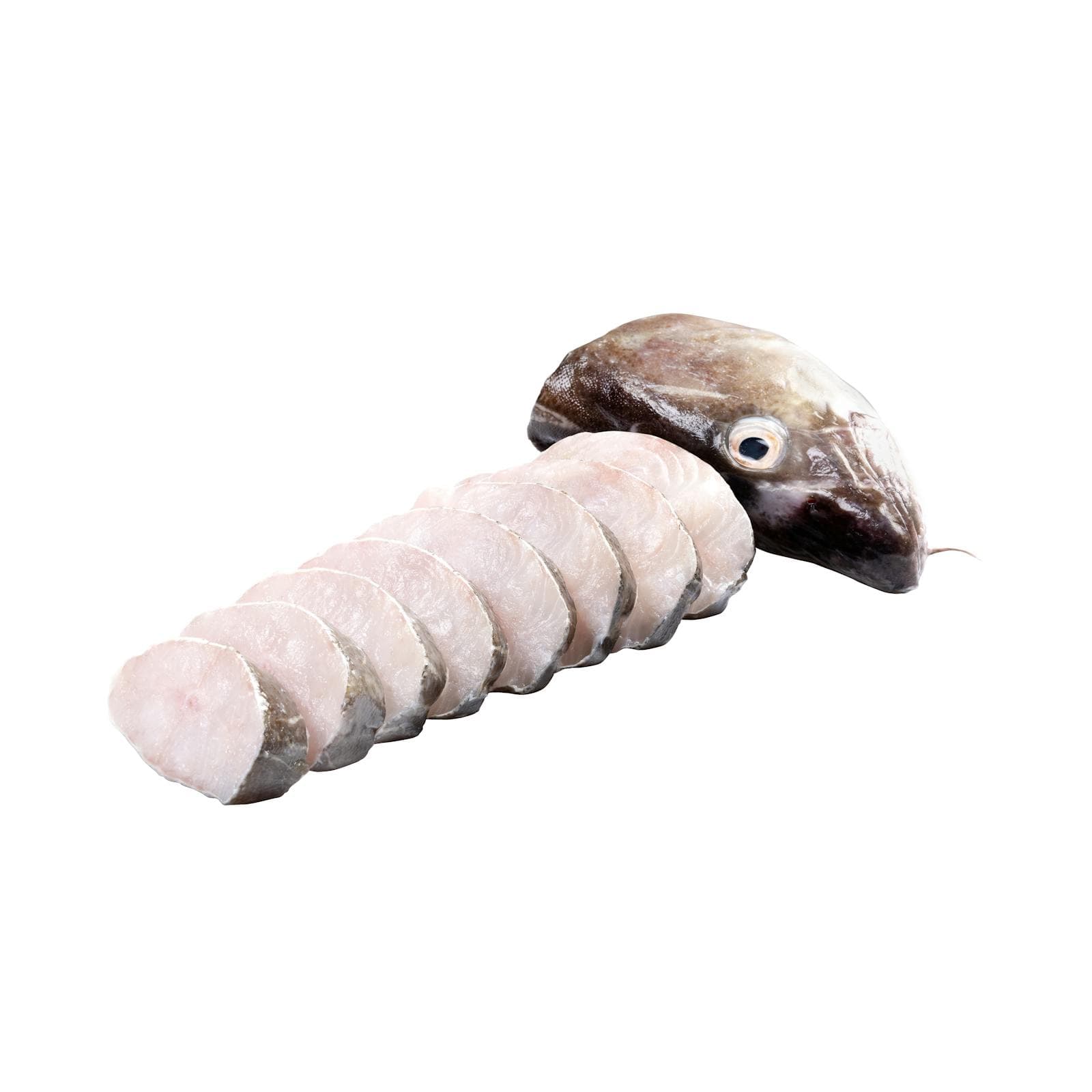
Cod Half Piece Sliced
1.18 kg · Mercadona
 €8.99
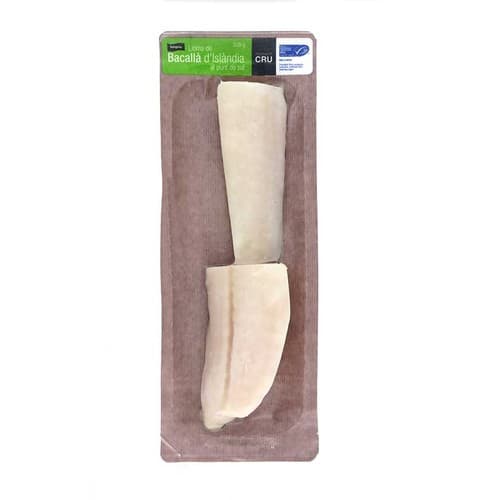
€8.99Salted Cod Loin
BONPREU · kg · Bonpreu
 €7.27
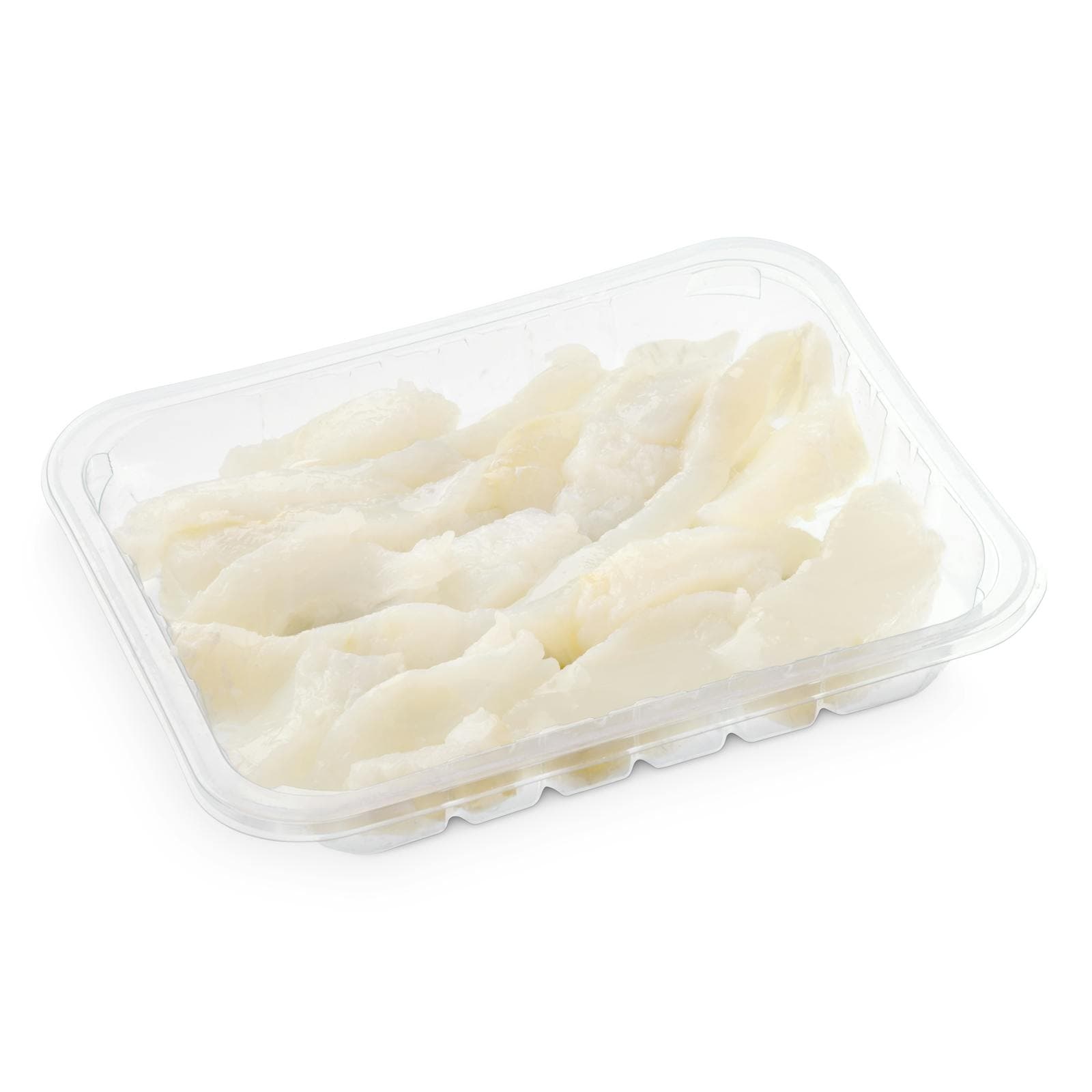
€7.27Desalted Cod Crumbs
Hacendado · 285 g · Mercadona
Good to know
- Scientific name
- Anoplopoma fimbria, the only species in the family Anoplopomatidae
- Common names
- Sablefish (official U.S./Canada), black cod (culinary), butterfish, gindara (Japan)
- Not a true cod
- Unrelated to the Gadidae cod family; the name refers only to its white, flaky appearance
- Fat content
- Roughly 15–20% intramuscular fat, several times that of halibut, cod, or snapper
- Omega-3s
- Among the highest of any white fish; rich in EPA and DHA
- Range & depth
- North Pacific from Japan to Baja, typically 300–1,500 m deep
- Mercury
- Low; well under FDA/EPA action levels
- Internal doneness
- Ideal at 55–60 °C (130–140 °F); turns waxy and greasy beyond 65 °C (150 °F)
Substitutes
- Chilean sea bass (Patagonian toothfish) — Closest match in fat and silky texture; check the fishery for sustainability, as sources vary widely.
- Wild king (chinook) salmon — Higher fat than other salmon; rich enough to stand in for a miso marinade, though the flavor is more pronounced.
- Arctic char — Clean, sweet, and fattier than trout; a reliable substitute in miso or broiled preparations.
- Farmed barramundi (fat-bellied cuts) — Approachable and widely available; leaner, so shorten cook time and consider a butter baste.
- Halibut — Leaner and firmer; only works with aggressive basting and an early pull from the heat, or it will dry out.
- King salmon belly — When a recipe specifically calls for the sablefish belly, king salmon belly has comparable richness.
Pairs with
Also called
sablefish · butterfish · gindara · Alaskan cod