Transform & Preserve
Beurre Blanc Method
Whisking cold butter into a wine-and-shallot reduction to form a silky emulsified French sauce.
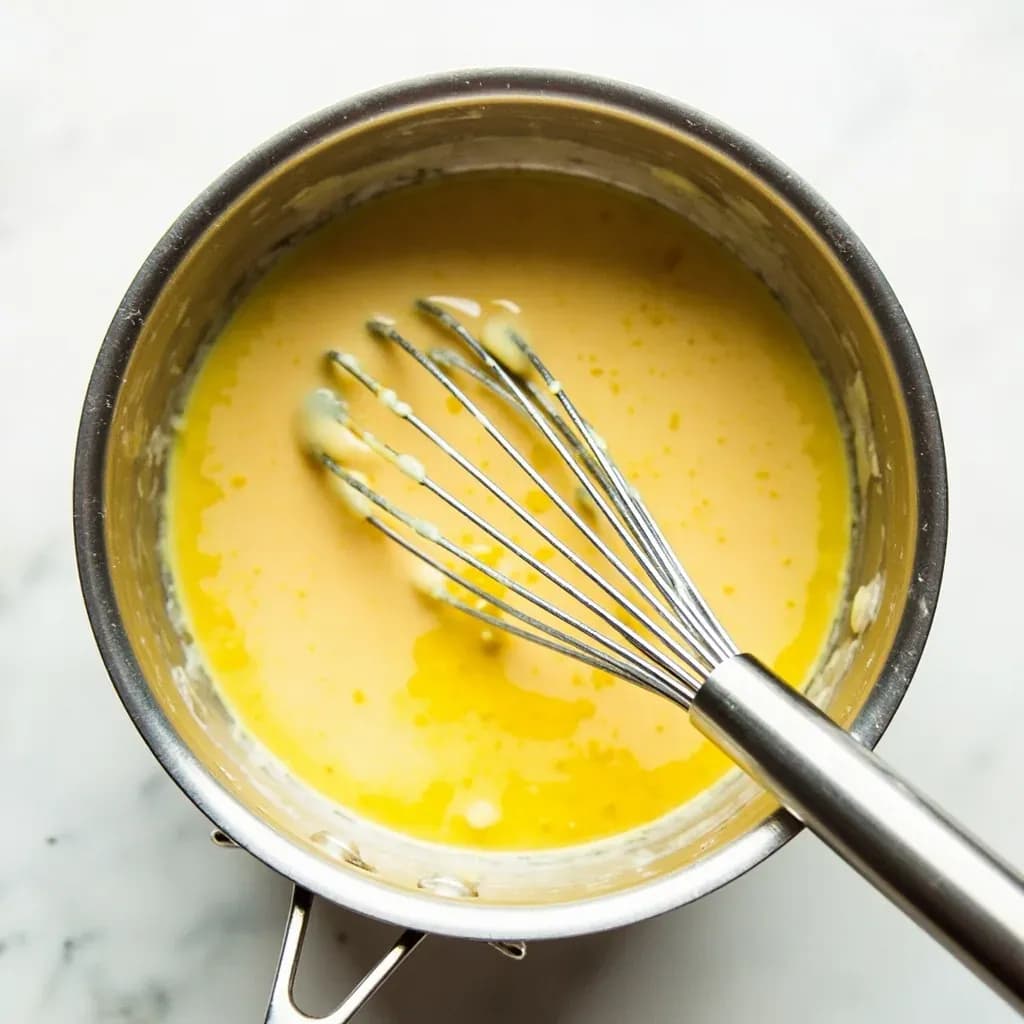
The beurre blanc method reduces white wine, vinegar, and shallots, then whisks in cold butter piece by piece off direct high heat to create a smooth, emulsified butter sauce. Keeping the temperature gentle is essential, because too much heat breaks the emulsion and the sauce separates. It is a foundational French sauce served warm over fish and vegetables.
Beurre blanc is an emulsion of cold butter into a reduced mixture of dry white wine, white wine vinegar, and shallots, with the silky body coming entirely from butterfat suspended in the acidic liquid rather than from any starch or egg-yolk thickener. It belongs to the small family of sauces built by monter au beurre — finishing a reduction with cold butter to create richness without flour, cornstarch, or liaison. The technique was codified in the late nineteenth century in the Loire Valley, where it remains a Nantaise signature, traditionally paired with the region's Muscadet and the river fish it accompanies.
Sauce-building is less about cooking than about controlling temperature and pace. Each cube of cold butter must melt and incorporate before the next is added, and the liquid must stay just below a simmer the whole time. Too hot and the emulsion breaks into oily streaks; too cold and the butter seizes before it has had a chance to suspend. When done well, the finished sauce has the texture of lightly whipped cream, a pale ivory color, and a clean, bright flavor of shallot and wine with a glossy, mouth-coating finish.
The method rewards last-minute cooking. Beurre blanc cannot be held for long, reheated, or frozen without breaking, so it belongs at the very end of a composed plate, whisked together in the time it takes to plate fish, shellfish, or vegetables. Once a cook has built a few, the principle extends easily to beurre rouge, beurre citron, and the cream-stabilized modern version that is now standard in most professional kitchens.
- Difficulty
- Hard
Types & varieties
The original Loire style: shallots, Muscadet, a little vinegar, and cold butter only — no cream. Silky and pure, but more fragile and easier to break.
Modern hotel and restaurant style with heavy cream added after the reduction; richer, looser, and considerably more stable on the pass.
Red-wine version made with red wine and red wine vinegar; classically served with beef, duck breast, or grilled salmon.
Built with fresh orange juice and a touch of zest alongside white wine vinegar; the classic partner for duck à l'orange and seared scallops.
Lemon juice replaces the wine and vinegar; sharp and clean, served with fish, asparagus, and artichokes.
Beurre blanc enriched with lobster coral or tomato concassée; the traditional accompaniment to lobster and other shellfish.
Finished with fines herbes — parsley, chervil, tarragon, chives — and the standard sauce for poached fish in many bistros.
How to do it
- 1
Prep all ingredients
Peel and finely mince 2–3 large shallots. Cut 200–250 g cold unsalted butter into 1 cm cubes and return them to the fridge. Measure 125 ml dry white wine (Muscadet traditionally), 2 tablespoons white wine vinegar, and, if using the cream-enriched version, 60 ml heavy cream. Have a small whisk, a heavy-bottomed saucepan, and a fine chinois at the ready — once the butter goes in, the sauce does not wait.
- 2
Sweat the shallots
Combine the wine, vinegar, and minced shallots in the saucepan. Bring to a gentle simmer over medium heat and cook until the shallots are translucent and softened, about 2–3 minutes. You are not trying to color them; you want their flavor to release into the liquid, not to brown.
- 3
Reduce the liquid
Lower the heat and reduce the mixture to roughly 2–3 tablespoons — the liquid should look syrupy, smell of cooked shallot rather than raw alcohol, and coat the bottom of the pan when tilted. This concentration is what allows the butter to suspend properly; an under-reduced liquid will not support the emulsion and the sauce will weep.
- 4
Add the cream if using
For the modern stable version, pour in the heavy cream and reduce again by about half, until the mixture coats the back of a spoon. The traditional Nantaise beurre blanc skips this step entirely — move directly on to mounting.
- 5
Mount with butter
Pull the pan off the heat, or set it over the lowest possible flame. Whisk in one cube of cold butter at a time with small circular strokes, returning the pan to gentle heat only if the sauce begins to set. Do not let the sauce boil at any point. Each cube should melt and become silky before the next is added; this step takes 6–10 minutes and is the heart of the technique.
- 6
Season and strain
Season with fine sea salt and a few grinds of white pepper. Taste and add a drop of lemon juice only if the sauce reads flat — the reduction should already provide enough acidity. Strain through a fine chinois for the classic glossy, transparent sauce, or leave the shallots in for a more rustic country-style finish.
- 7
Hold and serve
Transfer the sauce to a warm bowl set over a bain-marie at roughly 55–65 °C and whisk once more just before spooning. Use within 30–45 minutes; do not reboil or microwave, both of which will break the emulsion. The sauce is at its best the moment it leaves the pan.
Troubleshooting: when a beurre blanc breaks
A broken beurre blanc looks oily, with greenish butterfat pooling on the surface and thin, translucent liquid weeping underneath. Almost always this is a temperature problem rather than a ratio problem: the butter was added too quickly, the reduction was still too thin to suspend it, or the pan was allowed to boil during mounting. To rescue a broken sauce, set a tablespoon of cold heavy cream (or a teaspoon of ice water) in a clean bowl, then slowly whisk the broken sauce into it in a thin stream. The fresh liquid provides new surface for the butterfat to emulsify against, and the sauce should pull together within a few seconds of steady whisking. If it still looks greasy, set the bowl over a bain-marie of barely warm water and whisk gently until it recombines. Once a sauce has broken twice, however, the butterfat has usually lost its structure and the texture will be thinner than the original — it is best used as a cooking liquid for the next dish rather than served as a sauce.
The role of cream, and when to skip it
The traditional Nantaise sauce contains nothing but shallots, wine, vinegar, and butter, and the emulsion is held together entirely by the butterfat suspended in a strongly acidic, well-reduced liquid. The cream-enriched version was popularized in the twentieth century because cream buys time on a hot pass: the milk solids and fat give the sauce a looser body and a much wider margin of error in temperature. For a home cook serving two portions and plating immediately, the cream-free classic tastes cleaner and brighter, and is worth the extra attention. For a restaurant turning out thirty covers an hour, the cream version is essentially a professional necessity. If you are cooking without cream, reduce the wine and vinegar a little further than you would otherwise, and serve within ten minutes of finishing.
Common uses
Tips & pitfalls
- Keep the butter very cold, straight from the fridge, so it emulsifies into the reduction rather than simply melting into a greasy pool.
- Whisk constantly and add the butter cube by cube, letting each piece incorporate fully before adding the next; rushing is the most common path to a broken sauce.
- Pull the pan off the heat, or work over the very lowest flame, once you begin mounting — direct boiling is the single most common cause of failure.
- Reduce the wine-shallot-vinegar mixture to roughly 2–3 tablespoons before adding butter; under-reduced liquid will not cling to food and the sauce will weep.
- If the sauce breaks, whisk a tablespoon of cold cream or a teaspoon of cold water in a clean bowl and slowly whisk the broken sauce into it to re-emulsify.
- Hold finished sauce in a bain-marie at around 60 °C, not over direct heat; it will keep for 30–45 minutes this way before the emulsion begins to give out.
- Use the same wine for cooking as you serve at the table; a flat or sweet wine will announce itself in a sauce this simple and pale.
- Salt with fine sea salt and white pepper only — black pepper speckles unattractively in a pale sauce and can taste harsh against the delicate butter.
- Strain through a fine chinois for the classic glossy, transparent texture, or leave the shallots in for a more rustic Nantaise finish.
Good to know
- Origin
- Loire Valley, France, specifically associated with Nantes; traditionally credited to Clémence Lefeuvre at restaurant La Belle Angèle in the late 1890s.
- Classic liquid base
- Dry white wine (Muscadet from the Loire traditionally) combined with a smaller amount of white wine vinegar.
- Key fat
- Cold unsalted butter, cut into roughly 1 cm cubes, whisked in gradually off the heat.
- Stabilizer
- Heavy cream in the modern monté à la crème style; the traditional Nantaise beurre blanc contains no cream.
- Ideal holding temperature
- Roughly 55–65 °C (130–150 °F); hotter causes the emulsion to break, colder causes it to set and weep.
- Total time
- 15–20 minutes of active work, mostly unattended reduction.
- Yield
- About 250–300 ml (roughly 1¼ cups) from 100 g butter plus a small splash of wine, vinegar, and a few shallots.
- Wine pairing principle
- The sauce should be made with the same wine served at the table — never cook with a wine you would not drink.
- Difficulty
- Intermediate; an emulsification technique that requires careful temperature control.
- Best window
- Served immediately or held for 30–45 minutes in a bain-marie; not suited to long holding or reheating.
Also called
Beurre Blanc · White Butter Sauce
Related

Confit
Cook slowly submerged in fat for silky tenderness and keeping

Cure
Draw out moisture with salt and time to preserve and concentrate

Pickle
Steep in acidic brine for bright, tangy, crunchy preservation

Ferment
Let friendly microbes transform food into tangy, complex flavor

Marinate
Soak in a seasoned mix to flavor and tenderize before cooking

Brine
Soak in salt water so meat stays juicy and seasoned throughout

Dehydrate
Slowly dry out moisture to concentrate flavor and extend shelf life

Cold-Smoke
Perfume cured food with smoke without cooking it through