Legumes & Beans
Black Beluga Lentil
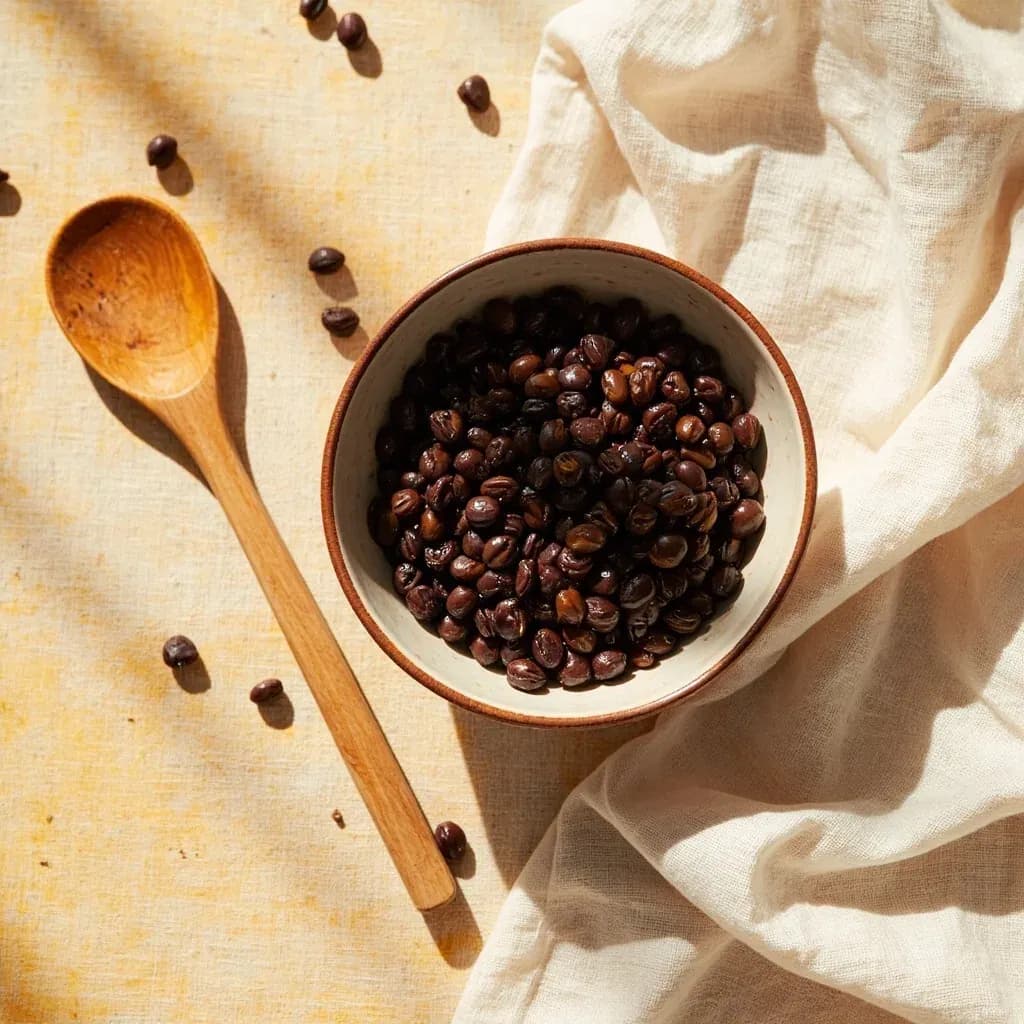
Tiny jet-black lentils that glisten like caviar and hold their shape after cooking; firm and earthy, ideal for salads and plated sides where mush would ruin the look.
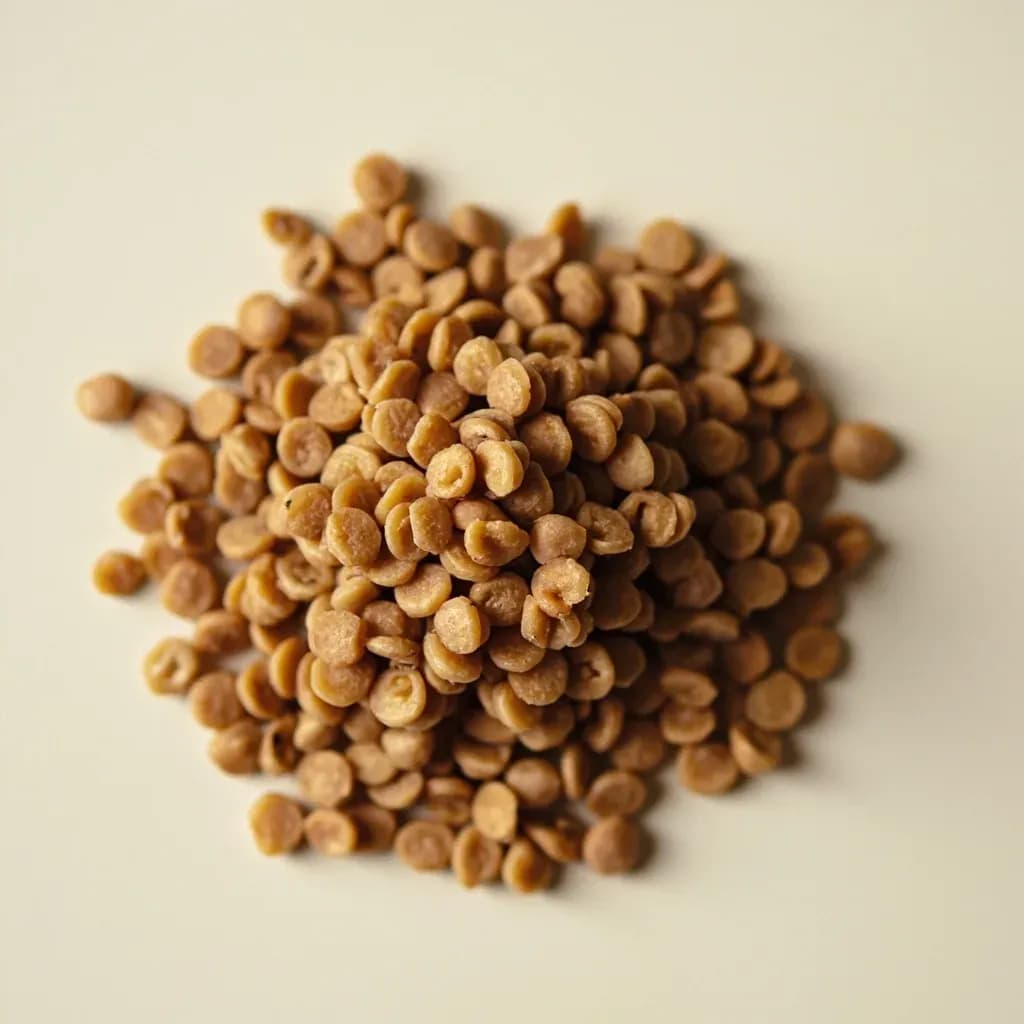
Beluga lentils are one of the smallest lentil cultivars on the market — a black, glossy cultivar of Lens culinaris grown chiefly in the Palouse region of eastern Washington and northern Idaho, with additional production in Saskatchewan and parts of southwest France and Spain. The marketing name refers to their resemblance to beluga caviar: a jet-black seed about 2 mm across, with a glossy sheen, that once cooked opens to a creamy beige interior while the skin remains intact. That skin is the defining feature of the lentil. It is tougher than the seed coat of brown or green lentils, so it resists bursting even when fully tender, and the finished legume reads on the plate as a discrete bead rather than a soft purée.
That behavior makes belugas a cook's choice whenever a legume has to compete visually and texturally with a knife-and-fork protein — seared scallops, duck breast, a roasted beet salad, a crostini under crème fraîche. They are also simply richer and more mineral than the average green lentil, with an earthy, faintly peppery profile that takes well to sherry vinegar, smoked paprika, duck fat, and toasted nut oils. They are sold dried almost universally; canned belugas exist but have lost the firm, intact skin that is the whole point of the lentil, so they are best reserved for purées.
Cooking is forgiving in time but not in aggression: a brief boil, then a gentle simmer for 20 to 25 minutes in salted liquid, is enough. No soaking is needed, and about 1 cup dried yields roughly 2 to 2.5 cups cooked. Cooked belugas freeze well, which makes them a practical option to have on hand for composed plates throughout the week.
- Measured in
- g
- Storage
- Airtight
Find it in
Suits
Types & varieties
Larger, duller-seeded black lentils; cook similarly but soften more readily and lack the uniform bead.
Distinctly green and slightly larger; the closest culinary cousin in shape and behavior, and the standard visual substitute.
Italian small black lentil of comparable size and firm texture; protected origin in the Apennines.
A reddish-brown cultivar in the same small-seeded family; behaves similarly but reads warmer on the plate.
Why the skin is the whole point
The beluga's reputation rests on a single anatomical fact: the seed coat is unusually tough and elastic. Brown and standard green lentils collapse at the skin well before the interior is fully cooked, which is why a soup thickens as it simmers. Belugas do not. They finish tender inside while keeping a defined black exterior, which is what allows a cook to use them like a grain — spooned under a protein, tossed into a salad, plated as a composed side — rather than as a thickener. Any cooking technique that protects that skin (gentle simmer, acid held until the end, finished with fat) preserves the lentil's defining quality.
- Gentle simmer, not a rolling boil, prevents the seed coat from abrading against its neighbors.
- Acid — vinegar, citrus, tomato — should be added off the heat or at the end; early acid firms the skin and lengthens cook time.
- Finishing with a fat (olive oil, butter, duck fat) re-coats the skins and restores the caviar-like gloss.
Reading the label
Beluga is a marketing term, not a protected designation, so the contents of a bag can vary. The most reliable sign is the seed itself: small, uniform, deeply black with a slight gloss, and free of dull gray or brownish seeds. Larger, duller-seeded black lentils are often sold under the same name at lower prices; they cook faster and soften more, which makes them usable in warm salads but a poor choice for a plate where shape is the point. Puy lentils (green) and Castelluccio di Norcia (black) carry protected-origin status in France and Italy respectively, and they are the named benchmarks for the small, firm-textured lentil family.
Common uses
Tips & pitfalls
- Rinse and pick over the lentils in cool water to remove dust and the occasional small stone — they run straight from the field into the bag.
- Toast the dry lentils in a little oil or butter for 1 to 2 minutes before adding liquid; it deepens the earthy flavor without affecting cook time.
- Salt the cooking liquid generously so the skins season from the outside in; undersalted lentils taste flat no matter what you dress them with.
- Hold off on acid (vinegar, citrus, tomato) until after cooking; acid early in the simmer toughens the skins and visibly prolongs cooking.
- Cook to just tender with a slight bite — overcooking collapses the prized shape and turns the cooking water starchy.
- Use a wide, shallow pan so evaporation stays even and the liquid reduces predictably; a deep stockpot can leave the lentils swimming unevenly.
- For salads, spread the drained lentils on a sheet pan to cool quickly; this halts carryover cooking and preserves the glossy black surface.
- Common mistake: boiling hard for the full cook time. Keep to a gentle simmer, or the skins split and you lose the caviar look entirely.
Nutrition
Energy
1473 kJ · per 100 g
Where the calories come from
Protein
24.6g
49% DV
Carbs
63.4g
23% DV
Fat
1.1g
1% DV
Fiber
10.7g
38% DV
Sugars
2g
of which
Sodium
6mg
0% DV
Source · USDA FoodData Central · Lentils, raw
View on FDC →In the shops
Matched grocery products
No matched grocery products for Black Beluga Lentil yet.
Good to know
- Scientific name
- Lens culinaris (black cultivar)
- Size
- Roughly 2 mm in diameter; among the smallest lentil cultivars
- Color
- Jet black with a glossy sheen; creamy beige interior once cooked
- Flavor
- Earthy, mineral, slightly peppery; richer than green lentils
- Texture after cooking
- Firm and intact; skin does not split readily
- Cooking ratio
- 1 cup dried lentils to about 2.5 cups water or stock
- Cook time
- 20 to 25 minutes at a gentle simmer after a brief boil
- Yield
- About 2 to 2.5 cups cooked from 1 cup dried
- Pre-soaking
- Not required
- Storage, dried
- Airtight container in a cool, dark pantry for 1 to 2 years
- Storage, cooked
- Refrigerated 4 to 5 days; freezes well for several months
- Nutrition highlight
- About 9 g protein and 8 g fiber per cooked 1/2 cup; good source of iron and folate
Substitutes
- French green (Le Puy) lentils — Closest match in size, shape retention, and earthiness; substitute 1:1, accepting the color change.
- Castelluccio di Norcia IGP lentils — Italian small black lentil with the same firm texture; substitute 1:1 and keep the dark look.
- Standard black lentils — Work in salads and warm sides but soften more readily and are less uniform; reduce cook time by a few minutes.
- Brown or regular green lentils — Acceptable in cooked-down applications like puréed soup; avoid in any dish where shape is essential.
- Beluga Roja lentils — Same small-seeded family with similar behavior; the reddish-brown color will alter the visual effect.
Pairs with
Also called
beluga lentil · black lentil · caviar lentil · lenteja beluga