Proteins
Cotechino
Large fresh Italian pork sausage with rind and spices that turns soft and gelatinous when simmered low for hours; classic with lentils for New Year's.
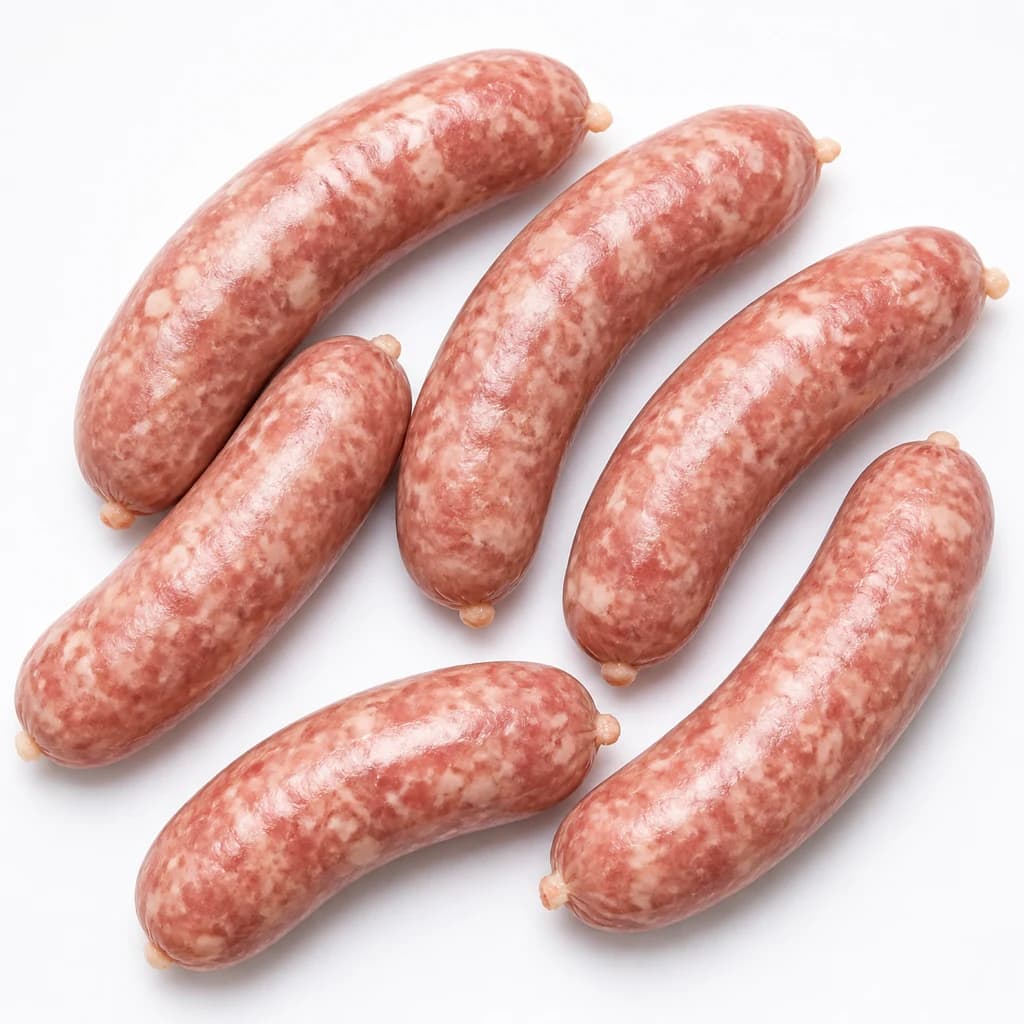
Cotechino is a large, fresh (raw) pork sausage from Modena and the surrounding Po valley, distinguished from ordinary Italian salsiccia by one unusual ingredient: a generous proportion of cotenna, pork rind, ground into the forcemeat alongside the meat and fat. That rind is the point of the sausage — during a long, gentle simmer it dissolves into a soft, almost spreadable, gelatinous texture that no lean fresh sausage can imitate. The seasoning is warm and aromatic rather than peppery-hot: black pepper, cinnamon, clove, and nutmeg, with some makers adding coriander or mace. The casing, natural beef or pork intestine, is never eaten; the kitchen twine tying the sausage at intervals is snipped off before slicing.
It must be cooked before eating, and only one method works: a long, low, unseasoned simmer. A rolling boil ruptures the casing and leaches the rendered rind; a hot pan would toughen the fat and never melt the gelatin. Outside Italy almost all cotechino is sold pre-cooked in vacuum packs or cans, needing only 20–30 minutes in simmering water to reheat, but the principle is the same — patience, not heat. Cotechino di Modena holds IGP status, which sets a minimum rind content and a defined spice profile, so a labeled piece cooks and tastes predictably across producers.
The sausage is anchored in two Italian rituals. On New Year's Eve it is simmered and served with stewed lentils — the round lentils as coins, the rich round sausage as prosperity, the dish meant to bring wealth in the new year. It also belongs in bollito misto, the grand northern-Italian boiled-meat spread, alongside coda, lingua, and cappello del prete. Its sibling, zampone di Modena, uses the exact same forcemeat but a deboned pig's front trotter as the casing; the two are frequently cooked and plated together.
- Measured in
- g
- Storage
- Refrigerate Sealed; Cook By Use By Date Or Freeze.
Find it in
Types & varieties
The certified traditional version; rind, meat, and fat from pigs born and raised in the IGP zone of Emilia-Romagna and Lombardy, with defined minimum rind content and spice mix.
A smaller household-size version (200–400 g), faster to cook, often sold fresh in Italian markets around the holidays.
Uncooked fresh sausage, the form to seek out in Italy; needs the full 2–4 hour simmer from raw.
Pre-cooked industrial version; only needs reheating in the unopened package or in simmering water for 20–30 minutes. The form most widely available outside Italy.
A commercial variant where the sausage is packed together with soaked borlotti or cannellini beans for a one-pot meal.
Small-batch butchers' versions, often with slightly different spice profiles — more clove, more pepper, or a different pepper blend — than the IGP standard.
The rind is the point
Cotechino takes its name from cotica, Italian for pork rind, and that etymology is a clue to what makes the sausage distinctive. Standard fresh Italian sausage is meat-and-fat; cotechino is meat, fat, and a substantial share of rind. The IGP specification for Cotechino di Modena sets a legal minimum for the rind proportion in the forcemeat, and producers who honor the standard get the soft, almost custardy interior that defines the sausage. When the cotechino simmers, the collagen in the rind converts to gelatin and binds the meat with a slick, glossy richness. A leaner version, even one with the same spices, will slice cleanly and taste pleasant but will never deliver the unctuous, faintly sticky texture that cotechino is loved for. If you can find it, ask for a piece with visible white flecks of rind in the cross-section — that is what you are paying for.
Cotechino and zampone: same filling, different skin
Zampone di Modena, also IGP, uses the identical cotechino forcemeat but is stuffed into a deboned pig's front trotter rather than an intestine casing. The two are cooked and served the same way (gentle simmer, remove the outer skin before slicing, eat with lentils) and are often cooked side by side on the New Year's table. Zampone has a slightly more concentrated, trotter-influenced flavor and a striking presentation — the shape of a small meaty club — while cotechino is plumper, milder, and more uniform. In the kitchen, treat them as interchangeable; the choice is aesthetic.
Common uses
Tips & pitfalls
- Do not boil the cooking liquid — keep it at a bare, lazy simmer. A rolling boil ruptures the casing and leaches out the gelatinous rind that defines the texture.
- Do not salt the cooking water. The sausage is already seasoned; salted water makes the meat firm and overly savory.
- Pierce the casing once or twice with a needle or skewer before cooking, especially for fresh cotechino, to release air pockets and prevent splitting.
- Start in cold water and bring it up to temperature. This evens out the cooking and reduces the risk of the casing bursting.
- Test for doneness by piercing the center with a skewer — no pink juices should run, and the rind should feel soft, almost custard-like.
- Let the cotechino rest in its cooking liquid off the heat for 10–15 minutes before slicing; it firms up just enough to cut cleanly into thick coins.
- Always remove the casing and the strings before slicing and serving — the casing is inedible.
- Save the cooking liquid: it is full of rendered gelatin and pork flavor. Use it to cook the lentils, or deglaze a pan for a quick sauce.
- For the New Year's lentils, finish with a drizzle of extra-virgin olive oil and a few drops of aged balsamic vinegar; skip the cheese, which fights the dish.
- If using the canned or vacuum-sealed kind, simmer the unopened package in water for 20–30 minutes — do not open and reheat dry, or the surface turns rubbery.
Nutrition
Energy
649 kJ · per 100 g
Where the calories come from
Protein
18.8g
38% DV
Carbs
0.5g
0% DV
Fat
8.1g
10% DV
Fiber
0g
0% DV
Sugars
0g
of which
Sodium
593mg
26% DV
Source · USDA FoodData Central · approx. Sausage, turkey, fresh, raw
View on FDC →In the shops
Matched grocery products
No matched grocery products for Cotechino yet.
Good to know
- Origin
- Modena, Emilia-Romagna, and surrounding provinces of the Po valley
- Status
- Cotechino di Modena holds IGP (Protected Geographical Indication) status under EU law, with defined minimum rind content and spice profile
- Composition
- Finely ground pork meat, pork fat, and a notably high proportion of pork rind (cotenna), plus salt and spices
- Defining texture
- The abundant cooked rind melts into a soft, gelatinous, almost creamy texture during long simmering — the hallmark that distinguishes cotechino from a normal fresh sausage
- Typical spices
- Black pepper, cinnamon, cloves, nutmeg; some versions add coriander or mace
- Casing
- Natural beef or pork intestine, not eaten; tied at intervals with kitchen twine
- Cooking
- 1.5–3 hours of gentle simmering for a 500–700 g piece; up to 3–4 hours for a 1 kg piece; pre-cooked vacuum-sealed or canned versions need only 20–30 minutes in simmering water
- Similar product
- Zampone di Modena — identical forcemeat stuffed into a deboned pig's front trotter instead of casing
Substitutes
- Zampone di Modena — The closest cousin — identical forcemeat (same rind-heavy, spiced mix) but stuffed into a deboned pig's trotter; cook and serve the same way, often with lentils.
- Salsiccia fresca di maiale — Plain fresh Italian pork sausage; works in lenticchie e salsiccia but lacks the rind-driven gelatinous texture of cotechino.
- Stinco di maiale (braised pork shank) — Not a sausage, but a slow-braised pork shank delivers a similar rich, gelatinous result with lentils if cotechino is unavailable.
- Piedmontese cotechino / Cotechino di Bergamo — Regional variants made the same way with slightly different spice profiles; usable as a direct substitute.
- Smoked pork hock (stinco affumicato) — A different flavor profile, but provides the fatty, gelatinous element when simmered with lentils in a more Germanic-Italian hybrid.
- Speck or prosciutto cotto — A flat, lean substitute only when the dish is being adapted for a lighter table; not recommended for a traditional lenticchie.
Pairs with
Also called
cotechino sausage · cotechino di modena