Dairy & Eggs
European-Style (High-Fat) Butter
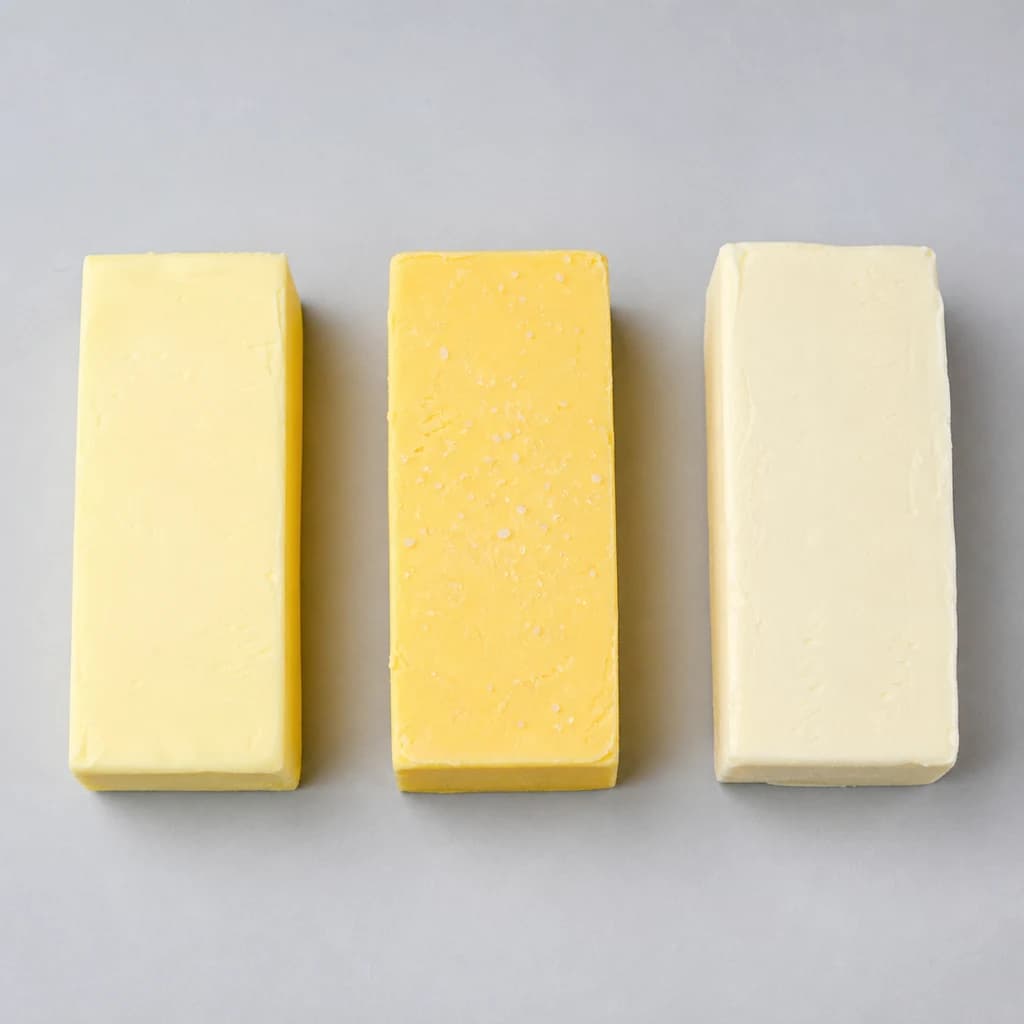
Cultured butter with 82%+ fat and less water, giving richer flavour and flakier pastry. Worth the upgrade for laminated dough and finishing sauces; behaves slightly differently in cake recipes.
European-style butter is defined by its fat content — typically 82 to 86 percent butterfat, where French law sets 82 percent as the legal minimum for butter sold as 'beurre' inside the EU. Those few percentage points above American standard butter aren't trivia: because butterfat and water are inversely related, every extra point of fat means less water in the dough, more concentrated flavor compounds, and — most visibly — flakier pastry. Many European butters are also cultured, meaning the cream is fermented with lactic bacteria before churning, which adds the tangy, nutty, buttermilk-like depth pastry chefs chase.
In practice, two things change when you swap it in. Baked goods tend to dry out slightly because there's less free moisture in the batter — most cake and quick-bread recipes written for 80 percent butter benefit from a small reduction in flour or a splash of extra liquid. And it browns faster: the milk solids are more concentrated and there's less water to buffer the pan, so butter headed for beurre noisette will hit deep amber and then scorch quickly, especially with cultured versions. Treat it as a more flavorful, more responsive ingredient, not a simple one-for-one upgrade.
A working kitchen is well served by keeping two blocks on hand: a cultured one for pastry and finishing, a sweet-cream one for baking where you want pure dairy flavor without competing tang. The two are structurally interchangeable; the choice is about the flavor note you want in the finished dish.
- Measured in
- g
- Storage
- Refrigerate
Allergens
Find it in
Suits
Types & varieties
From Normandy, often cultured; rich, slightly briny, hazelnut notes. The Isigny Sainte-Mère label is the best-known example.
Western France; churned from ripened cream, mildly tangy, ivory color.
Cultured, hand-churned, from Deux-Sèvres in the Marais Poitevin; deep dairy and almond flavor, prized by pastry chefs.
Hand-churned, often sold in knobbly demi-sel blocks; dense, almost cheese-like intensity.
Artisan producer, sometimes seeded with fleur de sel; cultured, intensely nutty.
From the Bresse region; soft, slightly sweet, cultured profile.
82% fat, lightly cultured; widely available, grass-fed, golden hue from beta-carotene.
Around 80–82% fat, sweet cream (uncultured); clean, slightly lactic, with a fresh dairy finish.
82% fat, uncultured; the common pastry-chef workhorse in U.S. kitchens.
82–84% fat, deliberately cultured, available sea-salted and unsalted; the benchmark American cultured butter.
Often 82–86% fat, sweet and grassy, reflecting the high-cream milk of Hokkaido dairy herds.
Cultured vs. Sweet Cream
Not every European-style butter is cultured, and the distinction matters more than the fat number does in a lot of applications. Cultured butters are made by inoculating pasteurized cream with mesophilic lactic bacteria (Lactococcus and Leuconostoc strains) and letting it ferment for 12 to 24 hours before churning. The bacteria convert a small amount of lactose into lactic acid and produce diacetyl — the compound that gives cultured butter its signature aroma — plus a range of other aromatic acids and esters. The result is a tangier, more complex, often nutty butter. Sweet-cream European butters skip the fermentation and taste cleaner, purer, and more singularly dairy.
- Reach for cultured for croissants, shortbread, brown-butter sauces, compound butters, and finishing where the tang is part of the point.
- Reach for sweet-cream when you want fat to do its work without flavor competition — pound cake, buttercream, sole meunière, beurre blanc, Hollandaise.
- Structurally the two are interchangeable in doughs; the choice is about the flavor note you want in the finished dish.
- Common mistake: assuming the words 'European butter' guarantee culturing. Read the label for 'cultured' or 'fermented cream' if the tang matters.
Common uses
Tips & pitfalls
- In cake and quick-bread recipes written for 80% butter, add roughly 5–10% more liquid (or trim a tablespoon of flour) to compensate for the lower water content; otherwise expect a slightly drier crumb. Pastry doughs rarely need adjustment.
- For laminated doughs, keep the butter and dough at the same cool temperature (around 15–18°C/59–64°F). European butter is firmer and tolerates slightly warmer folding than American butter, but it still benefits from a 20–30 minute chill between turns.
- When browning, pull the pan from the heat at pale amber rather than waiting for the familiar nutty smell — it darkens another full shade off the heat, and cultured versions brown especially quickly.
- Temper before creaming: the sweet spot is 18–20°C (64–68°F). Too cold and it lumps and refuses to trap air; too warm and the emulsion breaks and the batter greases out.
- Slice cold curls with a vegetable peeler for a fast, professional finish on steak, seared fish, or pasta — the curls hold their shape because of the lower water content.
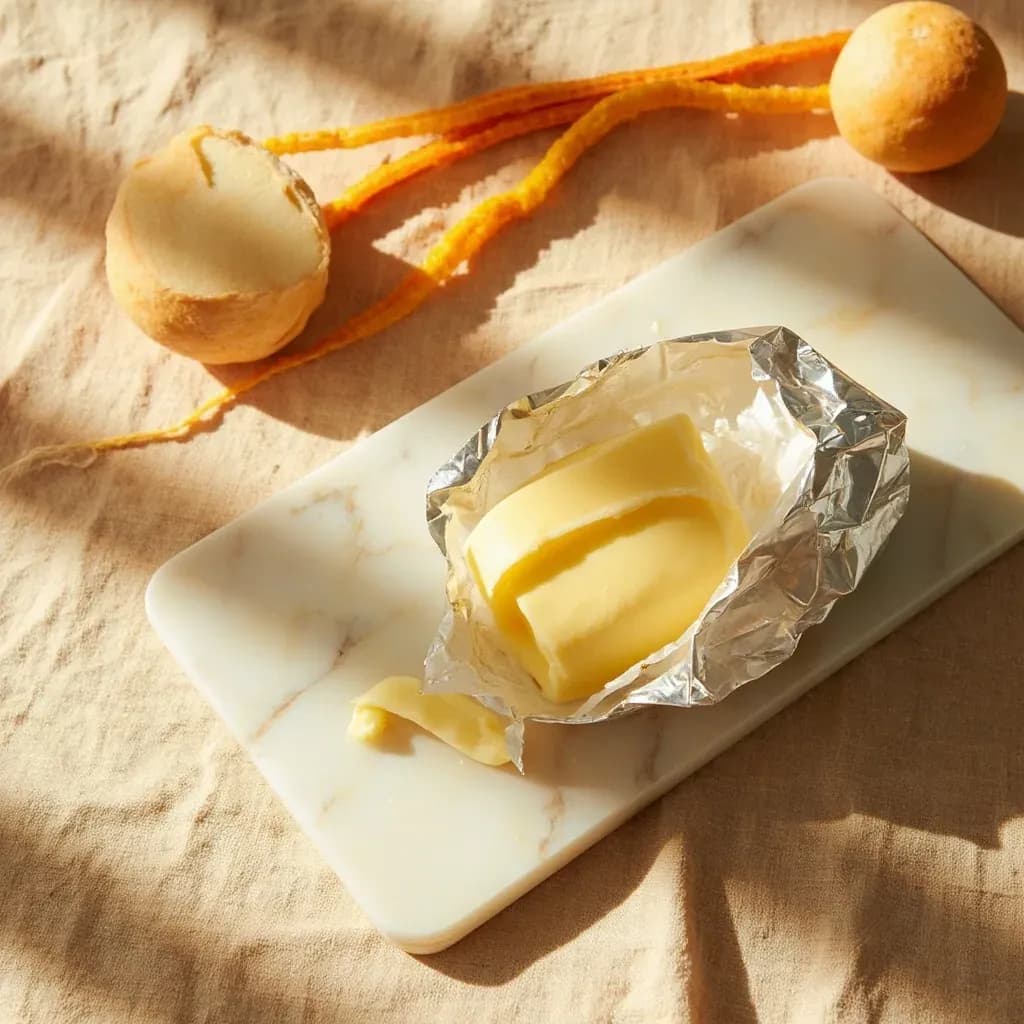
- Freeze in 250 g portions wrapped first in foil, then in a freezer bag, squeezing out air. It keeps 6–9 months without picking up off-flavors, and you can grate it frozen straight into dough.
- Don't substitute one-for-one in Swiss or Italian meringue buttercream without recalculating: the lower water shifts the sugar-to-butter ratio and can make the buttercream grainy or too sweet.
- Don't confuse 'European-style' with 'cultured.' If the tang matters, check the label; sweet-cream European butters behave like richer American butter, not like Isigny or Échiré.
Nutrition
Energy
3766 kJ · per 100 g
Where the calories come from
Protein
0g
0% DV
Carbs
0g
0% DV
Fat
100g
128% DV
Fiber
0g
0% DV
Sugars
0g
of which
Sodium
0mg
0% DV
Source · USDA FoodData Central · approx. Butter, Clarified butter (ghee)
View on FDC →In the shops
Matched grocery products
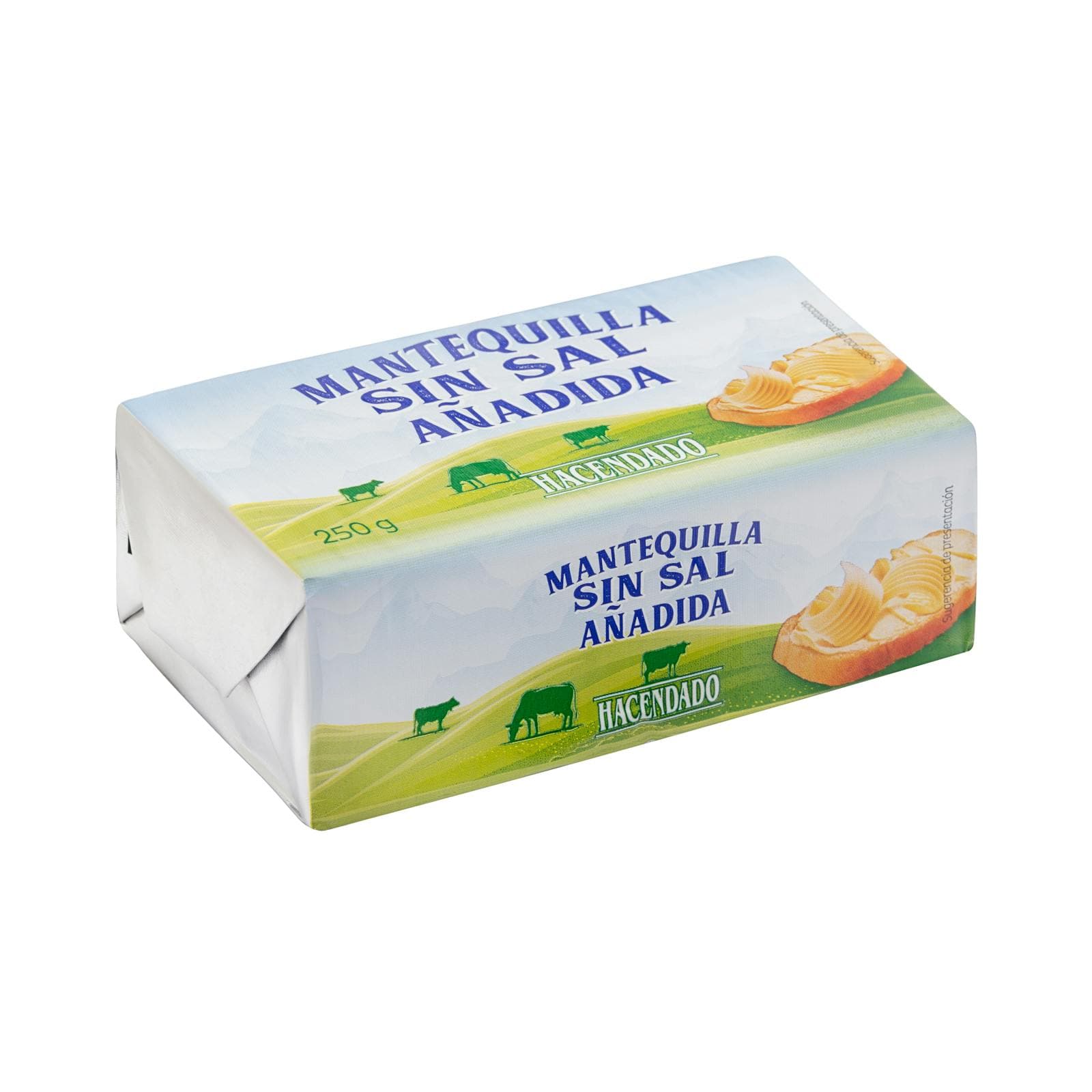 €2.10
€2.10Unsalted Butter
Hacendado · 250 g · Mercadona
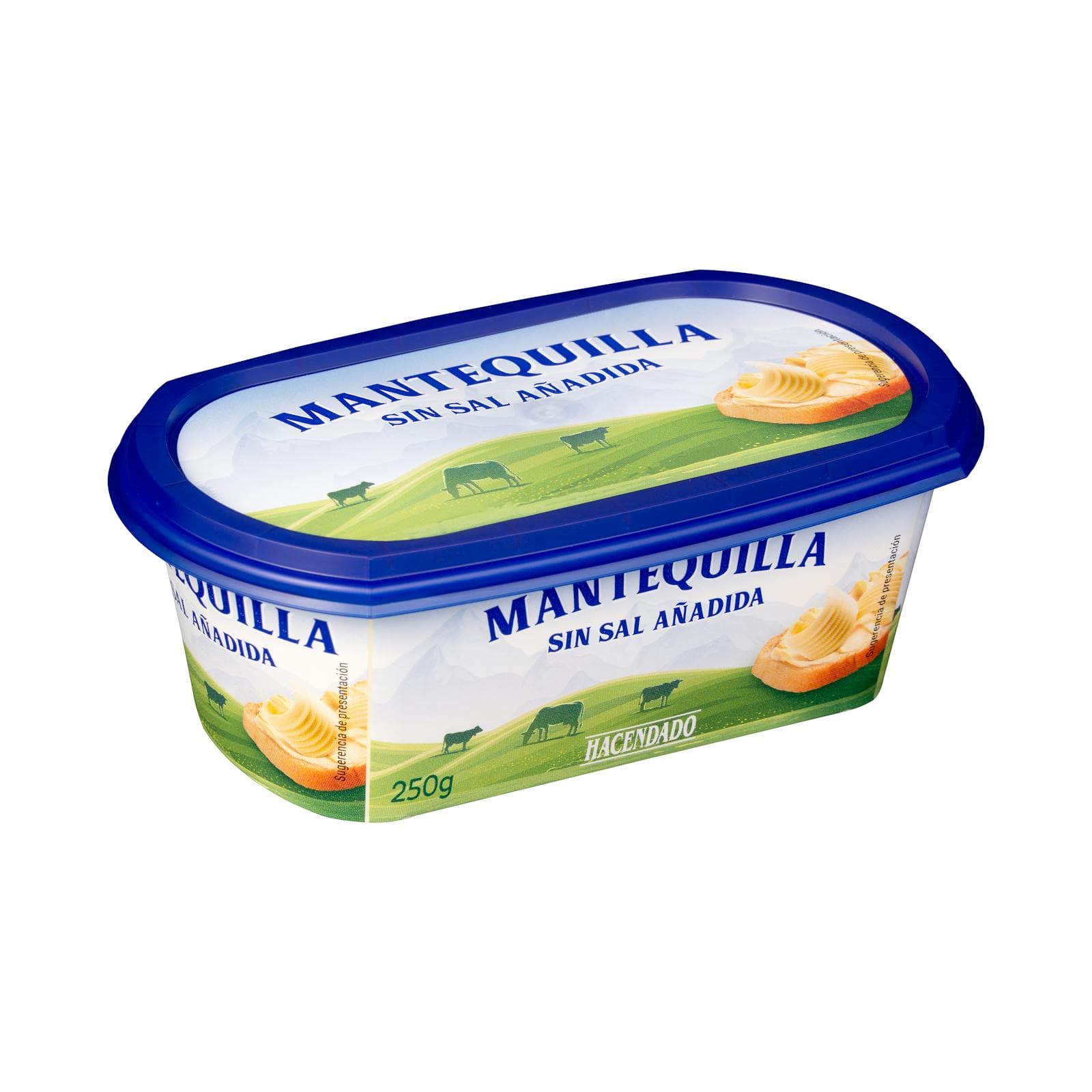 €2.45
€2.45Unsalted Butter
Hacendado · 250 g · Mercadona
 €3.69
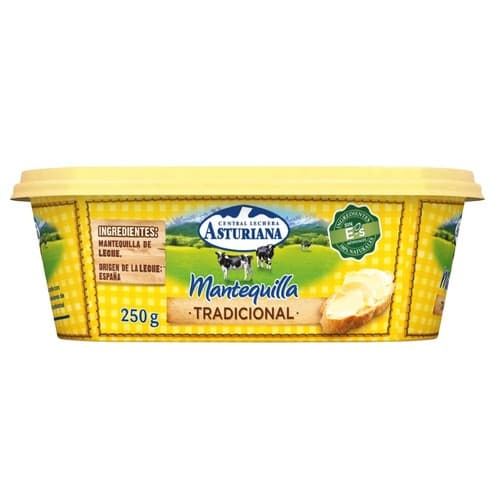
€3.69Unsalted Butter
ASTURIANA · kg · Bonpreu
 €8.90
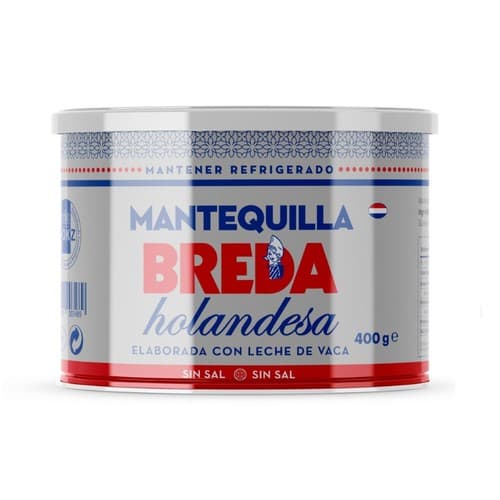
€8.90BREDA Unsalted Butter
BREDA · kg · Bonpreu
 €2.39
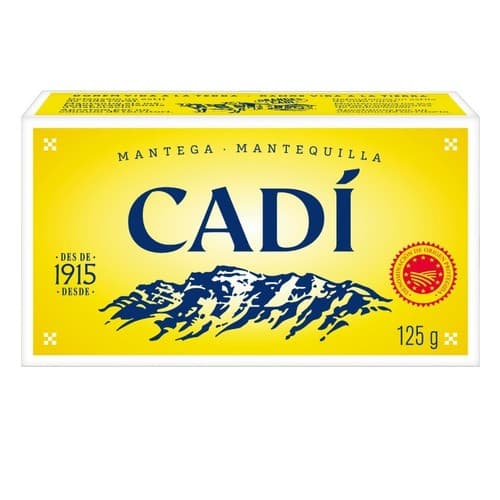
€2.39Cadí Butter
CADÍ · kg · Bonpreu
 €3.99
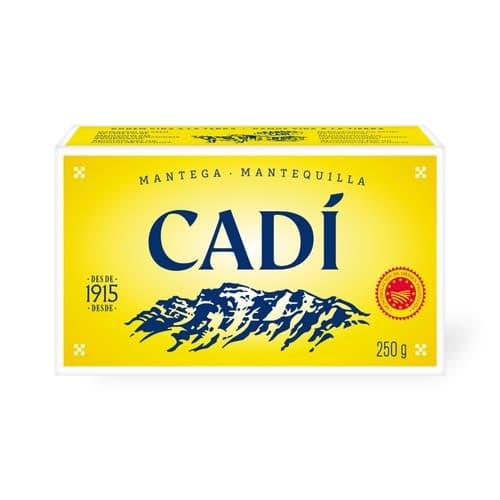
€3.99Cadí Butter
CADÍ · kg · Bonpreu
Good to know
- Typical fat content
- 82–86% butterfat; French law sets a minimum of 82% (matière grasse) for butter labelled 'beurre'.
- U.S. comparison
- Standard American butter is a USDA minimum of 80% fat; European-style runs roughly 2–6 percentage points richer.
- Moisture
- About 14–17% water versus roughly 18–20% in regular butter.
- Cultured vs. uncultured
- Many are cultured: cream is fermented with mesophilic lactic bacteria (Lactococcus, Leuconostoc) for 12–24 hours before churning, yielding tangy, nutty, complex notes.
- Browning behavior
- Lower water and more concentrated milk solids mean it browns faster and deeper; pull from the heat at pale amber when making beurre noisette.
- Texture at room temp
- Firmer and denser than standard butter because of less water and more fat; holds its shape better when cut into dough.
- Storage
- Keeps 4–6 weeks refrigerated; freezes 6–9 months wrapped airtight; cultured versions continue developing flavor in the fridge.
- Baking impact
- Less water means drier doughs; pastry and laminated doughs turn out flakier, but cake batters may need 5–10% more liquid or a touch less flour.
Substitutes
- Standard American butter (80% fat) — Direct substitute in most cases; expect slightly less flavor, a touch more moisture, and marginally less flaky pastry. For sauces, add 1–2 tsp heavy cream per stick to approximate richness.
- American cultured butter — Good substitute for the tangy note; fat content typically 80–82%, so results are close but pastry is a touch less flaky.
- Ghee — Works for high-heat sautéing and some baking, but it lacks water and milk solids, so it won't replicate the texture or browning behavior of whole butter.
- Emergency high-fat substitute — Melt 1 cup (227 g) standard butter, stir in 1–2 tablespoons milk powder, rechill, and briefly whip — bumps effective fat and milk solids upward for pastry when no European butter is on hand.
Pairs with
Also called
cultured butter · high-fat butter · 82% butter · plugra