Sweeteners
Muscovado Sugar
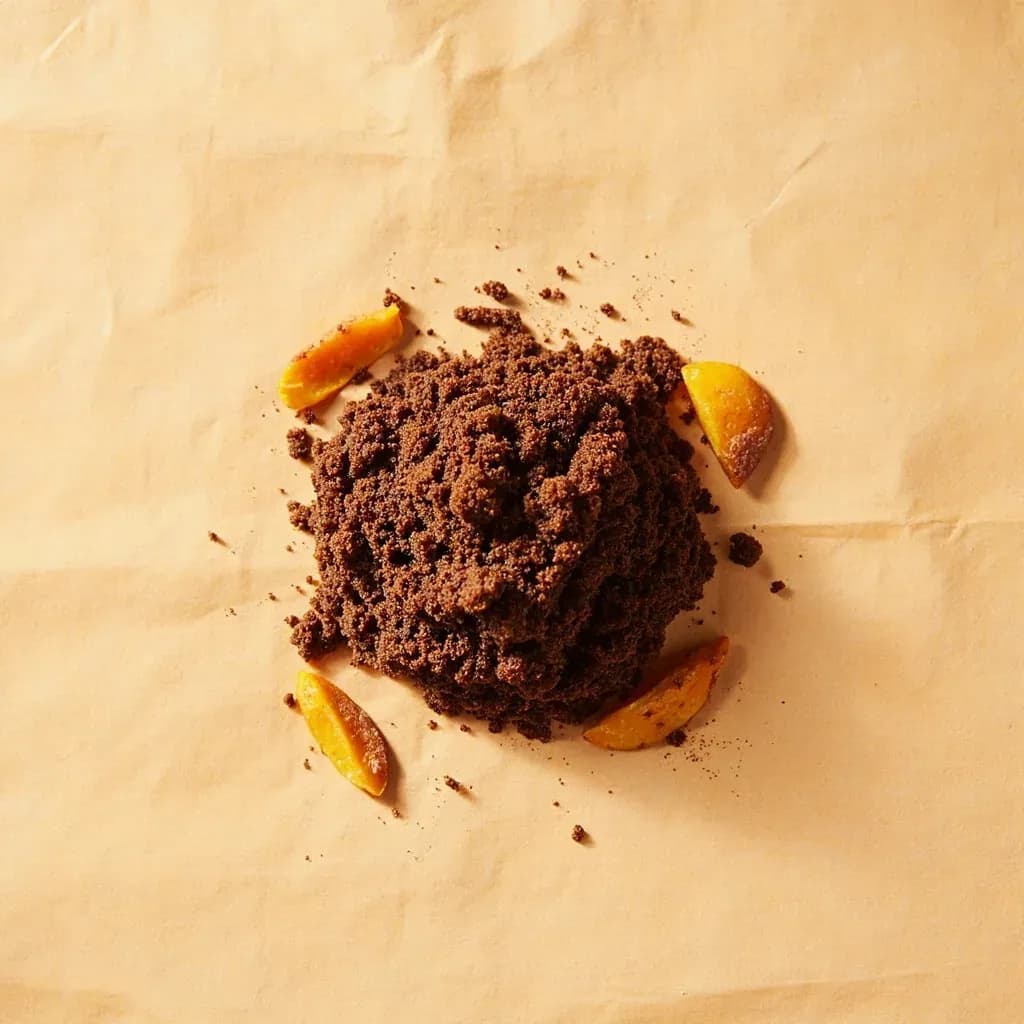
Dark, sticky unrefined cane sugar heavy with molasses; brings toffee depth and moisture to gingerbread, BBQ rubs, and rich fruit cakes.
Muscovado is the sugar you get when you take freshly boiled cane juice and skip the centrifuge step that strips out the molasses. What remains is a coarse, almost wet, deeply brown sugar that carries roughly 9–13% molasses — about double what's in standard brown sugar — along with residual invert sugars, organic acids, and trace minerals. That high molasses load is the whole point: it gives muscovado its smoky-toffee bitterness, its stickiness, and a noticeably wider window before it burns in the pan.
In the kitchen it behaves very differently from refined sugar. It holds onto moisture tenaciously, which keeps baked goods soft for days; it carries a faint acidity (pH around 5.5–6.5) that quietly nudges leavening reactions; and its irregular crystals resist dissolving cleanly in cold mixtures. None of those traits are flaws — they are why traditional dark gingerbreads, parkin, sticky toffee pudding, and long-steamed Christmas cakes have a depth you simply cannot get from white or even regular brown sugar.
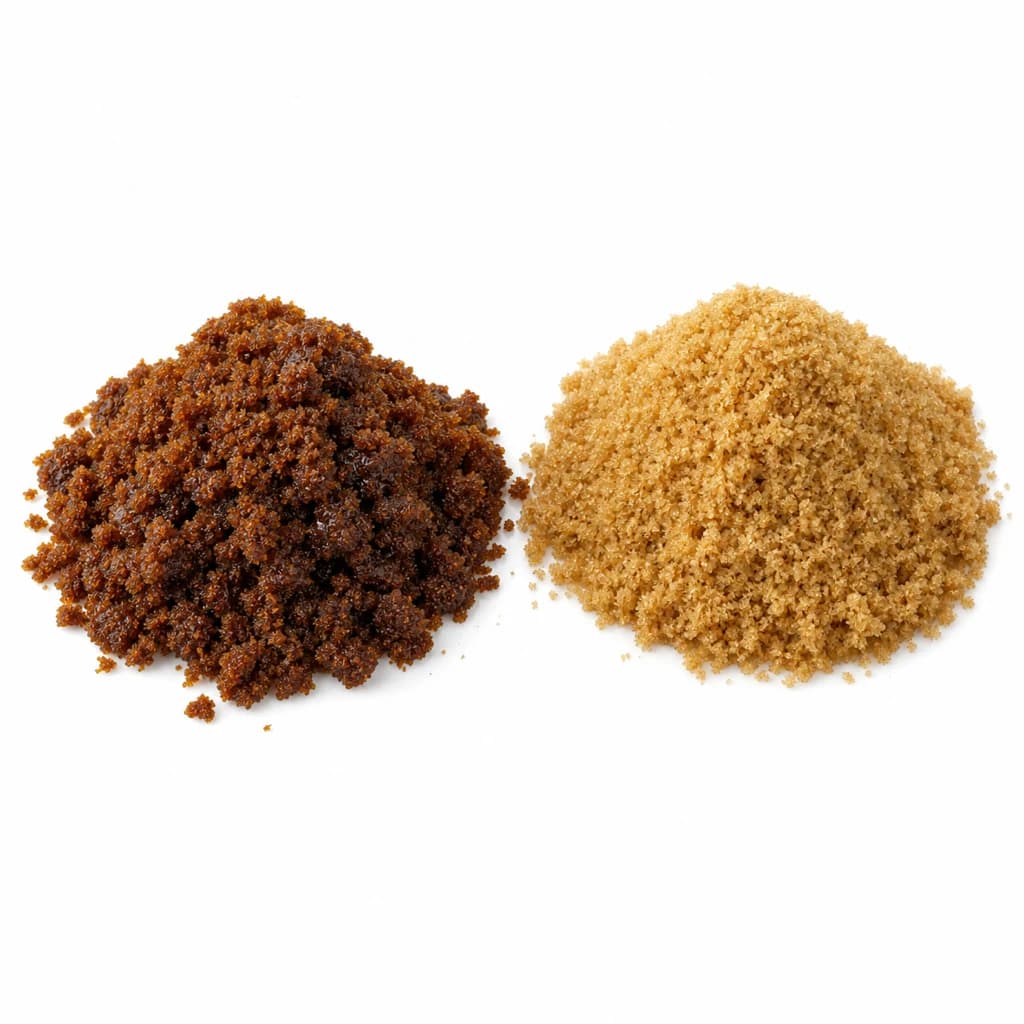
The single most useful distinction is light versus dark. Light muscovado is a modest step beyond brown sugar — fine for cookies and lighter sponges when you want a hint more complexity. Dark muscovado is essentially a different ingredient: nearly black, aggressively bitter-sweet, and the only authentic choice for serious gingerbread, dark fruitcakes, and barbecue rubs where you want toffee depth rather than plain sweetness.
- Measured in
- g
- Storage
- Pantry
Find it in
Suits
Types & varieties
Highest molasses content (~13%), almost black color, strongest bitter-toffee flavor; the classic for gingerbread, parkin, and dark fruitcakes.
Lighter brown, milder flavor with ~5–7% molasses; used when you want depth without heaviness, e.g. lighter sponges and cookie bases.
Typically the dark style; the Philippines is the largest modern exporter and supplies most supermarket bags labeled 'muscovado'.
Original-style, very wet and pungent; sold through specialty importers, often in tins or jars.
Similar unrefined cane sugar but often drier and lighter; closer to demerara in texture, used as a muscovado-adjacent substitute.
Working with muscovado in baking
Muscovado's high moisture and acidity change how a batter behaves. A few adjustments will get the best results:
- Dissolve dark muscovado in warm milk, melted butter, or coffee before adding it to a creaming-method batter; cold crystals won't beat smooth with cold butter and you'll leave pockets of sugar in the cake.
- When substituting muscovado for regular brown sugar, reduce other liquid in the recipe by about 1 tablespoon per cup to prevent a soggy crumb.
- In long bakes (fruitcake, parkin), the sugar's acidity can flatten the rise; add roughly 1/8 teaspoon extra baking soda per cup if the batter seems under-leavened.
- Pack the measuring cup firmly and level it — the sticky crystals will fool you into under-measuring if you treat them like free-flowing granulated sugar.
Muscovado in savory cooking
Its toffee-bitter edge and stickiness make muscovado a quiet workhorse for savory applications where plain sugar tastes thin:
- Mix muscovado with equal parts demerara or turbinado for BBQ rubs — pure muscovado clumps and burns easily over open flame.
- Bloom it into a pan with shallots, vinegar, and stock for a glossy glaze for pork belly, duck breast, or game.
- Stir a spoonful into Worcestershire-style or steak sauces to deepen the fermented backbone.
- Use it as the sweet element in marinades with soy, smoked paprika, chipotle, or coffee — the sugar caramelizes without the acrid edge of refined sugar.
Common uses
Tips & pitfalls
- If muscovado has hardened in the bag, microwave the sealed bag in 10-second bursts or drop a slice of bread or apple wedge into the container overnight — the moisture will redistribute by morning.
- Don't dissolve it on high direct heat in a thin metal pan; the residual molasses scorches before the crystals melt. Use a heavy-bottomed pan over low heat with a splash of water to help it along.
- Taste before salting; muscovado already carries a minerally, slightly bitter note that balanced salt will sharpen, and you may need less than the recipe states.
- Keep it sealed tight — its moisture is what makes it special, but it will also absorb odors (coffee, spices) and harden fast in dry kitchens.
Nutrition
Energy
393 kJ · per 100 g
Where the calories come from
Protein
2.1g
4% DV
Carbs
23.6g
9% DV
Fat
0.3g
0% DV
Fiber
4.4g
16% DV
Sodium
9mg
0% DV
Source · USDA FoodData Central · approx. Sugar-apples, (sweetsop), raw
View on FDC →In the shops
Matched grocery products
No matched grocery products for Muscovado Sugar yet.
Good to know
- Type
- Partially refined or unrefined cane sugar retaining high molasses content
- Molasses content
- Approximately 9–13% by weight (dark); 5–7% (light); roughly double standard brown sugar
- Texture
- Coarse, moist, sticky crystals that clump together
- Flavor
- Rich, smoky, toffee-like with deep molasses bitterness and a mineral edge
- Origin & aliases
- First produced in 17th-century Mauritius; historically 'Barbados sugar'; also known as khand (India) and moscabado (Philippines)
- Major producers
- Philippines, India, Mauritius, Guyana, Colombia, Tanzania, Jamaica
- pH
- Slightly acidic (around 5.5–6.5) due to residual molasses acids
- Substitution ratio
- 1:1 by volume for brown sugar; reduce other liquid in the recipe by ~1 tablespoon per cup added
Substitutes
- Dark brown sugar — Closest everyday substitute; 1 cup brown sugar + 1–2 tablespoons molasses approximates dark muscovado, though the flavor is less complex and smoky.
- Light brown sugar + molasses — A better flavor match than dark brown alone when you're out; add 1 tablespoon molasses per cup of light brown sugar.
- Demerara or turbinado sugar + molasses — Recreates the coarse texture and some of the depth; use 1 cup demerara + 1 tablespoon molasses per cup of muscovado.
- Jaggery (gur) — Unrefined palm or cane sugar from South Asia; similar color and depth but more earthy, less sharp. Grate before measuring.
- Piloncillo (panela, rapadura) — Latin American unrefined cane sugar; cone-shaped with comparable molasses content. Grate finely; flavor leans slightly grassy.
- Blackstrap molasses alone — Too intense and liquid for baking, but works in small amounts 1:1 for glazes, BBQ sauces, and baked-bean style dishes.
Pairs with
Also called
moist brown sugar · Barbados sugar · azúcar moscabado · khandsari · unrefined cane sugar