Spices
Pink Himalayan Salt
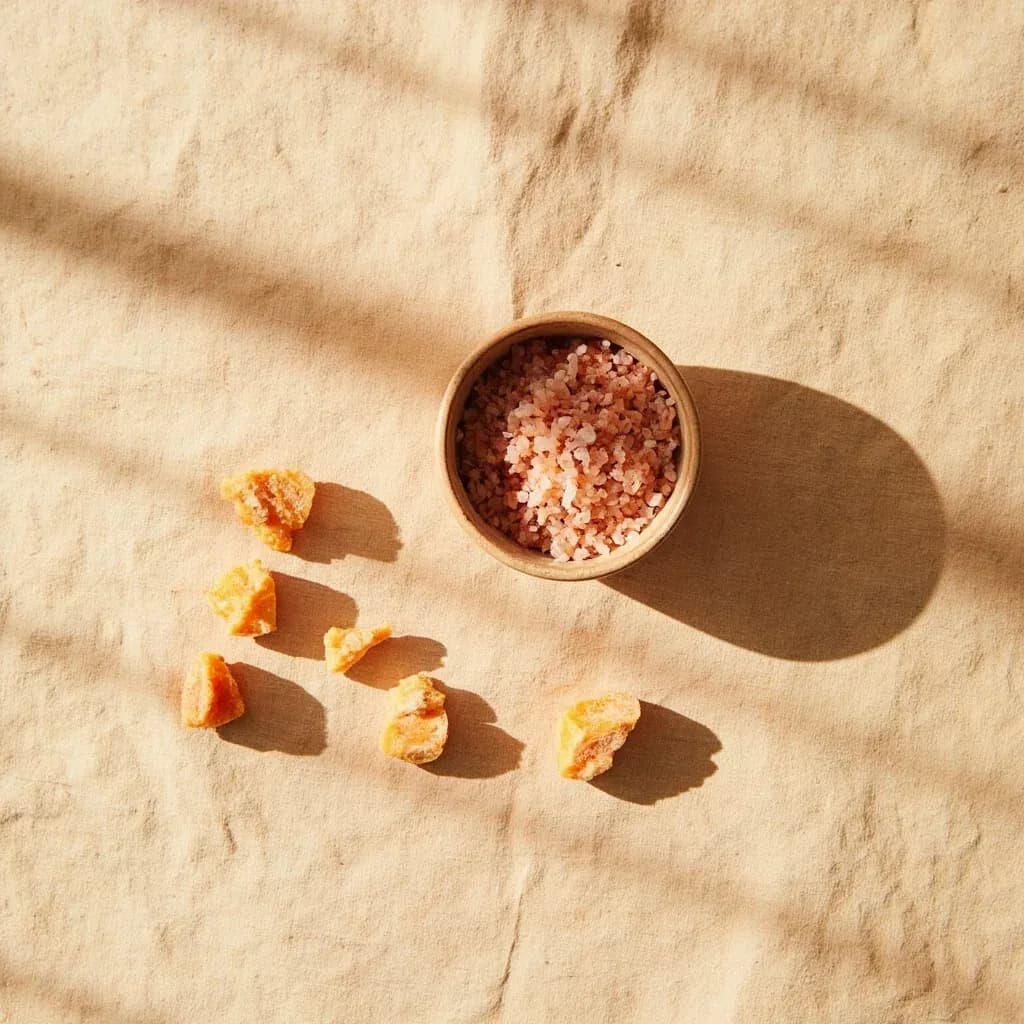
Rock salt tinted rose by trace minerals, sold fine or as coarse grinder crystals. Use it anywhere table salt goes; flavour difference is subtle, so it shines mostly as a coarse finishing salt.
Pink Himalayan salt is a rock salt mined primarily at the Khewra Salt Mine in Pakistan's Salt Range, laid down when an ancient inland sea evaporated several hundred million years ago. Geologically it is halite — sodium chloride — tinted by trace impurities, chiefly iron oxide, which gives the crystals their characteristic rose to deep pink hue. In the kitchen it behaves like any other sodium chloride: it seasons, preserves, and punctuates a finished dish. Its appeal is twofold. The crystals are visually striking, and the absence of added iodine removes the faint metallic aftertaste of iodized table salt. The trade also grades it into textures — fine to coarse grinder crystals, delicate flakes, and solid slabs — that suit specific jobs, especially finishing dishes where the salt should be seen and felt on the tongue.
The mythology around this salt outruns its culinary reality. The trace minerals that produce the color are present in quantities too small to matter nutritionally, and the flavor difference between a flake of Himalayan and a flake of good sea salt is, in blind tasting, subtle at best. Its true value is as a finishing salt and a visual accent, not as a daily workhorse. A bag of Diamond Crystal kosher salt will season a brine, a bread dough, or a pot of stock just as well for a fraction of the price. Where Himalayan earns its keep is on the last pinch, the rim of a glass, or a chilled block of salt at the table.
A few practical notes govern how it behaves. Because it is minimally refined and contains hygroscopic minerals, it clumps faster than polished table salt in a humid kitchen; a sealed container with a desiccant or a few grains of uncooked rice keeps the grinder flowing. It contains no added iodine, so in regions that depend on iodized salt for dietary iodine it should not be the only salt in the pantry. When you buy the slabs, you are buying a piece of kitchen equipment with its own rules: heat them slowly, never expose a wet block to direct heat, and treat them as a long-term tool rather than a pan.
- Measured in
- g
- Storage
- Pantry
Find it in
Suits
Types & varieties
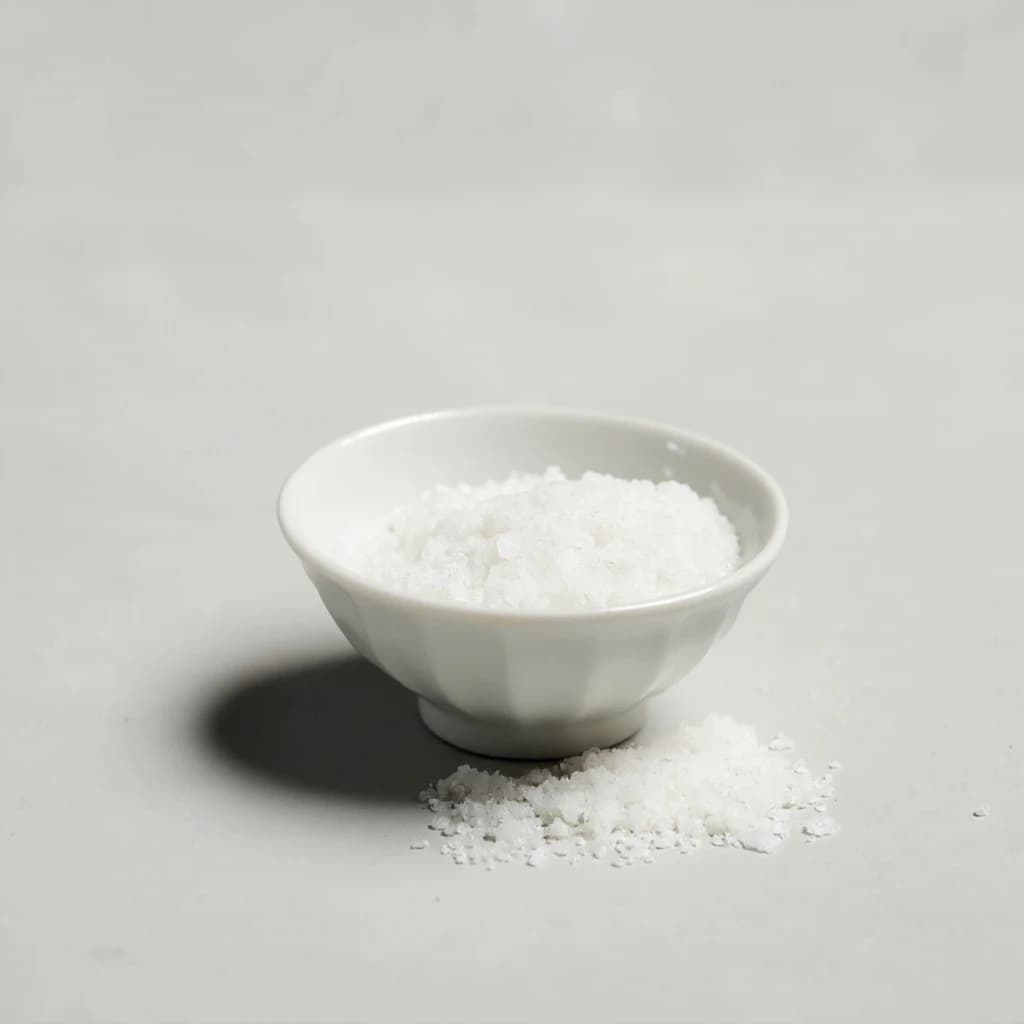
Powdery, table-salt sized; useful for baking and general seasoning, though pricier than standard table salt for everyday work.
Standard kitchen texture; appropriate for brines, stews, and general cooking where you want a non-iodized salt.
Chunky 4–8 mm crystals for refillable grinders; ideal as a finishing salt where crunch and visual presence matter.
Thin, pyramid-shaped flakes similar in use to Maldon; prized for finishing sweets, salads, and seared proteins.
Solid plates sawn from the deposit, commonly 20×30 cm to 30×45 cm and 2–4 cm thick; chilled for serving raw fish, preheated for searing and tabletop grilling.
Working with a Himalayan salt block
A Himalayan salt block is a piece of kitchen equipment as much as an ingredient, and it demands a different routine than a cast-iron pan. The crystalline structure is brittle and sensitive to rapid temperature change, so the block must always be heated or cooled gradually. Once seasoned, it seasons and presents food at the table with a faint mineral salinity that is genuinely different from a pinch from a grinder. Most blocks last for years of regular use if treated with care.
- Place a new block on a cold burner and bring it up to cooking temperature over 30–45 minutes on low to medium heat; never put a cold or damp block onto a preheated burner.
- For serving chilled, pre-chill the block in the freezer for 2–4 hours before arranging sashimi, oysters, or thinly sliced raw beef on it.
- Wipe — never soak — the block after use. A damp cloth and a soft brush are enough; water left on a heated block will dissolve the surface.
- Heat the block dry after cleaning for 30 minutes on low to drive off residual moisture, then store it in a dry place.
The '84 minerals' claim
It is often said that Himalayan salt contains 84 trace minerals, which is technically accurate but routinely misleading. The minerals are present in parts-per-million to parts-per-billion quantities — far below any threshold of nutritional effect. Treat the salt as salt. If you live somewhere that relies on iodized salt for thyroid health, do not rely on Himalayan as your only sodium chloride source.
Common uses
Tips & pitfalls
- Reserve it for finishing or visual jobs — seared meats, salads, chocolate, fruit. For brines, doughs, stocks, and stews, kosher or fine sea salt does the same job for less money.
- The '84 essential minerals' claim is technically true but nutritionally meaningless at the levels present; treat it as ordinary salt, not a supplement.
- If your diet relies on iodized salt for iodine, do not let Himalayan be your only salt — keep iodized salt in the rotation for everyday cooking.
- Keep the grinder dry. The iron oxide and other hygroscopic minerals make it clump faster than refined salt; a silica packet or a few grains of uncooked rice in the jar helps.
- Heat a salt block slowly over 30–45 minutes from a cold burner; thermal shock from a preheated burner or a wet block will crack it.
- Crush extra-coarse crystals with the flat of a chef's knife or in a mortar if you want finishing texture with less aggressive crunch.
- Avoid using it as the sole salt in lacto-fermented pickles where precise, neutral salinity matters; refined kosher or pickling salt is the safer choice.
- For rimming cocktail glasses, the extra-coarse crystals grip the glass better than fine salt and hold up longer in a drink.
Nutrition
Energy
0 kJ · per 100 g
Protein
0g
0% DV
Carbs
0g
0% DV
Fat
0g
0% DV
Fiber
0g
0% DV
Sugars
0g
of which
Sodium
38758mg
1685% DV
Source · USDA FoodData Central · approx. Salt, table
View on FDC →In the shops
Matched grocery products
 €0.75
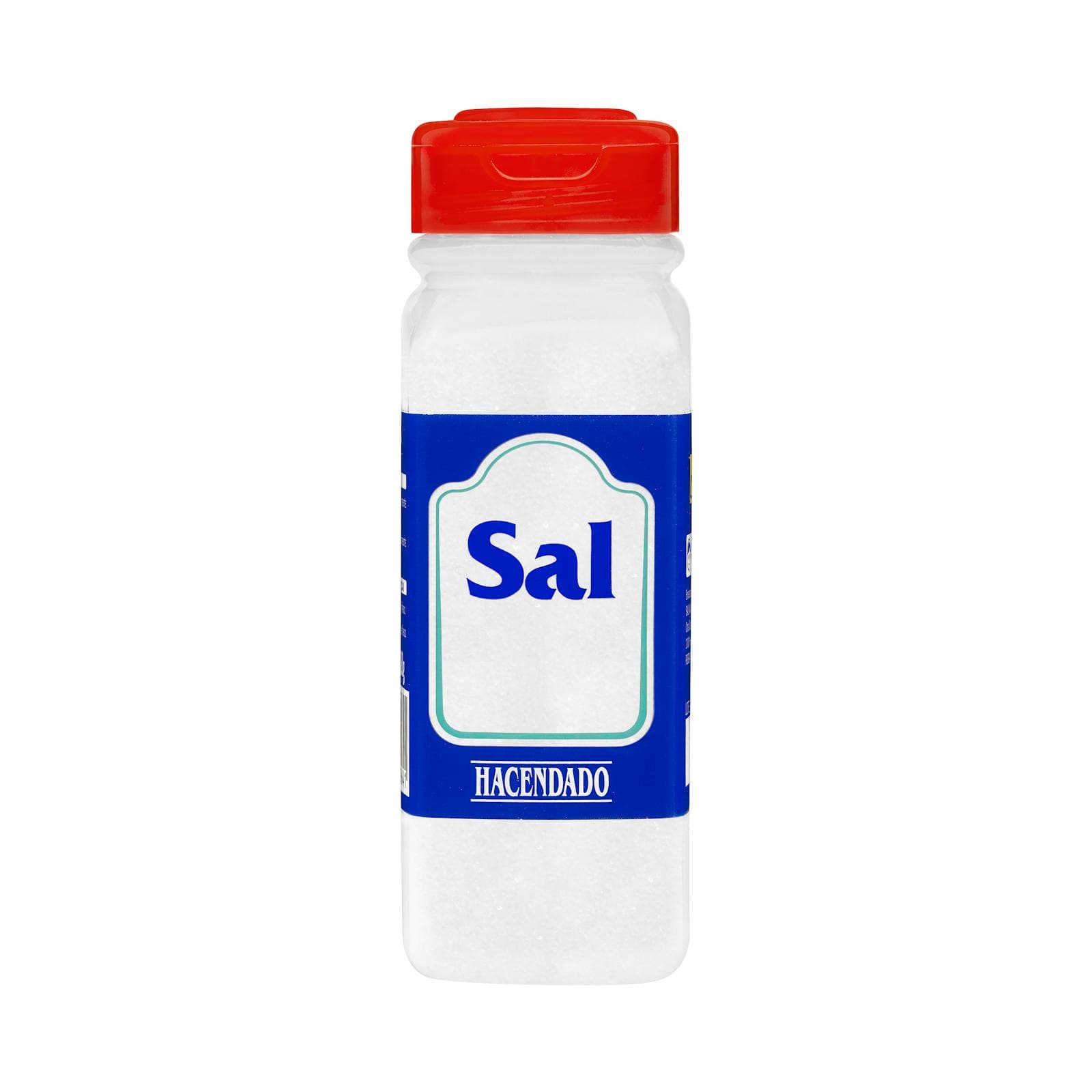
€0.75Fine Table Salt
Hacendado · 300 g · Mercadona
 €0.40
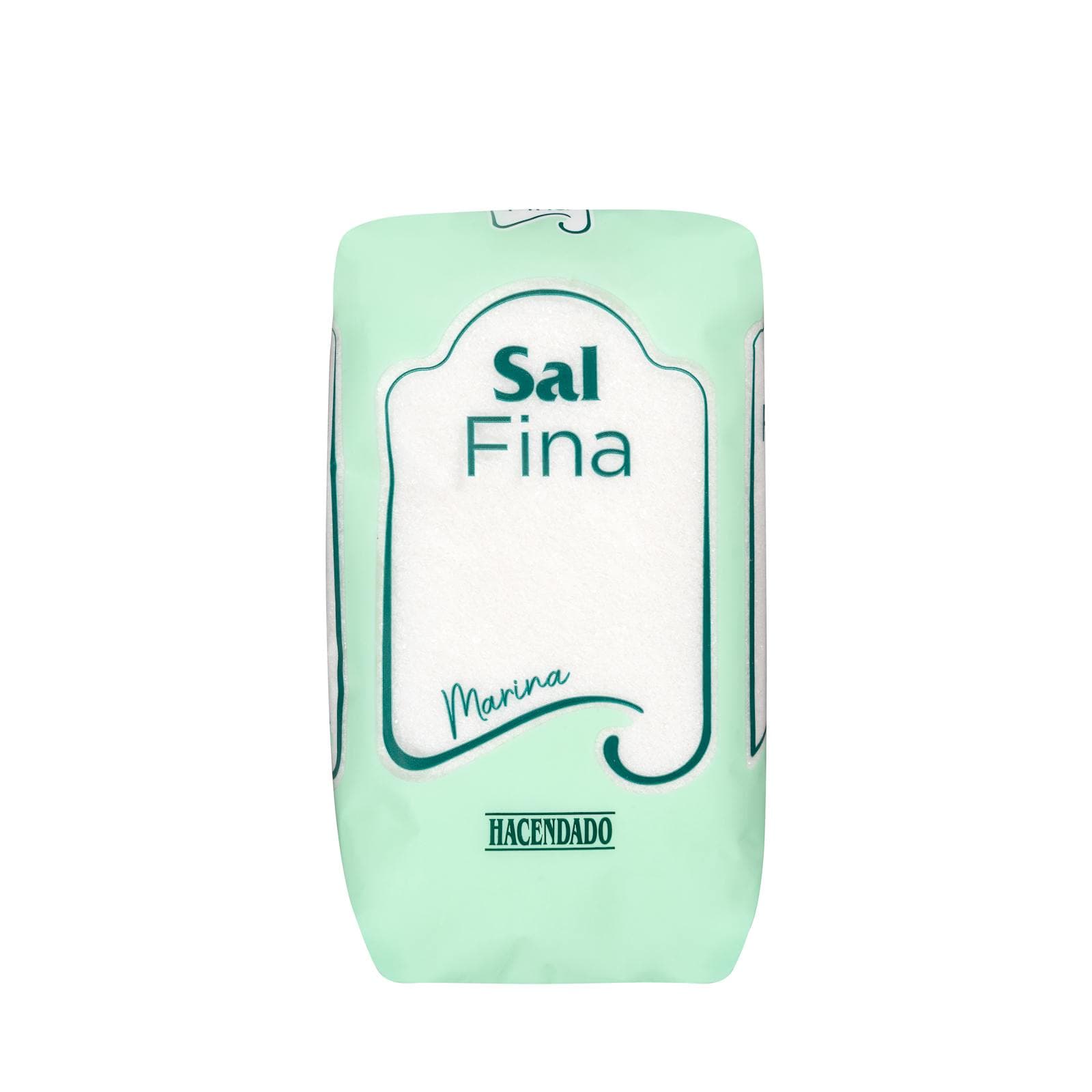
€0.40Fine Salt
Hacendado · 1 kg · Mercadona
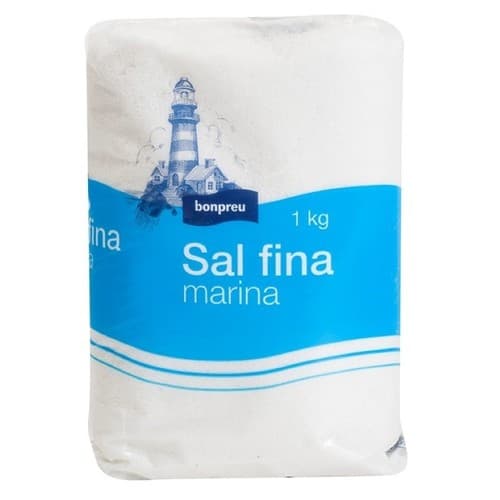 €0.40
€0.40Fine Sea Salt
BONPREU · kg · Bonpreu
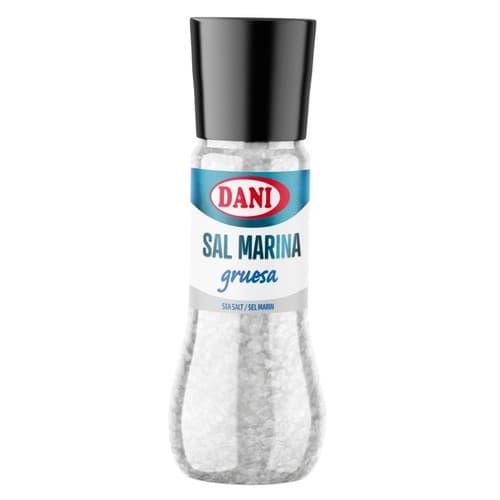 €2.99
€2.99Coarse Sea Salt
DANI · kg · Bonpreu
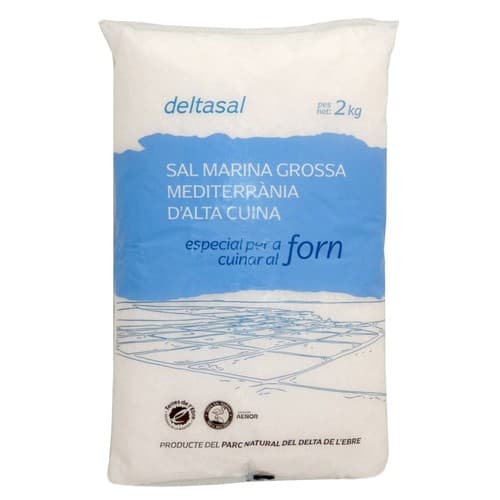 €1.40
€1.40Deltasal Coarse Sea Salt
DELTASAL · kg · Bonpreu
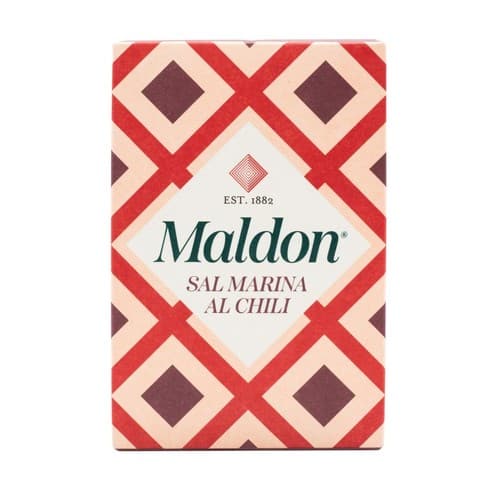 €5.89
€5.89Maldon Chili Sea Salt
MALDON · kg · Bonpreu
Good to know
- Origin
- Mined at the Khewra Salt Mine in the Punjab region of Pakistan, in the Salt Range foothills (often loosely described as 'Himalayan').
- Geological origin
- Halite formed from an ancient inland sea that evaporated roughly 250–600 million years ago and was compressed under geological pressure.
- Composition
- Approximately 95–98% sodium chloride; the balance is trace minerals, principally iron oxide (the source of the pink color), with magnesium, potassium, and calcium.
- Iodine content
- Contains no added iodine and only trace naturally occurring iodine — unlike most iodized table salt.
- Flavor
- Clean and slightly less sharply saline than refined table salt, with faint mineral notes; the rounder finish is largely a matter of crystal structure and the absence of iodine.
- Form
- Sold as fine grind, coarse grind, extra-coarse grinder crystals, pyramid flakes, and solid cooking/serving slabs roughly 2–4 cm thick.
- Storage
- Airtight, cool, dry; the hygroscopic mineral content makes it clump faster than refined salt if exposed to moisture.
- Shelf life
- Indefinite when kept dry; color and flavor do not degrade over time.
Substitutes
- Kosher salt (Diamond Crystal) — Light, flaky, iodine-free; the most economical 1:1 substitute for general cooking. Reduce slightly if switching from Morton, which is denser.
- Fine sea salt — Mineral-driven flavor, no iodine; 1:1 swap and usually cheaper than Himalayan.
- Maldon or fleur de sel flakes — Functionally equivalent as finishing salts — Maldon for crunch, fleur de sel for a more delicate, slightly moist mineral finish.
- Any premium flake salt — Use as a finishing substitute wherever texture and visual appeal matter most.
Pairs with
Also called
himalayan salt · pink salt · pink rock salt