
Vinegars
Seasoned Rice Vinegar
Rice vinegar pre-sweetened and salted for sushi rice — use straight for shari and quick Japanese pickles; not interchangeable with plain rice vinegar in savory cooking.
Seasoned rice vinegar is a pre-blended convenience version of su-mix (sushi-zu), the vinegar-sugar-salt seasoning that Japanese cooks traditionally stir into freshly cooked short-grain rice. Rather than mixing three ingredients at the rice cooker, you pour one bottle: the manufacturer has already married rice vinegar with sugar and salt in fixed proportions, often rounding the flavor with kombu or bonito extract. That convenience is the point, and it is also the limitation — the sweetness and salt are locked in.
Flavor-wise it reads as a single balanced note rather than a clean acid. Typical composition is roughly 3–4% acidity, 2–4% sugar, and 1–2% salt, giving a pH around 2.5–3.0 and a pale, almost colorless appearance. In warm short-grain rice the seasoning clings to the starchy surface and distributes evenly with a folding motion, so each grain ends up glossy and lightly seasoned without ever tasting sharp. The same balance is what makes it work in quick pickles and sunomono, where sugar and salt are exactly what you want anyway.
The practical rule: reach for seasoned rice vinegar when the sushi-rice flavor profile is what the dish calls for, and reach for plain rice vinegar (or a DIY mix) everywhere else. Using it in a vinaigrette, braise, or pan deglaze silently adds sugar and salt to a savory dish — almost always the wrong move. Keep both bottles on hand if you cook Japanese food regularly.
- Measured in
- ml
- Storage
- Pantry
Find it in
Suits
Types & varieties
Rice vinegar, sugar, and salt only — the most widely sold style in US grocery stores
Includes kombu (kelp) extract for a rounder umami note; sold under Mizkan and several premium brands
Adds dried bonito (katsuobushi) extract for a subtle dashi-like depth
Made from organically grown rice with the standard sugar-salt formulation
Lower-sodium version marketed for home cooks watching salt intake
Reading the label
Bottles that say 'seasoned rice vinegar' or 'sushi vinegar' are not all the same. The cheapest options are typically rice vinegar, sugar, salt, and nothing else — clean and predictable. Mid-range bottles add kombu extract, which rounds the finish with a faint marine sweetness and is worth seeking out for sushi rice and sunomono. Premium or dashi-style versions add bonito (katsuobushi) extract, which nudges the flavor toward a light dashi; this is welcome in chilled tofu and seaweed salads but can read as fishy if you are not expecting it. A few brands include MSG; useful for some cooks, off-putting for others. For sushi rice, any of these will work; for quick pickles, the kombu-inclusive versions are noticeably better.
DIY sushi-zu vs. the bottled version
Mixing your own su-mix from plain rice vinegar, sugar, and salt is inexpensive, takes two minutes, and lets you tune the ratio to the dish. The standard formula is 3 tablespoons rice vinegar, 2 tablespoons sugar, and 1 teaspoon salt, warmed gently until the solids dissolve and then cooled before folding into rice. For sushi rice that produces a balanced seasoning close to most commercial blends. For quick pickles you can lean sweeter (3:3:1) or saltier (3:2:2) depending on the vegetable. The trade-off is consistency: every batch will taste slightly different unless you measure carefully, and you give up the kombu or bonito notes that some bottled versions deliver for free.
Common uses
Tips & pitfalls
- Do not substitute seasoned rice vinegar for plain rice vinegar in savory dishes such as vinaigrettes, braises, or pan deglazes — the built-in sugar and salt will throw off the balance of the recipe.
- When seasoning sushi rice, fold the vinegar into warm (not hot) rice with a cutting-and-turning motion using a rice paddle; mashing or stirring crushes the grains and produces a gummy texture.
- A reliable DIY substitute is 3 tablespoons plain rice vinegar whisked with 2 tablespoons sugar and 1 teaspoon salt, gently warmed just until the solids dissolve, then cooled before use.
- Taste before adding any additional salt to a dish that already contains seasoned rice vinegar — it is salted already, and oversalting is the most common home-cook mistake.
- Cloudiness or light sediment after long storage is normal and harmless; shake the bottle or strain before using.
- Because it contains sugar, seasoned rice vinegar can scorch or caramelize if reduced over high heat; add it late in a pan sauce or keep the heat low.
- Refrigerate after opening to keep the flavor bright; at room temperature it dulls within weeks and can begin to ferment further, especially in warmer kitchens.
- For sushi rice, use roughly 60 ml (about 4 tablespoons) of seasoned vinegar per 2 cups of uncooked short-grain rice; adjust to taste based on how assertive you want the seasoning.
Nutrition
Energy
75 kJ · per 100 g
Where the calories come from
Protein
0g
0% DV
Carbs
0g
0% DV
Fat
0g
0% DV
Fiber
0g
0% DV
Sugars
0g
of which
Sodium
2mg
0% DV
Source · USDA FoodData Central · approx. Vinegar, distilled
View on FDC →In the shops
Matched grocery products
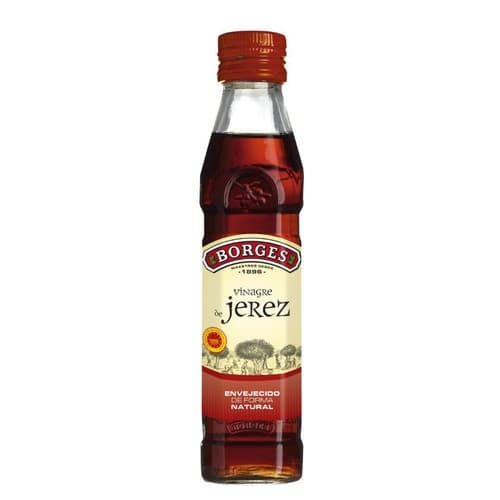 €1.99
€1.99BORGES Sherry Vinegar
BORGES · l · Bonpreu
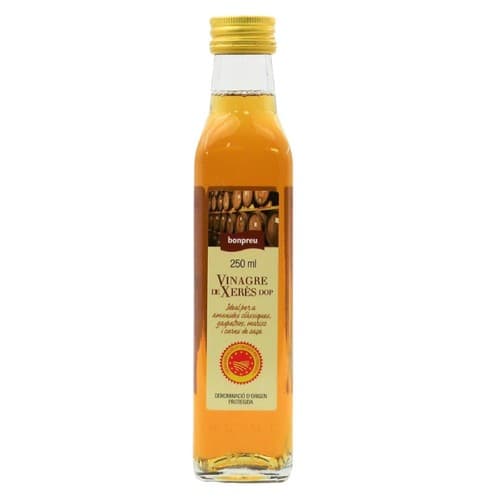 €1.49
€1.49Sherry Vinegar
BONPREU · l · Bonpreu
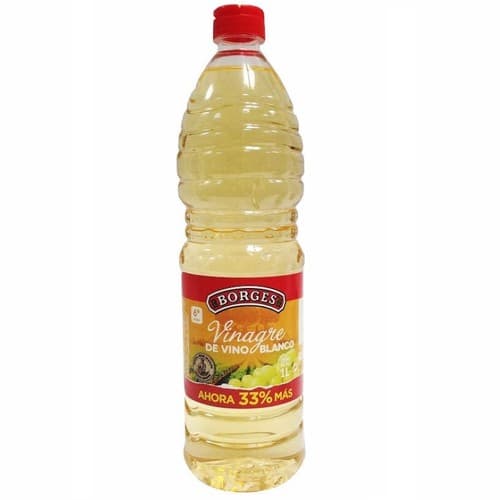 €1.35
€1.35BORGES White Wine Vinegar
BORGES · l · Bonpreu
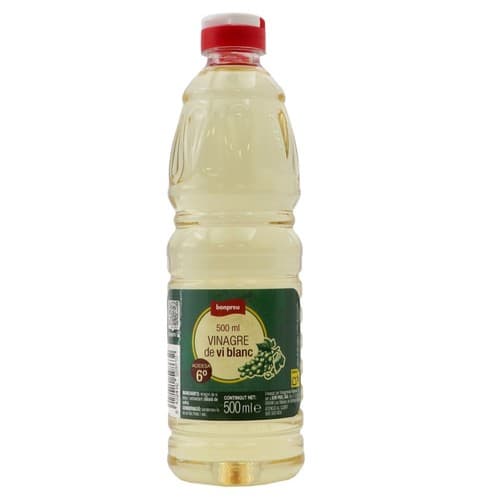 €0.49
€0.49White Wine Vinegar
BONPREU · l · Bonpreu
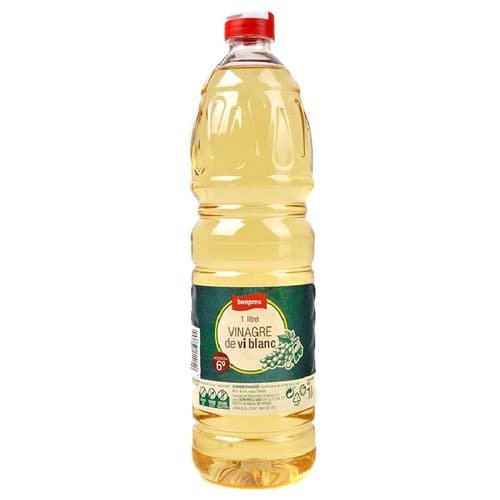 €0.65
€0.65White Wine Vinegar
BONPREU · l · Bonpreu
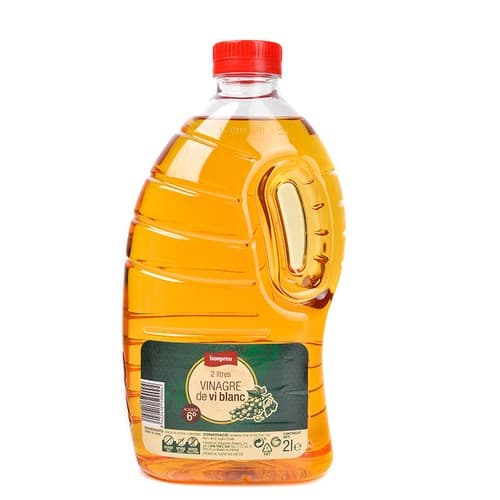 €1.24
€1.24White Wine Vinegar
BONPREU · l · Bonpreu
Good to know
- Origin
- Japan; a pre-mixed convenience version of the traditional sushi rice seasoning (su-mix / sushi-zu)
- Base ingredient
- Rice vinegar, typically fermented from rice or rice wine
- Added ingredients
- Sugar and salt; some commercial versions also include kombu (kelp) extract, bonito extract, or MSG
- Typical composition
- Roughly 3–4% acidity, 2–4% sugar, 1–2% salt
- Flavor profile
- Mild acidity with a noticeable sweet-salty finish; far less sharp than Western vinegars
- pH
- Approximately 2.5–3.0
- Storage
- Cool, dark place sealed; refrigerate after opening to keep flavor bright and prevent further fermentation
- Shelf life
- Unopened 1–2 years; once opened, best used within 6 months
- Standard US bottle
- 12 fl oz (355 ml)
Substitutes
- DIY su-mix — 3 tablespoons plain rice vinegar plus 2 tablespoons sugar and 1 teaspoon salt, warmed gently to dissolve, then cooled — identical function with no additives
- Plain rice vinegar with sugar and salt added to taste — Lets you dial sweetness and salt separately; preferred for savory applications and for adjusting to different vegetables
- Apple cider vinegar with sugar and salt — Works in a pinch for sushi rice; the flavor is fruitier and slightly harsher than true rice vinegar
- Champagne vinegar with sugar and salt — The closest mild, neutral substitute when you are out of rice vinegar; cleaner acidity than cider
- Lemon juice with sugar and salt — Emergency substitute only — different acid character, but it will rescue a batch of sushi rice in a bind
Pairs with
Also called
sushi vinegar · sushi-su · seasoned rice wine vinegar
