Dairy & Eggs
Sharp / Aged Cheddar
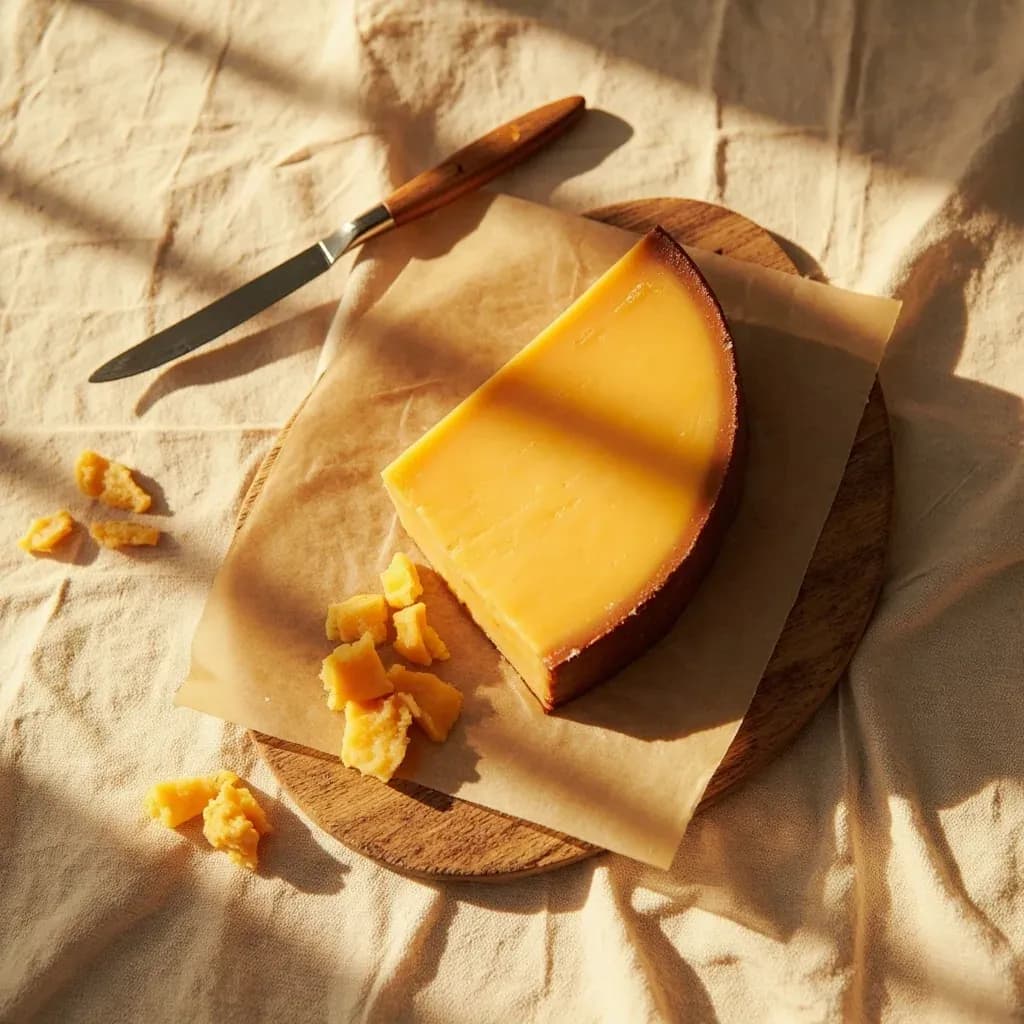
Cheddar aged 9+ months: drier, crumblier and tangy with crunchy tyrosine crystals. Grates fine for gratins; melts less smoothly than mild, so cut with a creamy cheese in sauces.
Sharp cheddar is not a different cheese — it is ordinary cheddar left to age longer. As months accumulate, the curd loses moisture, the casein network becomes more cross-linked, and the flavor moves from milky and lactic toward nutty, brothy, and eventually meaty and caramelized, almost parmesan-like at the far end. That concentration is the entire reason to buy sharp rather than mild, and it is why aged cheddar costs more per pound than its younger siblings.
The trade-off is texture. Aged cheddar is drier, firmer, and often crumbly; long-aged wheels throw small, crunchy white crystals (calcium lactate, and sometimes L-tyrosine) that signal proper aging. Those same qualities change how it behaves in the pan. Tight, cross-linked casein and low moisture mean sharp cheddar seizes, breaks, and turns grainy under direct high heat — the way an aged Alpine cheese does. Treat it as you would Comté or aged Gouda: stabilize with starch, blend with a younger, higher-moisture cheese for sauce work, and bring it to room temperature when you mean to taste it on its own.
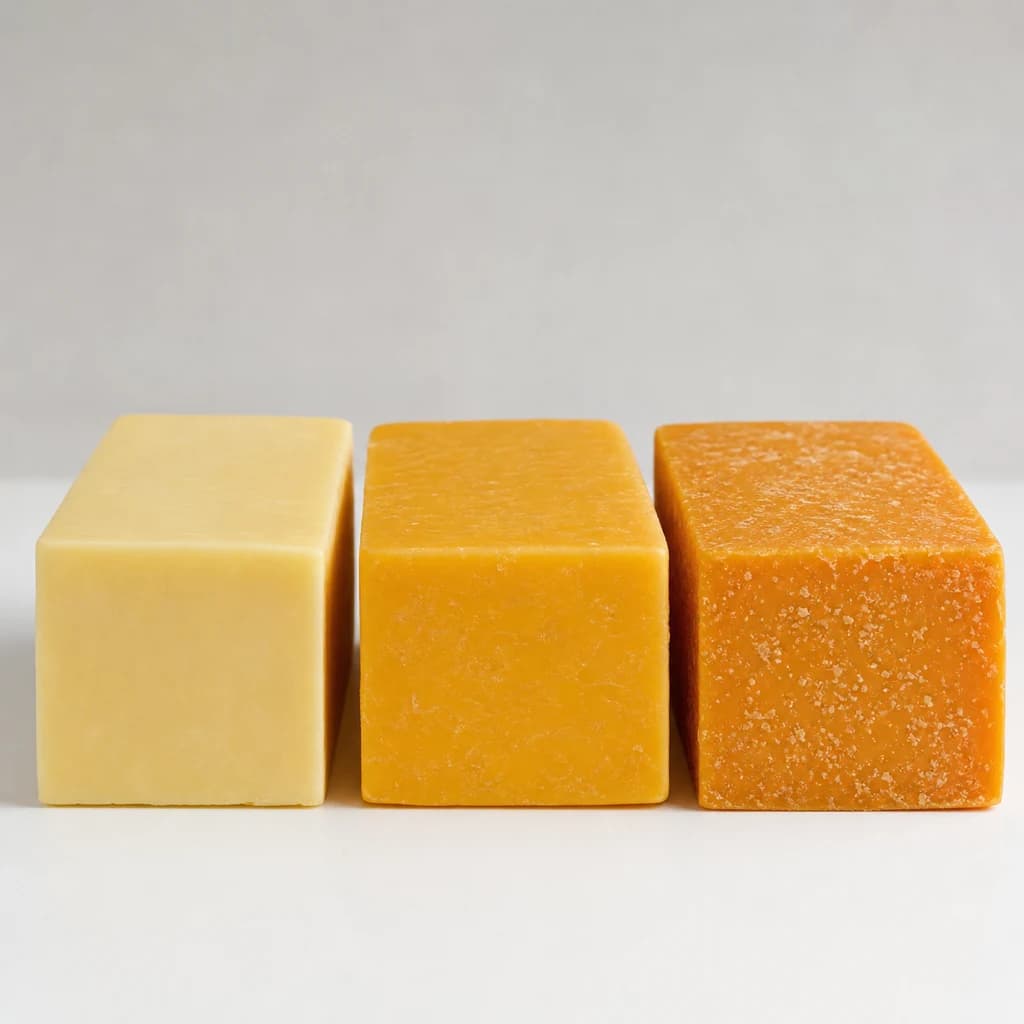
The reference standard is West Country Farmhouse Cheddar from Somerset (and Devon, Dorset, Cornwall), which holds EU PDO status and must be made on-farm from local milk, traditionally raw and clothbound. In the US, Vermont and Wisconsin are the dominant references, with Vermont enforcing state-mandated aging minimums for "sharp" and "extra sharp." Color tells you nothing about sharpness: both orange (colored with annatto) and ivory cheddars can be mild or aged; the months on the label, not the dye, are what matter.
- Measured in
- g
- Storage
- Refrigerate
Allergens
Find it in
Suits
Types & varieties
Aged 2–3 months; creamy, high-moisture, the smoothest melter of the family.
6–9 months; tangier and firmer, with more pronounced flavor without being assertive.
12–24+ months; dense, crumbly, crystalline, complex — closer in character to an aged Alpine cheese than to mild.
English PDO; made on-farm in Somerset, Devon, Dorset, or Cornwall from local milk, traditionally raw and clothbound.
Wrapped in muslin, often rubbed with lard or butter; the cloth wicks moisture and develops a natural rind. Found in both UK farmhouse and American artisan wheels.
Vermont enforces state-mandated aging minimums (sharp ≈ 6+ months, extra sharp ≈ 9+ months); a trusted US category label.
The dominant US commodity source; widely available, consistent, and generally milder at the same "sharp" label than Vermont or UK clothbound.
Nutty, slightly sweet, firm bite; a popular aged alternative to British cheddar.
Finished or soaked in port or sherry for a sweet-fruity accent; a dessert-cheese style.
Melting and sauce work
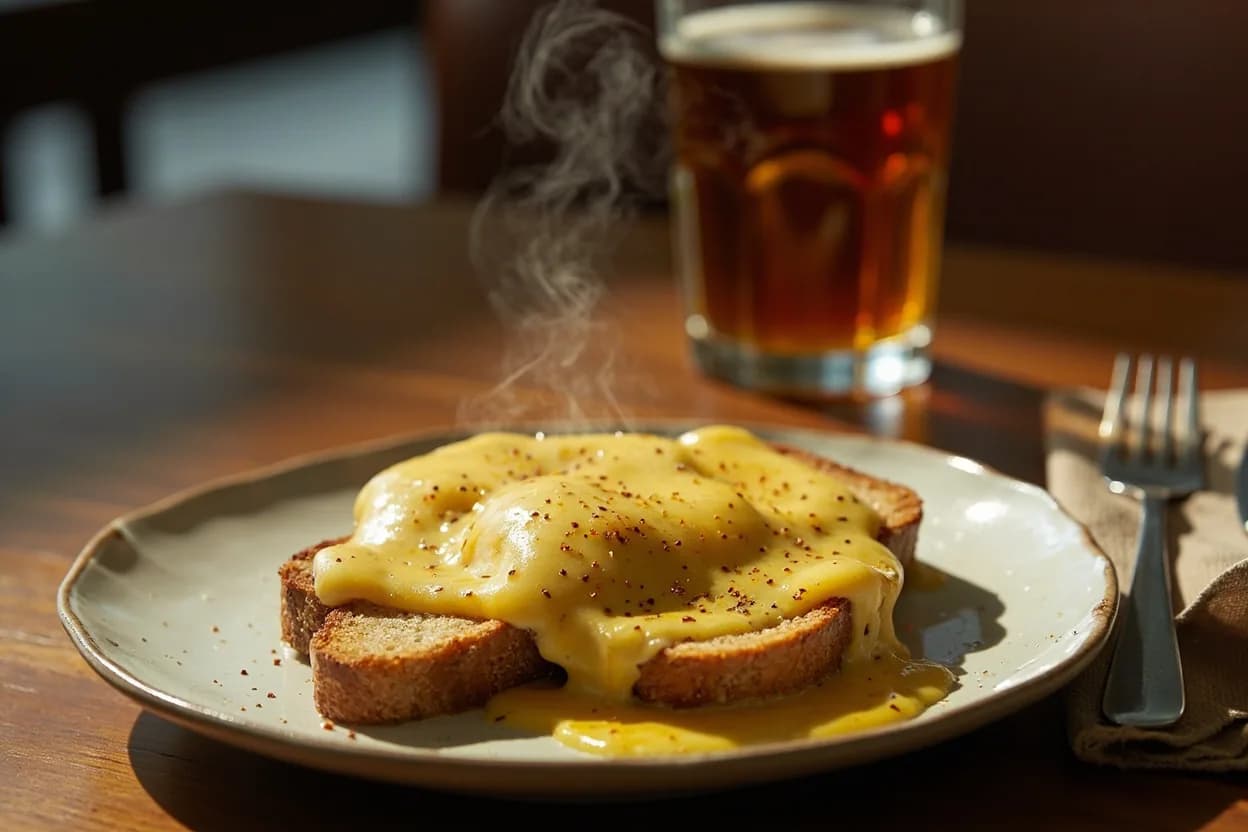
Sharp cheddar breaks for the same reason a custard scrambles or a hollandaise splits: the casein network has become more cross-linked during aging, and there is less moisture to keep the proteins mobile when heated, especially in the presence of fat and acid. The fix is not more heat — it is less direct heat, more starch, and a tempering step. Think of aged cheddar the way you would treat a 24-month Comté.
- Build sauces on a starch-thickened base (roux, béchamel, slurry) before the cheese goes in; the starch coats the proteins and slows seizing.
- Take the pot off the boil before adding cheese. Residual heat is plenty; a rolling pot is what makes it grainy.
- Shred on the largest holes of a box grater — the long, thin shreds melt gradually and stay suspended, rather than clumping into a sticky mass the way fine shreds of low-moisture cheese do.
- Temper the cheese: stir a ladle of warm sauce into the cheese first, then fold that loosened cheese back into the pot.
- If a sauce breaks and looks oily, whisk a teaspoon of mustard or lemon juice into a fresh splash of milk off the heat, then re-emulsify the cheese in by handfuls.
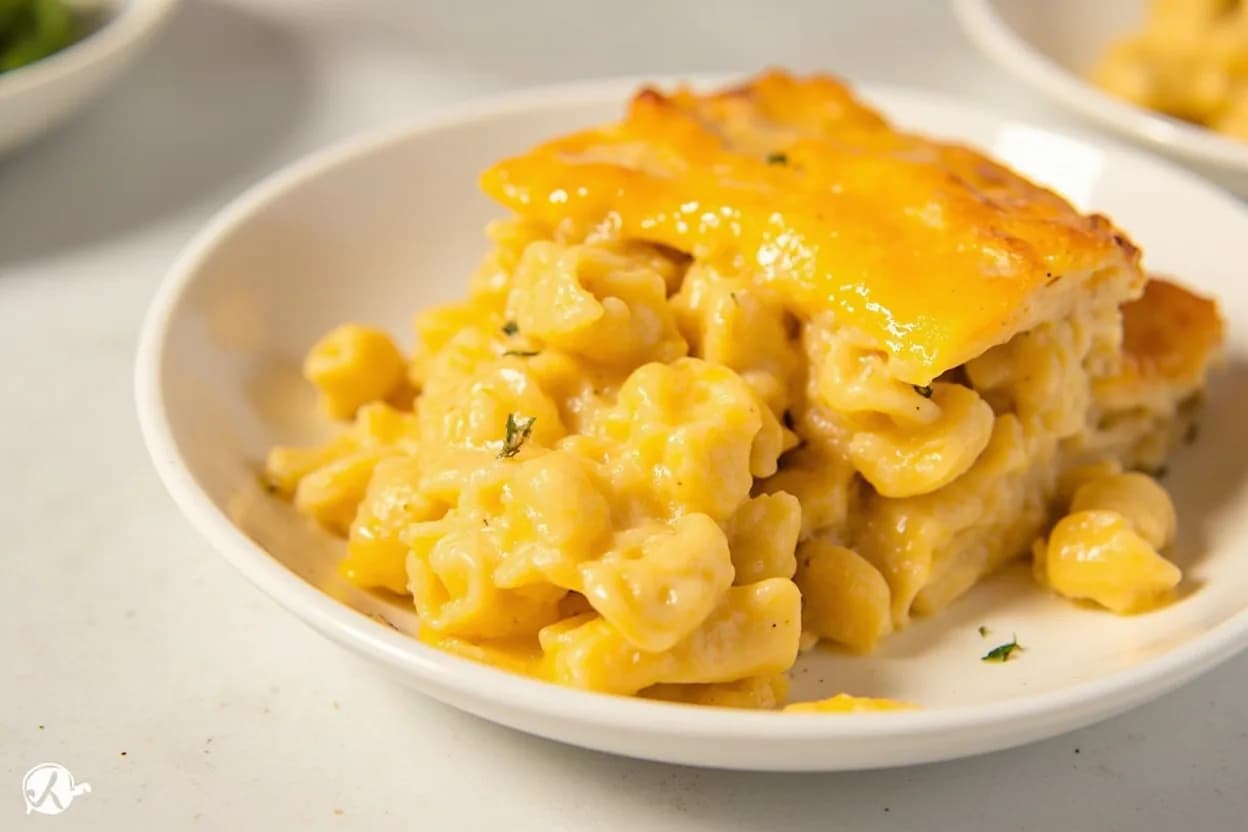
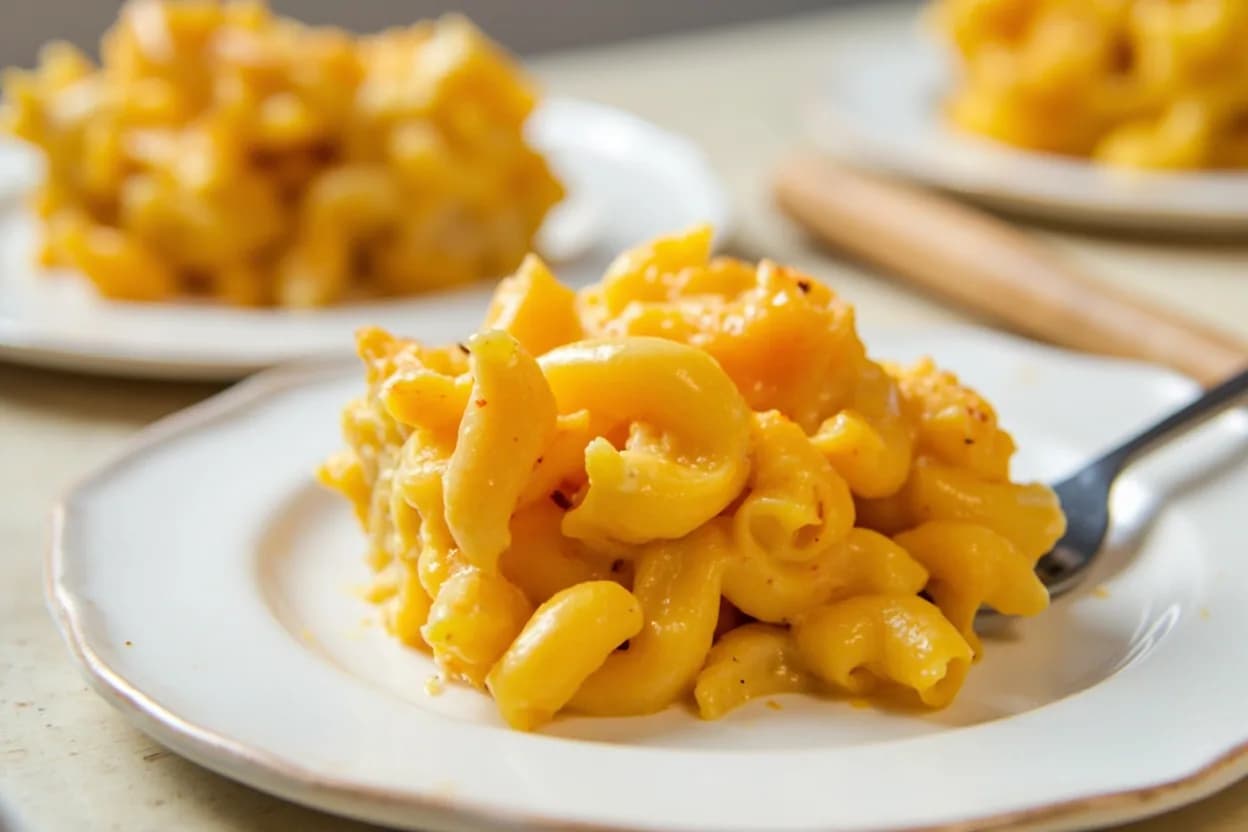
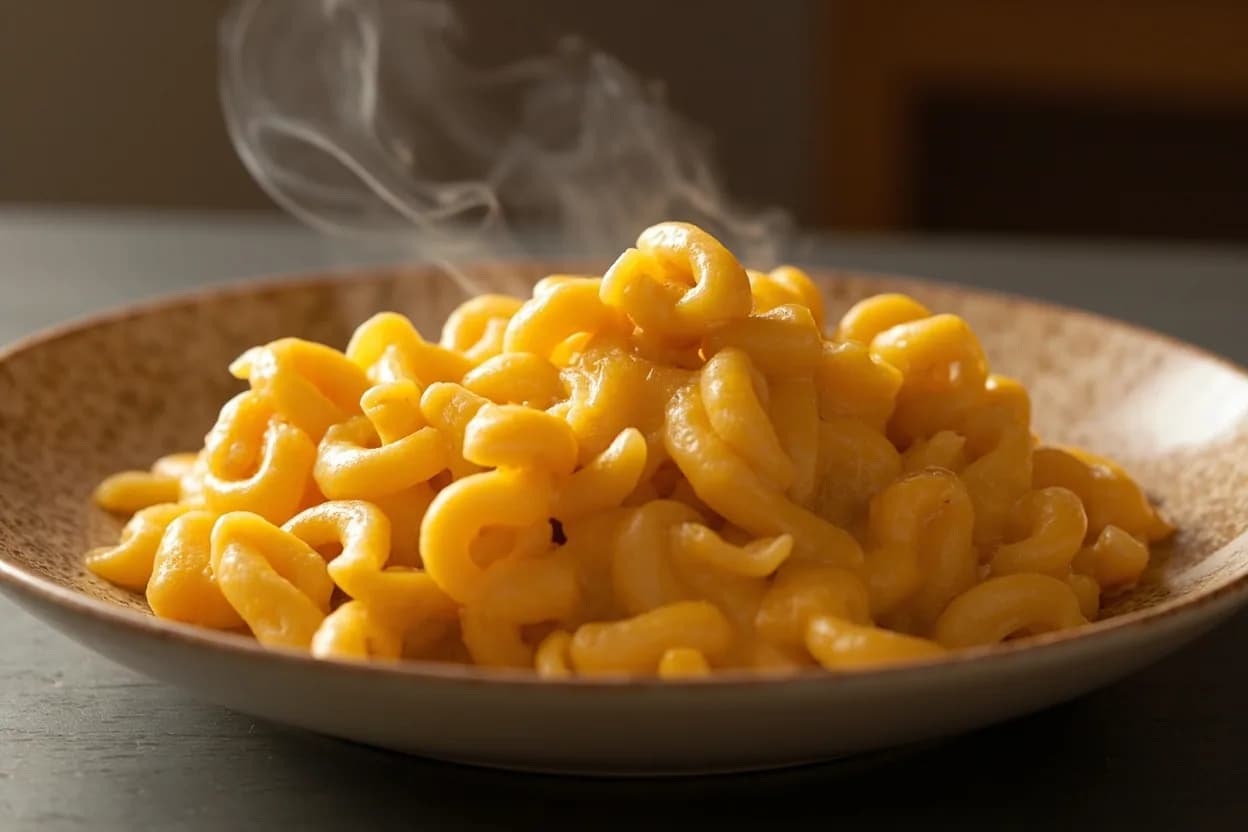
- For gratins and mac and cheese, blend sharp cheddar 50/50 with a younger, high-moisture cheese (Fontina, mild cheddar, Gruyère, Monterey Jack) for both flavor and stretch.
Common uses
Tips & pitfalls
- Shred on the largest holes of a box grater for sauce work — fine shreds clump and turn grainy as their high surface area melts faster than the low-moisture curd can integrate.
- Never add aged cheddar to a rolling boil or a screaming-hot pan; take the pot off the heat and let residual warmth do the work.
- Avoid pre-shredded bagged cheese for sauces: it is coated with cellulose or potato starch to prevent clumping and will never melt as smoothly as a block you grate yourself.
- Temper shredded cheese with a ladle of warm sauce before folding it in — this prevents the grainy, stringy texture that ruins many a cheddar sauce.
- Bring aged cheddar to room temperature 30–60 minutes before serving on a board; flavor is muted and the crystals feel chalky when ice-cold.
- Wrap in cheese paper or parchment, then loosely in plastic with a corner open; never sealed cling film, which traps moisture and ammonia and dulls flavor.
- Do not discard the rind — chop it and simmer in soups, stocks, or risotto for a savory boost, then fish it out before serving.
- "Sharp" and "extra sharp" on the front of the package are loosely regulated outside Vermont (which enforces ~6 months for sharp, ~9 months for extra sharp); trust the look — crumbly texture, visible crystals, brothy-nutty smell — over the label.
Nutrition
Energy
1715 kJ · per 100 g
Where the calories come from
Protein
24.3g
49% DV
Carbs
2.1g
1% DV
Fat
33.8g
43% DV
Fiber
0g
0% DV
Sugars
0.3g
of which
Sodium
644mg
28% DV
Source · USDA FoodData Central · approx. Cheese, cheddar, sharp, sliced
View on FDC →In the shops
Matched grocery products
No matched grocery products for Sharp / Aged Cheddar yet.
Good to know
- Aging window
- Sharp is roughly 6–9+ months; extra sharp / aged runs 12–24+ months. Flavor intensifies and moisture drops with every additional month.
- Texture
- Hard, firm, often crumbly at the aged end. Long aging produces crunchy white calcium lactate crystals (and sometimes L-tyrosine).
- Flavor profile
- Nutty, savory, brothy, and tangy; very long-aged wheels develop meaty, browned-butter, almost parmesan-like depth.
- Melting behavior
- Cross-linked casein and low moisture cause aged cheddar to break and turn grainy under direct heat. Best stabilized with starch and/or blended with a younger, high-moisture cheese.
- Origin
- Cheddar Gorge, Somerset, England — the village gives the cheese its name, and the cheddaring stacking process is the defining historical technique.
- Color
- Naturally pale ivory to straw-yellow. Orange cheddars are dyed with annatto, a 19th-century convention now standard in the US.
- Storage
- Wrap in parchment or breathable cheese paper, then loosely in plastic. Keeps weeks in the fridge; do not freeze if serving on a board — the crumbly texture suffers.
- Protected status
- West Country Farmhouse Cheddar (Somerset, Devon, Dorset, Cornwall) holds EU PDO; must be made on-farm from local milk by traditional methods.
Substitutes
- Aged Comté (18–24 months) — The closest stand-in for aged clothbound cheddar: nutty, crystalline, complex, with a clean melt.
- Aged Gouda — Buttery and caramel-like, with the same crystalline crunch; milder than extra-sharp cheddar but a natural swap on a board.
- Mimolette — Dry, crumbly, with crunchy crystals and a deep, savory, almost meaty flavor — a bold substitute.
- Parmigiano-Reggiano — More pungent and granular; works grated over the top or stirred into a sauce when you want the savory punch, though it will dominate.
- Aged Manchego (12+ months) — Firm, nutty, slightly sharp; sheep's milk gives a sweeter finish and a similar dry crumble.
- Dubliner or aged Irish cheddar — A straight swap, often slightly sweeter than Vermont or West Country farmhouse.
Pairs with
Also called
aged cheddar · extra-sharp cheddar · mature cheddar · vintage cheddar