Dairy & Eggs
Aged Gouda
Gouda matured a year or more into a firm, butterscotch-sweet cheese with salt crystals. Shave over salads or pasta like Parmesan; too dry to melt cleanly, so favour grated finishes.
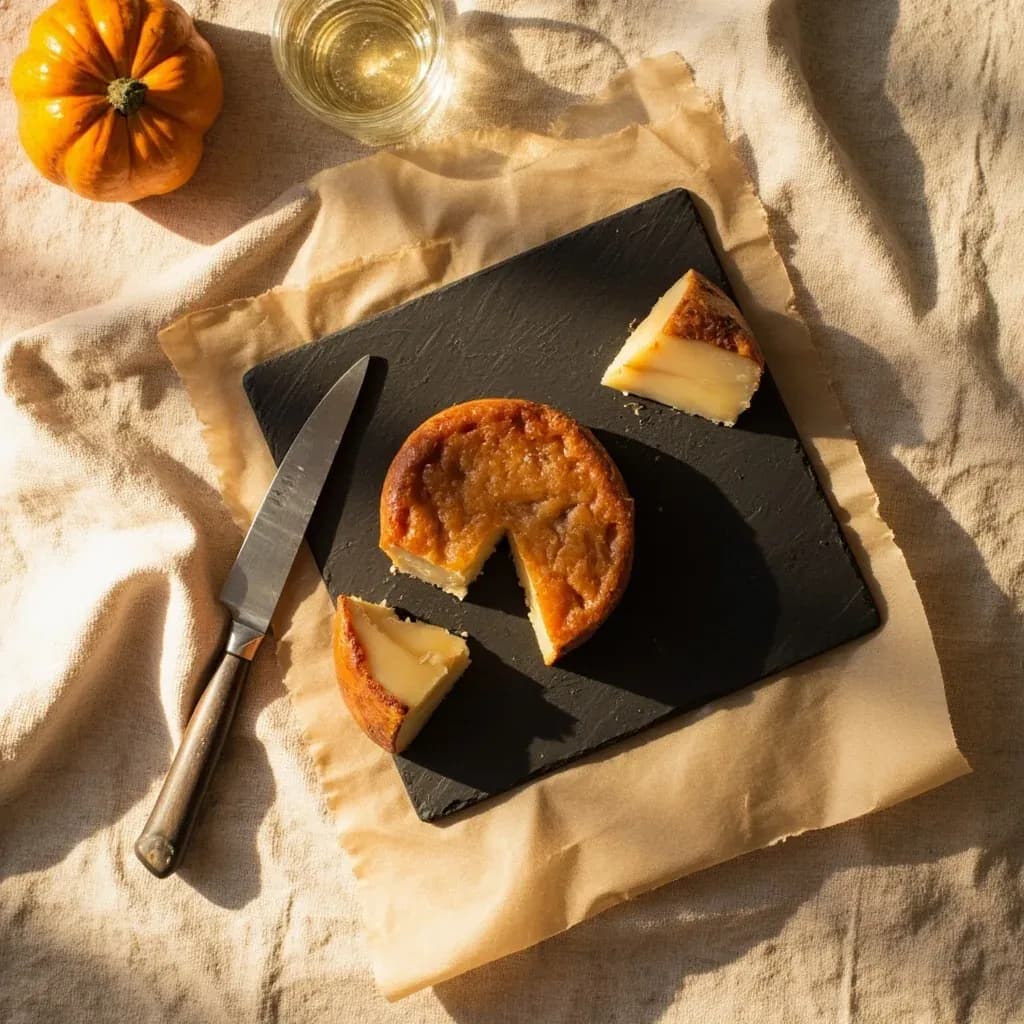
Aged Gouda — 'oude Goudse kaas' in Dutch — is a cow's-milk cheese that has spent a year or more on the shelf, long enough for its moisture to drop sharply and for its residual lactose to convert into the complex, caramelised sugars that give it its unmistakable butterscotch-toffee signature. The aging is also what produces the small, white calcium lactate crystals scattered through the paste: they crunch between the teeth like fine grains of salt and are the single best indicator that you are looking at a properly aged wheel rather than a mild young Gouda. Compared to a young or 'belegen' Gouda, the aged version is firm, dense, and almost brittle, with a deep straw-coloured interior and a flavour that walks a tightrope between salted caramel, toasted hazelnut, and a long, salty-sweet finish.
The practical consequence of that low moisture and high crystallinity is that aged Gouda refuses to behave like a melting cheese. It will not drape over a pizza, knit into a Mornay, or stretch on a grilled sandwich the way fontina or young Gouda will; instead, the fat separates and the paste turns grainy and greasy. Treat it as you would an aged Italian grating cheese: shave it with a vegetable peeler into long curls, grate it on a microplane for a snowy finish, or crumble it into hearty dishes at the last moment. The reward for using it correctly is a punch of concentrated dairy sweetness and salt that can carry a pasta, a bitter salad, or a cheese board all on its own.
When shopping, look for wheels (or wedges cut from wheels) labelled with a specific age — 12 months, 18 months, 2 years — or for the Dutch terms 'oud' (10–12 months) and 'overjarig' (1+ years). Black wax is a traditional but not universal marker of long aging; older Dutch wheels were often dyed black to distinguish them at the cheese market. Avoid pre-grated bags, which lose aroma and are dusted with anti-caking starch, and avoid anything that smells sharply of ammonia — a faint whiff on the rind is normal, but a strong chemical smell means the cheese has been poorly stored.
- Measured in
- g
- Storage
- Refrigerate
Allergens
Find it in
Suits
Types & varieties
Aged 10–12 months; firm, deepening butterscotch, first appearance of crystals
Aged 1–2+ years; very hard, abundant crunchy crystals, intense caramel-toffee, often black wax
Made from raw or thermised farm milk; richer and more variable, often aged long; carries EU protected status
Spring 'grass cheese' from cows on fresh pasture; aged versions show grassy, lactic notes under the caramel
Belegen or oud wheels studded with cumin seed; nuttier, slightly bitter edge
Belegen-style wheels with fenugreek seeds; maple-like aroma, slightly bitter finish
Cold-smoked aged wheels; adds resinous, campfire notes; common in Dutch delis
The Dutch aging ladder: what changes as Gouda ages
Gouda is sold under a handful of Dutch aging terms, and the gap between them is large enough to change how you cook with the cheese. The categories below cover the standard commercial progression; farmhouse and artisanal wheels may diverge from this schedule.
- Jong (young, ~4 weeks) — soft, creamy, mild, almost milky. Spreadable, melts well. Not what you are buying when you want aged Gouda.
- Belegen (~8 weeks) — semi-soft, slightly firmer, gentle lactic sweetness. Still a fair melter; good on sandwiches and paninis.
- Extra belegen (5–6 months) — the sweet spot for everyday slicing; supple paste, light butterscotch, no crystals yet. The default cheese for a Dutch lunch.
- Oud (10–12 months) — firm, distinctly butterscotch, first calcium lactate crystals appear. This is where aged Gouda begins; it will not melt cleanly.
- Overjarig (1+ years, often 18–24 months) — hard, dense, intense caramel-toffee, abundant crystals, often wrapped in black wax. Use only as a shaving or grating cheese; the sweetness is almost confection-like.
Common uses
Tips & pitfalls
- Bring the wedge to room temperature 30–45 minutes before serving — flavour is muted straight from the fridge, and the crystals soften enough to release their salt cleanly on the palate.
- Use a vegetable peeler for wide curls or a microplane for a snowy finish; the hard paste and crystals will clog or skate over a standard box grater.
- Never try to melt aged Gouda into a smooth Mornay-style sauce — the low moisture and high crystallinity make it grainy and greasy. Fold grated cheese into a hot liquid off the heat, or use it as a finishing shower.
- Trim the wax rind cleanly with a sharp chef's knife; a softer blade will skate on the wax and tear the paste underneath.
- Buy a wedge cut from the wheel rather than pre-cubed or pre-grated: pre-grated bags lose aroma within days and are dusted with anti-caking starch that dulls the flavour.
- Pair the sweetness of aged Gouda with something acidic or bitter — balsamic, lemon, radicchio, or pickle — or the cheese will read as one-dimensionally sweet and flat.
- Re-wrap unused portions in fresh cheese paper and never seal them in cling film alone, or the cut face will sweat and develop an ammonia taint.
- A small white bloom on cut faces is harmless surface yeast, common in low-moisture aged cheeses; scrape it off before serving.
Nutrition
Nutrition
No USDA FoodData Central match for Aged Gouda yet. We surface a per-100 g profile once a generic whole-food entry is matched and verified.
In the shops
Matched grocery products
No matched grocery products for Aged Gouda yet.
Good to know
- Origin
- Netherlands, named after the town of Gouda in South Holland where it was historically traded
- Milk
- Cow's milk, pasteurised or raw for protected Boerenkaas farmhouse wheels
- Aging threshold
- Generally 1 year or more (Dutch 'overjarig') for the crystalline, butterscotch profile; 'oud' begins at 10–12 months
- Texture
- Firm, dense, slightly crumbly paste with crunchy calcium lactate crystals
- Flavour
- Concentrated butterscotch, caramel, toasted nut, toffee, with a long salty-sweet finish
- Fat in dry matter
- Approximately 48% (around 31% absolute fat)
- Grate vs melt
- Low moisture and high crystallinity prevent smooth melting — best shaved or grated, not used as a melting cheese
- Storage
- Wrap in parchment or waxed cheese paper, then loosely in plastic; refrigerate at 2–5 °C; bring to room temperature before serving
Substitutes
- Aged Comté (24-month) — Closest match — same butterscotch-nut profile and crystalline crunch; slightly more savoury and less lactic
- Parmigiano-Reggiano (30-month+) — Sharper and more savoury, less sweet — works in most pasta and shaving applications
- Grana Padano (over 16 months) — Softer and cheaper than Parmesan; gentler caramel note, still crystalline
- Aged Manchego (curado or viejo) — Sheep's milk, slightly grassy and lactic; holds up in salads and grating, less sweet than aged Gouda
- Aged Asiago d'Allevo (12+ months) — Hard Italian, sweet-savory with crystals; works shaved but less butterscotch-forward
- Aged Cheddar (extra-mature, 18+ months) — Easier to find outside Europe; savoury and sharp rather than sweet — a last-resort substitute
- Brugge Vieux / Belgian aged cheeses — Belgian tradition mirrors Dutch aging; similar crystalline texture and caramel depth
Pairs with
Also called
oude gouda · overjarige gouda · extra-aged gouda · matured gouda
