Natural form
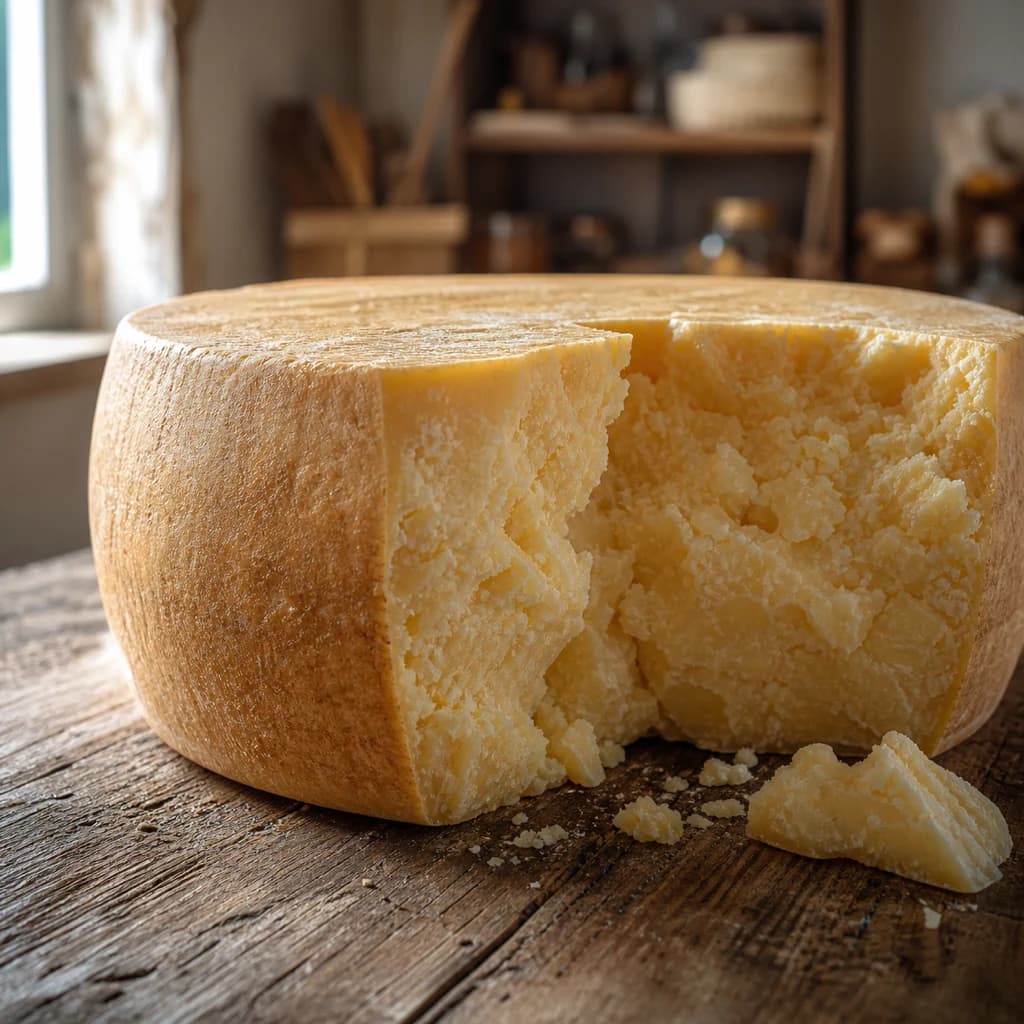
A large Grana Padano wheel with its thick golden-brown rind, showing the cheese's impressive scale.
Shows the whole wheel form — the thick natural rind, size, and characteristic pale-yellow interior — so readers recognize this cheese on sight.
Dairy & Eggs
Grana Padano
Hard, granular Italian aged cheese, grated over pasta and soups much like Parmesan.
Grana Padano is a hard, granular cow's-milk cheese from northern Italy, aged in large wheels until it develops a savory, nutty, slightly sweet flavor. It is grated over pasta, risotto, and soups, shaved into salads, or eaten in chunks. Milder and a touch less complex than Parmigiano-Reggiano, it is a versatile, more affordable grating cheese.
Grana Padano is one of Italy's most important and widely used aged cheeses, a hard, granular cheese with a pale straw interior and a natural rind fire-branded with the consortium mark. Developed by Cistercian monks at Chiaravalle Abbey near Milan in the 12th–13th century, it was born of necessity: the monks needed a way to preserve the surplus milk from the rich Po River Valley dairy farms of Lombardy and Emilia-Romagna. By partially skimming the milk and aging it in large 24–40 kg wheels for a minimum of nine months, they created a cheese that would keep for months and transport easily. Today Grana Padano carries DOP (Denominazione di Origine Protetta) certification, guaranteeing it is made only within the designated production zone using specified methods.
The cheese earns its name from its characteristic granular texture (granuloso in Italian), which becomes more pronounced with aging and produces visible crystalline flecks when broken or grated. At minimum aging the texture is firm and crumbly; the Riserva variety, aged 20 months or longer, develops a darker amber color and more intense crystalline character. The flavor is savory and nutty with subtle fruitiness—distinctly Italian, though generally milder and less complex than its cousin Parmigiano-Reggiano. This moderate flavor profile is actually an asset in cooking: it adds depth and savoriness without dominating other ingredients. The partially skimmed milk gives the cheese a minimum of 32% fat in dry matter, producing good melting and emulsifying properties that make it exceptionally versatile in both raw and cooked applications.
For the home cook, Grana Padano represents the workhorse Italian grating cheese: reliable, affordable, and available in most supermarkets, while still offering genuine quality and regional character. Understanding its characteristics—how the granular texture behaves when heated, how the flavor develops with age, and how it differs from more expensive alternatives—allows you to use it with confidence across Italian cooking, from quick weeknight pasta to elaborate risotti.
- Measured in
- g
- Storage
- Fridge
Allergens
Types & varieties
Standard variety, aged minimum 9 months; the most common version in markets. Suitable for all everyday cooking applications.
Aged 20+ months; darker amber color, more pronounced crystalline texture, richer and nuttier flavor. Worth seeking out for table use and finishing.
Grana Padano vs. Parmigiano-Reggiano
These two cheeses share a common ancestor in the medieval techniques of Po Valley monks, but differ in ways that matter for cooking. Parmigiano-Reggiano is made with whole milk, aged a minimum of 12 months, and produced in a smaller, more restricted zone spanning specific provinces of Parma and Reggio Emilia. It commands a higher price and delivers more complex, concentrated flavor with larger tyrosine crystals. Grana Padano uses partially skimmed milk, requires only 9 months aging, and spans a larger production zone. For everyday cooking—pasta, risotto, soups—Grana Padano performs nearly identically at a lower cost. For finishing dishes or serving as table cheese, Parmigiano-Reggiano's deeper flavor and more interesting texture give it the edge. In a pinch, they are freely interchangeable.
- Grana Padano: partially skimmed milk, 9-month minimum aging, larger production zone, more affordable
- Parmigiano-Reggiano: whole milk, 12-month minimum aging, smaller zone, higher price, more complex flavor
- Both are DOP-protected and made using traditional cooked-curd methods
- Substitute one for the other in any application without adjusting technique
How to Store Grana Padano
Proper storage preserves both texture and flavor. A whole wheel, rind intact, will keep for months in the refrigerator. Once cut, the exposed interior begins to dry and lose aroma. Wrap the cut surface tightly with plastic wrap, pressing out all air, then place in a sealed bag in the coldest part of the refrigerator—typically near the back, not in the door. If a small amount of surface mold appears (not the deep green or black fuzz of serious spoilage), simply trim it away; the underlying cheese is fine. Discard any portion with a strong ammonia smell, slimy texture, or mold that has penetrated deep into the wheel. Do not freeze Grana Padano: the ice crystals shatter the granular structure, leaving you with a crumbly, mealy mess that no amount of grating will fix.
- Wrap cut surface in plastic wrap, then seal in a bag
- Store in coldest part of refrigerator, not in the door
- Use within 3–4 weeks of cutting
- Trim minor surface mold; discard compromised portions
- Never freeze
Common uses
Tips & pitfalls
- Buy Grana Padano in wedges rather than pre-grated; grated cheese loses moisture and flavor rapidly and often contains cellulose anti-caking agents
- Grate or shave just before serving; freshly prepared cheese melts and emulsifies more effectively
- Store wrapped with plastic wrap pressed against the cut surface, then sealed in a bag in the coldest part of the refrigerator
- Discard any portion with a strong ammonia smell, deep mold penetration, or slimy texture; minor surface mold can be trimmed away
- Do not overheat after adding to dishes; excessive cooking destroys the delicate aroma and causes the cheese to clump
- For risotto, add grated cheese off-heat and stir vigorously to create a creamy bind without making the dish gluey
- Use the large holes of a box grater for coarse texture, a microplane for fine dusting, or a food processor for medium consistency
- Avoid freezing; the texture becomes crumbly and the flavor deteriorates significantly
Nutrition
Nutrition
No USDA FoodData Central match for Grana Padano yet. We surface a per-100 g profile once a generic whole-food entry is matched and verified.
In the shops
Matched grocery products
No matched grocery products for Grana Padano yet.
Good to know
- Type
- Hard, granular aged cheese (DOP/PDO protected)
- Milk
- Partially skimmed cow's milk; silage-fed cows excluded
- Origin
- Po River Valley, Lombardy and Emilia-Romagna, Italy; developed by Cistercian monks, 12th–13th century
- Rind
- Natural, fire-branded with the consortium stamp
- Wheel size
- 30–40 cm diameter, 15–20 cm height; 24–40 kg per wheel
- Aging minimum
- 9 months (standard); 20+ months (Riserva)
- Texture
- Granular, crystalline when fully aged; breaks into flakes rather than shredding evenly
- Flavor
- Savory, nutty, slightly fruity; milder and less complex than Parmigiano-Reggiano
- Color
- Pale straw yellow; Riserva is darker amber
- Fat content
- Minimum 32% fat in dry matter; milk is partially skimmed before use
- Yield
- Approximately 1 kg of cheese from 10 liters of milk
- Shelf life
- Sealed, refrigerated: 4–6 months; once cut: wrap tightly, use within 3–4 weeks
Substitutes
- Parmigiano-Reggiano — Closest substitute; made in adjacent region with stricter production rules and longer aging. More expensive and more complex, but freely interchangeable in any application.
- Reggianito — Argentinian Parmesan-style cheese; acceptable in cooked dishes where cost is a concern. Less aromatic and slightly saltier than the Italian original.
- Pecorino Romano — Sheep's milk cheese; sharper and saltier flavor changes the character of the dish significantly. Use only when a pronounced tang is desired.
- Aged Gouda — Dutch alternative with similar granular texture and nutty notes. Different origin character but functional in cooked applications; avoid if you need Italian authenticity.
Pairs with
Appears in these dishes
Related

Whole Milk
Rich, full-fat milk for drinking, coffee, sauces, and baking
Butter
Golden fat for searing, baking, and finishing a sauce
Yogurt
Tangy, creamy culture for breakfast, sauces, and marinades
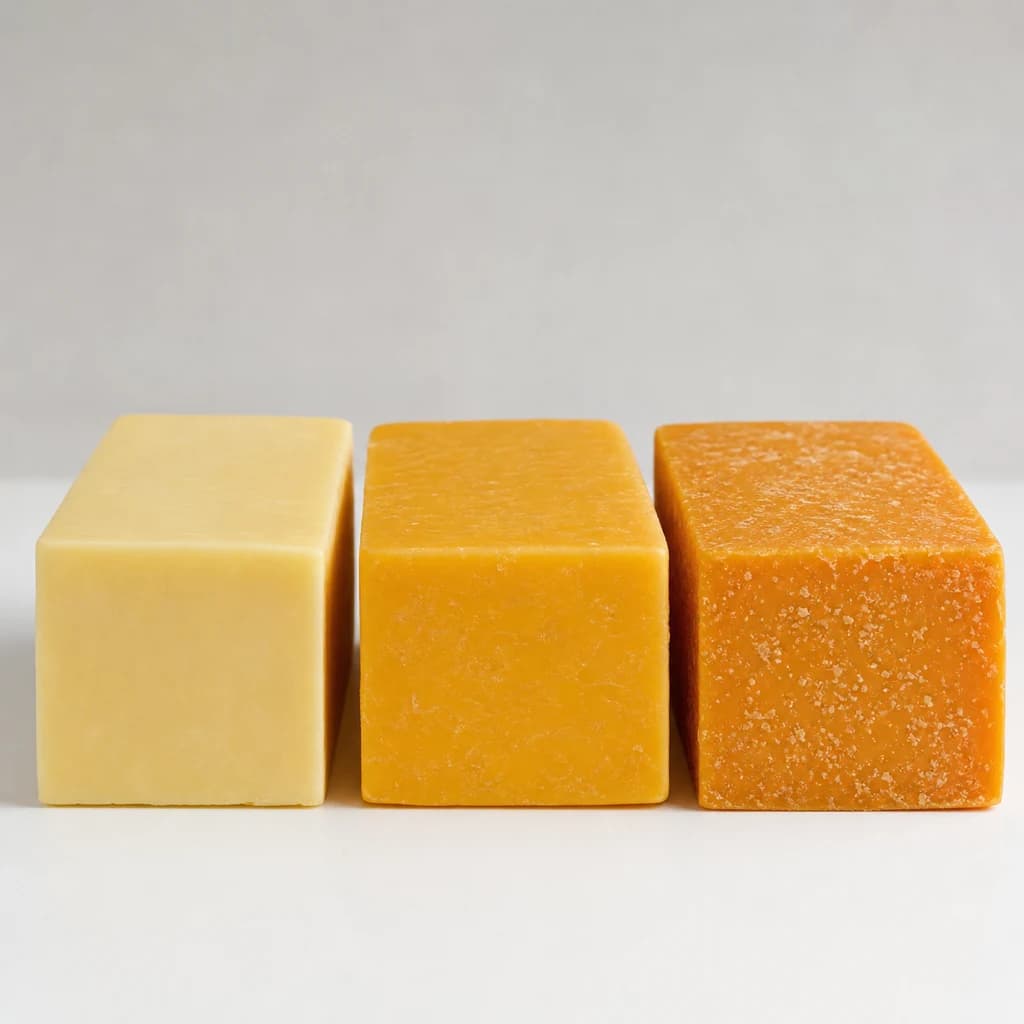
Cheddar Cheese
Sharp, melty cheese for sandwiches, gratins, and grating
Skim Milk
Fat-free milk for lighter drinking, coffee, and cooking
Heavy Cream
Rich cream that whips, enriches sauces, and sets ganache

Sour Cream
Tangy, thick cream for dolloping, baking, and dips
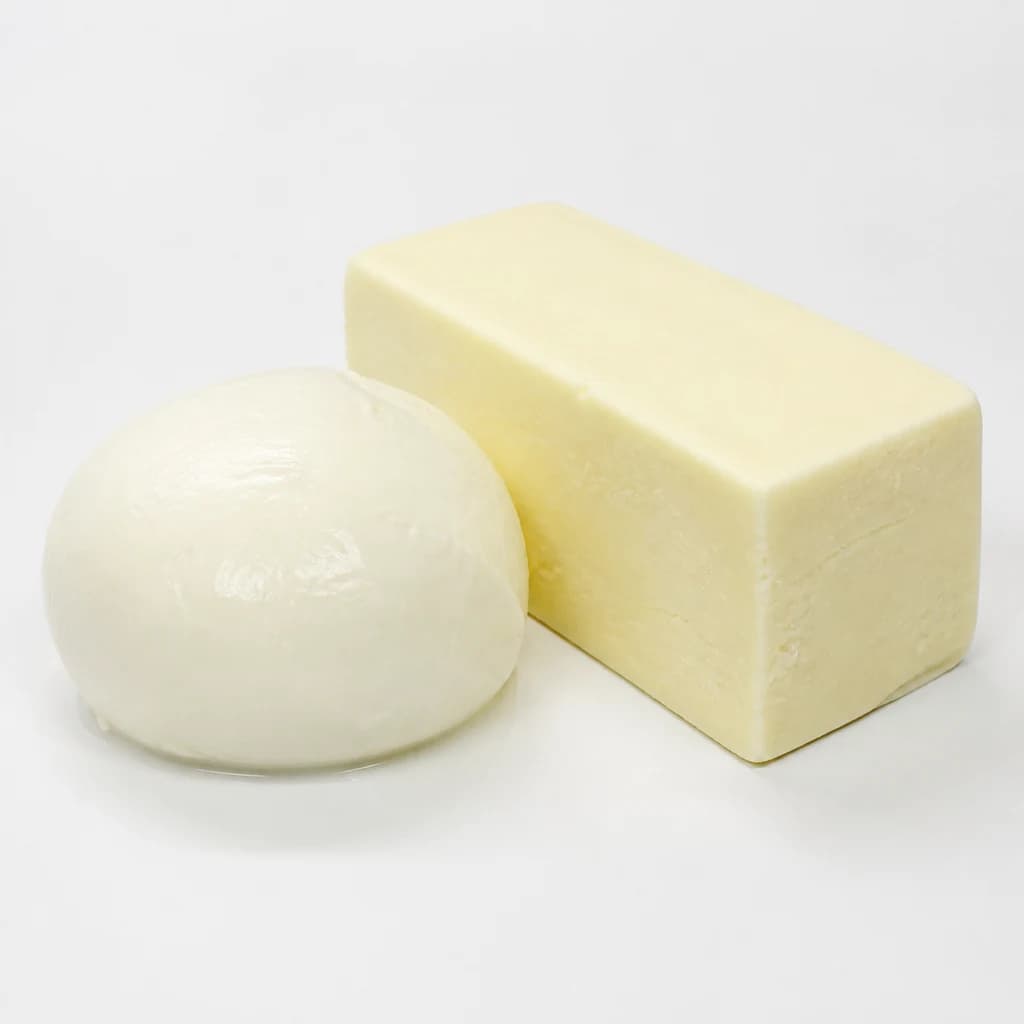
Mozzarella
Soft, milky cheese that melts into stretchy pizza pulls