Proteins
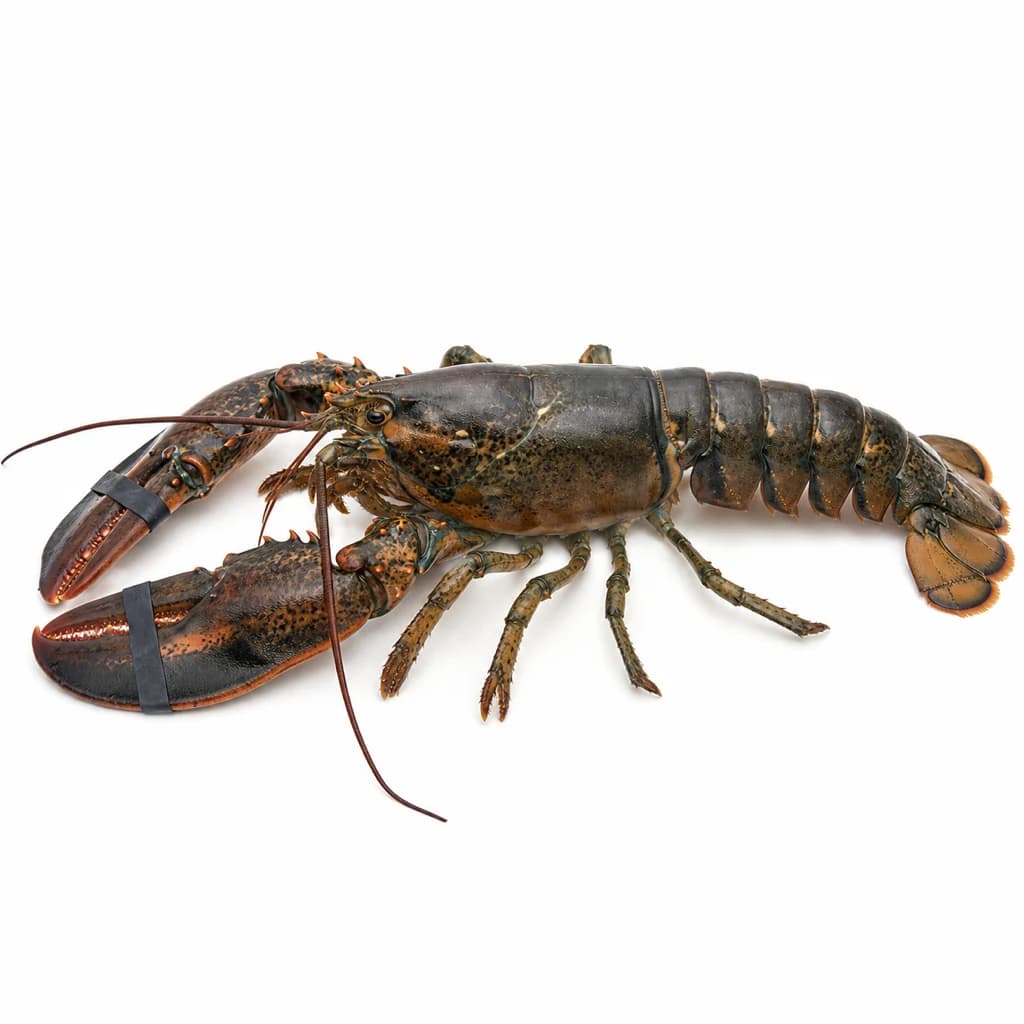
Spiny (Rock) Lobster
Clawless warm-water lobster prized for its meaty, firm tail. Grill or broil split tails with butter; the lack of claws makes the tail the whole show.
Spiny lobster is the clawless, warm- and temperate-water cousin of the Maine lobster, and it earns its place in the kitchen almost entirely on the strength of its tail. A member of family Palinuridae rather than Nephropidae (the clawed lobsters), it carries no large front claws, only long, spiny antennae and a hard, knobby carapace. That anatomy is the whole story: no claw meat to chase, no knuckles to crack open, just a single thick tail supplying the bulk of the edible yield — roughly a third of the live weight once the shell comes off. In markets you will see it under several names — rock lobster, langouste, langosta, and crayfish (in New Zealand, Australia, and South Africa) — but the cooking rules are similar across species.
The flesh behaves differently from clawed lobster. It is denser, slightly chewier, and less rich and buttery, with a clean, briny sweetness that takes seasoning aggressively rather than vanishing under it. That firmness is a gift on a hot grill or under a broiler, where a more delicate piece of lobster would fall apart, and it is why most serious preparations split the tail open like a book before applying heat. The trade-off is vigilance: the same density means the meat turns rubbery the moment it slips past medium, so a thermometer and a short carryover rest matter more than the timer suggests.
Regional traditions shape how the tail reaches the plate: split and grilled with garlic butter on the US West Coast and in Baja, boiled whole and cracked cold in the Caribbean, and served raw or grilled in shell in Japan (ise-ebi). Sustainability is mixed by species — California spiny and Western Australian rock are generally well managed, while Mediterranean Palinurus elephas has been pressured in places — so it pays to ask the source.
- Measured in
- g
- Storage
- Refrigerate
Allergens
Find it in
Types & varieties
Baja and US West Coast; classic split-and-grill preparation; sweet, clean flavor
Florida Keys and wider Caribbean; backbone of the Florida lobster roll and Bahamian cracked lobster
Western Australia; major commercial species, widely exported as frozen tails
New Zealand and southern Australia; called crayfish locally; firm tail meat
Cold-water Cape species; dense white tail meat
The langouste of French and Italian coastal cooking; supply is pressured in places
Ise-ebi; often served as sashimi or grilled isobeyaki
Two regional traditions worth knowing
How a spiny lobster reaches the plate is largely a regional decision, and recognizing the two main styles will sharpen your shopping and cooking.
- California / Baja (P. interruptus): split the tail lengthwise with shears, devein, brush with garlic butter, and broil or grill shell-side down. The meat stays in the shell and is picked out at the table with a fork. Sweet, clean, minimal seasoning beyond butter, garlic, and lemon.
- Florida / Caribbean (P. argus): boil whole in heavily salted water, chill, then crack the tail at the table. The meat is pulled and tossed with mayonnaise and celery for a lobster roll, or dressed with lime, cilantro, and Scotch bonnet for cracked lobster or ceviche.
- Japanese ise-ebi (P. japonicus): often dispatched and sliced raw for sashimi, or grilled whole in the shell as isobeyaki. Freshness is paramount — the tail is the centerpiece.
- Practical takeaway: in California you buy by tail size for the grill (8–10 oz is the sweet spot); in the Caribbean you buy by weight for boiling whole and serving cold.
Buying and storage without losing quality
Spiny lobster quality lives or dies on freshness, and the packaged frozen tails at the supermarket are not all equal.
- Live is best: cook from the live tank the same day. If you must hold, keep them at 45–50°F in damp newspaper or seaweed — never in fresh water, which kills them and ruins the texture.
- Watch for phosphate-soaked tails: imported frozen tails are often treated with sodium tripolyphosphate to plump them and retain water. They weep white liquid in the pan, steam instead of sear, and taste diluted. Look for unadorned labels and natural color.
- Blanch before freezing if you do your own: 60 seconds in salted boiling water, ice-shock, then vacuum-seal. Fully cooked meat freezes poorly and turns mushy on thaw.
- Size matters for cooking, not for bragging: 8–10 oz split tails cook in 6–8 minutes on a hot grill; 2 lb monsters are harder to heat evenly and easier to overcook at the edges.
Common uses
Tips & pitfalls
- Split the tail lengthwise with kitchen shears before cooking — even heat, faster cook, and easy plating in the shell
- Devein after splitting: the dark intestinal vein runs along the dorsal side and should be pulled out, then rinsed under cold water
- Brush the exposed meat with fat (butter, olive oil, or aioli) before grilling — lean meat dries out fast over direct heat
- Pull tails off the heat the moment the meat turns opaque; carryover cooking will finish them, and going further means rubber
- Salt your boiling water like the sea — about 1/4 cup sea salt per gallon — for boiled or blanched preparations
- Snip the underside membrane in 2–3 spots before grilling in the shell, or trapped steam will overcook the meat from the inside
- Dispatch and cook straight through; do not kill the lobster and let it sit 10 minutes the way you might with a clawed lobster — freshness is paramount here
- Avoid frozen tails soaked in sodium tripolyphosphate; they look plump raw but weep water and refuse to sear
Nutrition
Energy
469 kJ · per 100 g
Where the calories come from
Protein
20.6g
41% DV
Carbs
2.4g
1% DV
Fat
1.5g
2% DV
Fiber
0g
0% DV
Sodium
177mg
8% DV
Source · USDA FoodData Central · approx. Crustaceans, spiny lobster, mixed species, raw
View on FDC →In the shops
Matched grocery products
 €4.29
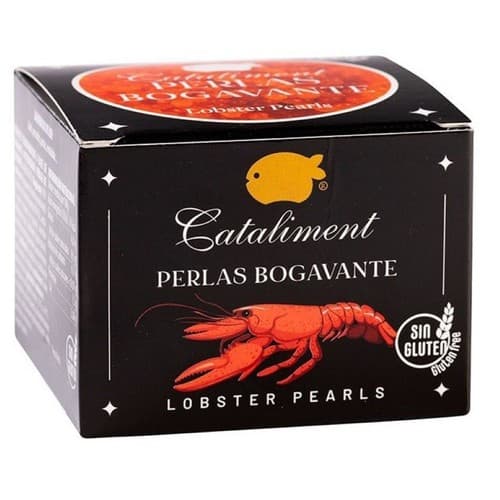
€4.29Lobster Pearls
CATALIMENT · kg · Bonpreu
 €21.99
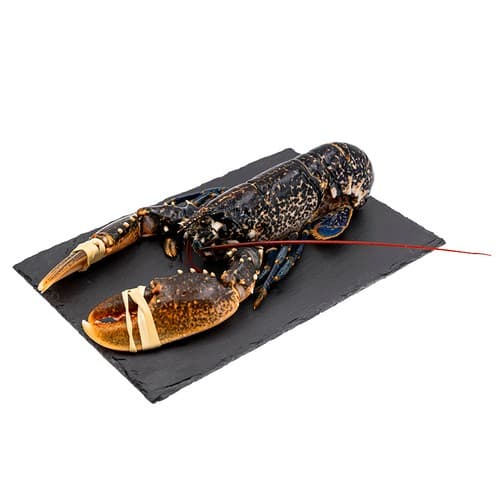
Blue Lobster (unit)
Bonpreu
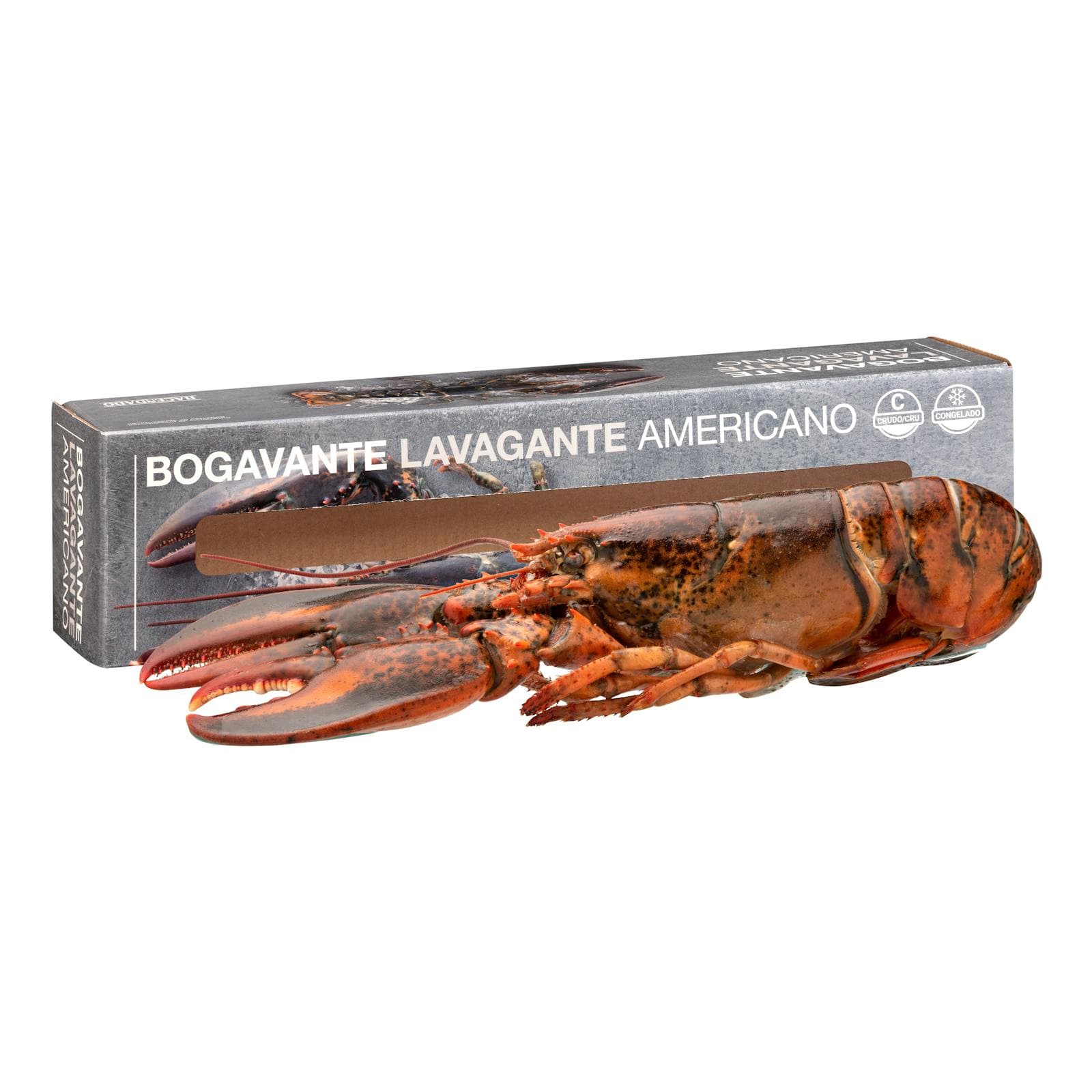 €14.85
Medium Raw American Lobster
Hacendado · kg · Mercadona
Good to know
- Family
- Palinuridae (spiny lobsters); not the same family as clawed lobsters (Nephropidae, e.g. Maine / Homarus)
- Meat yield
- Tail is the only sizeable portion; roughly 30–35% of live weight as edible tail meat
- Texture
- Firm, denser and slightly chewier than clawed lobster; holds shape well on the grill
- Flavor
- Briny, mildly sweet, less rich and buttery than Maine lobster; takes seasoning aggressively
- Doneness cue
- Tail meat should be just opaque throughout, about 135°F internal; turns rubbery fast past medium
- Color change
- Reddish-brown to purple-brown raw shell turns bright orange-red when cooked — a reliable doneness signal
- Storage — live
- Keep at 45–50°F, moist (damp newspaper or seaweed), never in fresh water; cook the same day
- Storage — cooked meat
- Refrigerate 2–3 days; freeze up to 3–6 months, ideally after blanching
Substitutes
- Maine / Atlantic lobster tail — Closest in shape; sweeter and more tender than spiny — drop cook time by a minute or two
- Langoustines (Nephrops norvegicus) — Best flavor match; much smaller, ideal for pasta or butter-poached whole
- Freshwater crayfish — Similar sweet-briny flavor at a smaller scale; works in pasta, salad, bisque
- Large shrimp / prawns — Cheaper and widely available; split and grill the same way, halve the cook time
- Florida stone crab claws — Not a 1:1 swap, but a good Florida-leaning substitute in cold preparations
Pairs with
Also called
rock lobster · langosta · crayfish (Australian) · langouste