Baking
Vanilla Bean Paste
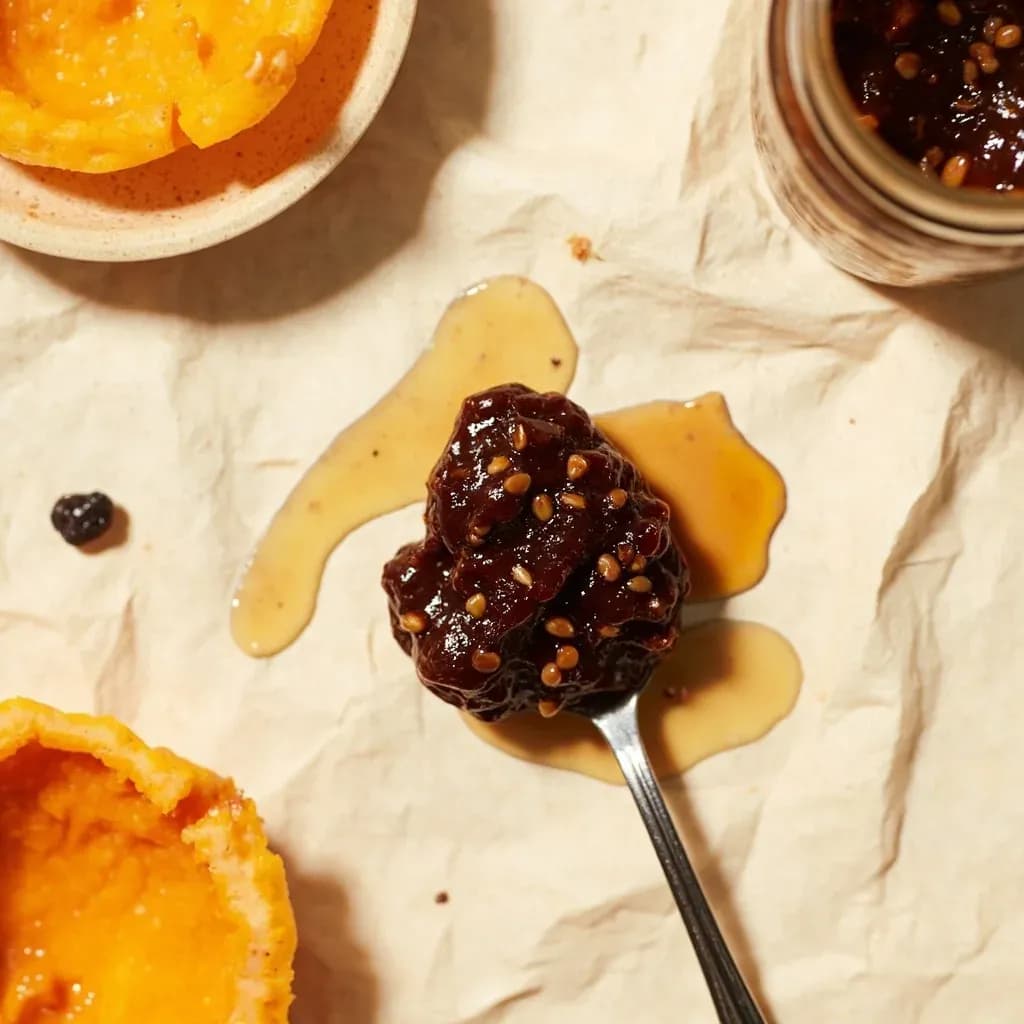
Thick syrup flecked with real vanilla seeds; spoon-for-spoon swap for extract that adds visible specks without splitting a pod.
Vanilla bean paste is a thick, syrupy concentrate built around the tiny black seeds (the so-called caviar) scraped from cured vanilla pods, suspended in a sweetened liquid base of vanilla extract, sugar, and water. It was created to solve a specific kitchen problem: pure vanilla extract delivers flavor but no visual proof, and whole vanilla beans are slow, fiddly, and expensive to split and scrape. Paste threads the needle — one measured spoonful gives you both the aromatic depth of extract and the unmistakable flecked appearance of a scraped pod, which is why pastry chefs reach for it when they want vanilla to read on the plate as well as the palate.
In practice, paste behaves like a wet ingredient with a little extra body. It disperses evenly into batters, custards, and creams, and the seeds stay suspended rather than clumping as they often do when scraped directly from a raw pod. Because most commercial pastes are built on Madagascar Bourbon beans, the default flavor is the familiar creamy, sweet-bourbon profile bakers expect, but Tahitian and Mexican-origin pastes are available for those chasing floral or spiced notes. Treat it less as a separate ingredient and more as a finished extraction — a hybrid convenience form that earns its place whenever appearance and aroma both matter.
It is worth knowing that paste carries added sugar, which is usually irrelevant in cakes and cookies but matters in delicate formulas like meringue or sugar-controlled custards. The seed content also varies by brand; some lean toward extract-heavy liquids with a light sprinkle of seeds, others pack nearly the full caviar of a pod per teaspoon. Read the label before assuming you are getting the visual impact you expect, and stir the jar before measuring, because the seeds settle during storage.
- Measured in
- ml
- Storage
- Pantry
Find it in
Suits
Types & varieties
The dominant commercial style; classic creamy, rich, sweet-bourbon flavor from Madagascar-grown Bourbon vanilla beans.
Made from Tahitian beans; more floral, anisy, and perfumed than the Madagascar standard.
Made from Mexican vanilla beans; deeper, slightly smoky and spiced notes with a wine-like warmth.
Artisan versions tied to a specific estate or curing house; flavor reflects the particular terroir and curing style.
How paste differs from extract and whole beans
The three forms are not interchangeable in every situation, even at a 1:1 ratio. Pure vanilla extract is essentially an alcohol-and-water infusion with no solids, so it disappears into a batter and leaves no trace. Whole beans contribute the full aromatic complexity of the cured pod in its least processed form, but they also demand labor and cost significantly more per equivalent spoonful of flavor. Paste sits between them: it delivers most of the aroma of extract, plus the visual signature of seeds, in a format that costs more than extract but a fraction of whole-bean pricing.
The seeded look is not just cosmetic. In pale mixtures — vanilla buttercream, panna cotta, pastry cream, whipped cream — those black flecks signal to the eater that real vanilla was used, which influences perceived quality before the first bite.
- Extract: flavor only, no visible seeds, lowest cost, longest shelf life.
- Paste: hybrid form with seeds and a syrupy body, mid-range cost, moderate shelf life once opened.
- Whole bean: full aromatic complexity, visible seeds, highest cost, shortest practical shelf life once split.
Common uses
Tips & pitfalls
- Substitute 1:1 for vanilla extract in virtually any recipe; there is no need to reduce other liquids, because the paste behaves as a wet ingredient.
- Stir the jar before measuring if it has sat a while — seeds settle at the bottom and the last spoonfuls can be far more concentrated than the first.
- Refrigerate after opening and always use a clean, dry spoon to prevent spoilage and mold; the sugar and water content makes opened paste vulnerable to microbial growth over time.
- Check the label for sugar content when working in sugar-sensitive formulas such as meringue, certain macarons, or diabetic-friendly baking; most pastes carry meaningful added sugar.
- Add paste late in mixing when possible — folding it in with the final wet additions or as a finishing stir preserves volatile top-note aromatics that heat and prolonged mixing can drive off.
- Don't try to make a 'vanilla bean extract' by thinning paste with alcohol; the result will not have the same depth as a true extract.
- For maximum visible specks in clear or pale applications (panna cotta, white buttercream), fold paste in gently at the end and avoid vigorous mixing, which causes seeds to clump rather than disperse.
Nutrition
Nutrition
No USDA FoodData Central match for Vanilla Bean Paste yet. We surface a per-100 g profile once a generic whole-food entry is matched and verified.
In the shops
Matched grocery products
No matched grocery products for Vanilla Bean Paste yet.
Good to know
- Form
- Thick, syrupy paste with visible black vanilla seeds suspended throughout
- Typical composition
- Ground vanilla bean seeds, vanilla extract, sugar, water; some brands add invert sugar, corn syrup, xanthan gum, or gum tragacanth as thickeners
- Substitution ratio
- 1:1 spoon-for-spoon for vanilla extract in nearly all recipes; no liquid reduction needed
- Yield note
- One split-and-scraped whole vanilla bean ≈ 1 tablespoon paste ≈ 1 tablespoon extract
- Shelf life (unopened)
- Approximately 2–3 years sealed, stored cool and dark
- Shelf life (opened)
- About 1 year; refrigeration after opening slows flavor loss
- Sugar content
- Most commercial pastes contain added sugar; unsweetened varieties exist but are uncommon
- Cost vs. alternatives
- Priced between pure vanilla extract (cheaper) and whole vanilla beans (most expensive)
Substitutes
- Pure vanilla extract — Direct 1:1 swap; flavor is comparable but you lose the visible seed flecks.
- Whole vanilla bean — One split-and-scraped pod equals roughly 1 tablespoon of paste; superior aroma and the freshest seed appearance, but the priciest option.
- Vanilla bean powder — Use about ½ teaspoon per tablespoon of paste; delivers specks and concentrated flavor but no syrupy base, so add a splash of extract or water.
- Vanilla sugar — Substitute equal weight for the sugar portion of the recipe and add 1 teaspoon extract per tablespoon of vanilla sugar called for; loses the visual seeds.
- DIY mix — Stir 2 tablespoons pure vanilla extract into 1 tablespoon vanilla sugar with the scraped seeds of one whole bean — a serviceable stand-in for a tablespoon of paste.
Pairs with
Also called
vanilla paste · vanilla seed paste · pasta de vainilla · vanilla bean blend
