Grains & Rice
Whole-Wheat Couscous
Tiny steamed pasta pearls of whole durum wheat, nuttier and higher in fiber than regular couscous. Hydrates in minutes for warm grain salads, pilafs, and tagine sides.
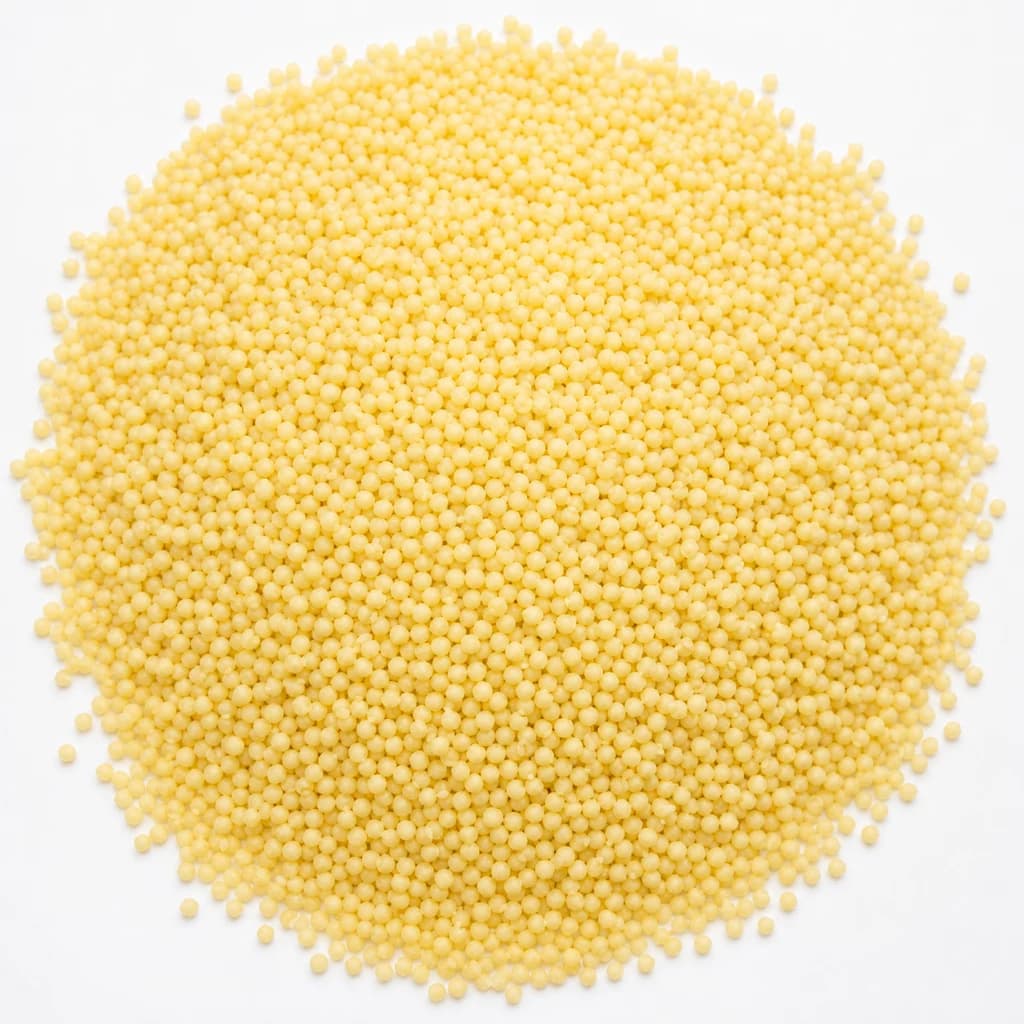
Whole-wheat couscous is the bran-and-germ version of North Africa's tiny steamed pasta pellets — same durum wheat, same rolling process, just milled coarsely enough to keep the nutritious parts of the kernel intact. The result is a speckled tan, distinctly nuttier grain that brings roughly two to three times the fiber of refined couscous, along with more magnesium, phosphorus, and B vitamins. It cooks in the same unhurried five minutes, but behaves a little differently in the pot: it drinks more liquid, carries a faint earthy bitterness from the bran, and rewards richer cooking broths and a generous slick of olive oil or butter.
Technically, couscous is pasta, not a true grain — wheat flour and water rolled into a 1–2 mm pearl — which is why it hydrates in a covered pot rather than simmering like rice. The whole-wheat pivot is largely a modern, health-driven adaptation that took hold in Western markets; traditional Maghreb cooking still favors refined semolina as a neutral canvas for long-simmered stews. The practical upshot is that you need to season and toast whole-wheat more aggressively to keep the dish lively. The bran does real flavor work, but it also asks for an acidic lift, a warm-spice backbone, or a creamy sauce to feel balanced on the plate.
In the kitchen, whole-wheat couscous is one of the fastest, most forgiving things in the pantry — equally at home in a 10-minute tabbouleh and a slow Sunday tagine. Treat it as a flavor carrier rather than a neutral filler, and it becomes a real asset: nutty, chewy, and substantial enough to stand up to bold ingredients like merguez, harissa, preserved lemon, and roasted root vegetables without disappearing under them.
- Measured in
- g
- Storage
- Pantry
Allergens
Find it in
Suits
Types & varieties
The smallest, most familiar pellets (1–2 mm); quick to hydrate and ideal for fluffy sides and tabbouleh-style salads.
Larger 2–3 mm pellets with a more pronounced chew; benefits from a longer steam or rest and a bit more liquid.
Toasted 3–4 mm spheres of pasta; whole-wheat versions exist and behave like a pasta — boil directly in salted water 8–10 minutes rather than steeping. (Not to be confused with maftoul, a hand-rolled bulgur-based Levantine cousin.)
Slightly larger than Moroccan, with a tender bite and a following in Levantine kitchens.
A whole-wheat base blended with tomato and spinach or beet versions; useful for visual contrast in composed salads.
Artisan pellets rolled by hand and sun-dried; irregular shapes, deeper flavor, and often steamed twice over a stew.
Why whole-wheat asks for more seasoning
Refined semolina couscous is essentially a blank canvas — pale, mild, and built to absorb whatever broth or stew it sits beneath. Whole-wheat couscous is the opposite: the bran brings an earthy, faintly bitter, almost tea-like note that can read as flat or rustic if the supporting flavors are timid. Compensate with three moves that the refined version doesn't demand.
- Build the cooking liquid from seasoned broth, not water, and consider adding a smashed garlic clove, a bay leaf, a strip of lemon peel, or a pinch of saffron as it heats.
- Toast the dry pellets in butter or olive oil for 1–2 minutes before adding liquid; the Maillard reaction deepens nuttiness and helps the grains stay separate.
- Finish with acid (lemon juice, preserved lemon, sherry vinegar) and fat (olive oil, yogurt, tahini, brown butter) to round off the bran and lift the dish.
Steep method vs. traditional steaming
Two very different paths produce two very different textures, and it's worth knowing which one you want before you start.
- Steep (modern, weeknight): bring seasoned liquid to a full boil, stir in couscous, cover tightly, remove from heat, rest 5–10 minutes, then fluff with a fork. Fast, reliable, and the standard approach for fine Moroccan-style pellets.
- Traditional North African steam (couscoussier): the pellets are moistened and rubbed by hand, then steamed over a long-simmering stew, rested, broken up, and steamed a second time. Produces lighter, more separate grains and is the only method that does justice to coarse or hand-rolled whole-wheat varieties.
- Pearl/Israeli couscous is a third case entirely: it is toasted pasta, not a steeped pellet, and should be simmered in salted water like orzo, then drained.
Common uses
Tips & pitfalls
- Toast the dry couscous in a tablespoon of butter or olive oil for 1–2 minutes before adding liquid — it deepens nuttiness and keeps the grains separate.
- Use seasoned broth instead of water whenever the dish allows; a smashed garlic clove, bay leaf, and pinch of saffron in the liquid do real work.
- Salt the cooking liquid lightly — the pellets themselves are unseasoned and depend on the liquid for flavor.
- For the fluffiest result, bring the liquid to a full boil, stir in the couscous, cover, remove from heat, and resist lifting the lid during the rest.
- Fluff with a fork using cross-hatch strokes, not a spoon — a spoon compacts the grains and produces clumps.
- For cold salads, spread the cooked couscous on a sheet pan to cool quickly, or rinse briefly under cool water and drain well to stop the cooking.
- If the grains still feel firm after the rest, sprinkle over 1–2 tablespoons of hot water, cover, and steam another 2–3 minutes rather than adding more liquid up front.
- Common mistake: stirring during the rest — it releases steam and yields gummy couscous.
- Common mistake: using too much liquid — whole-wheat turns mushy fast; start at 1:1 and add more only if needed.
- Reheat leftovers with a splash of water and a tight lid over low heat to restore moisture without drying the grains out.
Nutrition
Energy
1573 kJ · per 100 g
Where the calories come from
Protein
12.8g
26% DV
Carbs
77.4g
28% DV
Fat
0.6g
1% DV
Fiber
5g
18% DV
Sodium
10mg
0% DV
Source · USDA FoodData Central · approx. Couscous, dry
View on FDC →In the shops
Matched grocery products
 €1.95
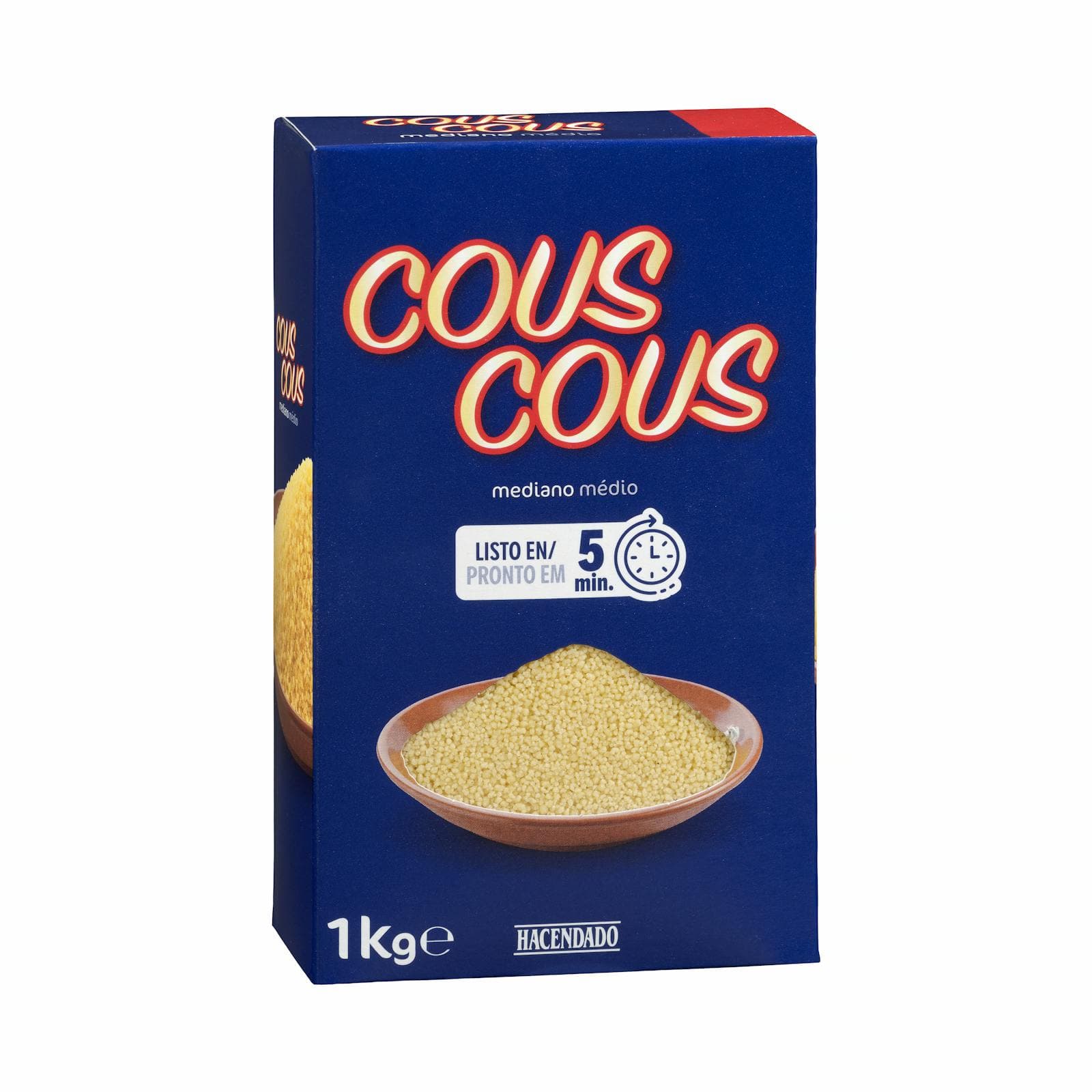
€1.95Medium Couscous
Hacendado · 1 kg · Mercadona
 €1.20
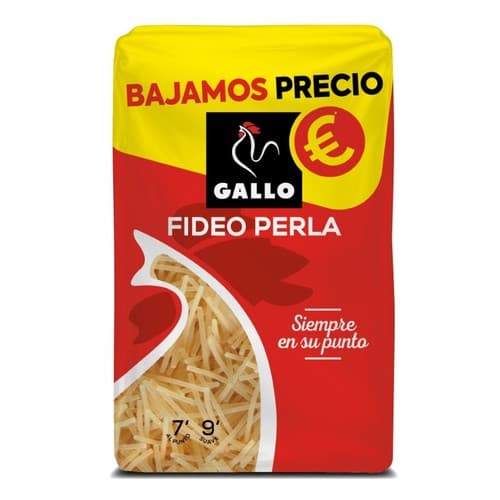
€1.20Gallo Pearl Couscous
GALLO · kg · Bonpreu
 €1.49
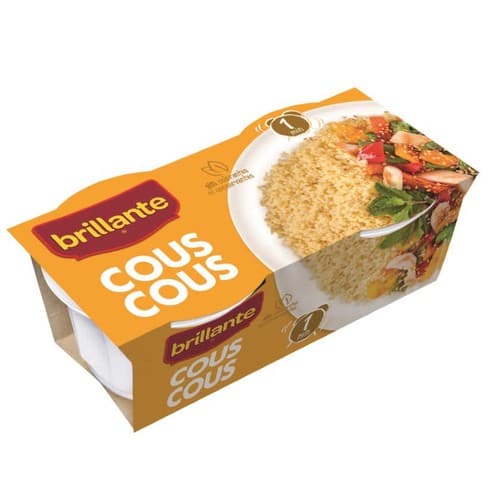
€1.49Brillante Couscous
BRILLANTE · kg · Bonpreu
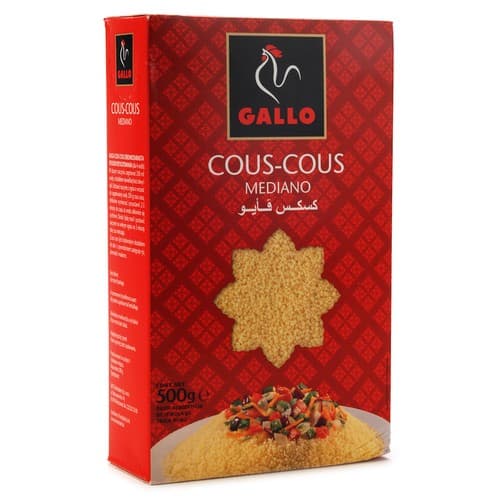 €1.99
€1.99Gallo Medium Couscous
GALLO · kg · Bonpreu
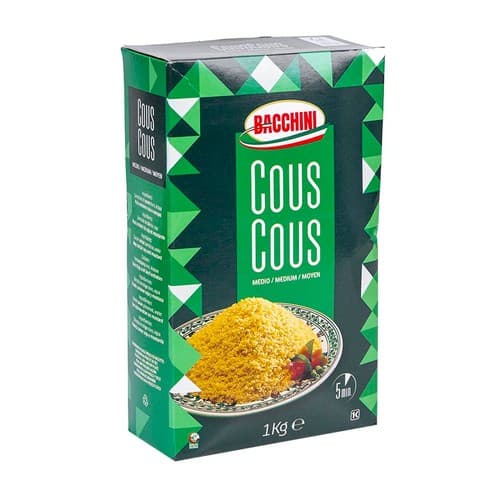 €1.99
€1.99Precooked Couscous
BACCHINI · kg · Bonpreu
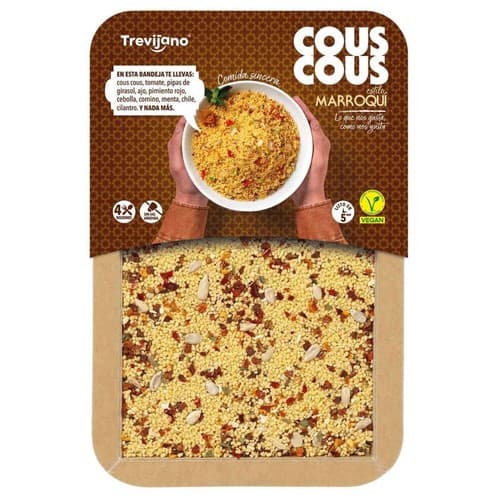 €3.55
€3.55Trevijano Moroccan Couscous
TREVIJANO · kg · Bonpreu
Good to know
- Origin
- North Africa — Maghreb region (Morocco, Algeria, Tunisia, Libya); whole-wheat versions are a modern, nutrition-driven Western adaptation of traditional semolina couscous.
- Made from
- Whole durum wheat, including the bran and germ, ground to a coarse meal, moistened, and rolled into tiny pellets.
- Classification
- Technically a pasta (wheat flour plus water), not a true grain, though it is used culinarily as a grain.
- Liquid ratio
- About 1:1 to 1:1.25 couscous-to-liquid by volume; whole-wheat typically wants a touch more liquid or a longer rest than refined.
- Hydration time
- 5–10 minutes covered off-heat for standard fine pellets; 10–15 minutes for coarser whole-wheat grades.
- Yield
- 1 cup dry yields roughly 2 to 2.5 cups cooked.
- Nutrition vs. refined
- Roughly 2–3 times the fiber, more magnesium and B vitamins, and a lower glycemic impact; similar calories per cooked cup (~170–180).
- Gluten
- Contains gluten — not suitable for celiac or gluten-free diets.
Substitutes
- Regular (semolina) couscous — Direct 1:1 swap; milder flavor, lower fiber, slightly faster hydration — a useful downgrade when you want a more neutral canvas.
- Fine-grind bulgur (#1) — Similar tiny grain with more chew; needs longer soaking or simmering (about 10–12 minutes) and brings a deeper nuttiness.
- Quinoa — Naturally gluten-free; cooked at a 1:2 ratio, then fluffed; more protein and a more pronounced earthy taste, but holds up beautifully in salads.
- Millet — Similar quick cook and small grain size; toast first for nuttiness and use roughly a 1:2.5 ratio with liquid.
- Acini di pepe — Tiny pasta pearls cooked like pasta and drained; neutral flavor and a pleasant chew for cold salads.
- Orzo — Rice-shaped pasta, larger and chewier than couscous, but works in pilafs and salads at a 1:1 swap by weight.
- Pearl/Israeli couscous — Larger toasted spheres; boil directly in salted water for 8–10 minutes and drain — not a same-texture swap, but a useful cousin in pilafs.
Pairs with
Also called
wholemeal couscous · whole grain couscous