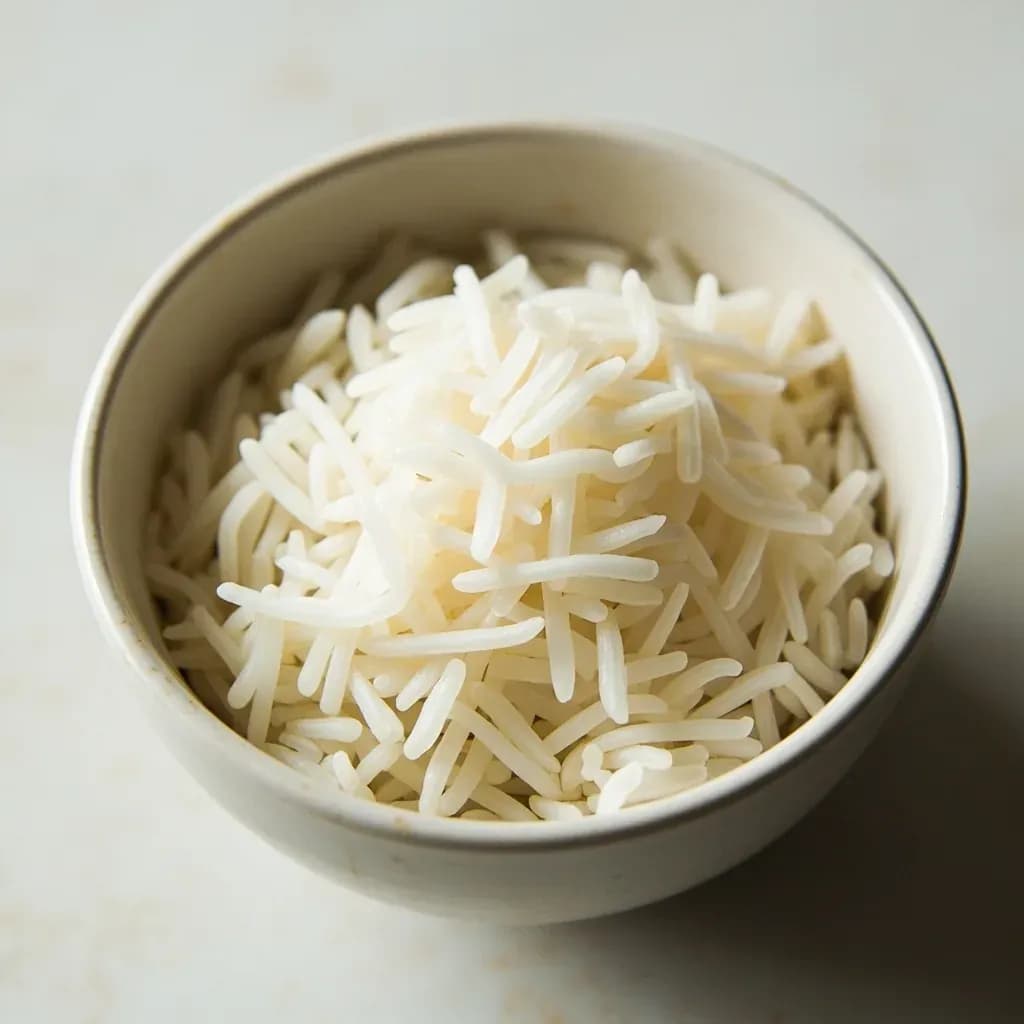
Grains & Rice
Wild Rice
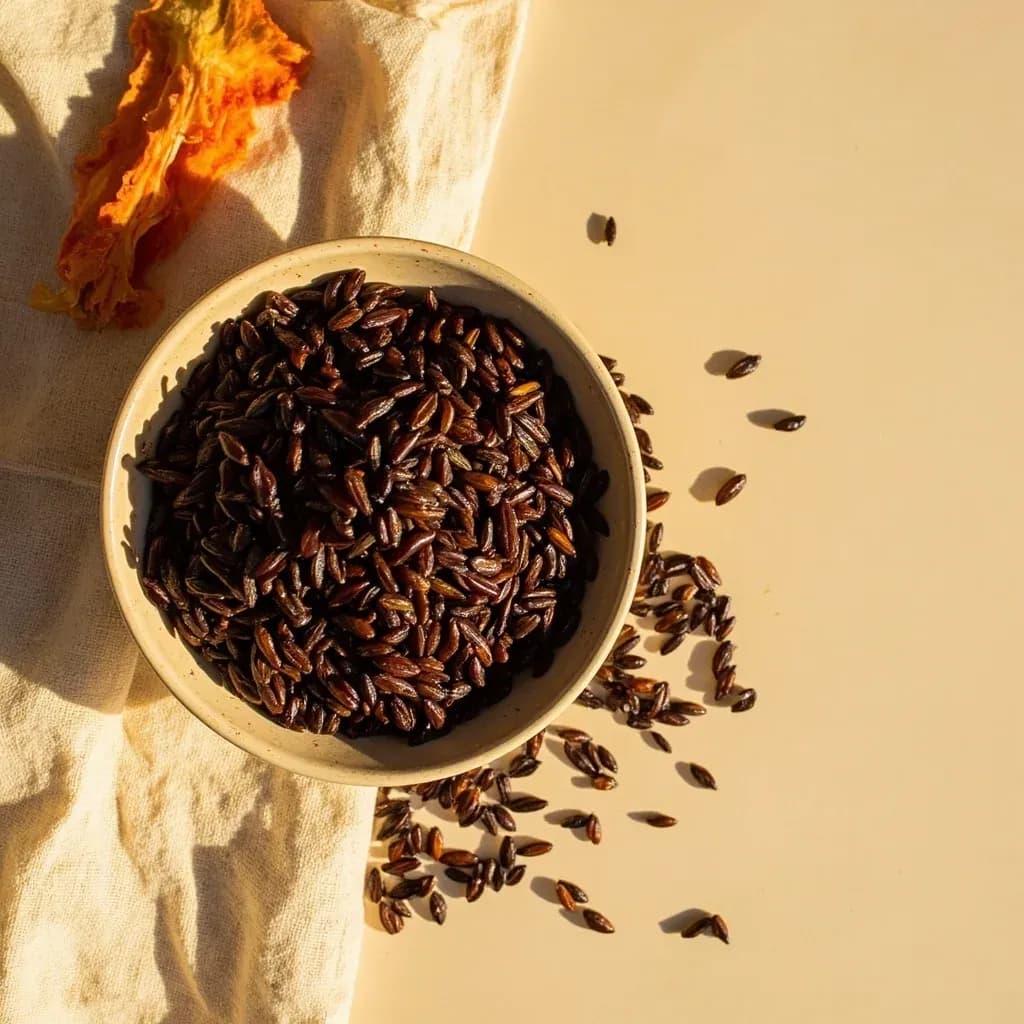
Long dark seed of an aquatic grass, not true rice; chewy with a nutty, smoky flavor and needs ~45 min to split open in pilafs, soups, and grain salads.
Wild rice is the seed of an aquatic North American grass (Zizania), not a true rice at all, and it has been a sacred, central food of the Anishinaabe and Menominee peoples of the Great Lakes region for centuries. Known as manoomin, it was traditionally harvested by canoe from natural lakes and finished by roasting the green seed over a fire — the same parching step that gives the traditional grain its deep, smoky character. Most of what is sold today is cultivated in paddies in Minnesota and Saskatchewan and harvested by combine, which produces a milder, more uniform product than the lake-harvested original.
Cooked wild rice behaves unlike any other grain in the pantry: each kernel swells, splits lengthwise, and curls open to reveal a creamy interior inside a dark, chewy outer layer. That split-and-curl is the visual cue of doneness, and the texture stays distinctly toothsome even after long cooking. It has a nutty, earthy, faintly smoky flavor that holds up to rich poultry, smoked meats, dried fruit, and woody herbs — which is why it shows up across the savory register of Midwestern and holiday cooking.
- Measured in
- g
- Storage
- Pantry
Find it in
Suits
Types & varieties
Traditional wild rice gathered by canoe from natural lakes in Minnesota, Wisconsin, and Ontario; intensely nutty, longer, and more variable in color — the most expensive and most flavorful.
Cultivated in paddies but roasted and finished by traditional methods; closer to the lake-harvested product in flavor.
Bulk retail wild rice from Minnesota and Saskatchewan paddies, harvested by combine; milder, more uniform, and the most affordable.
Grown in dry paddies; lighter in flavor and color than northern paddy rice.
Steam-puffed and dried for 15-minute rehydration; convenient but less toothsome than the long-cooking kind.
Asian species cultivated for its swollen stem (jiaobai); the grain itself is rarely sold as rice.
Wild Rice vs. Wild Rice Blends
Watch the label. Most products sold as 'wild rice blend' or 'wild rice pilaf mix' are mostly brown rice (sometimes long-grain rice dyed dark) with only a small percentage of true wild rice stirred in for color and a hint of chew. They are perfectly serviceable for weeknight pilafs, but they will not deliver the deep flavor, the dramatic split-open curls, or the chewy resistance of 100% wild rice. If a recipe was written for true wild rice — especially soups and stuffings where the grain's character carries the dish — buy the real thing and adjust the cooking time and liquid accordingly. A pure 100% wild rice cook-up looks like a bowl of dark, ragged curls; a blend looks like brown rice with a few black specks.
Cultural and Historical Note
Wild rice — manoomin — is more than a pantry ingredient in the Great Lakes region. It is a culturally protected food central to Anishinaabe and Menominee identity, harvested under treaty rights in many tribal lands and protected by state law in Minnesota. The paddy rice that dominates grocery shelves was developed beginning in the 1950s by a small group of Minnesota growers; it draws on traditional finishing methods but produces a much milder product. Buying from tribal or manoomin-focused producers, when possible, supports the traditional harvest and its stewards.
Common uses
Tips & pitfalls
- Rinse thoroughly under cool water before cooking — wild rice is dusty and sometimes sandy, especially in lake-harvested lots.
- Toast the dry grains in butter or oil for 1–2 minutes before adding liquid for a deeper, almost popcorn-like flavor.
- Cook in broth, not water, and salt only at the end of cooking — salt early toughens the outer bran and slows hydration.
- Simmer uncovered so steam escapes; a covered pot tends to leave gummy tops and undercooked centers.
- Test by biting, not by the clock — the grain is done when most kernels have split open along their length but still have a definite chew.
- Soak 4–12 hours in cold water to roughly halve the active cooking time and improve digestibility.
- For grain salads, spread cooked rice on a sheet pan to cool; clumps will not absorb dressing evenly.
- Freeze cooked wild rice in 1- or 2-cup portions — it reheats beautifully in soups or pan-fries in a little butter.
Nutrition
Energy
1494 kJ · per 100 g
Where the calories come from
Protein
14.7g
29% DV
Carbs
74.9g
27% DV
Fat
1.1g
1% DV
Fiber
6.2g
22% DV
Sugars
2.5g
of which
Sodium
7mg
0% DV
Source · USDA FoodData Central · Wild rice, raw
View on FDC →In the shops
Matched grocery products
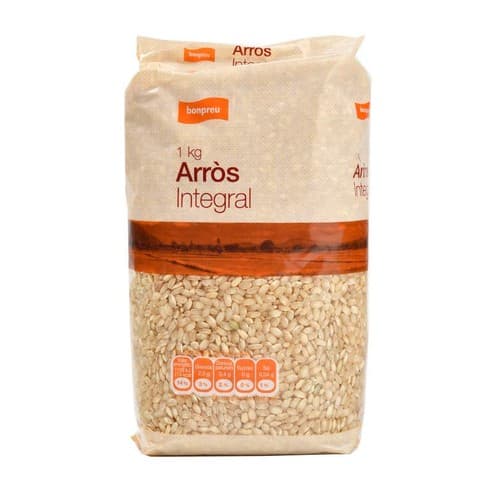 €1.65
€1.65Brown Rice
BONPREU · kg · Bonpreu
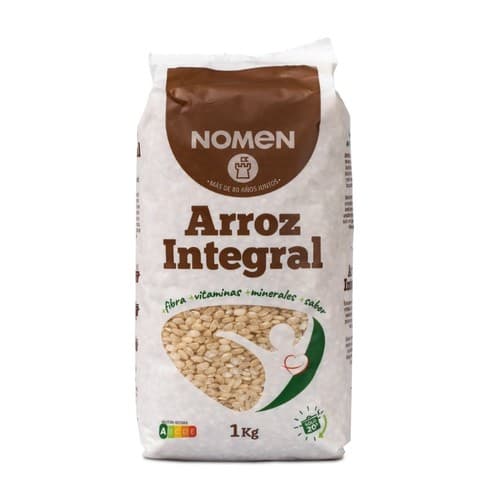 €1.99
€1.99Brown Rice
NOMEN · kg · Bonpreu
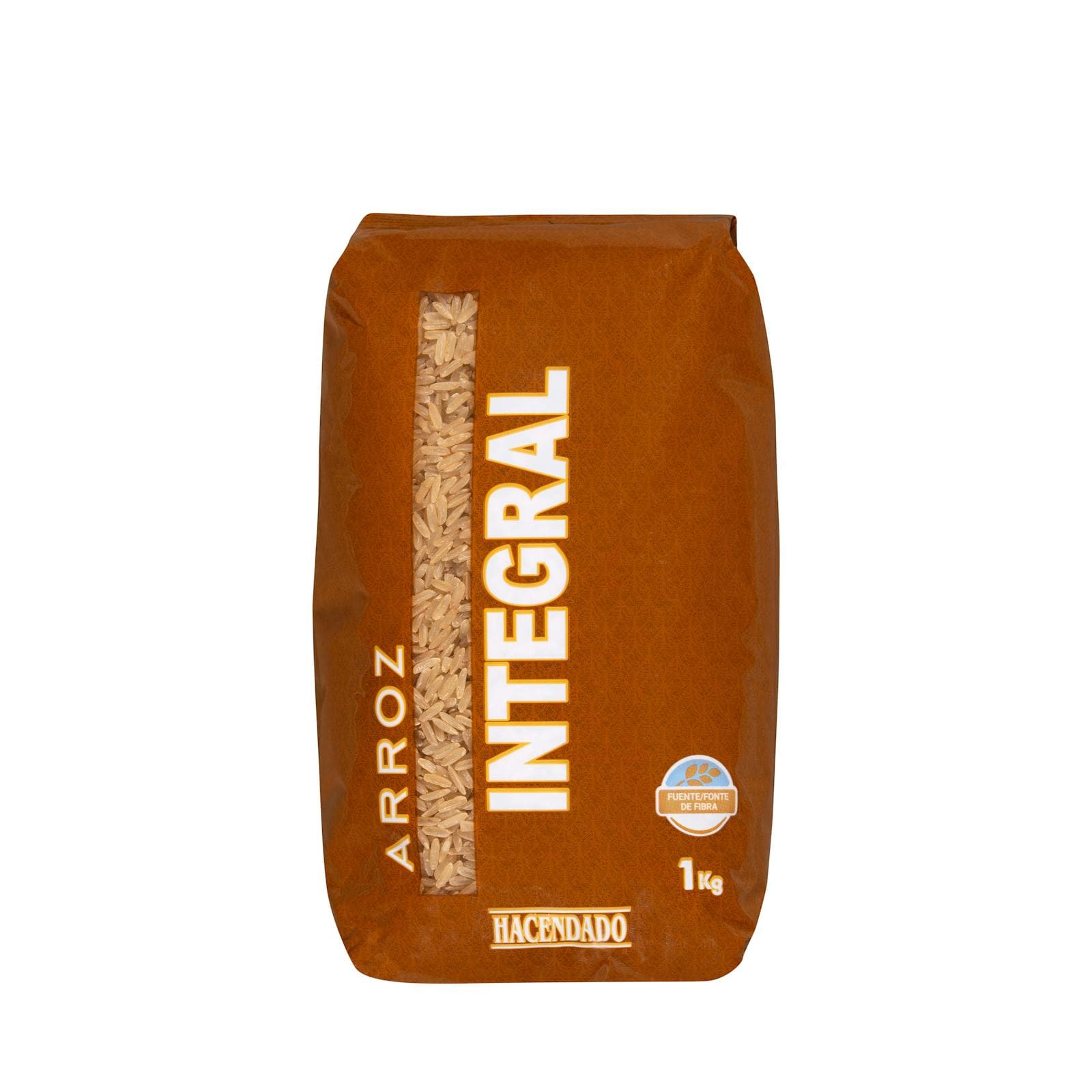 €1.65
€1.65Long Brown Rice
Hacendado · 1 kg · Mercadona
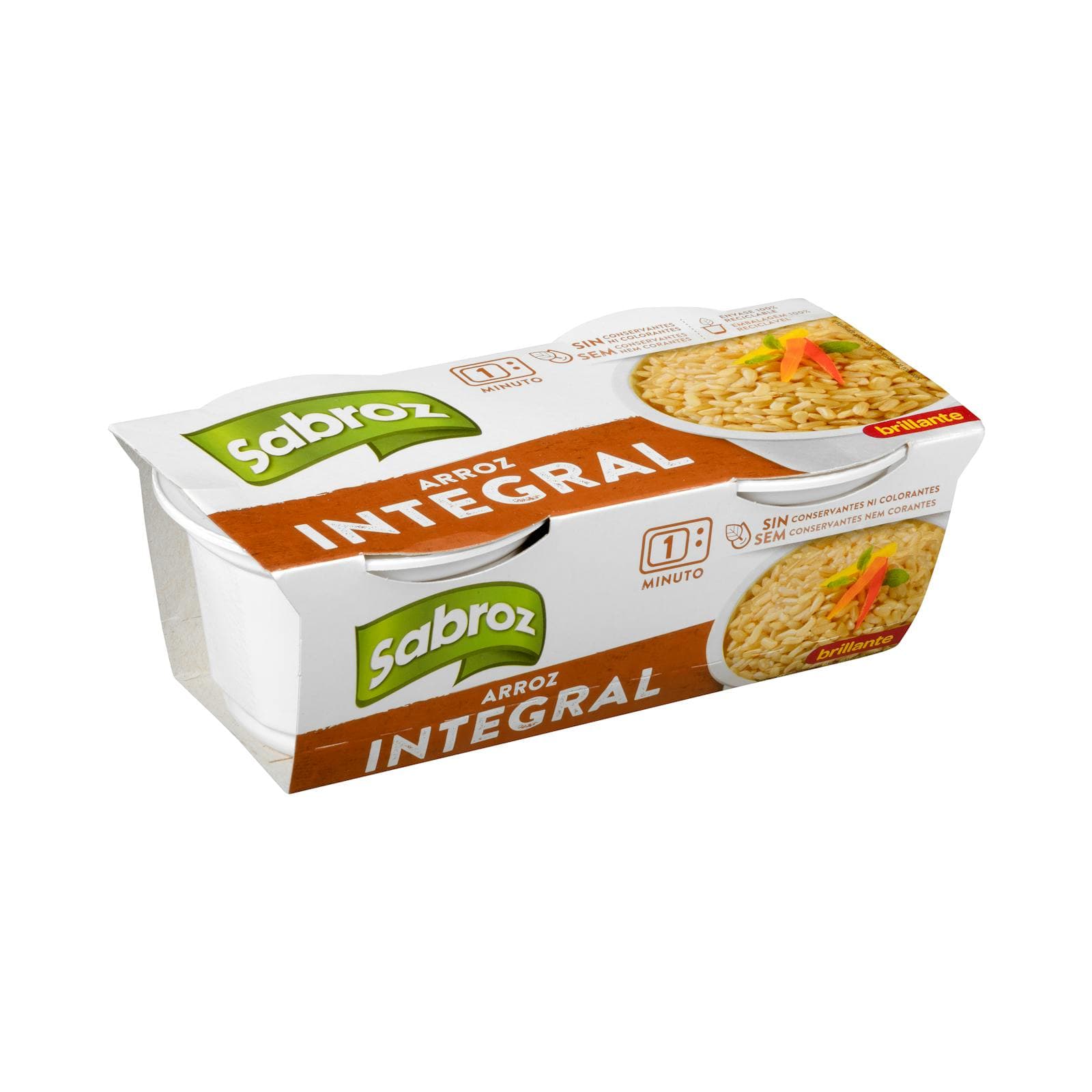 €1.05
€1.05Cooked Brown Rice
Sabroz · 250 g · Mercadona
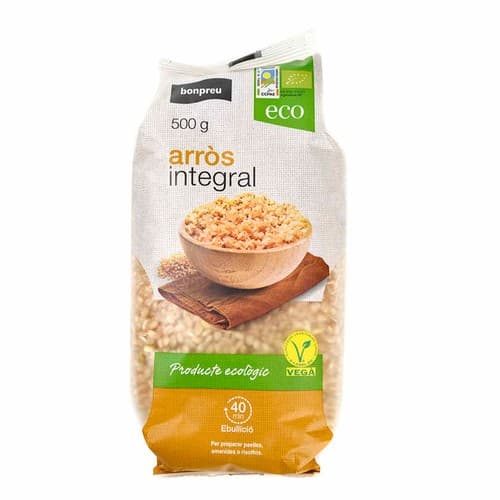 €1.65
€1.65Organic Brown Rice
BONPREU · kg · Bonpreu
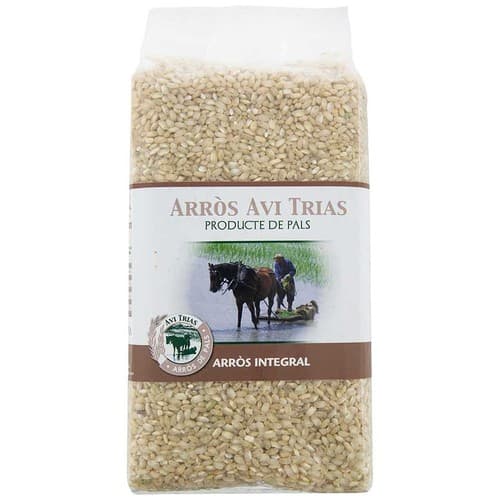 €3.25
€3.25Pals Brown Rice Km0
AVI TRIAS · kg · Bonpreu
Good to know
- Also known as
- Manoomin (Anishinaabemowin/Ojibwe); Canada rice; Indian rice; water oats
- Family
- Poaceae (grass family) — not a true rice (Oryza)
- Major producers
- Minnesota (largest U.S.), Saskatchewan and Ontario; smaller cultivation in California and Hungary
- Dry-to-cooked yield
- 1 cup dry ≈ 3 to 4 cups cooked
- Typical ratio
- 1 cup wild rice to 3–4 cups water or broth
- Cooking time
- 40–60 minutes at a gentle simmer; 20–30 minutes after an overnight soak
- Nutrition highlight
- Higher protein (~7 g per cooked cup) and fiber than most rice; gluten-free; good source of magnesium and phosphorus
- Storage
- Airtight in a cool, dark place 6–12 months dry; refrigerated 3–5 days or frozen up to 6 months cooked
Substitutes
- Brown basmati or brown long-grain rice — Closest everyday substitute; nuttier than white rice but milder and softer than true wild rice — use a 1:1 ratio, expect a softer chew.
- Black rice (Forbidden rice) — Similar dark color and a nutty, slightly sweet flavor; cooks in 30–35 minutes and holds its chew.
- Farro (semi-pearled) — Good textural stand-in with a chewy bite and earthy flavor; cooks in 25–30 minutes and absorbs dressings well.
- Black barley or hull-less barley — Another chewy, dark whole grain that mimics the heartiness; needs 40–50 minutes.
- Mixed grain blend (rye + brown rice + buckwheat) — Approximates the visual mix and layered texture of a wild-rice blend when you want that look without true wild rice.
Pairs with
Also called
Canada rice · water oats · manoomin