Grains & Rice
Rice
The staple cereal grain eaten across the world, boiled, steamed, fried, or made into flour.
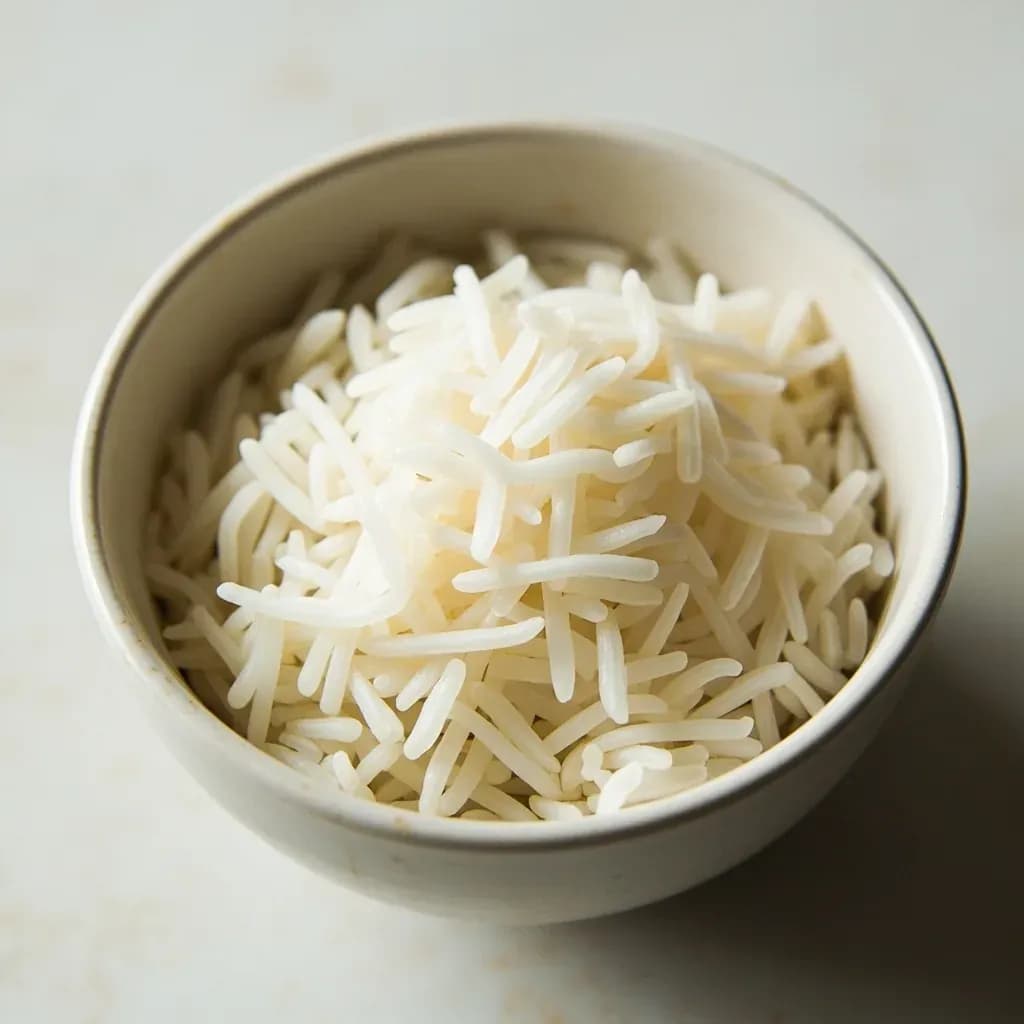
Rice is the seed of the grass Oryza sativa and the dietary backbone for over half the world's population. It is steamed or boiled as a plain side, fried, simmered into pilafs and risottos, and ground into flour for noodles and cakes. Varieties differ widely in starch and aroma, from fluffy long-grain to sticky short-grain and fragrant basmati and jasmine.
Rice is a cereal grain harvested from the Oryza sativa (Asian) and Oryza glaberrima (African) grasses, domesticated in Southeast Asia around 10,000–8,000 BCE and now the world's most important food crop, feeding over half the global population with annual production exceeding 500 million metric tons. The grain's behavior in cooking is governed by its starch composition: amylose, a straight-chain starch that promotes fluffy, separated grains when present in higher proportions, and amylopectin, a branched starch that creates creaminess and stickiness when dominant. Long-grain varieties (Indica) tend toward fluffy texture; short-grain varieties (Japonica) lean sticky. Rice roughly triples in volume when cooked—1 cup raw yields approximately 3 cups cooked—making it one of the most efficient and economical staples in any kitchen. Beyond the familiar steamed preparation, rice adapts to an extraordinary range of culinary applications: it becomes creamy in risotto, silky in porridge, chewy in sushi, crisp in fried rice, and transforms into flour, noodles, and desserts across global cuisines.
The two primary species of cultivated rice split into distinct genetic categories that determine most cooking properties. Indica varieties, grown predominantly in tropical regions like India, Southeast Asia, and the American South, retain their length and produce fluffy, non-sticky cooked grains ideal for pilafs and fried rice. Japonica varieties, grown in temperate zones including Japan, Korea, China, Italy, and California, have shorter, plumper kernels that clump together when cooked, making them essential for sushi, risotto, and rice balls. Beyond these two main categories, specialty varieties like aromatic basmati and jasmine add floral compounds (notably 2-acetyl-1-pyrroline, which gives that characteristic popcorn-like aroma), while whole-grain rices retain the nutrient-rich bran and germ layers that white rice loses during milling.
Rice is gluten-free by nature, making it a critical staple for those avoiding gluten, though this also means it lacks the structural proteins found in wheat flour—a limitation when used alone in baked goods. The grain's neutral flavor and high starch content make it exceptionally receptive to seasonings and fats, while its ability to absorb liquids without becoming mushy (when properly cooked) allows it to carry flavors in everything from simple side dishes to complex layered preparations like biryani. Professional kitchens often dedicate separate stockpots and burners to rice to prevent flavor transfer, and rice cookers are standard equipment for achieving consistent results across service.
- Measured in
- g
- Storage
- Pantry
Types & varieties
Long grain, aged, aromatic (2-acetyl-1-pyrroline); preferred for Indian pilafs, biryanis, and Middle Eastern dishes; grows in India and Pakistan; ratios: 1:1.5 to 1:2 water to rice
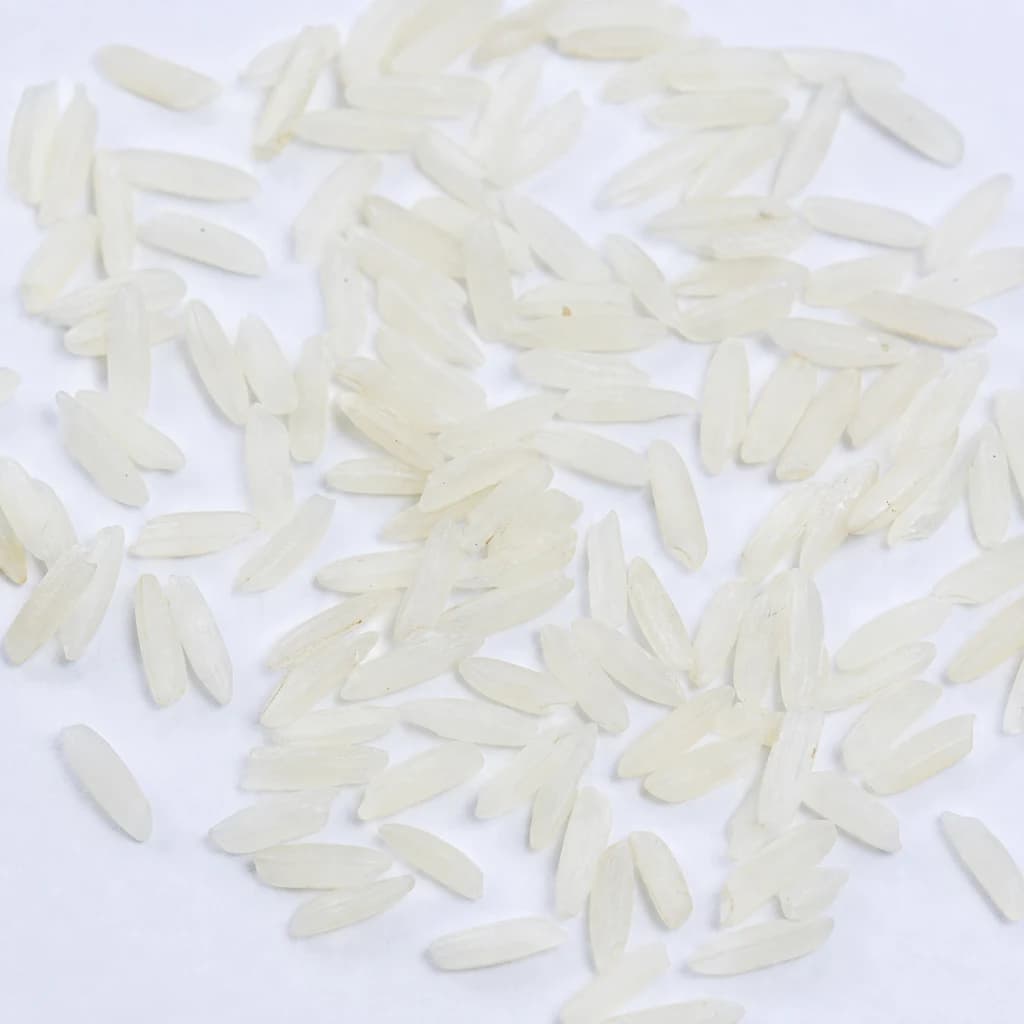
Long grain, fragrant, slightly sticky; Thai variety; becomes more fragrant when rinsed briefly; ideal for Southeast Asian and Chinese dishes
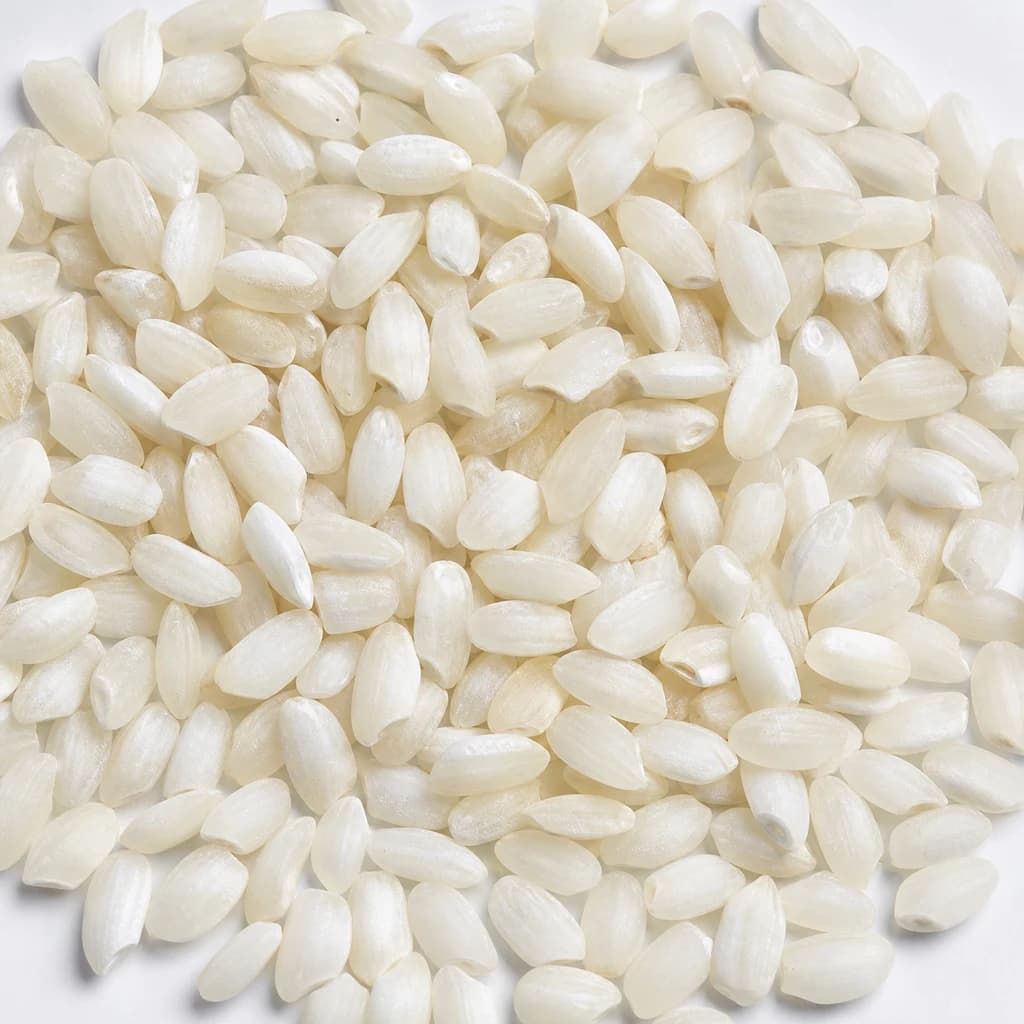
Medium grain, high amylopectin, creamy when cooked; Italian variety from Piedmont; standard for risotto; absorbs broth gradually without becoming mushy
Medium grain, considered superior to Arborio for risotto; higher amylose maintains structure better; Italian 'caviar' of rice; firmer bite when properly cooked
Medium grain, Venetian variety; principal rice for risotto alla Milanese and Venetian cuisine; smaller than Arborio, absorbs liquid quickly
Medium grain, Japanese-style; primary rice grown in California; versatile for sushi, bowls, and everyday cooking; sticky when cooked
Premium short grain, Japanese cultivar; prized for sweetness, stickiness, and aroma; most commonly served as plain steamed rice in Japan
Short grain varieties with high stickiness; typically seasoned with rice vinegar, sugar, and salt after cooking
Short grain, very high amylopectin, opaque raw; used in East Asian desserts (mochi, sticky rice with mango), savory dishes, and wrappers; must be soaked before steaming
Heirloom Chinese variety; bran layer rich in anthocyanins; nutty, slightly sweet; turns deep purple when cooked; used in desserts, porridge, and sushi
Whole grain with red bran; varieties include Bhutanese red rice (slightly nutty, shorter cooking) and Camargue red rice (French); chewy texture, used in salads and pilafs
Brown rice variety with reddish bran; developed in California; nutty, slightly sweet; holds shape well; cooks like brown rice (longer than white)
Zizania aquatica, a semi-aquatic annual grass native to North America; not true rice; chewy, nutty, darkens with cooking; often blended with cultivated rice; harvest season September–October
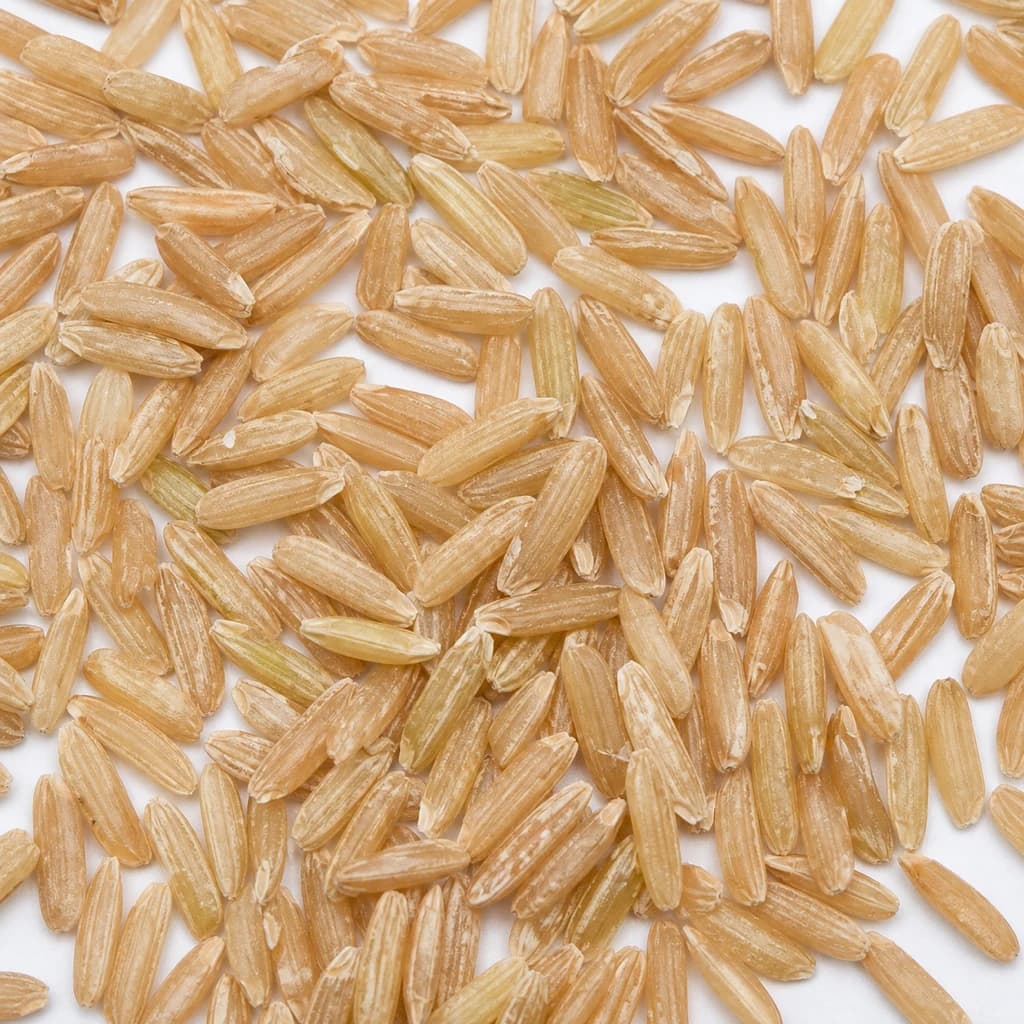
Whole grain with bran and germ intact; nuttier, chewier than white; higher fiber, B vitamins, and magnesium; requires more water and longer cooking time
Pre-steamed under pressure before milling; firmer, less sticky; golden color; higher in B vitamins than regular milled rice; holds shape well for fried rice and casseroles
Whole-grain rice that cooks to deep purple with a nutty, slightly sweet chew; striking under fish or stir-fries and in coconut-milk puddings.
Understanding Rice Starch
The starch composition of rice determines its behavior more than any other factor. Amylose is a straight-chain glucose polymer that gelatinizes slowly and tends to retrograde (re-crystallize) upon cooling, producing firm, fluffy, separated grains. High-amylose rices hold their shape well and are ideal for pilafs, fried rice, and dishes where distinct grains matter. Amylopectin is a highly branched polymer that gelatinizes rapidly and stays soft, creating creaminess and stickiness. Low-amylose rices clump together and are essential for sushi, rice balls, and creamy preparations like risotto. Glutinous rice contains almost exclusively amylopectin, which is why it becomes almost glue-like when cooked. The balance between these two starches explains why you cannot substitute a long-grain rice for Arborio in risotto, or use sticky rice for fried rice—the starch chemistry simply will not cooperate. Note that cooling rice increases resistant starch content—day-old rice actually fries better than fresh precisely because of this structural change.
- High amylose = fluffy, separated grains (basmati, jasmine, converted)
- Low amylose = sticky, clumping grains (Arborio, sushi rice, glutinous)
- Cooling rice increases resistant starch—day-old rice has more and fries better
Arsenic in Rice
Rice accumulates more inorganic arsenic than other cereals because it grows in flooded paddy fields where arsenic from irrigation water and soil binds to iron oxides in the root zone. Brown rice contains higher concentrations than white because arsenic concentrates in the bran layer that is removed during milling. For most people, the levels in conventionally grown rice pose negligible risk when consumed as part of a varied diet. However, for those eating rice frequently—particularly children and pregnant women—strategies to reduce arsenic exposure are worthwhile. The key is diversification: rotate rice with quinoa, millet, and other grains, and employ cooking methods that leach arsenic when rice is a dietary staple.
- Rinse rice thoroughly before cooking to remove surface arsenic
- Cook rice in excess water (1:6 ratio) and drain—reduces arsenic by 40-60% but also leaches some nutrients
- Brown and red rice contain more arsenic than white; basmati and jasmine typically lower than other varieties
- Diversify grain sources: rotate rice with quinoa, millet, and other grains
Common uses
Tips & pitfalls
- Measure rice precisely by volume, not weight, for consistent results
- Rinse white rice until water runs nearly clear to remove excess surface starch (1–3 washes); for sticky dishes, rinse minimally
- Do not rinse Arborio or Carnaroli when making risotto—preserve surface starch for creaminess
- Soak glutinous rice 2–4 hours minimum; black and red rice 30–60 minutes to reduce cooking time
- Use the absorption ratio method for plain steamed rice: 1 cup long grain to 1.5–2 cups water; short grain 1:1.25 to 1:1.5; brown rice 1:2.5
- Bring rice and water to boil together in heavy-bottomed pot, then reduce to lowest heat; cook covered 15–20 min for white, 40–50 min for brown
- Let rice rest covered off-heat 5–10 minutes after cooking; fluff gently with fork to release steam and separate grains
- Never lift the lid during cooking—this releases steam and drops temperature below simmering
- For fried rice, spread cooked rice on sheet pan to cool and dry; refrigerate 1–2 hours; cold, dry rice fries better than fresh
- Season cooking water with 1 tsp salt per cup of dry rice
- Substitute chicken, vegetable, or dashi stock for water when cooking rice to add depth
- To prevent burned bottom crust, use a heavy pot (cast iron, stainless steel, or thick aluminum) and ensure tight-fitting lid
- For fluffier rice, toast dry grains in 1 tsp oil before adding water—this prevents sticking and adds subtle richness
- Add a splash of rice vinegar or lime juice to steaming water for slightly tangier rice
- Microwave rice in covered bowl with damp paper towel: 2 minutes per cup for reheating
Nutrition
Energy
1536 kJ · per 100 g
Where the calories come from
Protein
7.5g
15% DV
Carbs
76.3g
28% DV
Fat
3.2g
4% DV
Fiber
3.6g
13% DV
Sugars
0.7g
of which
Sodium
5mg
0% DV
Source · USDA FoodData Central · Rice, brown, long-grain, raw (Includes foods for USDA's Food Distribution Program)
View on FDC →In the shops
Matched grocery products
No matched grocery products for Rice yet.
Good to know
- Scientific name
- Oryza sativa (Asian rice); Oryza glaberrima (African rice)
- Origin
- Southeast Asia, domesticated in China around 10,000–8,000 BCE
- Leading producers
- China, India, Indonesia, Bangladesh, Vietnam, Thailand, Myanmar, Philippines, Brazil, Pakistan
- Primary types
- Indica (long grain, fluffy); Japonica (short/medium grain, sticky); Javonica (intermediate, humid climates)
- Average shelf life
- White rice: 1–2 years in cool, dry pantry; brown rice: 3–6 months refrigerated; wild rice: 1–2 years
- Cooking yield
- Roughly triples in volume when cooked (1 cup raw yields ~3 cups cooked)
- Calories (cooked, per 100g)
- 130 kcal (white); 111 kcal (brown); 101 kcal (wild)
- Key starch component
- Amylose determines stickiness: high amylose = fluffy; low = sticky; amylopectin provides creaminess
Substitutes
- Quinoa — Comparable cooking method; fluffier texture, slight bitterness; similar neutral flavor; use 1:2 ratio with liquid, cook 15 minutes
- Couscous — Much smaller granules; cooks in 5 minutes; less starchy; not suitable for sushi or dishes requiring sticky texture
- Pearl barley — Similar neutral flavor, chewy texture; requires 35–40 minutes cooking; use 1:2.5 liquid ratio
- Farro (emmer) — Nutty, chewy ancient wheat; cooks in 25–35 minutes; use 1:2.5 liquid ratio; not gluten-free
- Millet — Small, round, neutral-flavored; good for porridge; cooks in 20 minutes; use 1:3 liquid ratio
- Cauliflower rice — Low-carb raw substitute; sauté 3–5 minutes; does not behave like cooked rice in fried rice applications
- Orzo (pasta) — Rice-shaped pasta; cooks in 8–10 minutes; acceptable in soups and salads; not a true substitute for main dishes
- Polenta/cornmeal — Can approximate creamy rice porridge dishes; not suitable for sushi, fried rice, or pilafs
Pairs with
Also called
Oriz · White Rice
Appears in these dishes
Related

White Rice
Fluffy long-grain rice — the neutral base for almost any meal

White Bread
Soft sandwich loaf for toast, sandwiches, and crumbs
Brown Rice
Nutty, whole-grain rice with chew and extra fiber

Basmati Rice
Fragrant, long-grain rice that cooks up light and separate
Jasmine Rice
Soft, floral-scented rice that's the pillar of Thai meals
Arborio Rice
Plump, starchy rice that makes risotto creamy
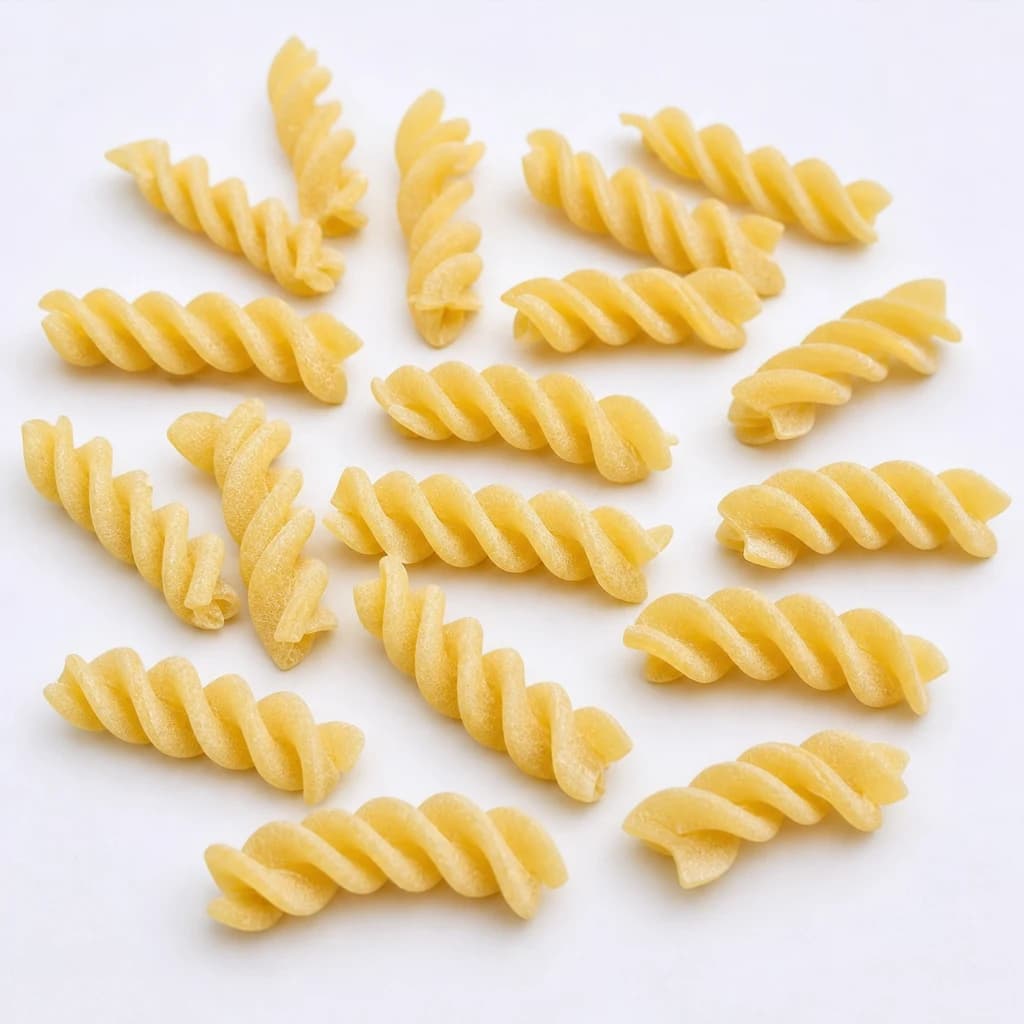
Fusilli
Spiraled pasta that twirls up sauce and dresses cold salads
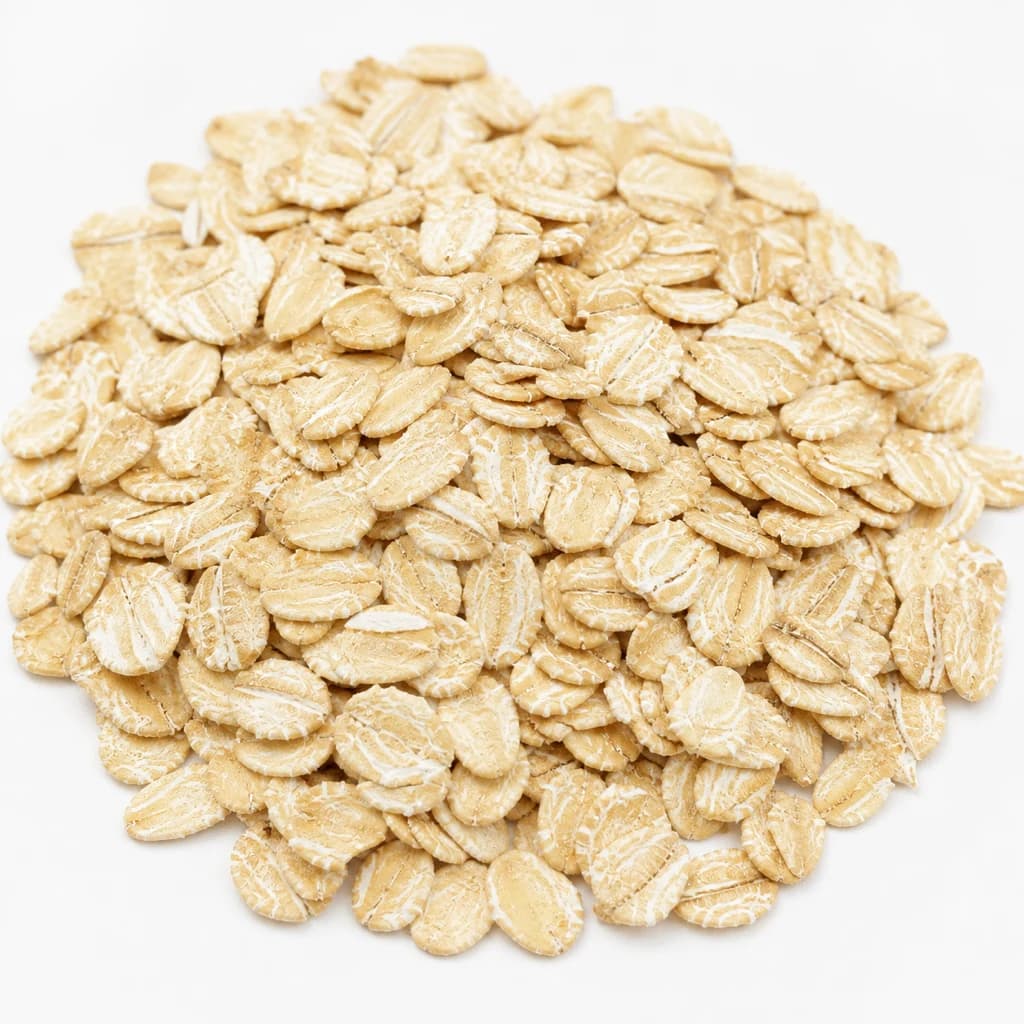
Rolled Oats
Hearty flakes for porridge, granola, and chewy cookies