Grains & Rice
Carnaroli Rice
The risotto rice prized over arborio for releasing creamy starch while keeping a firmer al dente core; more forgiving and less prone to overcooking into mush.
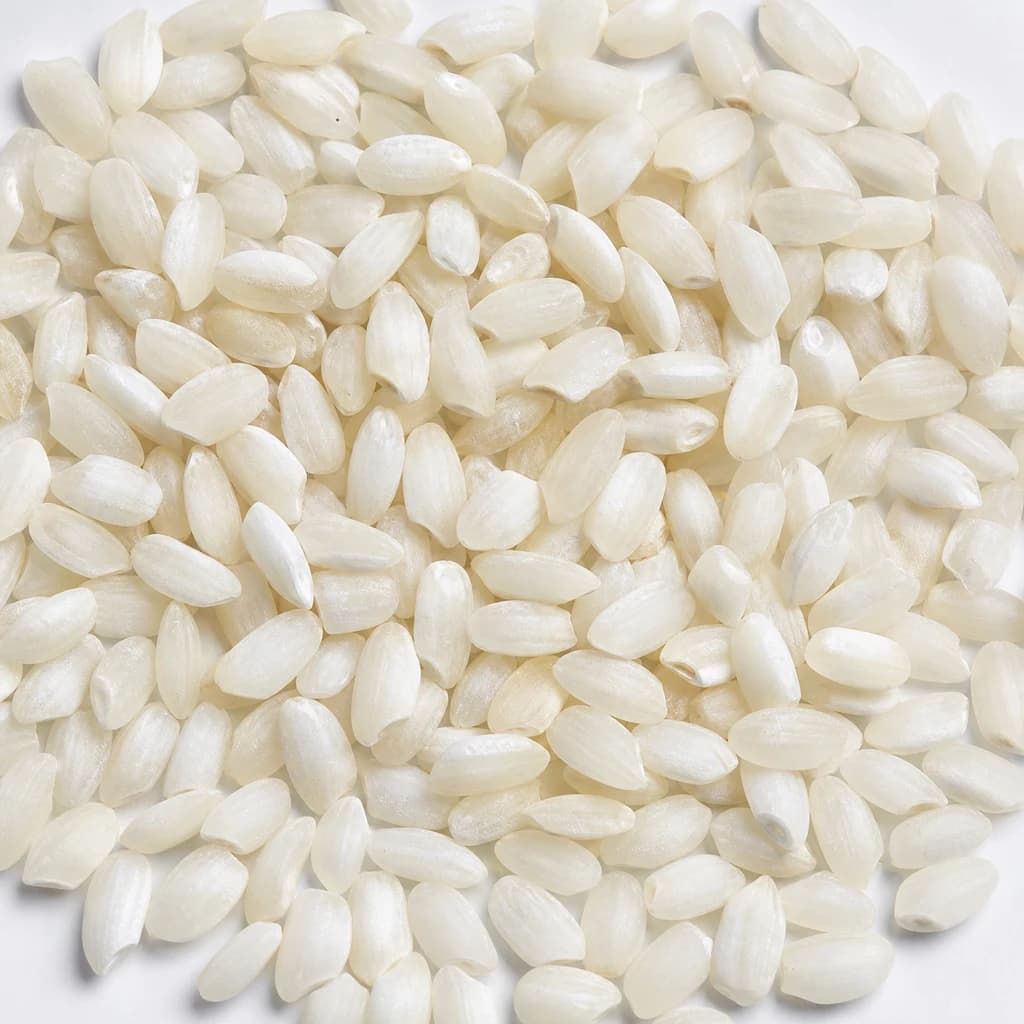
Carnaroli is the medium-grain japonica rice that Italian chefs and serious home cooks reach for when a risotto really matters. Selected in the Po Valley in 1945 by the rice grower Ettore De Vecchi and named for the Carnaroli family who farmed the land where it was developed, it is now grown almost exclusively in Piedmont and Lombardy and sits at the top of the 'superfino' tier — plumper than Arborio, with a distinctive opaque white core called the perla that serves as the visual signature of properly cooked grains. The decisive structural difference is amylose content: roughly 24–28% versus Arborio's 18–20%, which means the surface starch melts into the cooking liquid to create the signature creaminess, while the dense interior resists breaking down during the long, stirred cooking that risotto demands.
In practice, this dual nature is what makes Carnaroli forgiving and exceptional. The grain tolerates a few extra minutes of stirring without collapsing into porridge the way Arborio can if you look away. It also holds its shape through the secondary cooking that dishes like arancini, supplì, and risotto al salto require — pan-frying or deep-frying leftover risotto without the rice turning to mush. The payoff is a risotto that is creamy and flowing on the plate (all'onda) but where each spoonful still has a perceptible bite at the center.
The cost premium is real — Carnaroli typically runs well above Arborio — and reflects limited acreage, lower yields per hectare, and the care that goes into harvesting and milling. For a weeknight tomato-and-basil risotto, Arborio is a perfectly reasonable choice. For a Milanese, a porcini, or any risotto you plan to fry or chill and reshape, Carnaroli is worth the difference.
- Measured in
- g
- Storage
- Airtight
Find it in
Suits
Types & varieties
The standard commercial cultivar; what most Italian and specialty markets carry
Wholegrain (brown) version with the bran layer intact — nuttier, chewier, and needs longer cooking
Organically grown; otherwise identical in behavior to the conventional grain
A protected designation covering Carnaroli (and other permitted varieties) grown in the Baraggia hills between Biella and Vercelli — a terroir mark rather than a separate cultivar
Reading the Perla: How to Know It's Done
The perla — that small opaque white dot at the center of each grain — is the single most reliable visual cue for al dente doneness in Carnaroli. When you bite a grain, you should feel slight resistance at the very center, almost a translucent firmness surrounded by softness. If the perla has fully disappeared, the rice is heading toward mush. If the entire grain is still chalky white, it needs more stock and another minute or two of stirring.
- Bite a grain at 14 minutes — there should still be a visible white core
- By 18 minutes the perla will have shrunk to a pinpoint; that is the moment to pull off the heat
- Carry-over cooking during the 1–2 minute rest finishes the job; the risotto should be off the burner by the time all'onda flow is achieved
Common uses
Tips & pitfalls
- Toast (tostatura) the dry grains in butter or oil for 1–2 minutes until the edges turn translucent — this seals the surface and dramatically improves grain definition
- Always add hot stock; cold liquid shocks the grains and produces a gluey, uneven risotto
- Add stock in small ladlefuls and stir frequently, but do not drown the rice — it should never sit submerged for more than a minute at a time
- Treat Carnaroli with the same attention you'd give Arborio, not less: its margin of forgiveness is wider, but overcooking still destroys the perla
- Finish with mantecatura off the heat: beat in cold cubed butter and finely grated Parmigiano-Reggiano for 1–2 minutes to emulsify into a glossy sauce
- Rest the risotto 1–2 minutes before plating — the cream sets, the grains finish absorbing, and the all'onda flow stabilizes
- Salt the stock moderately; Parmigiano adds significant salinity at the end, and over-salting is a common error that no finishing butter can mask
- Do not rinse Carnaroli before cooking — the loose surface starch is precisely what creates the creamy sauce
- Use a wide, heavy-bottomed pan so liquid evaporates at the right pace; a rondeau or wide skillet works better than a tall saucepan
Nutrition
Energy
1536 kJ · per 100 g
Where the calories come from
Protein
7.5g
15% DV
Carbs
76.3g
28% DV
Fat
3.2g
4% DV
Fiber
3.6g
13% DV
Sugars
0.7g
of which
Sodium
5mg
0% DV
Source · USDA FoodData Central · approx. Rice, brown, long-grain, raw (Includes foods for USDA's Food Distribution Program)
View on FDC →In the shops
Matched grocery products
No matched grocery products for Carnaroli Rice yet.
Good to know
- Origin
- Northern Italy — primarily Piedmont (Novara, Vercelli) and Lombardy (Lomellina) in the Po Valley
- Grain type
- Medium-grain japonica, classified 'superfino'; plumper than Arborio with a denser grain structure
- Amylose content
- Roughly 24–28%, notably higher than Arborio's 18–20% — the structural reason it holds its shape
- Appearance
- Pearl-white with translucent edges and a distinctive opaque white center called the perla
- Developed
- 1945, selected by Ettore De Vecchi and named for the Carnaroli farming family
- Risotto cooking time
- About 16–20 minutes from the first addition of stock
- Liquid ratio
- Roughly 1 part rice to 3.5–4 parts hot stock, depending on desired looseness
- Storage
- Airtight container, cool and dark; stable for 12+ months without losing aroma
Substitutes
- Arborio — Most widely available substitute; releases starch faster and more aggressively, far more prone to mushiness — reduce stock slightly and shorten cooking time
- Vialone Nano — Smaller, rounder grain with a similar amylose profile; traditional in Veneto for radicchio and asparagus risottos; cooks a few minutes faster
- Roma — Italian medium-grain; workable but creamier and less defined than Carnaroli — a serviceable backup, not an equal
- Maratelli — Historic Italian variety; absorbent and creamy but more fragile in texture, more prone to breaking down
- Bomba (often sold as Calasparra) — Spanish short-grain rice traditionally used in paella; only a last resort — different starch profile, produces a less silky result
- Sushi rice (Calrose) — Can substitute in a pinch but lacks the surface starch of true risotto rices; result will be stickier and glossier
Pairs with
Also called
carnaroli · risotto rice · arroz carnaroli · arros carnaroli