Heat & Safety
Post Oak Smoking Wood
Dense, clean-burning oak split logs prized in Texas barbecue for smoking brisket and beef.
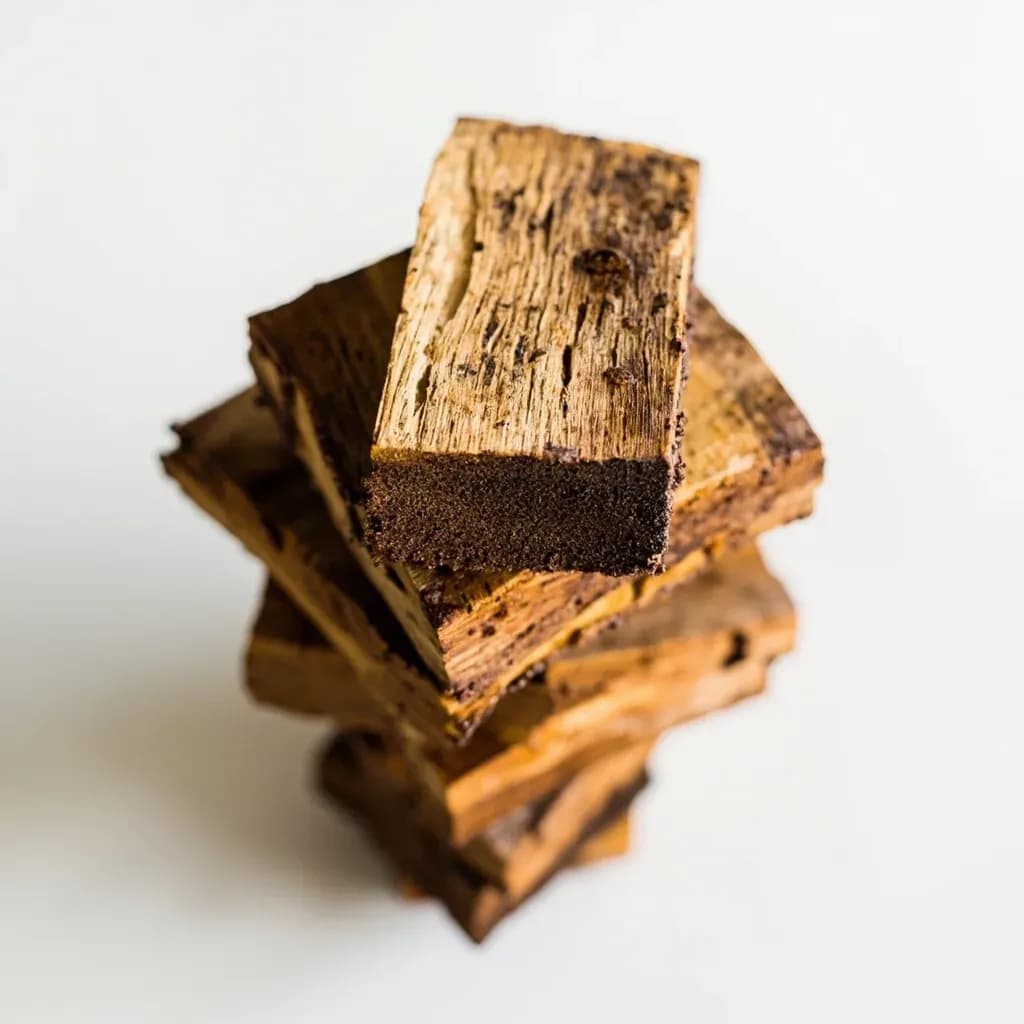
Post oak smoking wood is a hardwood split into logs and burned to smoke meat low and slow. It is the signature fuel of Central Texas barbecue, valued because it burns hot and clean with a mild, balanced smoke that suits big beef cuts like brisket. Pitmasters season the logs until dry, then feed a steady fire to maintain even temperature and thin blue smoke.
Post oak (Quercus stellata) is a dense, ring-porous hardwood from the white oak group that became the default cooking fuel of Central Texas barbecue by historical accident and by flavor. The post oak savanna running through the Texas Hill Country, Oklahoma, Arkansas, and Louisiana once made the wood the cheapest firewood on the ground for the German and Czech butchers who built the region's first pit rooms, and the species they chose stuck. Post oak burns hot, slow, and even, and its smoke is mild, slightly sweet, and nutty, with none of the resinous bite of hickory or the sharpness of mesquite. That neutrality is the point: in a long 10-to-14-hour brisket cook, post oak lays down a thin veil of flavor that lets the beef, the salt, and the rendered fat stay in front. Pitmasters who blend stronger woods usually keep oak at 70 to 80 percent of the fuel volume and use it as a canvas rather than a seasoning.
Alternatives
Types & varieties
Regional designation for Q. stellata harvested from the Texas Post Oak Savannah; the gold standard for Central Texas brisket.
Southern evergreen oak often sold as a post oak substitute in South Texas; similar mild flavor and long burn.
Closely related white-oak-group species used interchangeably with post oak in much of the South.
White-oak-group species used in the upper Midwest and Plains; burns and flavors almost identically to post oak.
Whole split firewood sized to fit stick-burners, offset fireboxes, and large cabinet smokers.
Smaller pieces (roughly fist-sized) for gas, charcoal, and pellet-assist setups.
Used for shorter cooks or to add a finishing layer of oak character on kettle grills and gas smokers.
Food-grade compressed sawdust for pellet grills; burns cleanly but lacks the visual smoke of real splits.
Why post oak dominates Central Texas
Three things aligned to make post oak the unofficial wood of Texas barbecue. First, geography: the post oak savanna of central Texas, running roughly from Austin north to Fort Worth and west into the Hill Country, was historically a working ranch and farm landscape dotted with post oak that settlers cleared for pasture and fence posts. A by-product became available fuel. Second, behavior on the fire: as a ring-porous hardwood with low sap content, post oak burns hot and slow, producing the thin, steady smoke that the region's dry-rubbed brisket style depends on. Third, flavor: the smoke is mild enough to layer over a brisket through a 10–14-hour cook without ever veering into resinous or bitter territory. Pit rooms that built their reputations on this combination — Kreuz Market, Louie Mueller Barbecue, Franklin Barbecue, Snow's BBQ, City Meat Market — all run post oak, and the species has become shorthand for the style itself.
Reading the smoke
The single best diagnostic of a well-run post oak fire is the smoke itself, not the temperature gauge. Learn to read it and the rest of the cook gets easier.
- Thin blue smoke that hangs and then dissolves within a few feet of the firebox is correct — flavor is depositing on the meat, not the bark.
- Thick white smoke that lingers in the cook chamber means incomplete combustion: the wood is smoldering rather than burning, usually because the intake is choked or the splits are too wet.
- Black, sooty smoke with visible ash means the fire is starved of oxygen or the wood is contaminated; open the intake, add a drier split, or both.
- A clean, faintly sweet smell at the exhaust is a good sign. An acrid, eye-stinging smell means creosote is forming on the meat, and that bark will taste bitter.
Seasoning and storage
Post oak must be seasoned before it burns clean. Green wood is the most common cause of bad barbecue smoke.
- Buy splits labeled 'cooking wood' or 'BBQ wood'; generic firewood may be mixed species and is sometimes red oak, which behaves differently.
- Aim for splits that ring when struck together rather than thud; kiln-dried splits at 8–12% moisture are usable immediately, air-dried splits at 15–20% need 6–12 months of cover.
- Stack splits bark-side up, off the ground on pallets or 2x4s, in a covered shed with cross-ventilation so wind dries the ends.
- Bring splits into the cook area an hour or two before lighting; very cold wood can suppress ignition in a stick-burner.
Common uses
Tips & pitfalls
- Burn only properly seasoned wood (15–20% moisture or less); green wood produces bitter, sooty smoke that coats meat in creosote.
- Aim for thin blue smoke that billows lazily and dissipates within a few seconds — thick white smoke means incomplete combustion, black smoke means the fire is starved of air.
- Do not soak splits in water; it does not improve smoke quality and only drops pit temperature. Water pans belong in the cook chamber, not on the wood.
- Avoid red oak (Quercus rubra). It belongs to the red oak group, is more porous, and can taste harsh on long cooks.
- Never burn construction lumber, pallets, or anything that may be treated, glued, painted, or stained — only use wood sold specifically as cooking fuel.
- Light splits in a chimney starter or with a propane torch — never lighter fluid or other petroleum accelerants, which leave residues on the meat.
- Store splits stacked off the ground, bark side up, in a covered shed with good cross-ventilation; bring them inside an hour or two before lighting.
- In wood blends, keep stronger woods (mesquite, hickory) to 20–30% of the fuel volume — oak is the canvas, not the seasoning.
Good to know
- Scientific name
- Quercus stellata
- Wood family
- White oak group (Fagaceae)
- Smoke flavor
- Mild, clean, slightly sweet and nutty; rarely overpowers meat
- Smoke color when burning well
- Thin blue to clean white that dissipates within seconds
- Ideal moisture content
- 15–20% for air-seasoned splits; 8–12% for kiln-dried product
- Seasoning time
- 6–12 months air-dried under cover, depending on split size and climate
- Typical smoking temperature
- 225–275 °F (107–135 °C)
- Common forms sold
- Split logs (4–8 in.), chunks, chips, sawdust, and food-grade pellets
Also called
post oak logs · oak smoking wood · Texas post oak
Related

Paper Towels
Disposable sheets for spills, drying, and patting dry

Kitchen Towels
Reusable cloths for drying, gripping, and wiping

Oven Mitts
Heatproof gloves to handle hot pans and trays safely

Disposable Gloves
Single-use gloves for safe, mess-free handling

Cleaning Cloths
Reusable cloths for wiping counters and spills

Tortilla Warmer
Insulated holder that keeps tortillas warm and soft

Trivet
Heatproof stand that shields surfaces from hot pots

Ice Bath Setup
Bowl of ice water that halts cooking and sets color