Heat & Safety
Smoking Wood Chips
Small flavor-wood chips that smolder to add smoke flavor on a grill or smoker.
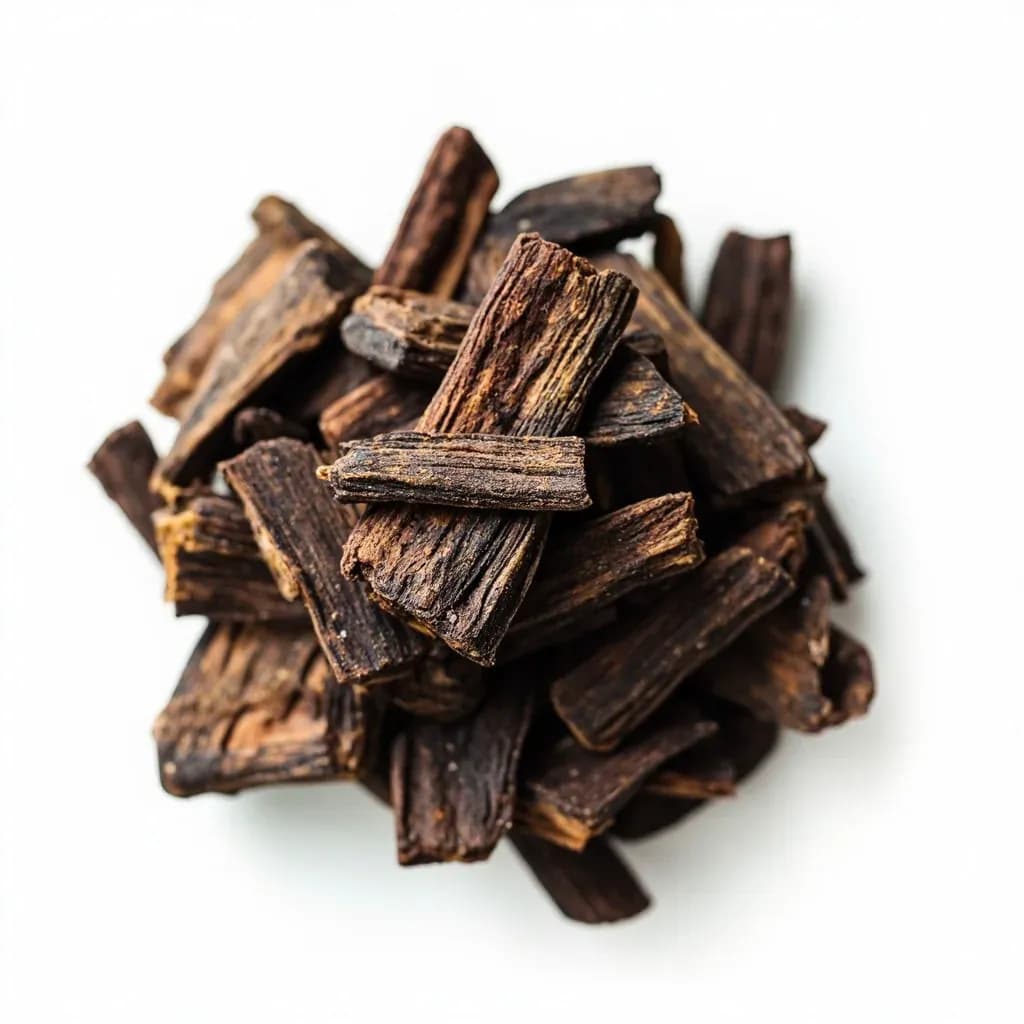
Smoking wood chips are coarse pieces of flavor wood like mesquite, cherry, or oak used to season grilled and barbecued food. Cooks soak or dry-load them in a smoker box or foil packet over the heat, where they smolder and release aromatic smoke. Chips ignite faster than chunks, giving quicker bursts of smoke for shorter cooks.
Smoking wood chips are small pieces of cured hardwood, typically 1–4 cm across, that smolder rather than burn with flame, releasing the volatile compounds responsible for smoke flavor. They are a flavoring fuel, not a primary heat source; a hot fire is what actually cooks the food. Most of the aromatic payoff comes from phenolic compounds and carbonyls released from the lignin as wood smolders, and that flavor develops cleanly only when combustion is incomplete but well ventilated, which is why thin blue smoke is the target and billowing white smoke is not.
The practice is older than recorded history, born of the need to preserve meat and fish before refrigeration. Today wood smoke is used almost entirely for flavor, and the variety of woods available (fruitwoods, nut woods, oaks, mesquite) gives cooks a flavor palette nearly as varied as herbs and spices. Intensity ranges from the whisper of alder on salmon to the assertive, almost herbal thump of mesquite on a Texas brisket, and learning to match wood to food is one of the most useful skills a griller can develop.
Chips in particular are sized for convenience: small enough to ignite quickly on a hot grill, fast enough to deliver smoke over a short cook. They differ from chunks, which burn for hours on a charcoal pit, from pellets, which are uniform cylinders for pellet smokers, and from dust or fines, which smolder as feed for cold-smoke generators. Understanding the form as well as the species is what separates a flabby backyard chicken from a properly smoked shoulder.
Alternatives
Types & varieties
Strong, bacon-like, classic American pork smoke; can overpower delicate foods if overused
Very strong, earthy, almost herbal; signature of Texas brisket; turns bitter if over-applied
Medium intensity, neutral backbone; widely used for red meat and classic barbecue blends
Mild, sweet, lightly fruity; popular for poultry, pork, and ham
Mild, slightly sweet, and gives a handsome mahogany tint to meat and poultry
Mild and sweet with a gentle smokiness; good with poultry, pork, and cheese
Mellower cousin of hickory, nuttier and softer; pairs with poultry, pork, and baked beans
Delicate, slightly sweet; traditional Northwest choice for salmon
Light, sweet fruitwoods; gentle enough for white fish and poultry
Medium-strong and slightly bitter; used sparingly, often blended
Mild, faintly tannic; a Mediterranean favorite for lamb and vegetables
Mild and herbal; associated with Mediterranean grilling
Mild and neutral, similar to apple
Mild and clean; common in European smoking, especially for fish and sausages
Chips, Chunks, Pellets, and Dust
Wood for smoking is sold in four practical forms, and choosing the right one matters as much as choosing the species. Each is engineered for a different setup and a different kind of cook.
- Chips: small pieces (½ to 1½ in) that ignite in minutes; ideal for gas grills, short hot cooks, and any application where a smoker box or foil pouch is the only smoke source. Burn time is short, 20 to 45 minutes per load, so replenish as needed.
- Chunks: fist-sized pieces for charcoal grills, offset stick-burners, and kamados. They smolder for one to three hours, give a steadier smoke stream than chips, and are the workhorse of low-and-slow barbecue.
- Pellets: uniform cylinders made by compressing sawdust; they feed automatically in pellet smokers and burn predictably. They can also be used in a smoke box on other grills for a controlled, steady smoke.
- Dust and fines: very small particles designed for cold-smoke generators (smoke tubes, maze-style devices). They smolder at low temperatures and produce thin smoke well below 80 °F (27 °C), the regime required for cheese, butter, and salmon.
Matching Wood to Food
A simple two-tier rule covers most decisions: light woods for delicate proteins and short cooks, heavier woods for red meat and long cooks. When in doubt, blend a strong wood with a mild one (oak and apple, hickory and cherry) to get body without harshness.
- Poultry and pork loin: apple, cherry, maple, pecan, pear.
- Salmon and other fatty fish: alder, beech, apple, cherry.
- Beef brisket, ribs, pork shoulder: oak, hickory, pecan, mesquite (sparingly).
- Sausages and cheese: cherry, apple, beech, oak at low density.
- Vegetables, tofu, and legumes: alder, apple, cherry, grapevine.
- Lamb: oak, grapevine, hickory (lightly).
Reading the Smoke
The look of the smoke coming off the fire is the fastest indicator of flavor quality. Thin, blue, almost transparent smoke is the goal; it deposits aroma without the bitter tars that ruin food. Thick white or yellow smoke means incomplete combustion, usually from too much fuel, too little oxygen, or wood that is too wet, and the food will taste ashy and creosote-coated. A common sign of trouble is black, tarry deposits forming on the meat: that is creosote, and the fix is more airflow, drier wood, or both.
Common uses
Tips & pitfalls
- Match wood intensity to the food: light woods (alder, apple, cherry, pear) for poultry, fish, pork loin, and cheese; heavier woods (hickory, mesquite, oak) for red meat and ribs.
- Never use resinous softwoods such as pine, fir, spruce, and cedar. Culinary cedar planks are the exception, used as a cooking surface, not as fuel, because the resins produce acrid, bitter smoke.
- Use only untreated, unvarnished wood: no lumber-yard scraps, no painted or stained offcuts, no pallets, and no foraged wood from trees sprayed with persistent pesticides or other chemicals.
- Keep the wood dry. If chips have absorbed moisture, dry them on a sheet pan in a low oven (around 225 °F / 110 °C) for 20–30 minutes before use to avoid steamy, creosote-laden smoke.
- Skip the soaking step. Modern pitmasters use dry chips because water-soaked chips steam more than they smoke, delay ignition, and drop the cooking temperature.
- Aim for thin blue haze rather than billowing white clouds; heavy white smoke usually tastes ashy and is the fastest way to ruin a cook.
- Limit smoke time: most smoke flavor is absorbed in the first 2–4 hours, and excessive smoke on long cooks turns food bitter and creosote-coated.
- On a gas grill, use a foil pouch or cast-iron smoker box; on a charcoal grill, place chips directly on glowing coals; in a pellet or electric smoker, follow the manufacturer's feed rate.
- If chips burn out too fast, switch to chunks, add chips in small batches, or layer them into the coals at intervals rather than all at once.
- Label and date stored chips; older chips lose aroma and, if damp, can develop mold.
Good to know
- Material
- Seasoned hardwood, sold dry in chip, chunk, or pellet form
- Typical chip size
- Roughly 1–4 cm (about ½ to 1½ in) pieces
- Smoke temperature range
- Best flavor develops between roughly 200 °F and 275 °F (95–135 °C)
- Burn time (chips)
- About 20–45 minutes per handful over direct heat; chunks last 1–3 hours
- Storage
- Airtight container in a cool, dry place; moisture invites mold and off-flavors
- Moisture content (commercial)
- Typically kiln-dried to under 8–10% moisture
- Softwood rule
- Pine, fir, spruce, cedar, and other resinous softwoods are avoided; resin produces acrid, bitter smoke
- Origin of practice
- Cold- and hot-smoking food for preservation and flavor predates recorded history and was used worldwide as a preservation method
Also called
Wood Chips · BBQ Wood Chips · Smoking Chips
Related

Paper Towels
Disposable sheets for spills, drying, and patting dry

Kitchen Towels
Reusable cloths for drying, gripping, and wiping

Oven Mitts
Heatproof gloves to handle hot pans and trays safely

Disposable Gloves
Single-use gloves for safe, mess-free handling

Cleaning Cloths
Reusable cloths for wiping counters and spills

Tortilla Warmer
Insulated holder that keeps tortillas warm and soft

Trivet
Heatproof stand that shields surfaces from hot pots

Ice Bath Setup
Bowl of ice water that halts cooking and sets color