Prep Tools
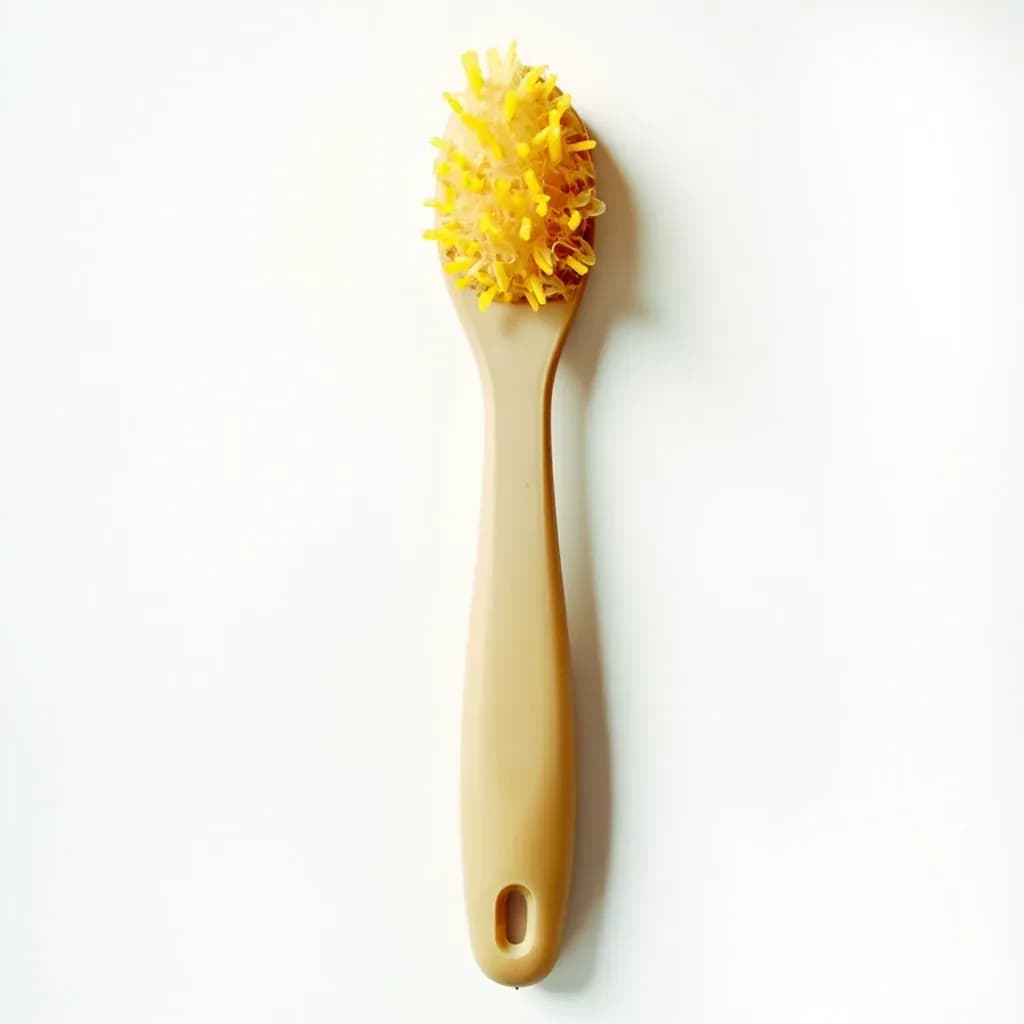
Basting Brush
Brush for spreading butter, oil, glaze, or egg wash onto food.
A basting brush is a handled brush with silicone or natural bristles used to spread liquids over food, such as basting roasts and grilled meats, glazing pastries, brushing oil onto dough, or applying egg wash. Silicone bristles tolerate heat and clean easily, while natural bristles hold and lay down more liquid smoothly. It overlaps with the pastry brush, often the same tool used in baking.
A basting brush is a handheld tool with a bristled or silicone head fixed to a handle, used to lay down thin, even films of fat, glaze, egg wash, or sauce across the surface of food. It belongs in every cook's kit because almost every cooking method that benefits from a glossy, seasoned, or protected exterior — roasting, grilling, baking, smoking, sautéing — depends on controlled surface application rather than pouring or spooning. A good brush holds just enough liquid to coat, then releases it in a smooth stroke, leaving a uniform sheen where a drizzle would pool and a spoon would tear or over-saturate.
How a brush behaves depends almost entirely on its bristles. Natural hog or boar hair is hollow and absorbent, so it picks up a generous load and lays it down in a very fine, even film — which is why bakers have long preferred it for egg wash on croissants and pie crust. Silicone, by contrast, is non-absorbent: it carries liquid on the surface of its fanned fingers, which makes it easy to wash, heat-tolerant enough to rest in a hot pan, and far less likely to harbor residual flavors from a previous job. Nylon splits the difference, costing less than natural bristle while cleaning more easily than boar hair.
In professional kitchens the smaller, softer version is usually called a pastry brush and lives at the bake station, while the larger workhorse used at the roast, grill, and sauté stations is the basting brush proper. The terms blur in home kitchens, but the principle holds: choose a size and bristle type suited to the job, keep separate brushes for sweet and savory work, and replace the tool the moment bristles shed, splay, or stop holding shape.
Alternatives
Types & varieties
Small, flat brush with soft, fine bristles sized for delicate work — egg wash on croissants, pie crust, rolls, and small pastries.
Mid-size flat brush, the everyday workhorse for coating roasts, poultry, vegetables, and breads with butter, oil, or glaze.
One-piece molded head or silicone-fingered design; heat-resistant, non-shedding, and easy to sanitize — increasingly the default in busy and high-heat settings.
Boar or hog hair that holds liquid well and lays down a very thin, even coat; preferred by many bakers for egg wash and traditional glazes.
Affordable, food-safe, and dishwasher-friendly; a practical middle ground between natural bristle and silicone.
Oversized round or oval head with long natural fibers or absorbent cotton cloth for mopping sauce onto brisket, ribs, and pork shoulder during long, low-and-slow cooks.
Narrow head, often under 1 in, for glazing small pastries, brushing into crevices, or finishing individual portions.
Pastry Brush vs. Basting Brush
The two names describe the same family of tool, but in a working kitchen they point to different sizes and uses. A pastry brush is small (often under 1.5 in across) with soft, fine bristles that won't disturb a delicate surface — useful for egg wash on laminated dough, glazing a fruit tart, or buttering the inside of a small mold. A basting brush is the larger version used at the roast and grill station, where it has to load enough fat to coat a chicken or a tray of vegetables in a few strokes. In practice, home cooks can get by with one good medium brush, but anyone who bakes seriously will want a smaller, softer brush reserved for pastry work.
Choosing the Right Bristle
Match the bristle to the job rather than buying one brush for everything.
- Boar or hog hair: the traditional choice for egg wash and clear glazes because the hollow shafts hold liquid and release it in a very thin, even film. Demands hand-washing and air drying, and should never see the dishwasher.
- Silicone: the modern all-rounder. Tolerates high heat, won't absorb flavors or oils, releases sticky glazes cleanly, and is dishwasher-safe. The trade-off is that it carries less liquid per load, so you may need an extra stroke.
- Nylon: a budget-friendly compromise — softer than silicone, easier to clean than natural bristle, and a sensible choice for everyday savory work.
Care and Longevity
A well-made brush should last years if treated properly. Hand-wash natural-bristle and wood-handled brushes in warm (not hot) soapy water, reshape the bristles with your fingers, and dry bristle-side down or hanging so water drains away from the ferrule — pooled moisture is what loosens bristles and rots wooden handles. Silicone and most nylon brushes go in the dishwasher. Replace any brush whose bristles shed, splay permanently, or fail to spring back; a worn brush leaves uneven coats and can drop hairs into the food.
Common uses
Tips & pitfalls
- Keep one brush dedicated to sweet applications (pastry, glazing, buttering pans) and a separate one for savory and raw-meat work — this prevents flavor carryover and reduces the risk of cross-contamination.
- After loading the brush, tap it against the rim of the bowl rather than wiping it — excess fat dripping into a hot oven or onto a grill is the most common cause of flare-ups and acrid smoke.
- Rinse new natural-bristle brushes and let them dry once before first use to dislodge loose hairs that would otherwise end up on your food.
- Reach for silicone whenever the liquid is sticky (honey, reduced syrup, barbecue sauce) or the heat is high — it cleans in seconds and won't absorb last night's garlic.
- Never put a wood-handled brush in the dishwasher; the prolonged heat cracks the handle and loosens the ferrule.
- Hang or stand the brush bristle-side down to dry so water runs out of the ferrule instead of pooling where the bristles meet the handle.
- For thin, even glazes on fruit tarts or mirror finishes, pull the brush in one direction across the surface rather than dabbing — dabbing leaves streaks and pulls up what's already been laid down.
- Don't confuse a basting brush with a basting syringe or bulb baster: the brush applies a thin external coat, while a syringe or baster draws up and pours liquid over the food (or, with a needle, injects it into the interior of the meat).
Good to know
- Also called
- Pastry brush (smaller, finer-bristled version); barbecue mop (larger mop-style variant for smoking)
- Primary function
- Applies thin, even layers of fat, glaze, egg wash, or sauce during prep or cooking
- Common widths
- Pastry brushes 0.75–1.5 in (2–4 cm); standard basting brushes 1.5–2 in (4–5 cm); mop brushes 2–3 in (5–7.5 cm)
- Bristle materials
- Natural boar or hog hair, nylon, or silicone
- Handle materials
- Wood, plastic, stainless steel, or one-piece molded silicone
- Heat tolerance
- Silicone generally 400–600 °F (200–315 °C); natural bristle and wood handles should not sit in hot pans or go in the dishwasher
- Care
- Hand-wash natural and wood-handled brushes in warm soapy water and dry bristle-side down; silicone and nylon are typically dishwasher-safe
- Storage
- Hang or stand bristle-side down so water drains from the ferrule; replace when bristles shed, splay, or lose shape
Also called
basting-brush · pastry-brush · baking-brush · basting-mop
Related

Peeler
Swift blade for stripping skin off fruit and vegetables

Grater
Sharp-toothed surface for shredding cheese and vegetables

Microplane
Ultra-fine rasp for citrus zest, garlic, and hard cheese

Mixing Bowl
All-purpose bowl for combining, whisking, and tossing

Whisk
Looped wires that beat air into eggs, cream, and sauces

Spatula
Flat blade for flipping, lifting, and scraping

Slotted Spoon
Pierced spoon that lifts solids and drains the liquid behind

Wooden Spoon
Gentle, heat-friendly spoon for stirring anything