Appliances & Heat
Braai (Backyard Barbecue)
The Southern African wood- or charcoal-fired grill at the heart of social outdoor cooking.
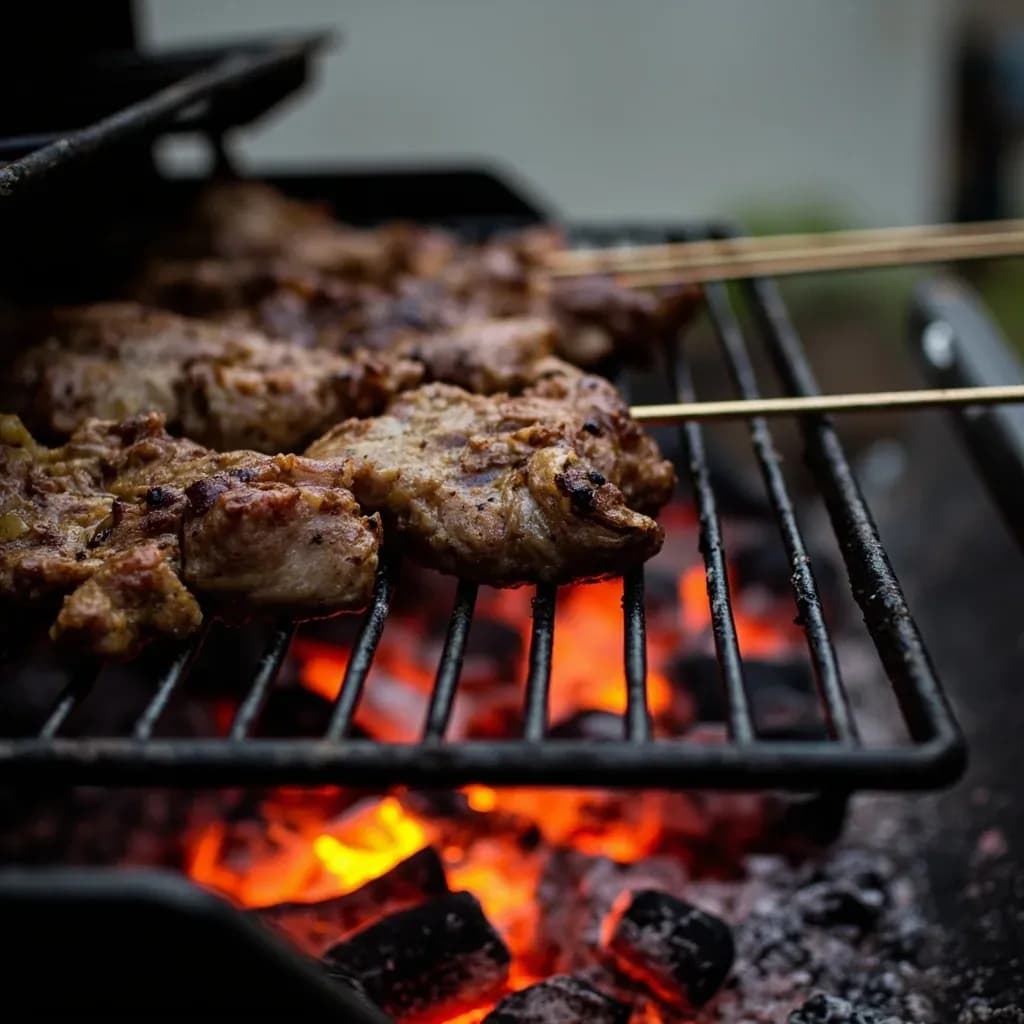
A braai is the Southern African barbecue, traditionally a wood or charcoal fire under a steel grid where meats, sausages such as boerewors, and vegetables are grilled. More than equipment, it is a social ritual built around the live fire and the cook tending it. Modern setups range from built-in masonry pits to portable gas barbecues.
A braai is the Southern African wood- or charcoal-fired grill, and the social ritual that surrounds it. The word functions as both noun — the fire and the grid — and verb, the act of grilling outdoors, which is why a South African will say "come braai on Saturday" rather than "come to a barbecue." At its simplest it is a steel rod grid set over an open wood fire on bricks or stones; at its most developed it is a permanent masonry structure with a chimney and adjustable grid, a dome kettle that handles both direct grilling and indirect roasting, or a skottelbraai — a large pressed-steel wok on a tripod that converts the coals into a flat-top burner. What separates a braai from American barbecue or the Australian barbie is tempo: the braai runs hot and fast, driven by radiant heat from a deep bed of coals rather than the low, smoke-heavy conditions of 'que.
The cookware that orbits the braai is as important as the fire itself. The potjie is a three-legged cast-iron pot that sits to the side of the fire, ringed with coals, for slow layered stews cooked without stirring. The skottelbraai turns the same coals into a flat wok for breakfasts, seafood, and paella-style rice. Boerewors — the coiled spiced beef sausage — is the most recognisable braai food, looped around the grid in a continuous spiral so the cook can flip the entire coil in one motion with a hinged or half-moon grid.
Unlike a gas grill, a braai asks the cook to read the fire: choosing wood, timing the burn-down to a deep gray ash, splitting the bed into a hot side and a cooler side, and managing flare-ups with a water bottle or by repositioning the food. Mastering those choices is what turns a braai from a smoky chore into the rhythm that has made it the centre of South African outdoor life, formalised as National Braai Day on 24 September.
Alternatives
Types & varieties
Grid set on bricks or stones directly over a wood fire; the original and most traditional form, found at farms and rural gatherings
Weber-style dome kettle with a charcoal ring beneath and a lid; allows direct grilling and lid-down roasting or indirect cooking
Permanent brick or steel structure, often with a chimney, adjustable grid height, and a work surface beside the fire
Large round shallow pressed-steel wok on a tripod; sits over coals for frying, stir-frying, breakfasts and one-pan rice dishes
Cast-iron pot used off to the side of the fire for slow layered stews (potjiekos); cooked by surrounding coals, never stirred
LPG-fuelled grill favoured for apartments, complexes and quick weeknight cooking; some units have skottel or potjie burners built in
Folding steel stand with grid, ubiquitous at South African parks, beaches and game reserves
Reading the fire
The single skill that separates a confident braaier from a hesitant one is judging the coals. Light the fire 45 to 60 minutes ahead; wood should collapse into a deep, even bed of gray ash with no black chunks still smoking and no flames licking the grid. If you must use charcoal, bank it into two zones — a hot side for searing steaks and chops, a cooler side for finishing or for items that drip fat and flare. A hinged or half-moon grid is the most useful upgrade you can buy: it lets you flip a full row of boerewors or a dozen chops in one motion without scattering the coals.
Wood choice shapes the flavour more than any sauce. Native hardwoods such as rooikrans, sekelbos and kameeldoring give a clean, fragrant smoke; bluegum and black wattle are common substitutes. Avoid pine, treated timber and any resinous softwood — they leave turpentine notes and a sooty film on the grid that transfers to the food. For long cooks, soak hardwood chunks in water for 20 to 30 minutes before adding them to the coals to extend smoke time, and keep the kettle lid closed between turns so smoke rolls over the meat rather than escaping.
- Light 45–60 minutes ahead; cook on a deep bed of gray-ashed coals, never over flames
- Build two zones — hot for searing, cool for finishing and flare-up management
- Choose native hardwoods; avoid pine and treated timber
- Use a hinged or half-moon grid to flip rows of food in one move
- Keep a spray bottle of water handy for fat-fuelled flare-ups
Potjiekos: the slow companion to the braai
While the grid handles fast cooking, the potjie handles patience. It is a three-legged cast-iron pot that originated in Voortrekker and Cape Dutch kitchens and is cooked by ringing coals around — not under — the base. The method is layered, not stirred: meat goes down first with aromatics, then vegetables in order of required cooking time, then liquid, then a tight lid and a long, undisturbed simmer. Pushing fresh coals against the side as the old ones die keeps the temperature steady over two to four hours. The result is a thick, glossy stew with distinct layers of texture that you spoon over rice or stampkoring (crushed wheat). Size 3 is the classic family pot.
- Ring coals around the pot, never under it
- Layer in order of cooking time; do not stir once the lid goes on
- Top up coals on the side as old ones die to hold temperature
- Size 3 is the standard family size — check the maker's litre rating for your group
- Serve with rice, pap or stampkoring
Common uses
Tips & pitfalls
- Light the fire 45–60 minutes ahead so the wood burns down to a deep bed of gray-ashed coals; cooking over leaping flames scorches the outside and leaves the inside raw.
- Build a two-zone fire — a hot side for searing steaks and chops, a cooler side for finishing or moving items that flare up.
- Salt meat only after it leaves the grid; salt drawn out by heat dries the surface and dulls browning.
- Use a hinged or half-moon grid so you can flip a coil of boerewors in one motion without scattering the coals.
- Do not prick boerewors as it cooks; the rendered fat bastes the sausage and keeps it juicy, and piercing it lets that fat drip into the fire.
- Rest grilled meat loosely tented in foil for 5–10 minutes before carving so the juices settle back into the muscle.
- Scrape the grid with a wire brush while it is still hot, then oil it very lightly; oiling a cold grid is the surest cause of sticking.
- Steer clear of pine, treated timber or resinous woods; they leave turpentine notes and a sooty film on the grid that transfers to the food.
Good to know
- Origin
- Southern Africa; embedded in South African culture, with the Afrikaans 'braai' used as both noun (the fire/grid) and verb (to grill)
- Fuel
- Wood, hardwood lump charcoal, or LPG; wood and charcoal are the traditional choices
- Coals readiness
- Cook over a deep bed of gray-ashed coals; never over leaping flames
- Common braai woods
- Rooikrans, sekelbos, kameeldoring, bluegum, black wattle; avoid resinous softwoods such as pine
- Charcoal preference
- Hardwood lump charcoal; Namibian hardwood charcoal is widely used and prized
- Typical grid
- Steel rod grid, often round, frequently hinged or height-adjustable over a fire pit or stand
- Heritage Day
- 24 September, celebrated in South Africa as National Braai Day
- Distinguishing feature
- High-heat, fast grilling over open fire, distinct from American low-and-slow barbecue
Also called
Backyard BBQ Grill · Outdoor Grill · Gas Barbecue · Barbecue
Related

Stovetop
The everyday burners where most cooking actually happens

Oven
Enclosed dry heat for roasting, baking, and braising

Grill
Live-fire or gas grates for char, smoke, and high heat

Smoker
Low, slow heat and wood smoke for barbecue and brisket

Air Fryer
Countertop convection that crisps with little or no oil

Slow Cooker
Set-and-forget low heat for stews, beans, and braises

Pressure Cooker
Sealed steam pressure that cooks tough food in a fraction of the time

Rice Cooker
Foolproof, perfectly steamed rice every single time