Appliances & Heat
Cajun Microwave (Box Roaster)
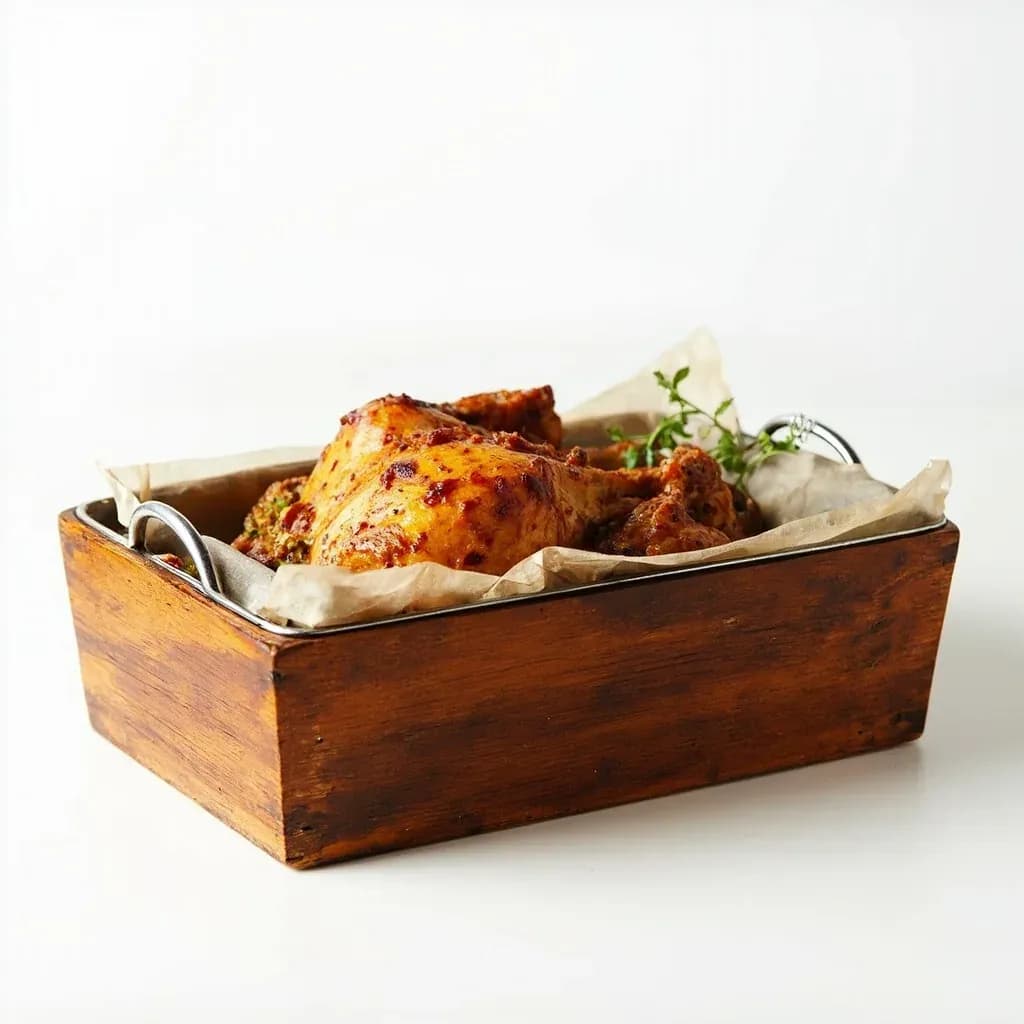
A wood-and-metal-lined box that roasts whole pig with charcoal heaped on its lid.
A Cajun microwave, despite the name, is a large insulated box, wood outside and metal-lined inside, used in Louisiana to roast a whole pig or large cuts. The meat goes inside while a tray of charcoal sits on the lid, radiating heat downward to cook it slowly and evenly. It is a community-cooking tool for cochon de lait and similar feasts, prized for hands-off, weather-proof whole-animal roasting.
The Cajun microwave — also called a box roaster, pig box, or Louisiana pig roaster — is an outdoor radiant oven built from a wood frame lined with sheet metal. A whole pig rests on a grate inside the box while hardwood charcoal or split-wood coals are heaped onto the metal lid above. Heat radiates down from the lid (and often up from coals set under the grate), enveloping the carcass in retained warmth. The result cooks a 60–80 lb hog in 6–10 hours, far faster than a conventional open-pit roast, which is exactly why Louisiana cooks dubbed it a "microwave."
The box is traditionally framed in cypress or pine, both rot-resistant woods, with cypress prized for the faint, pleasant smoke note it lends. Modern builds may use oak or treated lumber, but the interior must always be lined with galvanized steel or aluminum — bare wood soaks up fat, smokes badly, and eventually catches fire. Capacity is sized to the pig: small backyard boxes handle a 20–40 lb suckling pig (cochon de lait) while large trailer-mounted units take hogs of 150 lb or more. Fuel runs to roughly 20–40 lb of charcoal per average hog, refreshed in small batches through the cook.
Good cooking in a Cajun microwave is a study in steady, even heat rather than blast-furnace intensity. The target is a shoulder or ham interior of 190–205°F for pull-apart texture, with skin that has rendered down to golden crackling. The hallmark is consistency — building the coal bed gradually, keeping the lid covered, and resisting the urge to lift it — so the radiant heat does its work evenly from snout to hock.
Alternatives
Types & varieties
Open-topped wooden box with metal liner; lid lifts off to baste or check the pig, coals heaped on top.
Hinged metal lid that swings open — easier to manage than lifting a heavy coal-laden cover; the most common backyard build.
Pig suspended on a grate raised and lowered by chain and come-along or hand winch; common at large boucheries and event grounds.
Box roaster built onto a flatbed or utility trailer for transport to festivals, fundraisers, and Mardi Gras events.
Improvised cousin using stacked concrete blocks for the frame; works the same way but lacks the cypress smoke character.
Managing the heat
A box roaster rewards patience and steady coals more than raw fire. The lid holds heat remarkably well once it is loaded, so most of the cook's job is small, regular adjustments rather than dramatic interventions.
- Light a small starter pile of charcoal and let it ash over fully before heaping it on the lid; unlit coals dumped on top will stall and smoke.
- Refresh coals in small batches every 45–60 minutes; never strip the lid down to bare metal between refreshes.
- Position the freshest coals over the thickest parts of the carcass (shoulder, ham) to drive even doneness across the whole animal.
- Keep a drip pan with a cup or two of water on the floor to moderate bottom heat and to capture jus for gravy.
- In cold wind or rain, throw a tarp over the box; the radiant lid loses heat fast when exposed to the elements.
Common uses
Tips & pitfalls
- Build the box at least 4–6 inches wider and longer than the pig — a tight fit forces coals too close to the skin and leaves the shoulders burnt outside, raw inside.
- Use a leave-in digital probe thermometer in the thickest part of the ham/shoulder — opening the lid to test with an instant-read loses a lot of heat and time.
- Baste only with the drippings collecting in the bottom of the box; do not add sugary commercial barbecue sauces early on, as they scorch against the hot metal above.
- Season or inject the pig the night before — a salt, garlic, and Creole seasoning brine or injection works best; heavy dry rubs blacken under the radiant lid.
- Save and strain the rendered fat — it is liquid gold for cornbread, roux, frying potatoes, and seasoning beans.
- Let the pig rest 20–30 minutes wrapped in foil or old towels before pulling or carving; carryover heat finishes the interior and the juices settle.
Good to know
- Origin
- Louisiana Acadiana (Cajun country); used in traditional cochon de lait and boucherie cookouts.
- Also called
- Cajun microwave, box roaster, pig box, Louisiana pig roaster.
- Frame material
- Traditionally rot-resistant wood such as cypress or pine; modern builds often use oak or treated lumber.
- Lining material
- Galvanized steel or aluminum sheet metal on walls, floor, and lid to contain heat and resist fat.
- Heat source
- External — hardwood charcoal or split-wood coals heaped on the metal lid, sometimes on the bottom grate as well.
- Typical capacity
- One whole hog, usually 40–150 lb; small backyard boxes handle a 20–40 lb suckling pig.
- Approximate cook time
- 6–10 hours for a 60–80 lb pig, longer for larger hogs depending on coal management and weather.
- Internal doneness target
- Shoulder/ham about 190–205°F for pull-apart meat; minimum 165°F in the thickest part of the ham.
- Nickname reason
- Called a 'microwave' because all-around radiant heat cooks a whole pig far faster than an open-pit roast.
Also called
box roaster · Cajun box smoker · la caja china
Related

Stovetop
The everyday burners where most cooking actually happens

Oven
Enclosed dry heat for roasting, baking, and braising

Grill
Live-fire or gas grates for char, smoke, and high heat

Smoker
Low, slow heat and wood smoke for barbecue and brisket

Air Fryer
Countertop convection that crisps with little or no oil

Slow Cooker
Set-and-forget low heat for stews, beans, and braises

Pressure Cooker
Sealed steam pressure that cooks tough food in a fraction of the time

Rice Cooker
Foolproof, perfectly steamed rice every single time