Appliances & Heat
Camp Coffee Percolator
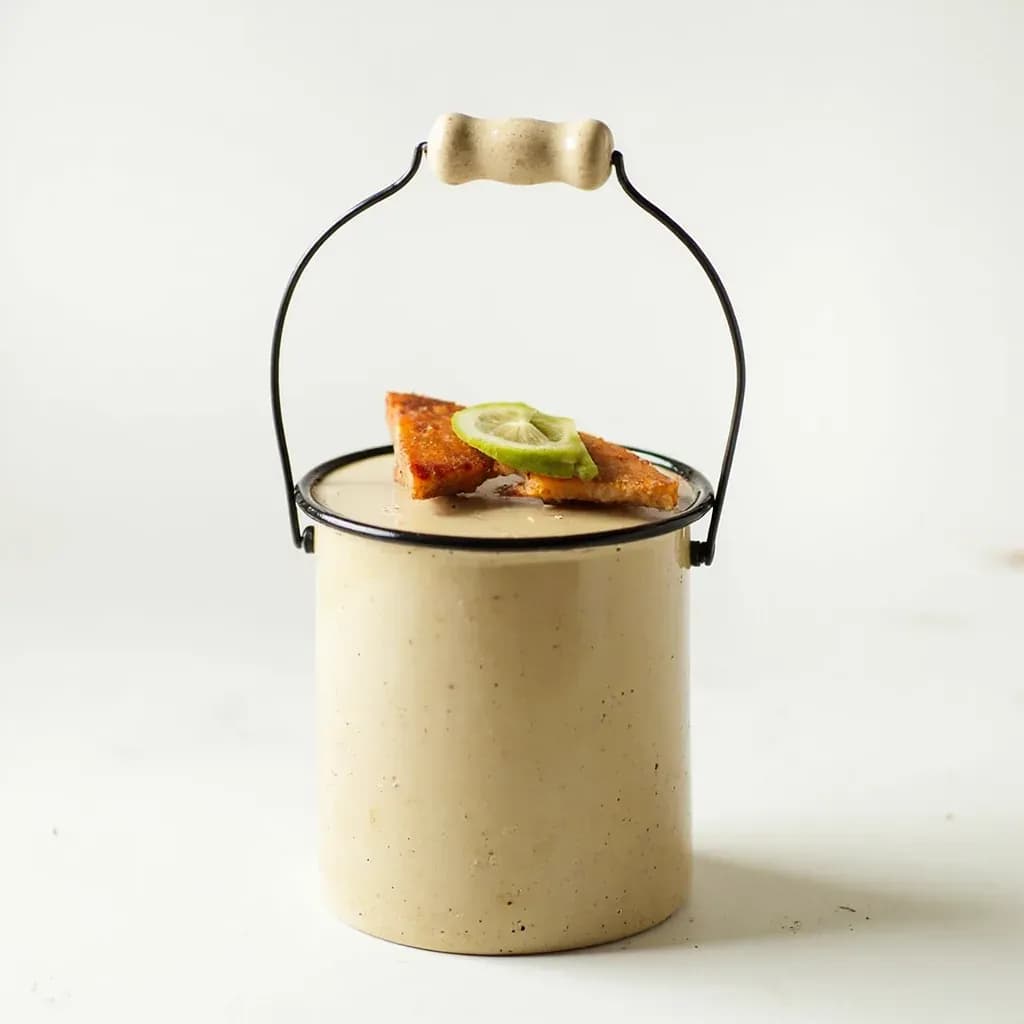
A flameproof metal pot that brews coffee by cycling boiling water through grounds over a fire.
A camp coffee percolator is a rugged stainless or enameled pot with an internal stem and basket that brews coffee directly over a campfire or stove. As the water boils it rises through the stem and showers down over the grounds, recirculating until the brew is strong. Its all-metal build makes it durable for outdoor cooking where a glass or electric brewer would not survive.
The camp coffee percolator is a flameproof metal pot that brews coffee by continuously cycling boiling water through a basket of grounds. Water sits in the lower chamber; heat from below turns it to steam, and that pressure pushes a column of hot water up through a central tube, over the grounds, and back down through the bed — repeating until the pot is pulled from the heat. The action is older and more aggressive than drip or pour-over, and it gives camp coffee its familiar heavy, fully extracted character.
For outdoor cooks, the appeal is mechanical honesty: the percolator needs only heat and water, so it works over a campfire, on a propane camp stove, on a charcoal grill, or on a domestic gas range with equal indifference. That versatility, plus the rough-and-tumble durability of enamelware or stainless steel, is what made it a fixture of North American hunting camps, scout troops, fishing shacks, and farm kitchens from roughly the 1920s onward — long before single-use pour-over cones and battery-powered espresso makers existed.
In American usage, the words 'camp coffee' and the image of a speckled blue-and-white enameled pot with a bail handle are nearly inseparable, though the brewing method is defined by action rather than material. Stovetop, electric, and backcountry stainless versions all use the same upward-cycling physics; only the form factor changes.
Alternatives
Types & varieties
The iconic blue-speckled or white-marbled enameled steel pot most associated with 'camp coffee'; durable, lightweight, and inexpensive.
Heavier and more dent-resistant; favored for backcountry and serious use; often polished or brushed finish.
Lightest option, conducts heat quickly; older examples may be unlined, so modern food-safe anodized versions are preferred.
Smaller, side-handled pot meant for the home range — same brewing action, different form factor.
Countertop appliance with an internal heating element; convenient but not suitable for open fire or most camp stoves.
Tall body, long bail handle, and often a heat-diffuser ring on the base so it sits stably on grates or coals.
Features a transparent knob or top so the brewer can watch dark coffee bubble up and time the cycle visually.
Reading the knob: when to pull the pot
The single biggest variable in percolator coffee is brew time, and the visual knob is your timer. Watch the color of the liquid rising in the well: pale tan means the cycle has just started and the coffee will taste thin and sour; a deep caramel-brown that reads almost as chocolate is roughly the right moment to pull. The 'perking' rhythm also matters — once it slows to about one pulse per second or less, extraction is well underway and the cup will turn bitter if the cycle keeps running.
- Pale tan in the knob = under-extracted; wait.
- Deep caramel-brown in the knob = right zone for most tastes.
- Pulsing slower than roughly once per second = pull it now.
- Standing the pot off heat for 1–2 minutes lets fines settle and the brew round out.
Care and longevity
Enamelware pots outlast cast iron when treated sensibly and fail quickly when mistreated. The enemies are thermal shock and abrasion.
- Never plunge a hot enamelware pot into cold water — the enamel will craze and flake.
- Clean by boiling a pot of plain water with a tablespoon of baking soda to scour internal tarnish; skip steel wool and harsh abrasives on enamel.
- If enamel chips and exposes steel beneath, retire the pot for food use; rust and metallic taste follow quickly.
- Store with the lid off so the basket and tube dry fully; trapped moisture scales and clogs the central tube.
Common uses
Tips & pitfalls
- Use a coarse, even grind — coarser than typical 'percolator grind' sold for drip machines, somewhere between raw sugar and cracked pepper.
- Fill the lower chamber with measured cold water and the basket with leveled-off grounds; do not tamp.
- Bring the pot to a slow boil over medium heat — a hard rolling boil scorches the grounds and pits enamel.
- Watch the knob: once the coffee turns a strong brown and the perking slows to about one pulse per second or less, pull it from the heat. Do not let it keep cycling.
- Let the pot sit 1–2 minutes off heat so fines settle before pouring, or pour gently and leave the last cloudy inch in the pot.
- Pre-warm the pot with hot water before adding cold water and grounds — shorter cycle, cleaner cup.
- A pinch of salt in the grounds softens perceived bitterness in over-extracted pots — a classic camp-cook trick.
- If the enamel chips, retire the pot for food use; exposed steel rusts and can leach into acidic coffee.
Good to know
- Origin
- First US patent for a coffee percolator was issued in 1865 to James Nason of Franklin, Massachusetts; the design was refined through the late 19th century by firms such as Hattersley in Britain.
- How it works
- Boiling water in the lower chamber is forced up a central tube by steam pressure, sprays over a basket of grounds, and drains back down through the grounds — repeating until the pot is removed from heat.
- Common materials
- Speckled enamelware over steel (the classic look), stainless steel, and aluminum; campfire models usually have a bail handle, stovetop models a side handle.
- Capacities
- Sold by 'cup' count measured in 5-oz (≈150 ml) servings; common sizes are 6-, 8-, 9-, 12-, and 14-cup.
- Grind size
- Coarse and even — similar to coarse sea salt or raw sugar. Fine grounds clog the basket and silt the cup.
- Coffee-to-water ratio
- About 1 heaping tablespoon of coarse grounds per 5-oz cup as a starting point; many campers go slightly heavier to compensate for long cycles.
- Brew time
- Roughly 5–10 minutes of percolation once water boils; longer cycles extract more bitterness.
- Perk indicator
- Most models have a clear knob or 'perk' well in the lid so the brewer can watch coffee bubble up and judge when to pull the pot.
Also called
stovetop percolator · campfire coffee pot · coffee percolator
Related

Stovetop
The everyday burners where most cooking actually happens

Oven
Enclosed dry heat for roasting, baking, and braising

Grill
Live-fire or gas grates for char, smoke, and high heat

Smoker
Low, slow heat and wood smoke for barbecue and brisket

Air Fryer
Countertop convection that crisps with little or no oil

Slow Cooker
Set-and-forget low heat for stews, beans, and braises

Pressure Cooker
Sealed steam pressure that cooks tough food in a fraction of the time

Rice Cooker
Foolproof, perfectly steamed rice every single time