Appliances & Heat
Campfire Grill Grate
A portable steel grate set over a fire or coals to grill food outdoors.
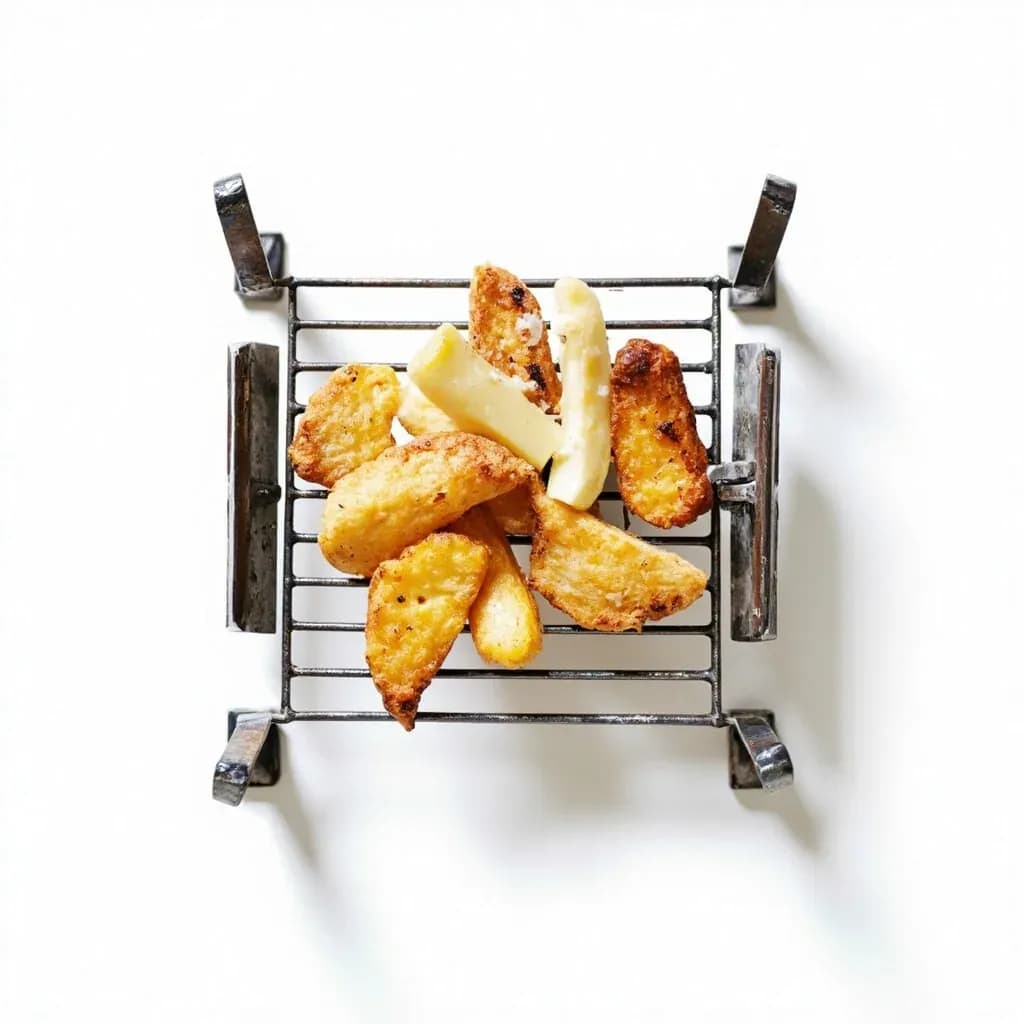
A campfire grill grate is a flat metal grid, often folding or legged, placed over an open fire, fire pit, or bed of coals to support pots and grill food. Campers and outdoor cooks use it to sear meat and vegetables or hold a kettle above the flames. Folding legged versions pack flat and set up quickly at a campsite.
A campfire grill grate is the simplest possible cooking tool: a rigid lattice of steel — usually welded round rod, sometimes expanded sheet — set across a fire ring or directly over coals. Its job is to hold food above the worst of the flame while still allowing radiant heat and smoke to do their work, and in that narrow role it has essentially no substitute. The grate's thickness, spacing, and material determine how the heat actually reaches the food: thin rods sear hard and leave pronounced grill marks, heavier plate or cast iron holds steady heat and forgives a fickle fire, and open expanded metal gives a wide flat contact area ideal for small or delicate items.
A good grate behaves like a piece of well-made cookware rather than a piece of hardware. It should be rigid enough not to bow when you set a Dutch oven on it, hot enough to mark meat on contact, and easy to clean with a wire brush and a wipe of oil. Most cooking failures blamed on a campfire are actually failures of fire management — the grate is just the surface where the fire's behavior becomes visible. Build a proper bed of coals, set the grate at the right height, and a modest piece of welded steel will outperform a backyard gas grill for the kind of direct, smoky cooking that camp food is supposed to deliver.
Matching the grate to the fire ring matters more than brand. The U.S. Forest Service standard fire ring is 22 inches across with built-in support slots, and grates sized to drop into that ring will sit stable and level on virtually any developed campsite. For car camping and small groups, a single round grate in the 22–24 inch range covers everything from hot dogs to a spatchcocked chicken; ultralight backpackers usually skip the grate and cook on a rock or in foil, trading control for weight.
Alternatives
Types & varieties
A simple ring of steel rod with short welded legs; the classic car-camping grate, sized to drop into a fire ring
Reversible legs or stacked rings let the cook raise or lower the cooking surface to control heat
Hinged steel rods fold flat for transport; light and packable but less rigid under heavy loads
Hangs from a chain on a tripod over the fire; classic for Dutch-oven camps and adjustable by chain length
Splits in half so coals and ash can be cleared or wood added without lifting the whole grate
One side is open rod for grill marks; the reverse is a flat plate that functions as a griddle
Pivots on a central pole so food can be moved in and out of the heat without lifting
Stamped from a single sheet of steel with diamond openings; large flat contact area, good for small items
Resists rust in wet conditions; brighter sear and easier cleanup, but lower thermal mass than carbon steel
Matching the grate to the fire
A grate can only do its job when the fire beneath it is doing its job. The single most useful skill is reading the difference between flame and coals, and putting the grate where you actually want the heat. A bed of glowing hardwood coals — built 20–30 minutes ahead of cooking — produces steady, even radiant heat ideal for grilling. Tall flame is a searing tool for fast skin-on work, but it scorches lean meats and burns through fat drippings. Most cooking disappointments blamed on a campfire are simply grate-over-flame mistakes; dropping the grate an inch or two into the bed of coals usually fixes them.
Seasoning and care in the field
Bare carbon-steel grates behave like cast iron: they need a thin, polymerized oil coat to stay nonstick and to resist rust. A new grate benefits from two or three rounds of oil-and-heat before its first real cook — wipe a high-smoke-point oil on with a rag, set it over coals until it just smokes, and repeat. Stainless grates are more forgiving but still benefit from an oil wipe before storage, especially in damp climates. At camp, cleaning while the grate is still warm with a stiff brush or a wad of foil does almost all the work; no soap needed.
Grate height and heat zones
Height is the only on-site control you have over temperature, and most failures come from cooking in the wrong zone. Low grates a couple of inches above the coals run hot and fast, perfect for searing burgers and chops. A grate set 6–8 inches above the fire, or swung off to the side on a swivel or extension, runs cooler and gives time for thicker cuts to cook through without burning. With a tripod or adjustable-leg design, the same grate becomes a high smoker, a low grill, or anything in between.
Leave No Trace
On public land, the grate itself is the one item that should move in and out of an established fire ring cleanly. Use the existing ring rather than building a new one, keep the fire small enough to fit the ring, and once coals are fully cold, scatter the ash back into the ring. Brush the grate clean at camp so ash doesn't end up in your car or pack. A properly maintained grate leaves nothing behind and is ready for the next cook.
Common uses
Tips & pitfalls
- Build the fire 20–30 minutes before cooking so you have a deep bed of glowing coals rather than tall flame; coals give even, controllable grilling heat.
- Set the grate in place while the fire is still building so it heats gradually; a cold grate dropped onto high flame can warp and is more likely to stick.
- Set a stable, level base: rotate stones in the fire ring so the grate sits flat and does not rock — a rocking grate drops food into the coals.
- Season a bare steel grate the same way as cast iron: rub with a thin coat of high-smoke-point oil and heat until it smokes, then wipe; repeat a few times before first use.
- Oil the food rather than the grate once it's hot and seasoned; oiling a screaming-hot grate causes flare-ups and a bitter off-flavor.
- Choose grate height by fire stage: low legs over coals for steady grilling, higher position over flame for gentler cooking or to slow burning.
- Clean while still warm with a stiff wire brush or a scrunched ball of aluminum foil; do not run cold water on a hot grate, which can crack welds.
- Dry the grate thoroughly at home and rub a thin film of oil before storing; even stainless steel will stain if left damp in a bag.
- Pack a small grate scraper and a bottle of oil in the camp box so cleanup and re-oiling happen at the campsite, not three weeks later when rust has set in.
- Use a hinged or two-piece design to add wood without disturbing food; never douse a grease fire with water — smother with a lid or sand.
Good to know
- Primary material
- Welded steel rod or expanded sheet steel; premium versions in stainless steel or cast iron
- Standard fire-ring fit
- Many grates are sized to the U.S. Forest Service 22-inch fire ring, which has built-in support slots
- Common diameters
- 18 in, 22 in, 24 in, and 30 in round; rectangular versions typically 16 × 24 in or larger
- Typical weight
- 2–8 lb for folding steel grates; 10–20 lb for cast-iron or heavy-duty models
- Operating temperature
- Surface temperatures of 500–700 °F over a bed of glowing coals; higher directly in flame
- Heat source
- Wood fire, hardwood charcoal, or a combination of coals and flame
- Finish
- Bare steel is seasoned like cast iron; stainless versions need less upkeep but sear less aggressively
- Cleanup
- Wire-brush while still warm; do not soak; oil lightly before storage
Also called
fire pit grate · camp grill grate · open-fire grill
Related

Stovetop
The everyday burners where most cooking actually happens

Oven
Enclosed dry heat for roasting, baking, and braising

Grill
Live-fire or gas grates for char, smoke, and high heat

Smoker
Low, slow heat and wood smoke for barbecue and brisket

Air Fryer
Countertop convection that crisps with little or no oil

Slow Cooker
Set-and-forget low heat for stews, beans, and braises

Pressure Cooker
Sealed steam pressure that cooks tough food in a fraction of the time

Rice Cooker
Foolproof, perfectly steamed rice every single time