Appliances & Heat
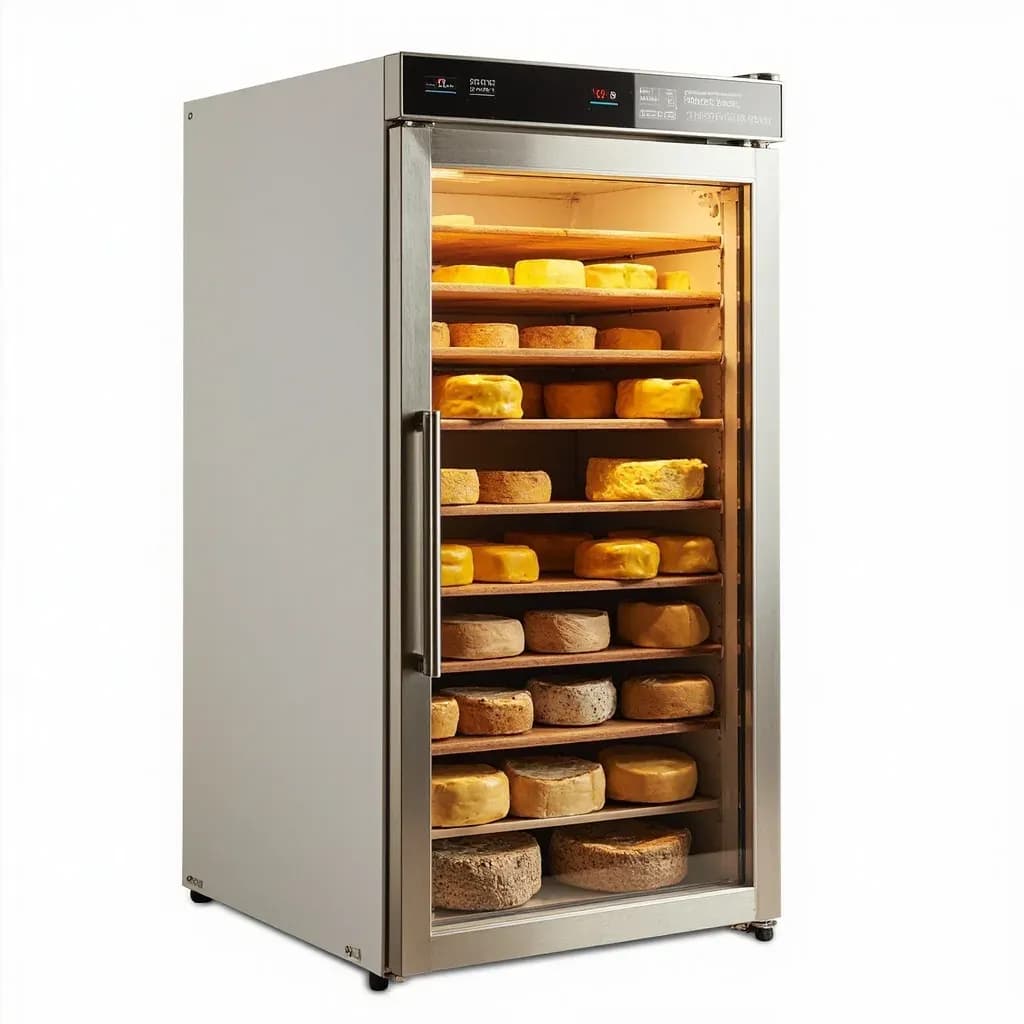
Cheese Cave (Aging Fridge)
A temperature- and humidity-controlled space that ages cheese to develop rind and flavor.
A cheese cave is a controlled environment, either a natural cellar or a converted refrigerator, that holds steady cool temperatures and high humidity to age cheese. Affineurs use it to ripen wheels over weeks to years, turning and washing them as the rind and flavor develop. Hobbyists often convert a small wine fridge with a humidifier to mimic these conditions.
A cheese cave is a deliberately engineered microclimate that imitates the natural limestone and earth cellars of Europe where most of the world's great aged cheeses were born. The defining job of the cave is to hold three variables in balance at once: temperature in the 50–55°F (10–13°C) range, relative humidity between roughly 75% for hard wheels and 95% for soft and washed-rind styles, and gentle, continuous air movement so rinds dry evenly rather than pooling moisture. Get any one of these wrong and the cultures doing the actual work of affinage — the surface molds, yeasts, and Brevibacterium that build a rind, and the interior enzymes that break curd down into something aromatic and supple — will stall, die off, or be overrun by spoilage organisms.
The reason a standard kitchen refrigerator cannot substitute is structural, not just a matter of degree. A fridge runs 35–40°F, far too cold for the slow enzymatic aging that develops flavor, and its 30–50% humidity dries the surface of a wheel into a cracked, leathery rind within days. Fridges also vent cold air in a way that strips odor, and they emit trace ethylene from produce, both of which a young cheese readily absorbs. A cave, by contrast, is a humid, slightly warmer chamber in which the rind is meant to live, breathe, and ripen as it would on a wooden board in a Comté cellar or a Grana Padano storeroom.
For the home cook or small producer, a cave is treated as a piece of dedicated equipment, not a corner of the kitchen fridge. The simplest builds are dorm-style refrigerators paired with an external temperature controller and a passive water pan, and from there setups scale up through purpose-built home cabinets, repurposed wine fridges, and walk-in cells. In every case the goal is the same: a stable, humid, gently ventilated space where cheese can age for weeks or months without intervention beyond an occasional turn, wash, or brine.
Alternatives
Types & varieties
A mini-fridge wired through an external temperature controller with a water pan inside; the most common and lowest-cost home setup.
Compressor-based units that already hold a stable 50–55°F; humidity is the limiting factor and usually needs supplementing with a water tray or small humidifier.
Insulated units designed specifically for cheese, often with integrated humidity reservoirs, drip trays, and food-safe wood shelving.
A room-sized insulated chamber for serious hobbyists or small producers, requiring a dedicated humidifier and separate HVAC controls.
The traditional approach, using the thermal mass of the ground to passively hold 50–55°F and high humidity year-round.
A cooler used for short-term transport or experimental batches, with damp cloths or sponges supplying humidity.
The Three Variables a Cave Controls
Cheese aging is governed by temperature, humidity, and air movement, and the cave is simply a piece of equipment designed to hold all three in their working ranges at the same time. Temperature sets the pace of enzymatic activity inside the paste: warmer caves produce faster proteolysis and softer textures, cooler caves slow things down and favor the long, slow development of hard alpine styles. Humidity governs what happens on the surface — too dry and the rind cracks, exposing paste to invasive mold; too wet and the rind slimes, the cheese loses weight, and anaerobic spoilage organisms can take hold. Air movement, the easiest variable to forget, keeps humidity even throughout the chamber, prevents stagnant pockets under the cheese, and carries away the CO₂ and ammonia that washed-rind and bloomy-rind cultures exhale.
Building a Working Cave at Home
A reliable home cave can be assembled in an afternoon, but the parts matter. The fridge should be a basic dorm-style unit with a mechanical thermostat, since digital fridges fight an external controller for control of the compressor. The controller — a brewing-style plug-in thermostat — plugs into the wall, has its probe placed next to the cheese rather than near the air return, and switches power to the fridge on and off to hold the setpoint. Inside, untreated pine, beech, or poplar boards serve as both shelf and moisture buffer; a shallow pan of water with a wicking cloth raises humidity for hard cheeses, while soft and washed-rind styles usually need a small humidifier on a humidistat. A data logger that records both temperature and humidity over 24 hours is the single most useful diagnostic tool, because it reveals the swings you cannot feel by hand.
Common uses
Tips & pitfalls
- Use a digital data logger rather than an analog gauge; logging temperature and humidity over 24 hours reveals the swings you cannot feel by hand and lets you catch a failing controller before a batch is lost.
- Place a small fan on a low or intermittent timer to keep air moving; stagnant pockets under the cheese lead to uneven rinds and localized mold blooms.
- Separate hard, semi-hard, soft, and washed-rind cheeses on different shelves — their humidity and aroma needs actively conflict, and a washed-rind wheel will overpower a young bloomy-rind cheese within days.
- Line shelves with untreated pine, beech, or poplar rather than raw plastic; wood wicks excess surface moisture and discourages the pooling that breeds black or pink invasive mold.
- A pan of water with a damp cloth wick is enough humidity for most hard cheeses; soft and washed-rind styles need a true humidifier on a humidistat or daily hand-misting.
- Do not wrap aging cheese in sealed plastic — it suffocates the rind, traps CO₂, and breeds anaerobic bacteria that produce gas and off-flavors.
- Do not store other foods, especially alliums, raw meat, or strongly aromatic fruit, in the same chamber; cheese absorbs off-odors and is sensitive to ethylene.
- For washed-rind cheeses, crack the door briefly once a day to vent accumulated CO₂ and ammonia; without that exchange, the rind flora shifts and the cheese loses definition.
- Check rind moisture throughout aging — a rind that is too dry will crack and the surface cultures will die back, while a rind that stays too wet invites invasive black or pink mold blooms that are difficult to reverse.
- Calibrate your controller by placing the probe next to the cheese, not in the fridge's air return — the temperature at the evaporator can be 10°F colder than the temperature the wheel actually experiences.
Good to know
- Target temperature
- 50–55°F (10–13°C) for most aging cheeses; blue cheeses prefer the cooler end (about 50–52°F).
- Target humidity
- 75–95% relative humidity, depending on style — hard cheeses around 75–80%, soft and washed-rind wheels 85–95%.
- Inspired by
- Natural limestone and earth cellars of Europe: the Roquefort caves, Comté cellars in the Jura, Emmental cellars in Switzerland, and Grana Padano storerooms in the Po Valley.
- DIY build cost
- Roughly $100–$300, using a dorm-style refrigerator, a plug-in temperature controller, and a water pan or small humidifier.
- Purpose-built units
- Home aging cabinets run $500–$3,000+; commercial aging rooms and walk-in cells run $2,000–$10,000+.
- Critical accessories
- A digital hygrometer and thermometer (ideally a data logger), a small fan for air circulation, untreated wood boards or stainless racks, and a shallow water pan or active humidifier.
- Why not a regular fridge
- Standard refrigerators hold 35–40°F with 30–50% relative humidity and emit ethylene while absorbing odor — all of which halt rind development and taint the cheese.
- Air exchange
- Washed-rind and bloomy-rind cheeses benefit from periodic brief fresh-air exchange; sealed environments accumulate CO₂ that shifts the rind flora and can promote unwanted molds.
Also called
Aging Fridge · Affinage Cave · Cheese Aging Cabinet
Related

Stovetop
The everyday burners where most cooking actually happens

Oven
Enclosed dry heat for roasting, baking, and braising

Grill
Live-fire or gas grates for char, smoke, and high heat

Smoker
Low, slow heat and wood smoke for barbecue and brisket

Air Fryer
Countertop convection that crisps with little or no oil

Slow Cooker
Set-and-forget low heat for stews, beans, and braises

Pressure Cooker
Sealed steam pressure that cooks tough food in a fraction of the time

Rice Cooker
Foolproof, perfectly steamed rice every single time