Appliances & Heat
Electric Cheese Shredder
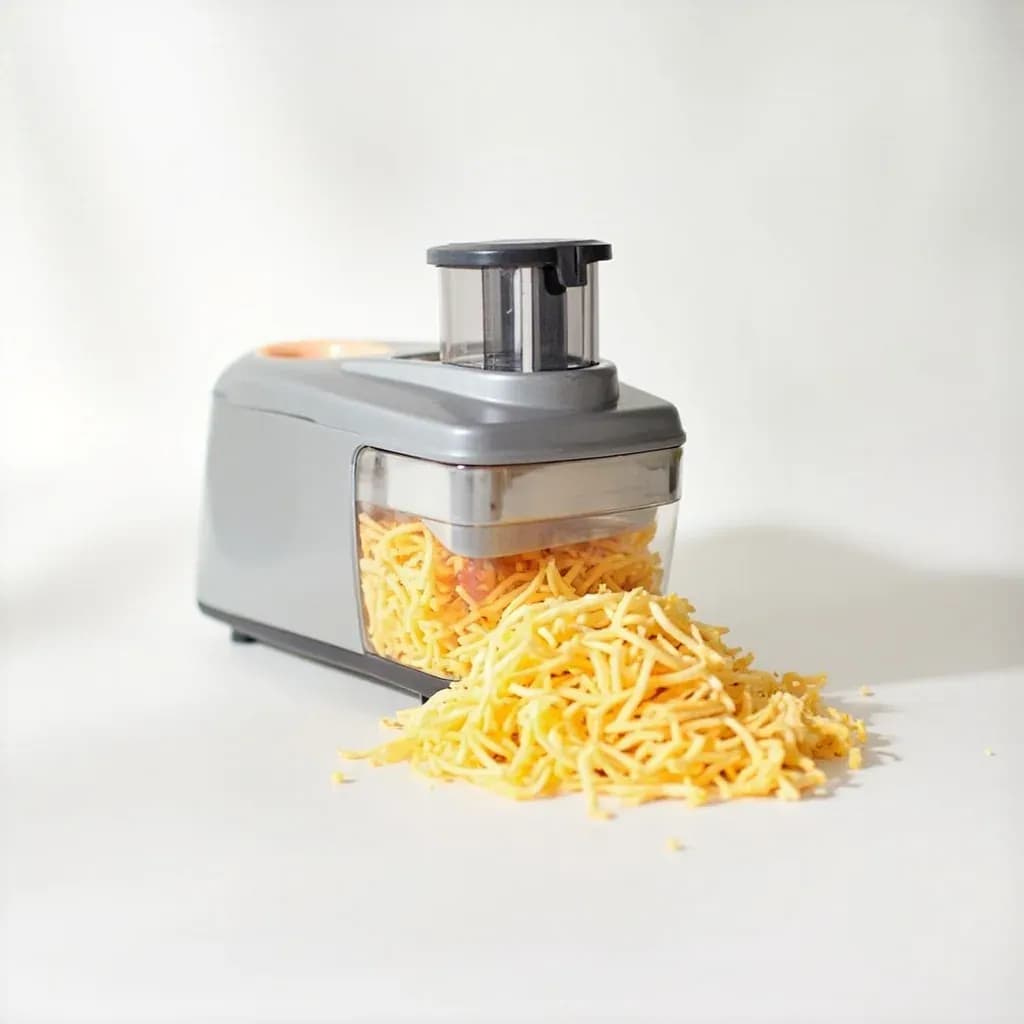
A motorized grater that shreds blocks of cheese quickly into bowls or onto dishes.
An electric cheese shredder uses a powered rotating drum or disc to grate cheese far faster than by hand. Feed a block in and it produces a steady stream of shreds for pizza, tacos, or gratins, with interchangeable drums for fine or coarse cuts. It saves labor in busy kitchens and spares knuckles on a box grater.
An electric cheese shredder is a small countertop appliance that turns grating a pound of block cheese into a job measured in seconds. A motor spins a metal drum or cone studded with raised cutting teeth or punched holes; you press a block of cheese against the surface through a feed chute with a plastic pusher, and the shreds fall into a bowl or catch tray below. The hardware is modest, but the payoff for a working cook is genuine — it shreds block cheese faster and with less effort than a box grater or a food processor, making it well suited to pizza night, a big lasagna, or a catering tray.
Most machines on the market are sold as general-purpose electric graters with cheese as the headline use, not as single-purpose cheese appliances. They occupy a middle ground between a hand-crank rotary box grater and a food processor fitted with a shredding disc — faster and less tiring than the first, smaller and more focused than the second. Many ship with interchangeable cones or drums that change shred size, which is what determines output texture; how long you run the machine has no effect on how fine the cheese comes out.
The single biggest variable in how an electric shredder performs is the temperature of the cheese, more than the brand of machine or the variety on the counter. Cold, well-chilled block cheese shears cleanly off the drum; cheese at room temperature smears, gums up the cutting surface, and produces clumpy, uneven shreds. Pre-shredded bagged cheese and soft high-moisture cheeses are the two consistent failure modes — the first because of its anti-caking starch coating, the second because it never holds a clean edge against the drum.
Alternatives
Types & varieties
Box-shaped unit with a top feed chute; cheese drops in and shreds collect in a bowl below. The most common configuration.
Drum-style grater in which the hand crank is replaced or assisted by a small electric motor; shreds collect inside the barrel.
Same hardware as a cheese shredder but shipped with interchangeable cones for fine shred, coarse shred, and sometimes slicing — also handles firm vegetables, bread for crumbs, nuts, and block chocolate.
Battery-powered countertop or hand-held units aimed at portability and easy storage; typically lower torque than corded models.
Single-purpose, often premium units built for cheese service — usually one fine-shred cone and a catch tray or domed cover.
The temperature rule
Cheese temperature is the single biggest variable in how an electric shredder performs, more than the brand of machine, the cone installed, or the variety on the counter. Cold cheese shears cleanly off the drum because the fat is firm and the protein matrix holds its shape; warm cheese smears because the fat softens and shreds cling to the cutting surface instead of falling free. Treat the cheese the way you would treat butter for laminated dough — keep it cold, work quickly, and let the machine do its job.
- Pull cheese from the refrigerator 5 to 10 minutes before use; the surface should feel cool, not frigid.
- If shreds start clumping on the drum mid-run, stop and return the block to the refrigerator for 15 to 20 minutes.
- A block at room temperature will gum up the cutting surface within seconds and may stall or overheat the motor.
- For soft semi-hard cheeses such as young mozzarella or provolone, ten to fifteen minutes in the freezer firms them up enough to shred cleanly.
Common uses
Tips & pitfalls
- Start with well-chilled cheese — cold cheese shears cleanly; cheese at room temperature smears, gums up the drum, and produces clumpy shreds.
- Cut the block to fit the feed chute before turning the machine on; do not wedge oversized pieces into the opening.
- Use short pulses rather than holding the button down continuously; this keeps the motor cool and stops cheese from heating and sticking.
- Avoid bagged pre-shredded cheese — the cellulose or potato-starch coating clogs the blades and produces a powdery, poor-melting result.
- Do not run very soft or high-moisture cheeses through the machine (fresh mozzarella in water, ricotta, cream cheese, brie); they smear rather than shred and will clog the unit.
- After use, soak the cone and pusher in hot water for several minutes before washing so residual cheese does not harden on the cutting surfaces.
- Always use the supplied pusher — never feed cheese with fingers or an improvised utensil pushed past the safety guard.
- If the machine bogs down, switch off and clear the drum rather than pushing harder; sustained resistance overheats the motor and can burn it out.
- Run a piece of bread or a carrot through at the end to clear residual cheese from the blades before washing.
Good to know
- Type
- Small electric kitchen appliance (motorized grater)
- Power source
- Mains electricity (corded) on most models; rechargeable battery on a smaller number of cordless units
- Drive mechanism
- An electric motor turns a metal grating drum or cone; cheese is pressed against it by a pusher or by gravity
- Shredding surface
- Stainless-steel or plated-metal drum or cone with raised cutting teeth or punched holes
- Body material
- Molded plastic housing with metal shredding parts
- Best for
- Hard and semi-hard block cheeses — cheddar, mozzarella, Monterey Jack, Swiss, gouda, Parmesan, Pecorino
- Cheese prep
- Block should be cold from the refrigerator (firmness matters more than variety) and cut to fit the feed chute
- Cleaning
- Removable drum or cone and pusher on most models; many are top-rack dishwasher safe, though manufacturer guidance varies
- Safety
- Feed chute and pusher keep fingers away from the rotating blades; never bypass the pusher
Also called
electric grater · cheese grater machine · rotary cheese shredder
Related

Stovetop
The everyday burners where most cooking actually happens

Oven
Enclosed dry heat for roasting, baking, and braising

Grill
Live-fire or gas grates for char, smoke, and high heat

Smoker
Low, slow heat and wood smoke for barbecue and brisket

Air Fryer
Countertop convection that crisps with little or no oil

Slow Cooker
Set-and-forget low heat for stews, beans, and braises

Pressure Cooker
Sealed steam pressure that cooks tough food in a fraction of the time

Rice Cooker
Foolproof, perfectly steamed rice every single time