Appliances & Heat
Chest Freezer
A large top-opening freezer for bulk long-term storage of frozen food.
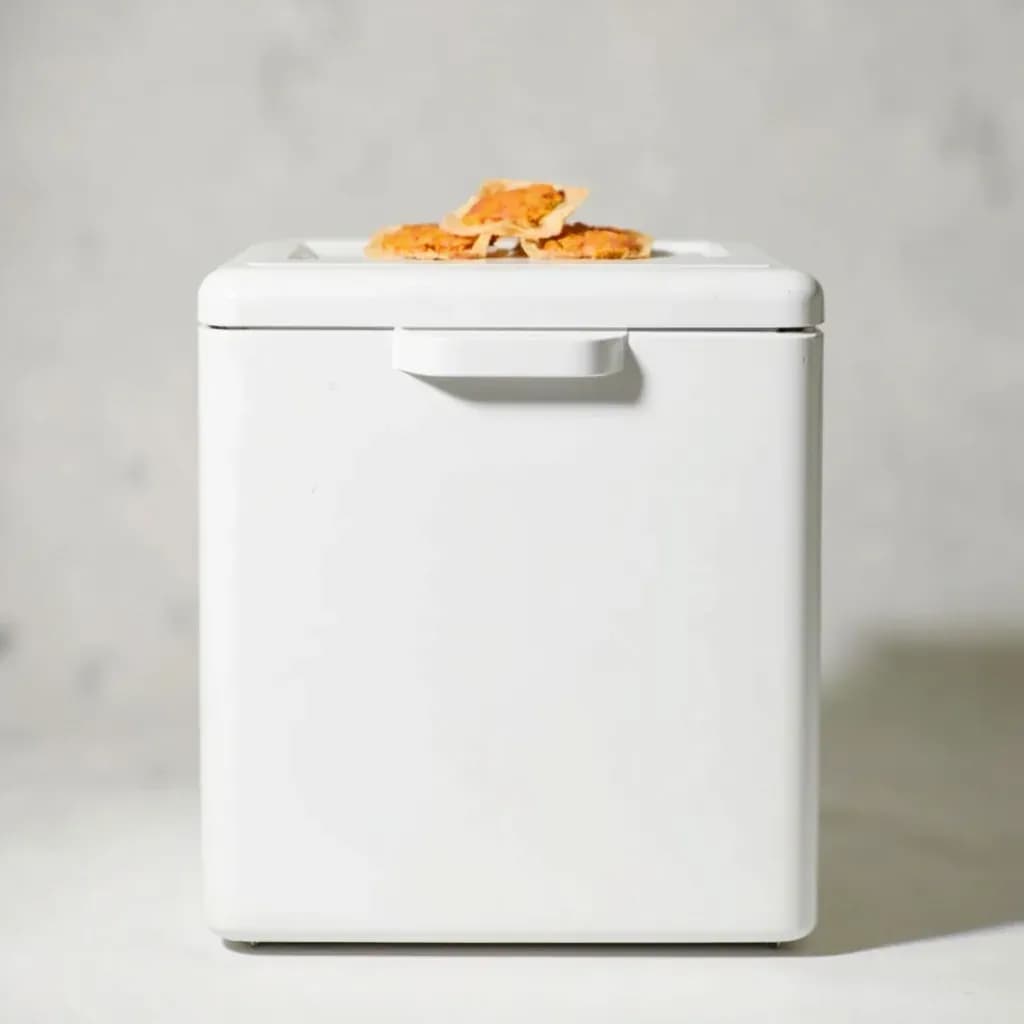
A chest freezer is a wide, top-opening insulated appliance that freezes and stores large quantities of food at deep-freeze temperatures. Its horizontal design holds cold better when opened and offers more usable space than an upright freezer, making it ideal for bulk meat, harvests, batch cooking, and ice. Removable baskets help organize layers in the deep cabinet.
The chest freezer is the workhorse of long-term food storage: a horizontal, top-opening cabinet that holds food at 0 °F (–18 °C) for months at a stretch. Unlike an upright, it has no shelves or drawers — you load food directly into a deep, insulated well — and that geometry is the source of both its strengths and its quirks. Cold air is denser than warm air, so when you lift the lid the cold stays put in the tub while the room air spills out the top. That single physical fact is why a chest uses less electricity per cubic foot than a comparable upright, holds safe temperatures for roughly 48 hours in a power outage, and rarely builds up the thick frost that plagues fan-cooled units.
For a serious home cook, a chest freezer changes what is possible at the stove. It makes bulk buying of meat, fish, and game practical; it gives you a place to put the last quarts of stock from a chicken, the tomatoes from a garden weekend, or the berries you picked in June. The same depth that protects the cold, however, also buries food — a 7-cubic-foot freezer is functionally a chest of forgotten leftovers unless you organize it deliberately. Most units are manual-defrost, which sounds old-fashioned but is actually the trade-off for higher efficiency and slightly more humid interior air, both kinder to unwrapped bread, ice cream, and cured meats.
Practically, a chest freezer is freestanding rather than built-in, needs an inch or two of clearance around the cabinet for the condenser to breathe, and runs on a standard 115 V household circuit. Pick the size to your real habits, not your imagined ones: a 7 cu ft model is plenty for a family that batch-cooks weekly, while a 20 cu ft unit earns its keep only when you hunt, garden, or source meat in quarters. If the unit will live in an unheated garage, buy a model explicitly rated for low ambient temperatures — standard compressors can struggle or fail in sub-zero weather.
Alternatives
Types & varieties
About 3–5 cu ft; suits apartments, small kitchens, or as a second freezer for bread, ice cream, and stock.
About 7–12 cu ft; the most common size for family kitchens, basements, and bulk shopping.
15–25 cu ft; sized for hunters, gardeners, batch cookers, and small catering operations.
Rated to operate across wider ambient temperatures, including unheated garages in cold climates.
Meets EPA efficiency benchmarks; uses roughly 10% less energy than standard models.
Less common than on uprights; uses a fan and automatic defrost cycle for convenience, at the cost of some efficiency and slightly drier interior air.
Heavy-duty hinged-lid units common in butcher shops and small restaurants; same operating principle, built for daily heavy use.
Loading and Organizing a Chest Freezer
The single biggest mistake new owners make is treating a chest freezer like a larger version of a kitchen freezer — that is, tossing things in and hoping to remember them. The geometry punishes you for it. A few habits turn a 10 cu ft tub into a useful, browseable archive:
- Use hanging wire baskets (most manufacturers sell them as accessories) to create a top layer of small, fast-turnover items — ice cream, bread, stock cubes — so you rarely need to dig.
- Stack bulky, long-holding items (whole turkeys, vacuum-sealed quarters, gallon containers of soup) on the bottom, where they will sit undisturbed for months.
- Freeze liquids flat in zip-top bags laid on a sheet pan, then stack the resulting bricks file-folder style; flat shapes thaw in a fraction of the time of a frozen lump.
- Keep an inventory list — paper taped to the lid, or a note on your phone — and update it the moment food goes in or comes out. 'Out of sight, out of mind' is a chest freezer's defining weakness.
- Group by category (red meat, poultry, seafood, prepared foods, vegetables, bread/dough) and store each category in a labeled bin or section so a single search yields everything of one kind.
Defrosting Without Damaging the Unit
Manual-defrost chests do not need to be defrosted often — once a year is typical for a well-managed home unit — but the job is worth doing right when the time comes. Frost thicker than about a quarter inch acts as insulation, forcing the compressor to run longer and shrinking usable volume.
- Plan the defrost for a cool day, or move food to coolers packed with ice; a full chest of food can stay safe for hours if you work quickly.
- Unplug the unit, open the lid, and place towels on the floor. Many models have a drain plug at the front — pull it and direct meltwater into a pan rather than sopping it up by hand.
- Speed the process with a fan blowing across the interior and pans of hot water placed inside; never use a hair dryer or heat gun inside, and never chip ice with a knife or screwdriver, which can puncture the inner liner and the evaporator coils bonded to the walls beneath it.
- Wipe the interior with a weak solution of baking soda and water to neutralize odors, dry it thoroughly, and restart the freezer 30 minutes before returning food so it is already pulling down to temperature.
Common uses
Tips & pitfalls
- Organize with hanging wire baskets and shallow stackable bins — the chest's only real weakness is that bottom-layer items get forgotten, and baskets fix it.
- Keep an inventory list taped inside the lid or saved on your phone; update it the moment food goes in or comes out.
- Label and date everything with freezer tape and a Sharpie; opaque bags or foil block light and slow the freezer burn that turns months of storage into months of waste.
- Cool food to refrigerator temperature (below 40 °F) before freezing — putting hot pots in wastes energy, spikes the interior temperature, and partially thaws neighboring items.
- Freeze in meal-sized, flat portions rather than bulky blocks; a 1-inch-thick bag of stock thaws in an hour on the counter, a frozen 1-gallon cube can take all day.
- Pack the freezer at least three-quarters full for best efficiency — thermal mass helps it cycle less — but leave an inch or two around items so cold air can still circulate.
- Defrost when frost reaches about ¼ inch; thick frost raises operating costs and steals usable space.
- Plug directly into a wall outlet on a dedicated 15- or 20-amp circuit; long or undersized extension cords cause compressor strain and void most warranties.
- In a power outage, keep the lid shut, drape blankets over the unit for extra insulation, and avoid opening it — a full chest will hold safe temps for nearly two days.
- If the lid has a lock, leave the key somewhere obvious so you are not cutting a seal to get at $200 of meat after a compressor failure.
Good to know
- Type
- Horizontal, top-opening standalone freezer; free-standing, not built-in
- Standard operating temperature
- 0 °F (–18 °C), the USDA/CDC guideline for home freezer food safety
- Common capacity range
- 5 to 25 cubic feet for residential models
- Defrost type
- Most are manual-defrost — no fan, no auto cycle — which is more energy-efficient but requires periodic defrosting
- Power-outage hold time
- A full, unopened chest freezer holds safe temps for roughly 48 hours; half-full for about 24 hours
- Defrost trigger
- Manual defrost is recommended when frost buildup reaches about ¼ inch (6 mm)
- Energy use
- Roughly 200–400 kWh/year for typical 7–12 cu ft models; less per cubic foot than uprights because cold air sinks and stays put when the lid opens
- Garage-ready rating
- Standard models handle ambient temps of ~55–110 °F (13–43 °C); 'garage-ready' units extend the lower end to about 0 °F (–18 °C) for unheated spaces
Also called
Arca · Deep Freezer · Freezer
Related

Stovetop
The everyday burners where most cooking actually happens

Oven
Enclosed dry heat for roasting, baking, and braising

Grill
Live-fire or gas grates for char, smoke, and high heat

Smoker
Low, slow heat and wood smoke for barbecue and brisket

Air Fryer
Countertop convection that crisps with little or no oil

Slow Cooker
Set-and-forget low heat for stews, beans, and braises

Pressure Cooker
Sealed steam pressure that cooks tough food in a fraction of the time

Rice Cooker
Foolproof, perfectly steamed rice every single time