Appliances & Heat
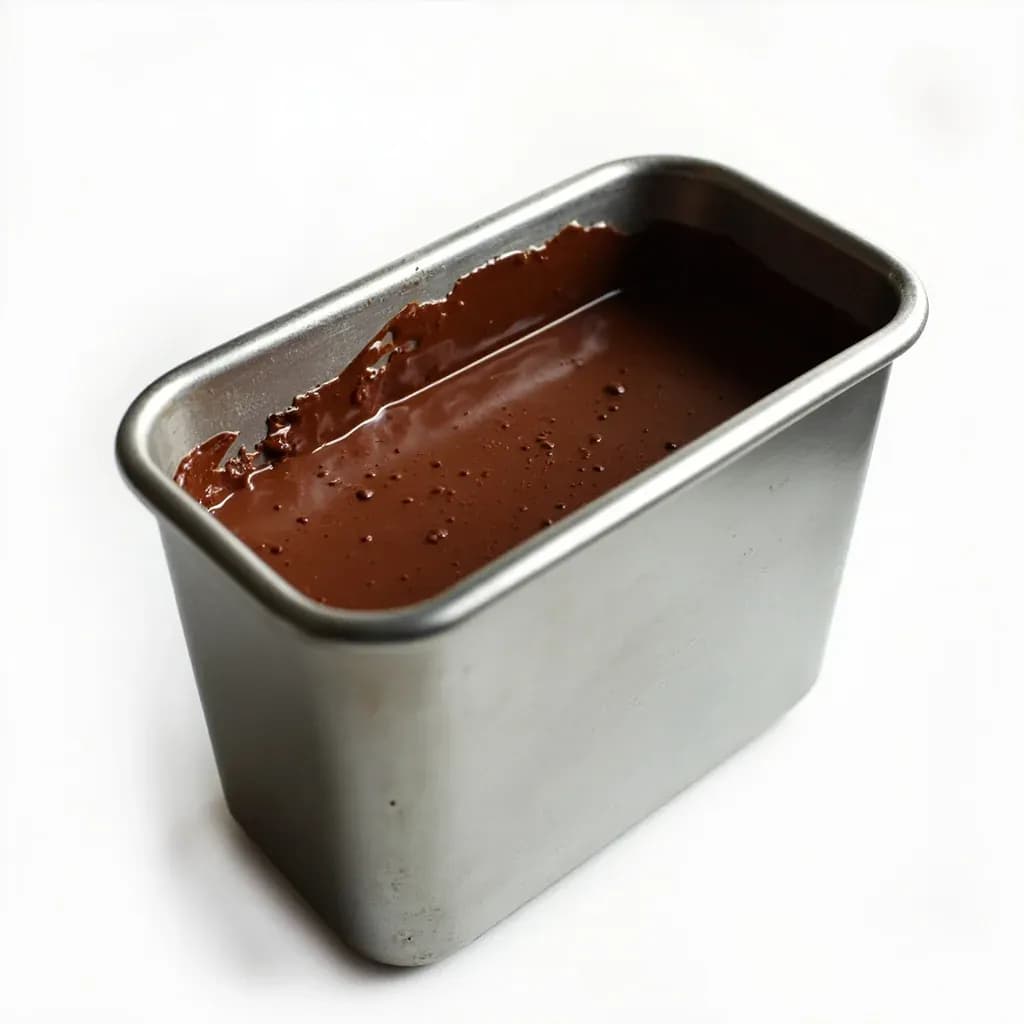
Chocolate Melting Tank
A heated, thermostatted reservoir that melts and holds chocolate at working temperature.
A chocolate melting tank is an electric, temperature-controlled vessel that gently melts chocolate and keeps it fluid at a steady holding temperature for dipping, enrobing, and molding. Chocolatiers and pastry kitchens use it to stage tempered or coating chocolate ready for production without scorching. Many have a water or dry jacket and a stirring option to keep the mass even.
A chocolate melting tank is a thermostatted, heated vessel that does two jobs at once: melt solid chocolate (callets, pistoles, blocks) and then hold the resulting liquid at a stable working temperature for as long as the work demands. Unlike a saucepan or a stovetop bain-marie, the tank maintains its set point over many hours without scorching, which is the single biggest advantage when you are dipping, enrobing, or moulding in volume. The chocolate sits in a food-grade stainless chamber that is either surrounded by a water bath or warmed by a dry element beneath the pot, with a thermostat cycling the heat on and off to hold the dial temperature.
The practical value is consistency. Hand-melting chocolate in a bowl over simmering water is fine for a truffle batch, but the temperature drifts constantly — every lift of the bowl, every splash of steam, every addition of cool chocolate pulls the mass away from target. A tank removes that fiddling. Set 32 °C for dark couverture, 30 °C for milk, or 28 °C for white, and the chocolate stays there through a full production shift, freeing the cook to focus on centres, moulds, and pacing rather than babysitting a saucepan.
How chocolate behaves in the tank is worth knowing. The mass is mostly cocoa butter and cocoa solids suspended in fat, with very little water — so it heats gently, holds heat well, and seizes violently if any moisture enters. Cocoa butter crystallizes into several forms as it cools, and only one (Form V) gives finished chocolate its snap and gloss; the others cause bloom and a soft, tacky surface. The tank, by itself, is a melting and holding reservoir, not a tempering device — it keeps chocolate warm, but the stable crystals still have to be introduced separately through seeding, tabling, or a multi-zone tempering program.
Alternatives
Types & varieties
Compact counter unit, roughly 3–12 kg capacity; standard in small bakeries and chocolate shops.
Large reservoir, 25–200+ kg; feeds enrobing and moulding lines in production bakeries and chocolate factories.
Heats chocolate indirectly through a surrounding water bath; gentler, more even, with much lower scorch risk.
Direct contact element under the chocolate pot; heats faster but demands more attention to avoid hot spots at the base.
Requires periodic hand stirring; the simplest and least expensive configuration.
Built-in paddle or auger keeps the chocolate homogeneous; valuable for long holds and high-volume work where the mass would otherwise stratify.
One set temperature across the whole vessel; the common configuration for steady holding at a fixed working temperature.
Separates melt, cool, and rewarm zones, or runs a programmed cycle so the same machine can also perform true tempering.
Outfitted with a chocolate pump to feed enrobers, moulding lines, or fountains without manual ladling.
Tank versus tempering machine
The distinction is the most common point of confusion when buying or specifying equipment. A standard melting tank will reliably hold chocolate at a chosen temperature, but it does not, on its own, put the cocoa butter into its stable crystal form. If you pour tank-held chocolate into a mould, it will eventually set, but it will look dull, feel waxy or tacky on the surface, and resist releasing cleanly — classic signs of an untempered piece. True tempering requires a deliberate cool-down and re-warm cycle: melt fully to about 45 °C, cool to seeding temperature (roughly 27–28 °C), then rewarm to working temperature (31–32 °C dark, 29–30 °C milk, 27–28 °C white). That cycle can be done by hand on a marble slab, by seeding with stable callets, or — built into a multi-zone tank — automatically by the machine itself. For high-volume work, that integrated cycle is the reason many producers step up to a tempering tank rather than a plain melting tank.
- Plain melting tank: holds chocolate warm, does not develop stable crystals; tempering must be done separately.
- Multi-zone or tempering tank: runs a melt–cool–rewarm cycle, so the unit both melts and finishes chocolate ready to use.
- Enrobers and depositors: receive chocolate that has already been tempered; the tank's job is to keep it at working temperature without re-melting the crystals out.
How chocolate behaves in the tank
Three behaviours dictate how you use a melting tank day to day. First, chocolate is hydrophobic: a single drop of water seized into the mass and you are scraping out a thick, grainy paste rather than pouring glossy liquid. Second, cocoa butter carries heat well but unevenly — the corners and base of a static tank always run cooler than the centre, which is why a quick scrape with a spatula every ten or fifteen minutes matters. Third, the thermostat is a guide, not gospel: built-in probes drift over months of use, so a separate probe thermometer checked at the start of service is the only way to be sure you are working at the temperature you think you are.
Common uses
Tips & pitfalls
- Never let water — even a single drop — enter the tank; chocolate is hydrophobic and will seize into a thick, grainy mass that is painful to recover.
- Avoid exceeding about 50 °C; sustained overheating destroys the cocoa butter crystals you are trying to preserve and produces dull, streaky, or bloomed finished chocolate.
- Use callets, pistoles, or finely chopped chocolate rather than large blocks; smaller pieces melt faster and more evenly with far less risk of scorching at the base.
- Stir periodically, especially with a static tank, scraping down the sides and base where cooler chocolate collects and the fat can stratify.
- Dry chocolate pieces thoroughly before adding them; condensation from a cold bag dropped into a warm tank is one of the most common seizing causes in a working kitchen.
- Keep the lid on during long holds to slow oxidation, surface skinning, and moisture pickup from the ambient air.
- Check the chocolate with a separate probe thermometer at the start of service; built-in tank thermostats drift over time and should be rechecked against a known-good instrument.
- Clean thoroughly between dark, milk, and white chocolate sessions — fat carryover is invisible but will affect the colour, flavour, and setting behaviour of the next batch.
- Drain and wipe the tank at the end of service; chocolate left to cool and re-solidify in the vessel is far harder to remove than still-warm residue.
- If using the tank as part of a tempering workflow, melt fully, cool to seeding temperature (around 27–28 °C), then rewarm to working temperature (about 31–32 °C dark, 29–30 °C milk, 27–28 °C white) and seed or cycle as your method requires.
Good to know
- Category
- Professional confectionery equipment; heated holding reservoir
- Body material
- Food-grade stainless steel, often with a surrounding water jacket
- Heating method
- Indirect water-jacketed bath or direct dry element, thermostatically controlled
- Typical capacity
- Roughly 5 kg (tabletop) to 200+ kg (industrial floor models)
- Operating range
- Approximately 28–50 °C, set by chocolate type and stage of work
- Agitation
- Manual stirring, or built-in paddle/auger on higher-end units
- Dispensing
- Ladle, bottom tap/spigot, or optional pump feeding an enrober or depositor
- Power
- Electric; single-phase for small units, three-phase for industrial tanks
Also called
Melting Tank · Chocolate Melter / Holding Tank · Tempering Melter · Chocolate Holding Tank
Related

Stovetop
The everyday burners where most cooking actually happens

Oven
Enclosed dry heat for roasting, baking, and braising

Grill
Live-fire or gas grates for char, smoke, and high heat

Smoker
Low, slow heat and wood smoke for barbecue and brisket

Air Fryer
Countertop convection that crisps with little or no oil

Slow Cooker
Set-and-forget low heat for stews, beans, and braises

Pressure Cooker
Sealed steam pressure that cooks tough food in a fraction of the time

Rice Cooker
Foolproof, perfectly steamed rice every single time